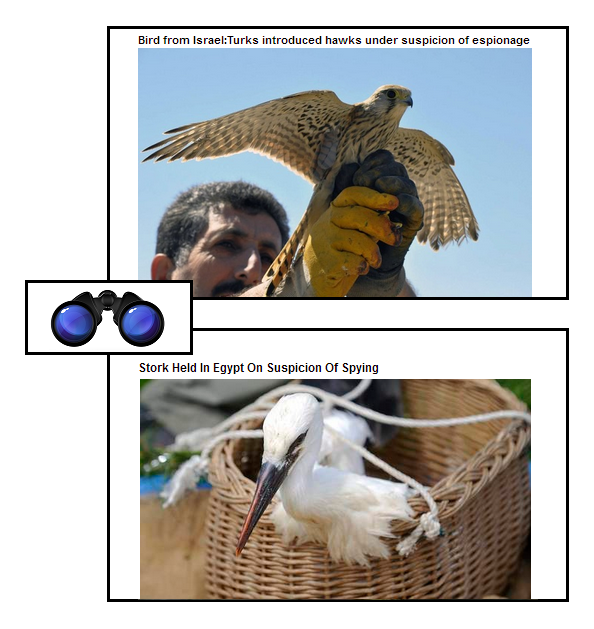
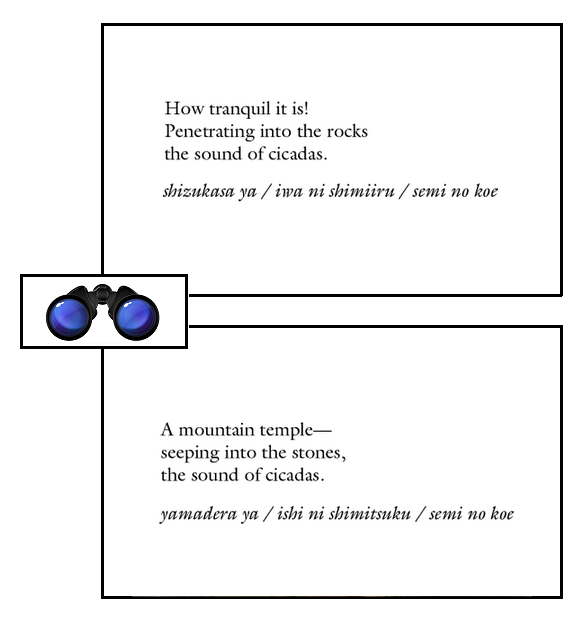
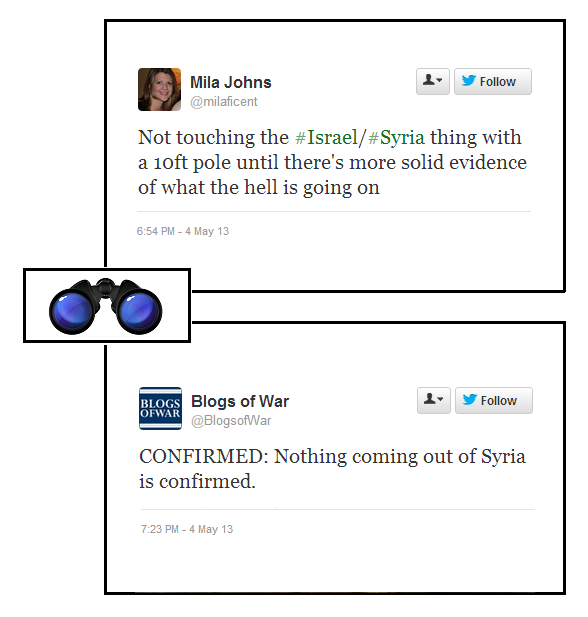
The stork story concludes with this delicious tid-bit:
In 2010, a series of shark attacks along Egypt’s Mediterranean coast were blamed on “GPS-controlled sharks” allegedly sent by Israeli security services into Sinai waters.
[ by Charles Cameron — Khorasan, black banners, the Ghazwa-e-Hind — when will the updating ever stop? ]
.
**
It looks as though I first realized that “the black banners of Khorasan” was a meme I should be “eyes out” for was in July 2007, when John Robbpointed us to a piece by Syed Saleem Shahzad on events at the Red Mosque
For the al-Qaeda leadership sitting in the tribal areas, the situation is fast evolving into the promised battle of Khorasan. This includes parts of Iran, Pakistan, Afghanistan and Tajikistan from where the Prophet Mohammed promised the “end of time” battle would start.
That reference to Khorasan in turn led me back to a slightly earlier Washington Post piece where the Khorasan / black banners motif was clearly set forth, along with a pointed comment from Andrew Black, co-founder of Thistle Intelligence Group:
The battles today, like those against the Soviet occupiers, are also fought with religious verve. The Taliban and al-Qaida fight under a black flag connoting the participation of Islam’s prophet in their battle for Khorasan, the ancient name for the region centered around Afghanistan.
Khorasan increasingly features in the militants’ videos and the name was taped to the leg of a suicide bomber who killed 24 people in Pakistan’s Northwest Province this spring.
“One should not underestimate the theological importance of Khorasan to aspiring mujahedeen; particularly those who are only able to initially view the conflict through the Internet,” said Black.
Hamid Gul was in Shahzad’s piece too, talking about the Red Mosque and the Red Fort — and here, too, I likely made my first acquaintance with the motif of the Ghazwa-e-Hind, symbolized by the wish to plant Pakistan’s flag on Delhi’s Red Fort:
It is a pity that our army was preparing youths to seize Lal Qala [the Red Fort of Delhi] and they ended up seizing the Lal Masjid,” Gul said.
Both these memes have been around longer than I have, but back then they didn’t seem to be attracting much attention in the west.
Now they’re cropping up all over — and I’m (to switch metaphors in mid-stream) paddling hard to keep up.
**
The black flags are alive and well this week, as shown in this video of the graduation of a new batch of the Free Army fighters in Syria:
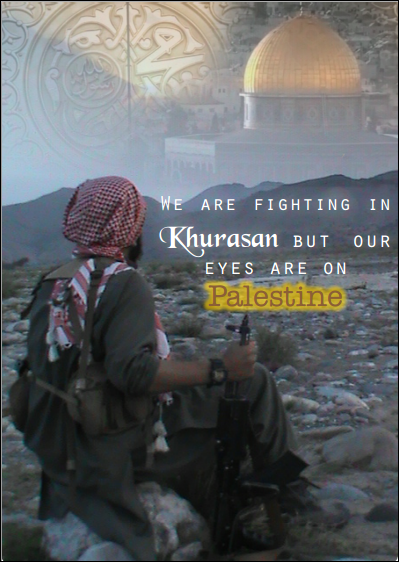
Khorasan too, as seen in the image from the new magazine Azan at the top of this post — but where does Azan itself come from?
B Raman writes:
It is not yet clear who has started “Azan”. One suspect is the Tehrik-e-Taliban Pakistan (TTP), which is the Pakistani Taliban. The other suspect is Al Qaeda headquarters in the South Waziristan area of Pakistan.
I’m interested in this question, because Azan had an overview of the various fronts of contemporary jihad, and an image that invokes both Khorasan and Jerusalem isn’t exactly “local” in focus. And that brings me to that other meme of interest here — the Ghazwa-e-Hind — which as I pointed out recently ius also mentioned in Azan, though not a huge focus there.
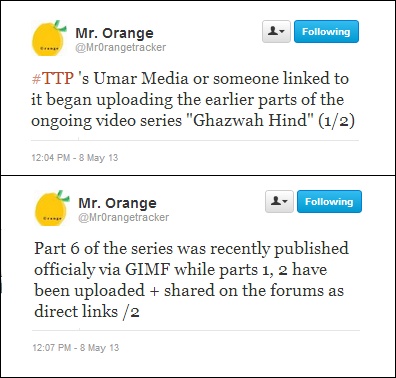
But if Azan is indeed a TTP product, then this info from Mr Orange:
would indicate they find the Ghazwa of more than passing interest…
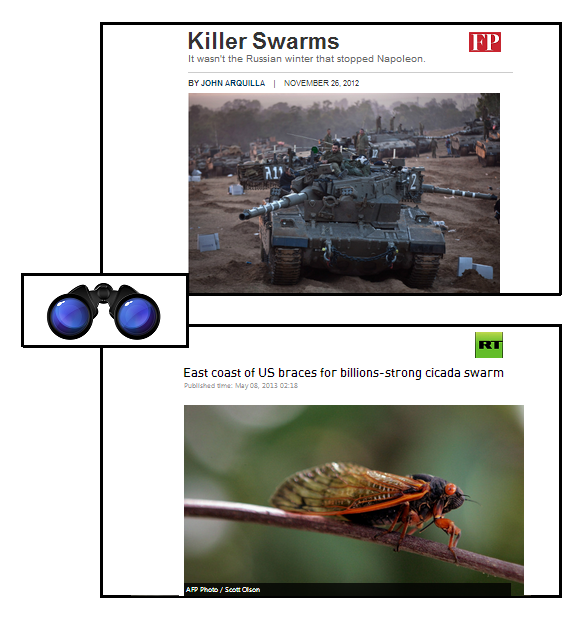
And Moses and Aaron came in unto Pharaoh, and said unto him, Thus saith the Lord God of the Hebrews, How long wilt thou refuse to humble thyself before me? let my people go, that they may serve me. Else, if thou refuse to let my people go, behold, to morrow will I bring the locusts into thy coast: And they shall cover the face of the earth, that one cannot be able to see the earth: and they shall eat the residue of that which is escaped, which remaineth unto you from the hail, and shall eat every tree which groweth for you out of the field: And they shall fill thy houses, and the houses of all thy servants, and the houses of all the Egyptians; which neither thy fathers, nor thy fathers’ fathers have seen, since the day that they were upon the earth unto this day.
[ by Charles Cameron — always we need the rapid response, always we need the slow, thoughtful understanding ]
.
It’s almost axiomatic, isn’t it, we need two brain speeds, two types of intelligence, two modes of analysis, to handle the moment and the times we live in. Both.
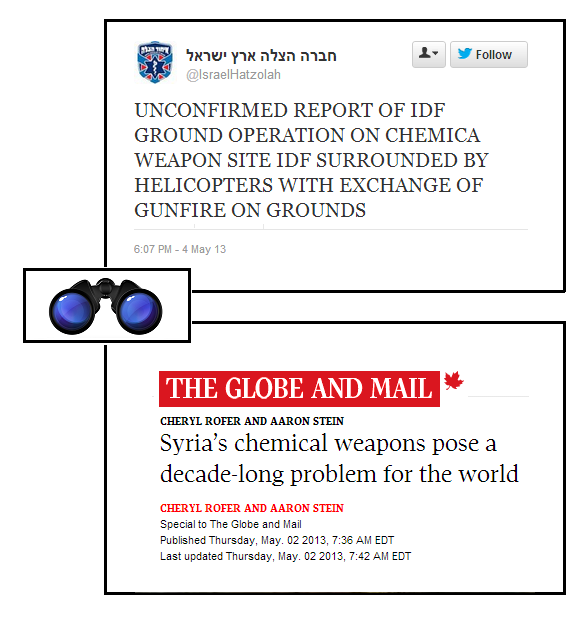
Chevra Hatzolah Israel has the immediacy of Twitter, Cheryl Rofer and Aaron Stein the longer view from the Globe and Mail. Both.
**
Cheryl Rofer, a good friend of this blog, “supervised a team developing supercritical water oxidation for destruction of hazardous wastes, including chemical warfare agents, at the Los Alamos National Laboratory” — bio from the Globe and Mail article. I don’t want to pick and choose excerpts from her piece, I’m certainly no expert on her topic — but as things heat up in Syria, the considerations she describes offer us significant background.
Syrian state TV is claiming that Israel hit a “research center,” while opposition Facebook pages are saying that several elite units on Mt. Qassioun, overlooking Damascus, were the targets.
…
Because it’s so difficult, not to mention risky, to destroy chemical-weapons stocks from the air, the next-best thing is to take out Assad’s means of delivering them. And Mt. Qassioun is reportedly where many of the Syrian regime’s best missiles are kept.
That’s a lot less worrisome.
**
As the “fog of war” slowly clears, the longer and slower insights will prove to be the more reliable and enduring.
Zenpundit is a blog dedicated to exploring the intersections of foreign policy, history, military theory, national security,strategic thinking, futurism, cognition and a number of other esoteric pursuits.