zenpundit.com » 2009

Archive for 2009

Forensic Paleo-Anthropology and the Last Man

Tuesday, May 5th, 2009

forensic.jpg

THE FIRST EUROPEAN – NOT ENTIRELY HOMO SAPIENS SAPIENS – 35,000 BC

A British forensic scientist, Dr. Richard Neaves, has recreated the head of one of the earliest modern human ( some differences in brain case and teeth)  hunter-gathers from fossil remains, in the same manner of reconstructing the identity of homicide victims.

His recreation offers a tantalising glimpse into life before the dawn of civilisation. It also shows the close links between the first European settlers and their immediate African ancestors. To sculpt the head, Mr Neave called on his years of experience recreating the appearance of murder victims as well as using careful measurements of bone. It was made for the BBC2 series The Incredible Human Journey. This will follow the evolution of humans from the cradle of Africa to the waves of migrations that saw Homo sapiens colonise the globe.

….’Richard creates skulls of much more recent humans and he’s used to looking at differences between populations. ‘He said the skull doesn’t look European or Asian or African. It looks like a mixture of all of them. ‘That’s probably what you’d expect of someone among the earliest populations to come to Europe

As with the example of Kennewick Man, efforts at forensic paleo-anthropogy shatter modern racial assumptions regarding our earliest ancestors, regardless of whether those assumptions emanate from archaic stereotypes or modern PC ideology. Kennewick Man bore little or no resemblance to Amerinidian tribal groups that he long preceded, and Native American activists responded to the startling archaeological find  by attempting to have the remains seized, scientific analysis of them banned and the site bulldozed. The “First European”in turn, looks nothing like the Aryan mythology of the Nazis or 19th century European racialist agitators. Instead, he appears somewhat like an Africanized Yul Brynner.

These reconstructions demolish our casual, self-referentially anachronistic, projections of our own demographic groups backward in time. We want to see ourselves in the people “back then” just like we wish to imagine that kind of continuity in a far-flung future. I’m dubous that we will look like “us” 100,00 or 250,00 years in the future and wonder if such a  people will even acknowledge their kinship with us any more than we do with Homo Habilis.

Recommended Reading

Monday, May 4th, 2009

Top Billing! The Committee of Public SafetyThe Machiavellians: Principle I , The Machiavellians: Principle II and The Machiavellians: Principle III

Josephfouche’s neat idea for a series, based on The Machiavellians: Defenders of Freedom by 20th century public intellectual James Burnham.

DNI – “The Epistemology of Strategy” by Maj. Richard Maltz (ret.) Hat tip to Fabius Maximus.

Military revolutions are cognitive revolutions.

NYT  – “Up, Up and Out ” by Paul Kane

Getting rid of the Air Force is laugh test dumb – as if I want ground commanders controlling our arsenal of nuclear weapons, we decided that issue fifty years ago. That said, other parts of this op-ed are very sound.

Foreign PolicyThree juntas and a democracy

Studies in IntelligenceThe CIA and the Culture of Failure: U.S. Intelligence from the End of the Cold War

SEED –  This is your brain on Facebook

That’s it!

New to the Blogroll

Friday, May 1st, 2009

Project White Horse

Scholars & Rogues

RBO

Wings Over Iraq

The First 100 Days and Threats in the Age of Obama

Thursday, April 30th, 2009

tttaob_cover_cropped.jpg 

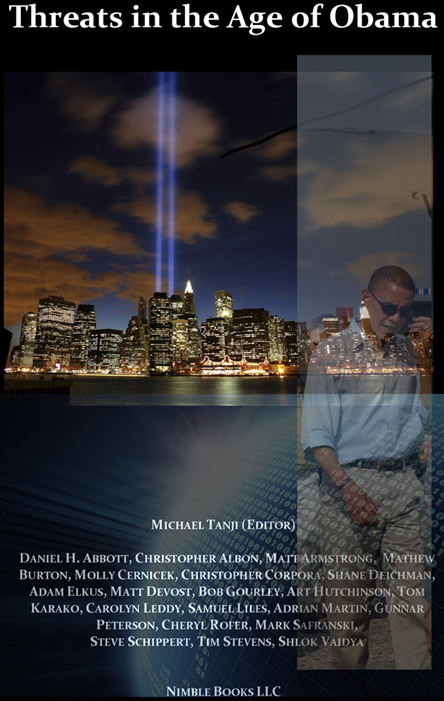
Threats in the Age of Obama

Editor:

Michael Tanji.

Authors:

Dan tdaxp, Christopher Albon, Matt Armstrong, Matthew Burton, Molly Cernicek, Christopher Corpora, Shane Deichman, Adam Elkus, Matt Devost, Bob Gourley, Art Hutchinson, Tom Karako, Carolyn Leddy, Samuel Liles, Adrian Martin, Gunnar Peterson, Cheryl Rofer, Mark Safranski, Steve Schippert, Tim Stevens, and Shlok Vaidya

President Barack Obama has hit the 100 day mark which has become a traditional (if unfairly high) bar for measuring a new President of the United States during his “honeymoon” period, ever since the historic “first hundred days” of President Franklin Roosevelt, that ushered in the New Deal. At the time, the United States and the world was on the precipice of financial implosion and the Congress effectively permitted Roosevelt to rule by decree, ratifying his crisis management by passing 15 bills of such sweeping scope that the relationship of the Federal government to the states and the American people was changed forever.

The United States and the world is again in the grip of a great economic crisis, though not quite of the magnitude of the Great Depression, it can be said that only a few presidents in the last century – FDR, Truman, Nixon and Reagan – inherited a similar number of gravely serious problems from their predecessor as did Barack Obama. I was part of the collection of authors of Threats in the Age of Obama above who attempted to discern the major challenges the new administration would face. As a group, we spanned the political spectrum and fields of expertise, many having or had governmental, military or academic backgrounds or significant projects in the private sector and if something united us, it was the 21st century would require new approaches than did the Cold War.

The publisher of Nimble Books, W. F. Zimmerman  suggested that the authors take a moment today and asses what we each got right, what we got wrong and what has surprised us regarding Barack Obama’s first 100 days and where we think we are headed.

This request puts me in an odd position because having the last chapter in the book, I opted for a deep futurist perspective to try to cover the “first one hundred years” of Obama with an essay entitled “A Grand Strategy for a Networked Civilization“. Here is an excerpt:

….The difference between leaders today and those in the past – not only past centuries but as recently as the Cold War – is a certain loss of perspective as to longitudinal scale and societal fundamentals. American politicians think primarily in terms of the present, mentally cycling with the nightly news or   the upcoming elections, which gives more weight to superficial, tactical, objectives than they deserve, and waste time, resources and opportunities.  Not only has the political will to make long term, strategic investments in the national interest faded, it is questionable as to the degree to which they are even considered.  The current economic crisis requires action, naturally, but if the incoming Obama administration wishes to make their mark on history, they should give at least as much thought to 2100 as they do to 2010.

….Moral legitimacy of the state, the nature of the homeland it governs and the political economy that satisfies the needs of the people are the fundamentals of strategic calculation; the longer the time frame to be considered, the more that getting the fundamentals right matters.

It is premature for me, given the nature of my chapter, to make a hard and fast judgment yet about where I went right or wrong. I will say that the Obama administration does seem to be taking “moral legitimacy” seriously, as they understand it from their political perspective. Many of President Obama’s gestures in foreign policy, agree or disagree with them, have been designed to recalibrate the global opinion of America’s moral standing as a world leader without costing too much in terms of concessions or cash.

Changing Bush administration policy on Gitmo, “harsh interrogations” and “no negotiations” with adversarial states is an intentional signal that the Obama administration has a different diplomatic posture. On the other hand, the Obama administration has refused to formally sign onto infinitely expensive, utopian, schemes such as Gordon Brown’s “global new deal”. Unlike the Clinton White House in its early days, the administration has also cleverly avoided trying to hand its conservative opponents an outrageous “bright red line” issue like “Gays in the Military” or “Whitewater”, around which Republican activists could galvanize public support and media attention.

What surprised and pleased me is the degree to which the Obama administration has lined up their national security positions behind the leadership of Secretary of Defense Robert Gates, embracing the “military reform” and “COIN” factions as their own. Secretary of State Hillary Clinton is trying to step up the role of the State Department in shaping policy; this is a long term necessity but State isn’t up to the task without a major cultural and organizational overhaul. If Clinton does not invest the effort early, she will be a “road show Secretary” without the supporting cast to be a success. The NSC, by contrast, is being reorganized to maximize presidential control, perhaps to the point of going overboard with micromanagement, if the Somali pirate incident is a representative example. The only senior figure in the administration who seems both out of political step and out of her depth is the Secretary of Homeland Security, Janet Napolitano.

What worries me, naturally, is the political economy aspect and the profound centralization of power over the economy being ushered in by Obama,  that is accumulating in the hands of very few people as the response to the economic crisis. The inevitable ripple effect, if such a concentration of power were to become the new status quo, would be one of stasis and stagnation. A globalized economy is too complex an “ecosystem” for top-down, ad hoc, hierarchical management to be an efficient or adaptive response. A re-focus on the fundamentals of new growth and not just legacy dinosaurs is in order.

Strangling OSINT, Weakening Defense, Censoring Criticism: The Pentagon

Wednesday, April 29th, 2009

banned.jpg

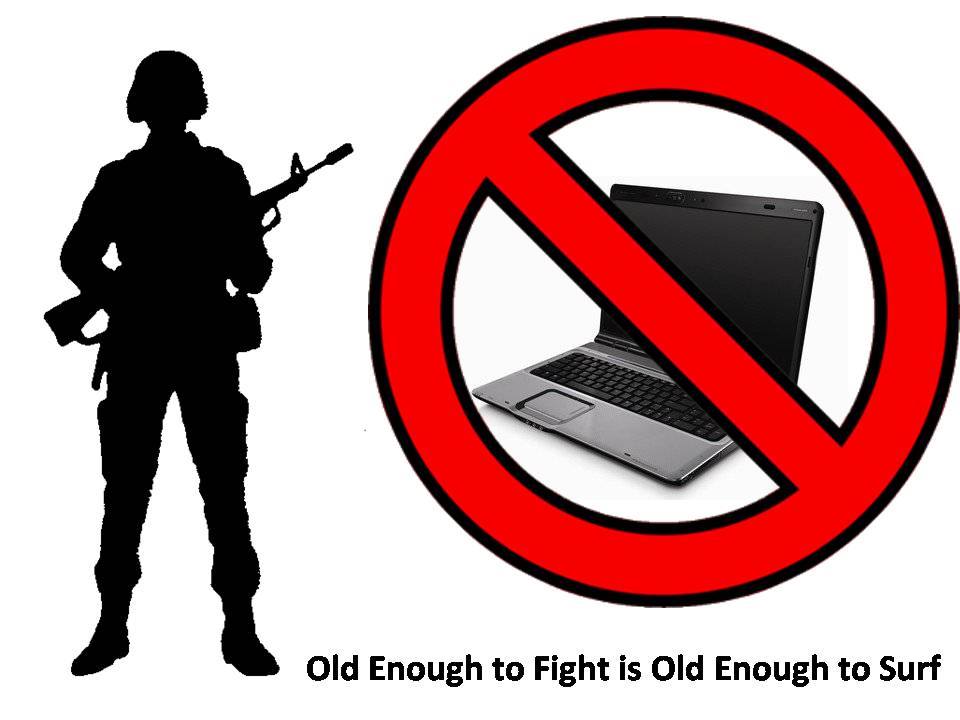
William Lind has a new post up at Defense and The National Interest that addresses the issue of the IT restrictions on the use of the internet by military personnel. This topic has been touched on previous by others such as at the SWC, SWJ Blog, Haft of the Spear, Hidden Unities and many milbloggers, intel and cyberwonks but previously, IT policy varied across services and from command to command. That appears to be changing – for the worse.

On War #302: Blinders

At the height of the Cold War, a U.S. army corps commander in Europe asked for information on his Soviet opposite, the commander of the corps facing him across the inter-German border. All the U.S. intelligence agencies, working with classified material, came up with very little. He then took his question to Chris Donnelly, who had a small Soviet military research institute at Sandhurst. That institute worked solely from open source, i.e. unclassified material. It sent the American general a stack of reports six inches high, with articles by his Soviet counterpart, articles about him, descriptions of exercises he had played in, etc.

What was true during the Cold War is even more true now, in the face of Fourth Generation war. As we have witnessed in the hunt for Osama, our satellite-photo-addicted intel shops can’t tell us much. But there is a vast amount of 4GW material available open-source: websites by and about our opponents, works by civilian academics, material from think-tanks, reports from businessmen who travel in areas we are interested in – the pile is almost bottomless. Every American soldier with access to a computer can find almost anything he needs. Much of it is both more accurate and more useful than what filters down through the military intelligence chain.

Or at least he could. In recent months, more and more American officers have told me that when they attempt to access the websites they need, they find access is blocked on DOD computers. Is al Qaeda doing this in a dastardly attempt to blind American combat units?
Sadly, no. DOD is doing it. Someone in DOD is putting blinders on American troops.

I do not know who is behind this particular bit of idiocy. It may be the security trolls. They always like to restrict access to information, because doing so increases their bureaucratic power. One argument points to them, namely an assertion that the other side may obtain useful information by seeing what we are looking for. That is like arguing that our troops should be given no ammunition lest muzzle flashes give away their positions in a fire-fight.

But the fact that websites of American organizations whose views differ from DOD’s are also blocked points elsewhere. It suggests political involvement. Why, for example, is access to the website of the Center for Defense Information blocked? CDI is located in Washington, not the Hindu Kush. Its work includes the new book on military reform America’s Defense Meltdown, which has garnered quite a bit of attention at Quantico.

The goal of the website blockers, it seems, is to cut American military men off from any views except those of DOD itself. In other words, the blockaders want to create a closed system. John Boyd had quite a bit to say about closed systems, and it wasn’t favorable.

Read the rest here

What is disturbing to me is that Lind indicates that the previous policy, which left IT restrictions up to commanders, seems to be coalescing behind one of systemic, tight, restrictions on access for all uniformed personnel to all kinds of blogs or websites that do not jeopardize information security. Or may even be useful to the conduct of their mission. The previous excuse by DoD bureaucrats was “conserving bandwidth” but it’s hard to see how esoteric sites like the Center for Defense Information or some university PDF on Islamist madrassas in Pakistan clog up a combatant command’s skinny pipes.

Intel and cyber experts in the readership are cordially invited to weigh in here.

ADDENDUM:

Professor Sam Liles offered up this manifesto on cyberthreats and cybersecurity.

ADDENDUM II:

Fabius Maximus, Ubi war and Wings Over Iraq took a similar view ( Wings though, added “Curse you Zenpundit!”).

ADDENDUM III THE COUNTERPOINT:

Galrahn says Bill Lind does not understand the legitimate cybersecurity aspect that causes blogs and websites to be blocked and then offers some practical advice to the blocked bloggers (such as myself):

….but I’d bet at least 5 shots of Canadian Whiskey (I’m a Crown Royal fan until summer gets here) that the problem that triggered his rant doesn’t originate in the DoD or any government entity, rather the private sector.

But I will say this. There are several legitimate reasons why websites, blogs, and other forms of social media sites on the web are blocked. If your website or blog is blocked, please understand you can do something about it besides whine.

Use Feedburner, or some other form of syndication software to distribute your content, including by email. Organizations including the military may block Blogger but typically they do not block syndication service sites because from an IT perspective, syndication services like Feedburner is a better way to manage bandwidth for larger enterprises. If an organization is blocking syndication sites too, then your organization has a very strict IT policy, BUT if your favorite websites are distributing content by email, problem solved

I used Feedburner previously with my old blogger site when Feedburner was in beta but when it was purchased or absorbed by Google, that account went dormant. I think I will ressurect it and then look into Galrahn’s other suggestions.


Switch to our mobile site