zenpundit.com » 2012

Archive for 2012

Recommended Reading: dessert

Sunday, July 22nd, 2012

[ by Charles Cameron — of the Naked Breasts of Justice and the Verse of the Sword ]
.

Two more quick notes on the Gunpowder & Lead / Bernard Finel discussion:

The first concerns similarities between a figure — not in this case, Rick Santorum — on the American Christian right and his Iranian counterparts:

These two instances — which if I recall correctly, were reported within a month of one another between Dec 2001 and Feb 2002 — can be used as indicators to illuminate both the similarity and the difference between religiously-influenced thinking as between two nations and two religions. The similarity — a common Puritanism, to give it a name — is immediately apparent: but the difference — that the Christian Ashcroft merely veils the statue, whereas the Iranians grind off the figure’s breasts — surely speaks to a deeper intensity on the part of the Iranian authorities.

**

My second point is by way of counterpoint to my discussion of RJ Rushdoony in Recommended Reading: salad.

A recent COMOPS paper, How Islamic Extremists Quote the Qur’an [.pdf], explores a substantial body of jihadist materials:

Islamist extremists make heavy use of the Qur’an (Islam’s most sacred text) in their strategic communication. This study analyzed the most frequently cited or quoted verses in the Center for Strategic Communication’s database of over 2,000 extremist texts. The texts date from the years 1998 to 2011, and originate primarily from the Middle East and North Africa. Taking this data as a starting point, we provide a qualitative analysis of the historical contexts and core narrative components of the cited passages.

and notes:

The most surprising is the near absence of the well-known “Verse of the Sword” (9:5) from the extremist texts. Widely regarded as the most militant or violent passage of the Qur’an, it is treated as a divine call for offensive warfare on a global scale. It is also regarded as a verse which supersedes over one hundred other verses of the Qur’an that counsel patience, tolerance, and forgiveness.

We conclude that verses extremists cite from the Qur’an do not suggest an aggressive offensive foe seeking domination and conquest of unbelievers, as is commonly assumed. Instead they deal with themes of victimization, dishonor, and retribution. This shows close integration with the rhetorical vision of Islamist extremists.

Based on this analysis we recommend that the West abandon claims that Islamist extremists seek world domination, focus on counteracting or addressing claims of victimage, emphasize alternative means of deliverance, and work to undermine the “champion” image sought by extremists.

That’s a significant insight to chew on. And since we are still in “recommended reading” mode, let me also point you to the COMOPS Qur’an Verses Study: A Response to Our Critics. Different people — as the discussion between Mark Jacobsen and Tim Mathews illustrates — will have different reasons for and levels of interest in these documents, but it is good to have serious scholarship challenging some of our easy (and dubious) assumptions.

Recommended Reading: salad

Sunday, July 22nd, 2012

[ by Charles Cameron — a follow up to Recommended Reading: the meat, discussing the word Christianist, also an intellectual foundation for the desire to fuse church and state ]
.

In a comment on Daveed and Laurel’s post, Tim Mathews writes:

The views of a hypothetical “Christianist” yearning to fuse church and state are clearly ad hoc and usually incoherent, with little to no significant intellectual foundation. Thus, the Islamist versus Christianist dynamic seems, to me, to be an invented controversy. “Islamist” is a descriptive label applied to an agenda with an intellectual foundation. “Christianist” is a label in search of a description.

I’d like to make two comments here:

First, FWIW, the term “Christianist” already has a usage promoted by the essayist Michael Ventura, who writes in Shadow Dancing in the USA:

In following the lead of James Hillman’s work, I’m going to use “Christianism” in place of “Christianity” and “Christianist” in place of “Christian” whenever possible in an attempt to get around the enormous bias for the religion built into our very language.

This isn’t the same as using the term in parallel to “Islamist” – but it’s a usage worth noting.

As to there being “little to no significant intellectual foundation” for the desire to fuse church and state in Christianity, Rousas John Rushdoony opens his monumental Institutes of Biblical Law with the following observations:

When Wyclif wrote of his English Bible that “This Bible is for the government of the people, by the people, and for the people,” his statement attracted no attention insofar as his emphasis on the centrality of Biblical law was concerned. That law should be God’s law was held by all; Wyclif’s departure from accepted opinion was that the people themselves should not only read and know that law but also should in some sense govern as well as be governed by it. [ … ]

No less than Israel of old, Christendom believed itself to be God’s realm because it was governed by the law of God as set forth in Scripture. There were departures from that law, variations of it, and laxity in faithfulness to it, but Christendom saw itself as the new Israel of God and no less subject to His law.

When New England began its existence as a law-order, its adoption of Biblical law was both a return to Scripture and a return to Europe’s past. It was a new beginning in terms of old foundations….

You can read the complete Introduction here (.pdf).

Max Blumenthal‘s 2009 Republican Gomorrah opens with a chapter on Rushdoony, contrasting him with Billy Graham, who:

routinely urged his audiences to “create a culture with Christ at its center,” but his message was consistent with the evangelical tradition of effecting change through personal persuasion, not political imposition. … By contrast, Rushdoony’s concept of cleansing the land of sin by seizing the reins of government was genuinely revolutionary.

John Frame‘s much earlier review of the first volume (of three) of the Institutes appeared in the Westminster Theological Journal 38:2 (Winter, 1976), 195-217. It offers the uninitiated reader a decent overview of the book:

Rushdoony not only acknowledges biblical authority, knows the Bible, and knows our cultural situation; he is also able to apply biblical principles to our culture in creative and cogent ways. Rushdoony has grasped a hugely important point that theologians rarely acknowledge, namely, that theology must involve the application of the word of God to the whole world. Otherwise, theology is a “lie,” testifying that God himself is irrelevant (p. 597; cf. pp. 308, 652ff). The Institutes, therefore, presents a plan for the reformation of all aspects of human society in accord with biblical law. Rushdoony advocates this reformation in various ways:

(a) He sets forth eloquently the beauty of a society governed by biblical law: a society where the power of the state is strictly limited (pp. 429f, passim); where eminent domain belongs to God alone, not to the state (pp. 492f, 499ff); where there are no property taxes (pp. 56, 283), no expropriations beyond the tithes (pp. 846ff), but where welfare is effectively provided through covenantal institutions; where all citizens expose and prosecute criminals (pp. 271, 463ff); where criminals are responsible to make restitution to their victims (p. 272); where crime is rare because habitual and serious offenders are promptly executed and because others are caught and forced to make restitution, a society without prisons and the farce of pseudo-rehabilitation (pp. 228ff, 458ff, 514ff); where war is not permitted to take precedence over every other human activity (pp. 277ff); where the environment is protected by following the instructions of its Creator (pp. 141ff, 164ff).

(b) Where the biblical laws at first glance appear not to be so beautiful, but rather (to our humanist-indoctrinated minds) to be strange, trivial, or even cruel, Rushdoony effectively explains the divine logic underlying them. The denial of full citizenship to eunuchs (p. 100), the execution of blasphemers (pp. 106ff) and incorrigible juvenile delinquents (pp. 185ff, 48lff), the prohibition of taking a mother bird together with her young (pp. 169, 257, 267), the levirate (pp. 308f), the dowry legislation (pp. 185ff, 48lff) and other perplexing biblical statutes are cogently defended.

(c) Besides showing the inherent logic of biblical law, Rushdoony shows how that biblical law has been used through history, how its observance has brought about justice and happiness in many societies, and how its abandonment has brought about cultural disaster. He is quite specific with regard to American culture, and advocates dramatic changes in our legal and institutional structure. His strongest and most frequent polemic is against “statism,” the view that the state has the right to tax, control, and disturb all areas of human life. In that regard, his rhetoric closely resembles that of political conservatism which, indeed, he acknowledges as resting on Christianity to an extent (p. 289). Yet he strongly opposes laissez faire capitalism (pp. 288ff, 432f, 472) as a deification of the abstract laws of economics. Rushdoony’s proposals really do not fit very well under any contemporary label, and that in itself is an index of his zeal to follow Scripture rather than to please men.

Finally, I’d suggest that Rushdoony has more influence than many would like to admit these days – hence Caleb Hayden‘s comment in his Amazon review:

Rushdoony influenced many prominent and visible leaders in Christian circles today, even though many of these men are afraid to identify with him for fear that their reputations will be tarnished. Most people do not want to be thought of as radical, but Rushdoony had a different mentality. That is why, love him or hate him, a student of theology, philosophy, history, and law can greatly benefit from Rushdoony’s distinctly Christian analysis and critique of society.

See also, Jeff Sharlet, The Family, pp. 347-351.

In a second follow up, I’ll present a case where similar governmental practices resulted from arguable similarities between particular Christian and Islamic worldviews, and offer a comment on the degree to which even jihadists may not be directly attempting world conquest in the name of Islam.

Recommended reading: the meat

Sunday, July 22nd, 2012

[ by Charles Cameron — a couple of courteous debates on topics of considerable interest ]
.

I’d like to draw your attention to two recent conversations:

The first begins with Mark Jacobsen‘s Armed Forces Journal piece, How to teach about Islam, and continues with a guest post from Tim Mathews at Abu Muqawama, Insha’Allah they learn something useful. Mark then responds to Tim at his own blog, Building Peace.

Mark lays out the problem:

Much of the debate now hinges on which voices educators should trust. The question is no longer “What is Islam?” but “Who should teach about Islam?” Government agencies struggle to answer that question, because they often feel compelled to choose between two camps: those who believe extremism is intrinsic to Islam itself, and those who see no relationship whatsoever between Islamic doctrine and extremism. Although much thoughtful and scholarly discussion of Islam does exist, it is these two camps who now dominate the popular conversation.

Government agencies will never escape their dilemma if they continue searching for an authority who can speak for “true” Islam. Islam is a deeply contested religion, even among Muslims, and the arguments of both extremes are shot through with truth, falsehood, exaggerations, omissions and assumptions. Much of the debate about Islam in the United States is intellectually dishonest. Rival voices are less concerned with sincere discussion than with heavy-handed tactics to dominate the conversation, such as efforts to control government classrooms. The only way out of this dilemma is also the most intellectually honest one: to understand the battle for American perceptions of Islam, to map out the topography of the debate and to teach students to critically evaluate rival arguments.

Tim responds:

As should be clear, I agree with problems that the author identifies in the US. However, I fail to see what this has to do with the issue of educating our personnel. We are not training our personnel to be foot soldiers in a culture war fought on cable television and weblogs in the United States. We are training our personnel to conduct operations in foreign countries.

[ … ]

The problem that he identifies is not relevant to preparing our personnel for deployments to conduct, and provide support for, operations in majority-Muslim countries. What the author has advocated is a program to help our educators avoid being pulled into battles of a culture war on US soil and, along the way, educating our personnel. The primary focus should be educating and the secondary focus on mitigating public pressure from fringe organizations.

Mark’s response:

I’m very glad to see your thoughtful response to my article. More than anything, I had hoped to spark some discussion about how Islam is taught in various government agencies, so am glad to see you carrying the discussion forward.

[ … ]

One reason you might disagree with aspects of my article is because you viewed it primarily through the lens of preparing deploying soldiers. That is an important part of what I’m writing about, but I actually intended the article to encompass a much broader range of government needs. Government employees have many different reasons they might need to understand something about Islam. Congressmen and their staffs are trying to make sense of the alleged “shariah threat” and calls for anti-shariah legislation; law enforcement agencies and the FBI need a way to understand and delineate between “moderates” and “extremists”, so they can hone in on real threats while respecting the civil liberties of ordinary Muslims; military commanders concerned with preventing the next Ft. Hood want to know how they can recognize extremist ideology; government agencies involved in any sort of outreach to Muslim communities struggle to find partners they can work with, because the largest American-Islamic organizations that claim to speak for American Muslims are tarnished by alleged links to extremism and terrorism.

All three pieces are worth reading in full — it was hard to pull quotes that did any of them justice, they’re all packed! And FWIW I do think Mark is right in ranging beyond the constraints of “preparing our personnel for deployments” — Tim’s more focused concern — because the war of ideas is won or lost as much in terms of how the US is perceived WRT Islam as it is by the behavior of troops, village by village, “in the field”.

**

The second begins with a David Briggs piece in Huffington Post, Is It Time to Reconsider the Term Islamist?, which leads Daveed Gartenstein-Ross and Lauren Morgan to respond at Gunpowder & Lead with Islamism in the Popular Imagination — which in turn generated Bernard Finel‘s post On Islamists and Rick Santorum. Daveed then comes back with Islamists and Rick Santorum: A Response to Bernard Finel.

I’m not going to quote Briggs, whose piece strikes me as light-weight, except to note that he introduces the question of comparisons between Obama and Rick Santorum (potential “Christianists”) with “Islamists”:

At this year’s National Prayer Breakfast, President Barack Obama said his policies were grounded in his Christian beliefs. In a 2008 speech, former GOP presidential contender Rick Santorum said America was in the middle of a spiritual war in which “Satan has his sights on the United States of America.”

Are Obama and/or Santorum Christianists?

The answers to those questions would depend on how the term is defined. But it is unlikely you will hear any Christian politician or activist referred to in that way.

What American and western audiences are increasingly hearing, however, since the political and social upheaval that accompanied the Arab spring, is the term Islamist.

Daveed and Lauren:

You would be hard pressed to find anything beyond a few fringe commentators who are worried about Islamism because politicians representing this movement refer to Islamic principles in their rhetoric. Rather, it is the specific relationship between religion and state that worries observers. (I mean, really, does Briggs think that Obama will make canon law the law of the land if given a second term?)

Briggs bolsters his case by quoting Mansoor Moaddel, an Eastern Michigan University sociologist, as saying that in his interviews, he found that “‘in some respects, Mr. Santorum is more extremist’ than leading figures of Egypt’s Muslim Brotherhood.” Nor is Briggs the only Western commentator to fatuously compare Santorum to Islamic extremists. To actually approach the claim being made by Briggs and others — that Islamist politicians possess an agenda that is less extreme than that of Rick Santorum — a better approach is to look at the practice in Middle Eastern states, as well as the policies advocated by Islamist politicians with significant audiences (as opposed to mere fringe players). That is what we do in this entry.

And do they indeed do — detailing with bullet points and commentary the practical behaviors of a variety of Islamic nations in respect to apostasy, blasphemy, the rights of women, and gay rights in the rest of their lengthy and instructive piece.

Enter Bernard Finel, who draws a fine distinction:

GR argues convincingly that policies put in place by Islamist parties throughout the Middle East are more extreme than Santorum. And indeed, on issues like religious freedom, women’s rights, and gay rights, GR is quite correct. Islamist regimes are worse than anything Santorum has proposed.

But I’d argue this is an apples to oranges comparison. Santorum’s limits are defined, I think, more by the limits imposed by American institutions rather his ideology per se. In other words, GR is comparing institutionally unconstrained ideological positions with those heavy constrained by institutions. It actually is not at all difficult to find actors on the right who would like to see religious freedom severely curtailed. Indeed, there is even a “Constitutional theory” out there among right wingers than Muslims should not receive First Amendment protections because either Islam is a “cult” or because it was not extant in any significant way in the United States when the Bill of Rights was ratified.

I’ll get into the issue of “actors on the right who would like to see religious freedom severely curtailed” in an follow up to this post — and touch on the usage “Christianist” there also — here, I’ll just say that Finel is articulating something I’ve “felt but not thought” or perhaps “thought but not articulated” myself quite a few times, and while I’m not entirely satisfied with his phrasing about “constraint by institutions” I think there’s a serious point in there, and I’m glad to see it surfaced.

Back to Daveed:

In comparing the relative extremes of Santorum versus those of Islamist parties, we were not trying to offer a moral judgment on the relative righteousness of those two actors (to be clear: we use “actor” in the loosest possible sense here, since Islamist politicians are by no means a unified actor). Rather, we were comparing exactly what we have just specified: the policies Santorum has advocated or implemented versus those that Islamist parties have advocated or implemented. It is true that institutional constraints play a role in defining said policies, but our goal was illuminating policies that are likely to have an impact on anyone’s life, and not judging Santorum’s “heart of hearts.” Hence, it is a direct apples to apples comparison of what policies are advocated by these two different actors. It would only be an apples to oranges comparison if our goal were moral judgment.

Fair enough: then there are at least two kinds of comparisons to be made… one between policies advocated by the respective parties, and one between the political realities constraining those whose ideals may be comparable.

**

Again, with such rich material it is difficult if not impossible to pick quotes without cherry-picking them — and I must repeat that my intention here has not been to summarize these debates so much as to lead you into them…

Finel actually has a further post today in which he characterizes Daveed (and Laurel) as making “an ill-conceived and pointless attempt to haul Rick Santorum into the mix” on the way to another discussion. For the record, it was Briggs, not Daveed and Laurel, who introduced Santorum into the discussion.

I’ll have two follow-ups to this post, one adding a couple of points to the Gunpowder & Leaf / Finel discussion in regard to “Christianism” and the theological underpinnings of a contemporary movement for church-state fusion, the other adding a couple of other intriguing details to the mix.

To be or to do

Sunday, July 22nd, 2012

[ by Charles Cameron — to be or to do: this one’s for Scott ]
.


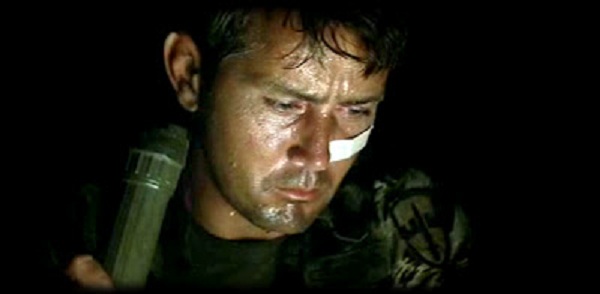
Martin Sheen as Capt. Willard in Francis Ford Coppola’s Apocalypse Now

**

Of course, Col. Kurtz‘ end in the movie is more than a little different from Col. Boyd‘s — but one wonders whether John Milius was aware of the Boyd quote when he wrote that particular scene.

The perils of juxtaposition: Aurora

Saturday, July 21st, 2012

[ cross-posted from SmartMobs – this post is not about the tragic Aurora shooting, but about internet advertising mechanics ]

Our hearts go out to all the bereaved.


.

If you know me & my Hipbone project, you know I’m always on about juxtaposition as a means of generating a sort of stereoscopic depth of understanding from two similar — or opposite — ideas, images etc.

And yes indeed, the juxtaposition of ideas and the creative leaps that juxtaposition generates are at the heart of the Sembl game approach that Cath Styles and I are prototyping.

-- image: board for an iPad Sembl game + detail of single move

But look, you need to have some sense of context.

And neither current algorithms nor remote humans seem to be terribly good at this.

**

aurora-boutique

The Celeb Boutique tweet above was posted when the word Aurora started trending after the recent awful cinema shooting, and was up for an hour before someone realized how inappropriate it was and took it down. In subsequent tweets, the boutique apologized and noted “our PR is NOT US based and had not checked the reason for the trend…”

I think that’s extremely unfortunate, but somewhat understandable: human error, outsourced.

The humans in question should have been as savvy as Paul Coelho, who counseled (just a day earlier, if I’m getting my dates right) as follows:

coelho-google-before-you-tweet

**

Then there was the Christian Science Monitor‘s article, Colorado shooting: A rare glimpse into Mitt Romney’s Mormon faith, which showed up on blog-friend Critt Jarvis‘ monitor with this ad:

Again, that’s unfortunate — but the CSM’s ads are presumably chosen by algorithm, and I wouldn’t know where to send an algorithm to repent if I met one and it was sincerely apologetic…

The CSM website does offer us humans an opportunity to object to ads we find tasteless and inappropriate, however:

The Monitor is committed to showing only those ads that meet our standards for appropriate content. These particular ads are sold by internet advertising partners who share the revenue with The Christian Science Monitor. We have implemented filters with them that are designed to prevent unacceptable advertising from showing on the site. If you feel an inappropriate ad is being displayed, please contact us immediately using the form below. Ads that violate our acceptance standards will be removed from the site and our filters will be adjusted to help prevent a recurrence.

So humans can backtop the algorithms when they play foul… that’s good.

**

But all this just reinforces my appreciation for Cath Stylestweet last week, after she met with Mel from Serena (neat video, btw!):

sembl-turing-test

There’s still no machine substitute for human wit and wisdom.


Switch to our mobile site