zenpundit.com » 2013

Archive for 2013

Boston special issue promoted in Azan #2

Wednesday, June 5th, 2013

[ by Charles Cameron — for the record, there’s a Boston “special edition” of Azan, though I’ve only seen the ad! ]
.

The second issue of Azan magazine is out, and not all that exciting — but just as I did last time, I’ve scanned it for bits that interest me, and come up with a couple — but first I’d like to note is the teaser on p. 49 (below) for a “special issue” on the Boston bombings, dated 15/5 on the cover and claiming to have been published “soon after the attacks”:

I haven’t seen it, but there’s corroboration. SITE appears to have found a copy and announced it in this tweet on May 25th:

So somewhere between Azan #1 and Azan #2, there would seem to have been an out of series issue. Since it concentrates on Boston, however, and not Khorasan, there’s probably not much in it along my line of interest, so knowing it’s out there only piques my curiosity just a tad.

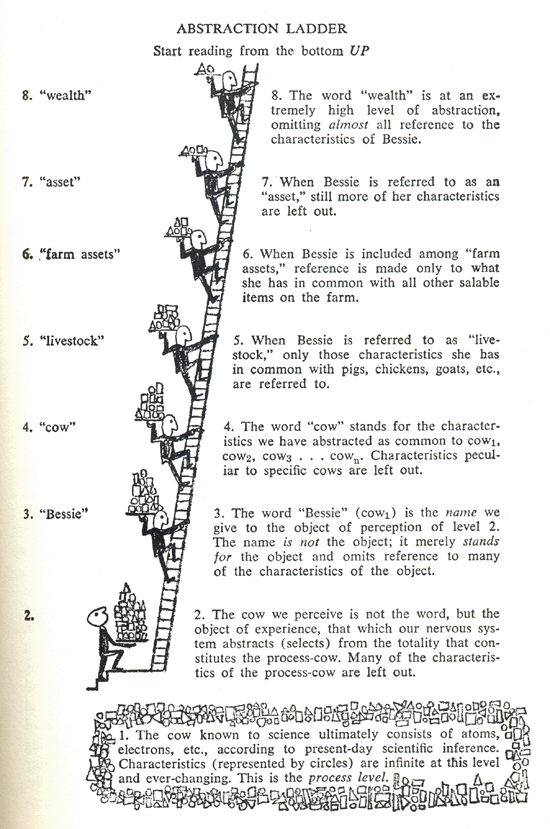
A woman, a ladder, four goats, and a cow named Bessie.

Tuesday, June 4th, 2013

[ by Charles Cameron — the four goats go with the woman, the cow called Bessie belongs with Hiyakawa’s Ladder of Abstraction ]
.

**

My friend the anthropologist Peter van der Werff recently wrote this paragraph about a woman he met in India:

The very poor woman explained me she and her four goats needed the shadow of a tree to escape from the blistering afternoon sun in their semi-arid part of India. There was a tree at the edge of the village, but the owner did not allow her to come near that tree. Therefore, she and her goats suffered from the heat, at the cost of her health and the productivity of the goats.

I was reminded of SI Hayakawa‘s Ladder of Abstraction.

**

Caution: you really do need, as it says, to “read” this image from the bottom up…

See Bessie, the Cow, in SI and AR Hayakawa, Language in Thought and Action, pp. 83-85, 5th ed..

**

Why did I think of Hayakawa’s ladder?

Here are two other things m’friend Peter had to say about the woman and her goats, the merciless sun, and that tree with its abundance of merciful shade:

As long as economists don’t include oppression and exploitation in their models, they cannot understand poverty.

and:

Such cruel relationships occur in many of the 750,000 villages of India. Without including those oppressive and exploitative realities, real poverty is not captured. We may invite economists to fit this reality in the computer.

**

We humans can do it. But how do we configure models that can hold those levels of granularity and abstraction — of individual human concern and global decision-making necessity — close enough together to give our grand plans humane flexibility?

I suspect writers such as Lawrence Wright know more about this than the number crunchers — and that the well-selected anecdote must become as significant as the well-chosen statistic

How to win souls and be worthy of emulation?

Tuesday, June 4th, 2013

[ by Charles Cameron — considering a rare attribute in two religious leaders ]
.

**

Christopher Anzalone tells a story about the Grand Ayatollah Sadiq al-Sadr (above, left), Moqtada‘s father, in his highly recommended podcast on Jihad & Martyrdom in Contemporary Muslim Militants with Karl Morand.

I’m very slow at transcription, but this story hit me with its insight into an aspect of religion that — as the story itself illustrates — is not always recognized, and i was able to find the same story told elsewhere, though not with the flair Chris brings to the telling. Here it is, as recounted by Patrick Cockburn in his book, Muqtada Al-Sadr and the Battle for the Future of Iraq:

One former disciple of Mohammed Sadiq tells an anecdote illustrating his master’s pragmatism. “One day, I was sitting with Mohammed Sadiq in his office, when a man came in to ask the price of tomatoes,” he says. “The question infuriated me: I thought he had come to mock us. But al-Sadr, wiser and smarter than I am, gave him a detailed answer, giving him the price of different kinds of tomatoes. He had understood what the question was about. I caught up with the man as he left the office and asked him why he had asked the question. He replied: ‘In selecting a marji’ [a religious figure to emulate and whose rulings he would accept], I choose the one who knows my suffering, who is close to the poor and the disinherited.'”

**

Pope Francis has a similar direct and simple approach, and from the very start of his pontificate it has been winning him admirers, both religious and secular. He refuses the limo, preferring to take the bus. He pays his own bill as he checks out at the hotel front desk (above, right). He telephones the guy in Buenos Aires whose newsstand supplied his daily newspaper, to thank him and cancel his subscription…

Person to person.

Half Price Books

Tuesday, June 4th, 2013

An old Border’s location near where I live was taken over by Half Price Books, the growing used book chain. So I took a drive with the kids to check it out, though my expectations were not high.  My Eldest also decided to sell a box of books dating back to her more childish years.

The atmosphere of the store was pleasant and the employees friendly and helpful, much of the space is (quite properly) devoted to maximizing the display of the stock of books instead of various kinds of retail nonsense. We browsed while the buyers evaluated my daughter’s books for resale. The store was very well stocked for a used book store catering to the general public and the prices were excellent. While the decor was “no frills” there were comfortable, well-used, chairs in which to sit toward the back of the store accompanied by end tables for the piling of books.  My son enjoyed going through the bins of of old comics, of which he bought a fistful for .50 cents each.

The most expensive book I bought was $9 (for two volumes) vice a new retail price of $40; most ran $4 – $6. One brand new copy was purchased for all of $2.

Here’s what I picked up:
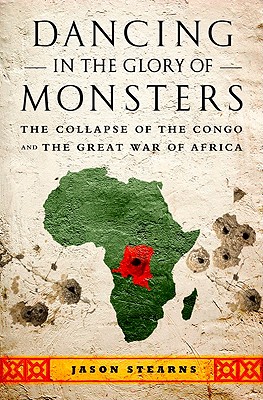
    

Dancing in the Glory of Monsters: The Collapse of the Congo and the Great War of Africa byJason Stearns 

This one was the subject of a book review by Scott Shipman which you can read in full here.

Clausewitz’s On War: A Biography by Sir Hew Strachan

I have been wanting to read this one ever since we had The Clausewitz Roundtable at Chicago Boyz. Strachan is one of the leading military historians and strategic thinkers and can be viewed lecturing on strategy and war here.

The Symbolic Species: The Co-evolution of Language and the Brain by Terrence Deacon

This was in mint condition – literally had never been opened (must have been a student’s copy LOL) – and was only $2 as a Half Price Books “SuperBuy”. Deacon is a biological anthropologist and was/is a professor at Harvard Medical School and Berkeley. On the one hand, some of the neuroscience might be dated, given the 1997 copyright, but as he is investigating 2 million years of human evolution, so how off could it be in just 16 years?

The Campaigns of Alexander by Arrian 

Arrian was cited frequently, but with significant reservations and commentary, by Paul Cartledge in his biography Alexander the Great, which I reviewed here.

    

War in the Shadows: The Guerrilla in History (vol. I & II) by Robert Asprey 

I am not very familiar with Asprey but I have deep sympathy for anyone who attempts this kind of epochal survey, they are very hard to pull off well ( and harder to get people to read all the way through  once they are written and published, see Arnold Toynbee and Will and Ariel Durant). Any comments here are welcome.

Mussolini by R. J. B. Bosworth 

A biography of il Duce by a leading expert on the period of Italian Fascism.

Creativity: Flow and the Psychology of Discovery and Invention by Mihaly Csikszentmihaly 

I’ve read this before, when it was first published, but did not have a copy. Bought it to have on hand as a reference.

My only complaint about the Half Price Books experience was the store was a trifle warm. My Eldest pocketed a cool $15 from selling her old books and decided to treat herself to a detective novel and a used Xbox game.

A good time was had by all.

I am not Kafka. But..

Tuesday, June 4th, 2013

[by Charles Cameron — a very preliminary salute to James Bennett and Michael Lotus’ new book, with blues harp to match ]
.


.

Okay, I’m a snapper-up of unconsidered trifles, a jackdaw, not the most consistent of readers — but I did stumble upon something…

I’ll admit, I cannot even see how “the actual time and materials cost of the hammer might be $60 a hammer” when its “functional equivalent might cost $20 in a hardware store” — but let’s overlook that 200% markup for a moment, and chew on the rest of this dazzling paragraph from James C. Bennett and Michael J. Lotus, America 3.0: Rebooting American Prosperity in the 21st Century — Why America’s Greatest Days Are Yet to Come, pp. 266-67:

The Department of Defense requires that the labor time and materials used in building defense items on a “time and materials” basis, which is the great majority of all such items, be documented in excruciating detail. The costs of doing this are themselves allowed as expenses, so that the government ultimately pays for the costs of this proof. Therefore, when lurid accounts of $600 hammers procured by the Pentagon surface in the press, what is actually happening is a hammer whose functional equivalent might cost $20 in a hardware store is purchased in the Pentagon system, the actual time and materials cost of the hammer might be $60, with an additional $540 in documentation costs to ensure that the government is not being over¬charged for the item.

I admit, I am not Kafka.

But if that isn’t a snake biting its own tail arrangement, I don’t know what is.

**

What can I say?

**

Interesting, btw — I’ll bet there’s a story behind the decision to switch book covers from the one proposed earlier (at the top of the post, left) to the one the book now carries (right)!


Switch to our mobile site