zenpundit.com » 2015 » January

Archive for January, 2015

Paris: cartoons on cartoons

Thursday, January 8th, 2015

[ by Charles Cameron — free speech, speech balloon style ]
.

This one’s background, so we understand the vibe of Charlie Hebdo:

**

Here’s Charlie Hebdo‘s last cartoon before the massacre — probably too recent to be the source of what looks to have been a carefully planned attack:

**

And a suggestion: the shortest distance between prediction and prophecy is via instinct:

It’s the sense that a scenario is uncannily close to what actually happens later that gives us, in hindsight, the sense that it was prophetic rather than predictive: it’s the frisson, the shiver, that makes the cognitive difference.

Paris: best resources

Wednesday, January 7th, 2015

[ by Charles Cameron — where I’m finding clarity in the fog, and grateful for it ]
.

From my point of view, the most calm-headed and significant tweet thus far today must be Will McCants‘ offering of scholarly context:

With any luck I’ll get back to this.

**

IMO, these tweets offer links to the two best resources thus far for thinking about the perpetrators:

**

Back soon.

New Bookapalooza

Tuesday, January 6th, 2015

[by Mark Safranski, a.k.a. “zen“]


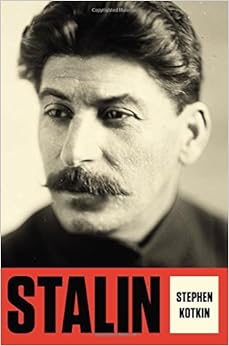
Stalin: Volume I – The Paradoxes of Power by Stephen Kotkin

World Order by Henry Kissinger 

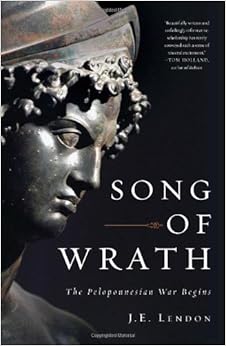
Song of Wrath: The Peloponnesian War Begins by J.E. Lendon

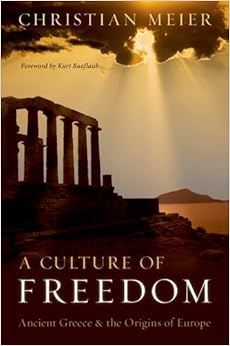
A Culture of Freedom by Christian Meier

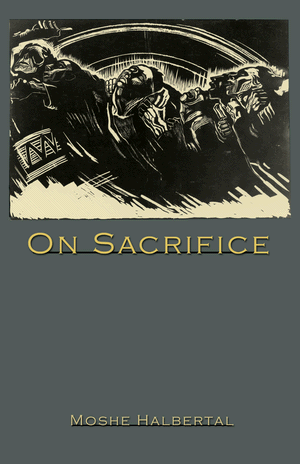
On Sacrifice by Moshe Halbertal

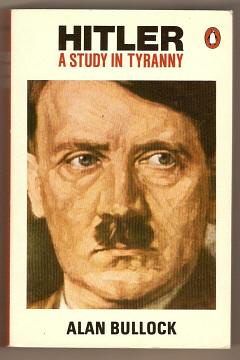
Hitler: A Study in Tyranny by Alan Bullock

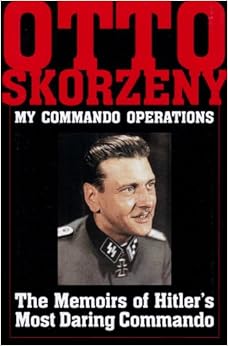
My Command Operations by Otto “Scarface” Skorzeny 

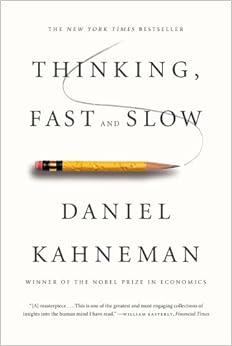
Thinking Fast and Slow by Daniel Kahneman

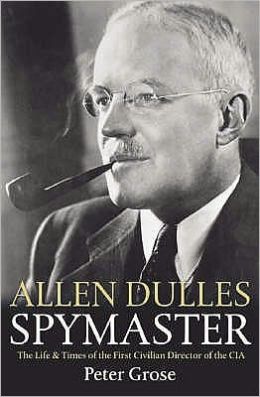
Allen Dulles: Spymaster by Peter Grose

The Road to Terror: Stalin and the Self-Destruction of the Bolsheviks 1932-1939 by J. Arch Getty and Oleg Naumov

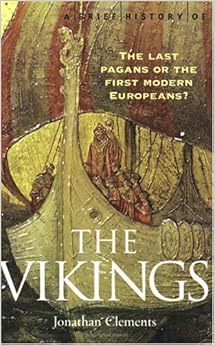
The Vikings by Jonathan Clements

An unusually large book-buying spree on my part, fueled in part by a stash of Xmas gift cards.

Reading Thinking Fast and Slow already and will probably start the Kotkin book on Stalin tomorrow and I have already finished On Sacrifice, which I will review elsewhere. I’ve resolved to get more books read this year as 2014 was kind of a nadir in that regard (more on that in another post) by my previous standards and looks rather woeful next to T. Greer’s list.

Scott Shipman was instrumental in my picking up World Order, as he convinced me that after I had slogged through all the volumes of Kissinger’s memoirs that he still had something to say.

What new titles have you acquired?

T. Greer on Sun Tzu the Radical

Sunday, January 4th, 2015

[by Mark Safranski, a.k.a. “zen“]

T. Greer at Scholar’s Stage had an outstanding post on Sun Tzu and his classic The Art of War the other day in which I learned a number of things that were new to me, which is the best kind of blog post!

The Radical Sunzi

When translated into English, the Sunzi Bingfa, usually titled Sunzi’s Art of War, is a fairly small work. When we take away the commentary and annotation added by its translators we are left with a sparse text indeed: Roger Ames’ translation is 71 pages long, the Denma Group’s translation is 66 pages, Victor Mair’s translation is only 56, and Ralph Sawyer’s translation clocks in at a mere 30 pages total. [1] The brevity of the Sunzi explains its staying power. The Sunzi only has space for a foundational discussion of abstract strategic principles, leaving no room for detailed discussions of either the tactics or the political realities of its time. This is what gives the Sunzi its transcendent feel. Great power competition between the kingdoms of Chu, Qi, and Qin faded into the realm of memory centuries ago; the proper way to deploy squadrons of crossbowmen and charioteers is now a question that interests only the historian. In contrast, the strategic principles outlined in the Sunzi endure. Their very terseness frees them from the historical context from which they came and allows them to be applied by men living thousands of years after they were first etched into bamboo.

Timeless as it may seem, however, the Sunzi was the product of problems experienced at a specific time and a specific place. It is my belief that we cannot really understand the Sunzi if we do not first understand the world from which it came–the world of the Warring States.[2] A few historians and scholars of Chinese thought have written this sort of analysis; the best of these attempts to place the Sunzi within its historical context are usually focused on the broad, macro-historical trends that divided the Spring and Autumn period that preceded the Sunzifrom the Warring States period that gave birth to it. From this perspective the Sunzi and the other military manuals that followed it were the natural product of a world torn asunder by wars waged on an ever increasing scale between large infantry armies fighting in the name of territorial, bureaucratized states.[3] There is, however, more to the Sunzi‘s historical setting than the institutional history of ancient China. Just as important is the intellectual milieu of early Warring States times. The compilers of the Sunzi were not the first Chinese to write about war. When read as a response to these earlier voices, the Sunzi’s vision of war and politics is nothing less than radical. [….]

Here comes the important part, one that demonstrates a curious symmetry with the cultural shift  between the post-Dark Age heroic-aristocratic Archaic Greece to the Classical Greece of the Golden Age that laid the foundations of Western civilization:

….The Sunzi that Meyer describes is radical–at the time of its compilation it was possibly the most radical attack on ancient China’s old aristocratic order etched in bamboo. The Sunzi‘s assault on the old regime begins with its opening line:

The military [bing] is the great affair of the state, the terrain of life and death, the way of survival and extinction, it cannot but be investigated. [4]

To modern ears this sentence may sound controversial, but it is hardly subversive. Its revolutionary nature only becomes clear when we see what it was written in response to. The place to turn is the Zuo Zhuan, China’s oldest narrative historical account and one of the few preserves of the old Spring and Autumn ethos. One of its better known dictums reads:

The great affairs of state are sacrifice and warfare.[5]

Meyer comments on the contrast between the two statements:

[In the Sunzi] all mention of sacrifice is eliminated, telegraphing the text’s contention that martial matters must be viewed in purely material terms. Rather than “warfare,” the “military” is held up as the great affair of state, implying (as the text goes on to elaborate) that there are uses for military power beyond the ‘honorable’ contest of arms. Moreover, the word that the Sunzi uses by reference to the “military,” bing???, does not evoke the aristocratic charioteer but the common foot solider, who had become the backbone of the Warring States army.[6]

The Sunzi‘s insistence that military methods were more important to the state’s survival than sacrifice was not merely radical–it was nonsensical. In the early Chinese world view, sacrifice and warfare could not be separated from each other. As with the Aztecs, Maya, and many other premodern peoples, for the Chinese of Zhou times, warfare was a sacrificial ritual. The Lost Book of Zhou, an early warring states record that chronicled the conquests of the semi-mythical King Wu, provides a clear picture of these views. It contains an interesting narrative account of the King’s return to his clan’s ancestral temple to report his victorious conquest:

Read the rest here

I just finished reading a book by the Israeli scholar Moshe Halbertal, On Sacrifice; here’s an enormous difference between a culture that “sacrifices to” and one that is worth or requires “sacrificing for“. It is not only a cultural difference, it is cognitive. Strategy is possible in a “sacrificing to” society only to the extent that it does not conflict with (often maximalist) religious dictates, which will often mean a rational strategy to achieve victory is impossible. The Jews at Masada or the Greeks of the Trojan War would have understood the precepts of warfare of the ancient Chinese of the Zhou era very well.

In war, the bronze age peoples sacrificed to. We sacrifice for – and to spend our lives to best effect we need strategy.

Enantiodromia: the French Revolution

Thursday, January 1st, 2015

[ by Charles Cameron — abstraction and pattern recognition as devices to evade one’s foibles, preferences, analytic assumptions ]
.

Robespierre facial reconstruction
Robespierre, forensic reconstruction

**

The itaicized portion of the quote below just happens to be a concise statement of the pattern known as enantiodromia [1, 2, 3] — and the puzzlement it represents to linear (as opposed to loopish) thinkers:

Since the collapse of Jacobin rule after Robespierre’s execution in Thermidor Year II, debate has raged over how an event that began with the promise of liberty and fraternity degenerated so rapidly into fifteen months of mass imprisonment and death.

**

The quote above is from The World Turned Upside Down, a review of Jonathan Israel‘s Revolutionary Ideas: An Intellectual History of the French Revolution from the Rights of Man to Robespierre by Hugh Gough in the Dublin Review of Books. Here’s the full para:

Anyone looking for a neat explanation of the French revolutionary terror faces the problem of choice. Since the collapse of Jacobin rule after Robespierre’s execution in Thermidor Year II, debate has raged over how an event that began with the promise of liberty and fraternity degenerated so rapidly into fifteen months of mass imprisonment and death. During 1793 and 1794 around three hundred thousand people were jailed, many of them dying from disease and neglect, a further seventeen thousand were guillotined or shot and a quarter of a million killed in civil wars, of which the Vendée was by far the most deadly. After Thermidor the revolution’s opponents argued that terror on such a scale was inherent in the entire revolutionary project from the outset, part of a “genetic code” of violence and intolerance deeply embedded in the revolutionary gene. The revolution’s supporters, on the other hand, defended terror as the product of difficult circumstances, a regrettable but necessary expedient to combat the threats posed to the republic by civil war and military invasion.

**

Dichotomy.

The two sides of the debate are separated by their political associations with the events in question. Take away the sentiment-engagers — bread vs cake, revolution, Bastille, Marseillaise, the guillotine, the tricoteuses, the American revolution, Marx, whatever — thus viewing the image as simply one of contending forces, preferring neither one to the other, and the paradox resolves itself into a simple self-biting circle: the oppressed press back until they are themselves the pressors.

Jung knew this archetypal pattern — but I suspect he is little known in the history silo, and has indeed been expelled from the silo of the psychologists.

Somewhere in back of the event is a pattern, and when sufficiently abstracted the pattern will illustrate with commendable impartiality the forces in play in the whole.

For the analyst, that impartiality, that wholistic perspective, is pure gold.

For myself, it was Reason enthroned in Notre Dame that truly set my teeth on edge.

**

Image source:

  • Robespierre’s likely appearance, a forensic reconstruction
  • **

    And a Happy New Year to us all!

    Switch to our mobile site