zenpundit.com » 2015 » January

Archive for January, 2015

New Article at Pragati: Diplomatic Warfare?

Tuesday, January 13th, 2015

[by Mark Safranski, a.k.a. “zen”]

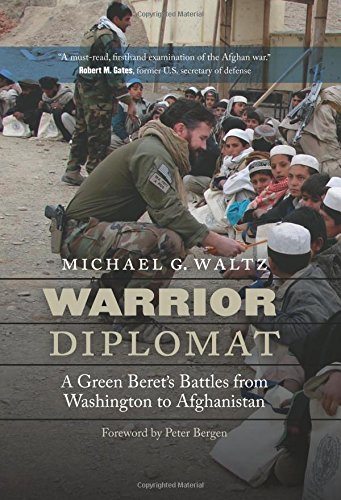
I have a new article up at Pragati: The Indian National Interest. A review of Warrior Diplomat by Michael G. Waltz

Diplomatic Warfare? 

….Waltz, now the president of Metis Solutions, brings to the table a powerful juxtaposition of perspectives on the Afghan war. As a Department of Defense civilian official, he served variously as an Interagency Counter narcotics Coordinator in the Office of the Secretary of Defense (OSD) developing strategies to combat opium trafficking in Pashtun regions, as the Pentagon’s Afghanistan Country Director, as the Special Adviser to Vice President Dick Cheney on South Asia and Counterterrorism and finally, as an adviser on negotiations with the Taliban to the deputy assistant secretary of defense in the Obama administration.

This is “making policy at 50,000 feet”, briefing and advising senior administration officials on national policy formulation and implementation. No contrast could be more dramatic with Waltz’s alternate role as a Green Beret company commander living among Pashtun tribal villagers, drinking tea with tribal elders, working with village police chiefs, engaging in brutal firefights with Haqqani network insurgents, disarming IEDs and delivering medical care to remote Afghan districts. Like few other officers, Waltz could see the life or death impact of policy he had helped craft on his own soldiers, Afghan farmers, and the Taliban enemy; but at other times, the blindness of policy or its complete irrelevance to the often ugly ground truth of counterinsurgency warfare.

Though the story of Waltz’s gritty experience in combat looms large in Warrior Diplomat, he also lays out a hard analysis regarding the self-created problems that impaired the American war in Afghanistan, including a paucity of resources, the incapacity of NATO partners, a muddled strategy, bureaucratic and political risk aversion and micromanagement of military operations down to the smallest units, a stubborn refusal to confront Pakistan over Taliban sanctuaries and announcing an early withdrawal date from Afghanistan. There is an additional subtext to Waltz’s story; the transformation of the legendary Green Beret Special Forces, intended to work autonomously in small groups training and fighting with indigenous forces, to ‘conventionalised’ units of ‘door-kickers’ who spend enormous amounts of time on powerpoint slides, making fruitless requests for helicopters or artillery support and fighting the timidity and capriciousness of Waltz’s own chain of command.

Read the rest here.

Some of you may have read American Spartan or my earlier review of that book. The stories of Michael Waltz and Jim Gant are not the same but the setting, their operational environment, largely was. Some of the frankly preposterous, Catch-22 restrictions with which Waltz struggled mightily to comply while effectively circumventing may illuminate some of the unspoken reasons why Jim Gant took a different path.

I cannot say it was the objective of the US Army and ISAF to prevent effective COIN operations in Afghanistan in writing their regulations and ROE, but it might as well have been

Sunday surprise: ways of viewing

Sunday, January 11th, 2015

[ by Charles Cameron — asymmetries, for your delectation ]
.

SPEC DQ ways of looking

**

Sources:

  • 36 Views of Mount Fuji, Hokusai Katsushika
  • Thirteen Ways of Looking at a Blackbird, Wallace Stevens [link corrected]
  • Qur’anic recitation of Commander Abu Usamah al-Maghribi

    Sunday, January 11th, 2015

    [ by Charles Cameron — analysis of religious violence requires the skilled use of both mind and heart if it is to comprehend passion with clarity ]
    .

    There is a lot of discussion of the complex relationship between religion and politics — presumably including the continuation of politics by other means — these days.

    Here Abu Usamah al-Maghribi of ISIS, the immediate precursor of IS, recites the Qur’an:

    This clip, incidentally, nicely illsutrates the dilemma facing those poor folks at YouTube who are responsible for determining what videos should be withdrawn for breach of their user contract. On the one hand, it shows a militant leader encouraging his subordinates towards martyrdom, while on the other it is something quite other, turned to that purpose: a recitation from the revealed scripture of a global and diverse religion, one and a half billion people strong…

    **

    The text of the recitation is that of the Qur’an, Sura 9, 38-39:

    O you who have believed, what is [the matter] with you that, when you are told to go forth in the cause of Allah , you adhere heavily to the earth? Are you satisfied with the life of this world rather than the Hereafter? But what is the enjoyment of worldly life compared to the Hereafter except a [very] little.

    If you do not go forth, He will punish you with a painful punishment and will replace you with another people, and you will not harm Him at all. And Allah is over all things competent.

    The reciter, Abu Usamah al-Maghribi, was killed last year by fighters from Jabhat al-Nusra.

    **

    I’m not sure that language alone can ever quite sort the different strands that rise and fall in the human beings involved, nor that the distinction we draw between heart and mind is even close to a subtle enough instrument to account for human process. What I want to present here, though, is not an answer or even the suggestion of an answer to such questions, but a vivid evidence of the coexistence of militant intent with religious fervor.

    After years of monitoring and reporting on religious violence, it is not its existence but its potential for overwhelming sincerity that I would like to communicate, so that we do not underestimate it — our analysts being, as John Schindler put it in his brilliant piece, Putin’s Orthodox Jihad, “mostly secularists when not atheists” — and thus liable to pay matters of religious passions little or no attention.

    More on Schindler’s piece shortly.

    Paris, the Prophet and his veiled face

    Sunday, January 11th, 2015

    [ by Charles Cameron — the role of iconography vs idolatry within Islam and Christianity ]
    .

    Karim Sadjadpour of the Carnegie Endowment for International Peace tweeted an image of Muhammad today:

    This image, according to Wikipedia, is not merely Persian but specifically Shiite, “reflecting the new, Safavid convention of depicting Muhammad veiled”. It is also non-satirical.

    As such, it is neither offensive in the sense of insulting the person of the Prophet, nor does it in fact show the features of his face, nor is it the product of the Sunni “mainstream” branch of Islam.

    **

    In considering the revulsion that many Muslims feel at the images of their Prophet in Charlie Hebdo, it may be helpful to understand the respect in which the Prophet is held within their faith.

    The Qur’an says of the Prophet:

    And We have not sent you but as a mercy to the worlds.

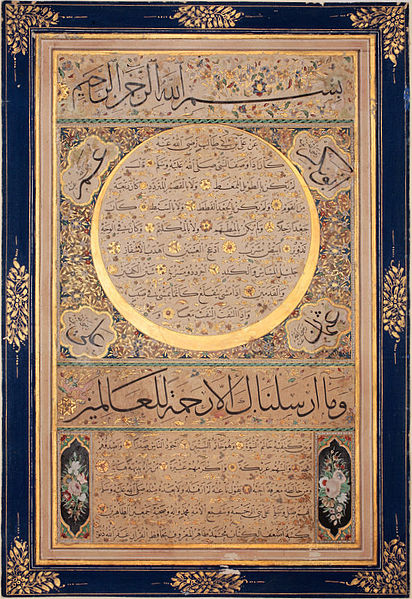
    Muhammad is sent “as a mercy”, and thus whatever representation of the Prophet, his words and deeds serves to carry human thought towards the divine participates in that divine mercy, whereas whatever representation scorns that mercy or merely distracts us from it is to be avoided.

    The normative manner in which the Prophet is represented within Islam, then, is abstract and calligraphic, with the artist showing devotion and respect for the Prophet through the care with which the work itself is endowed with beauty:

    412px-Hilye-i_serif_7

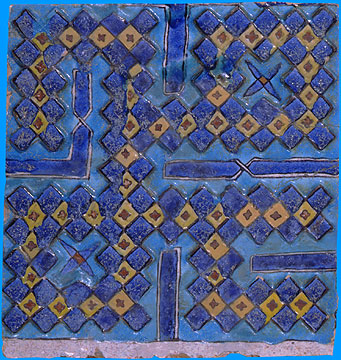
    Simpler, and in its own way no less beautiful, is this calligraphic representation of the Prophet’s name in tile from Samarkand:

    Muhammad_calligraphy_tile

    **

    Icon or idol?

    One facet of the controversy over Charlie Hebdo has to do, then, with a deep issue in representation, which crops up elsewhere in the jihadists’ relish in destroying “idols” — the Bamiyan Buddhas, yes, but also the tombs of Muslim prophets and saints; there has even been discussion within Saudi circles of the destruction on the Prophet’s tomb and relocation of his remains to an anonymous grave.

    Within Christianity, there have been those who encouraged the painting of icons, believing that they carry the minds and hearts of believers deep into the mysteries of faith — and those who would tear them down, holding them to be “graven images” (via Judaism, Exodus 20.4) that give mind and heart a resting place far short of those same mysteries: iconodules and iconoclasts.

    Wars have been fought in Christendom too over such questions [in both East and West].

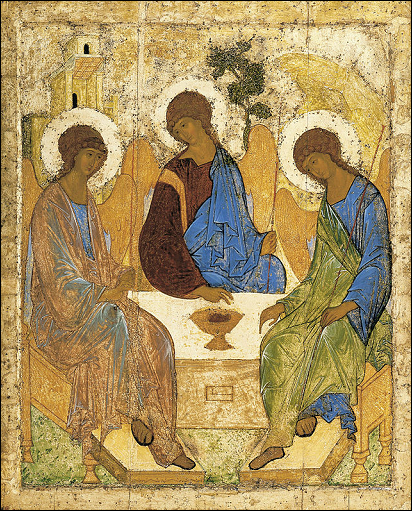
    The great Russian iconographer Andrei Rublev‘s most celebrated icon is often referred to as The Trinity — though literally (or should I say, figuratively) speaking, it portrays the three angels who visited Abraham at the Oak of Mamre (Genesis 18. 1-15):

    Rublev Trinity icon

    It is significant for our context that Rublev has not in fact attempted to portray the Trinity, a mystery deemed beyond human comprehension — the Athanasian Creed, speaking of the Three Persons in one God says explicitly “there are not three incomprehensibles .. but one incomprehensible” — but these three angels, considered as “types” or foreshadowings of the Trinity, which can therefore both veil and represent it.

    Paris, AQ and IS

    Friday, January 9th, 2015

    [ by Charles Cameron — just noting the apparent blurring of a significant distinction, although it’s still early to draw conclusions ]
    .

    Raffaello Pantucci tweets:

    French TV interviewed Cherif Kouachi who states clearly I was directed by AQAP and funded by Awlaki. Same French TV channel spoke to Coulibaly who they say told them he was linked to ISIS. And Coulibaly claims that the brothers and himself were coordinated.

    Here’s the video (in French) that Pantucci linked to:


    Switch to our mobile site