T. Greer on Ibn Khaldun’s Asabiyah
Tuesday, May 5th, 2015[by Mark Safranski, a.k.a. “zen“]
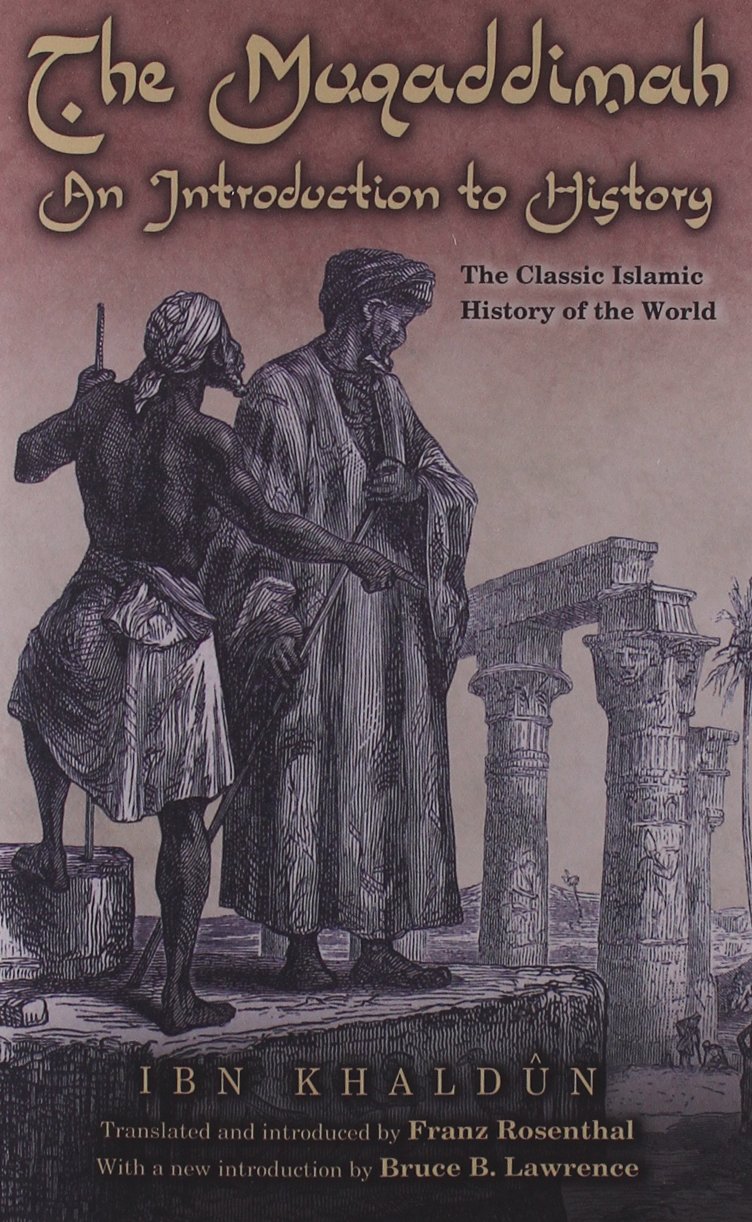
T. Greer of Scholar’s Stage has an exemplary post comparing the philosophy of English social contract theorist Thomas Hobbes with medieval Arab historian Ibn Khaldun, who described a critical component of a functional polity – asabiyah. You should read Greer’s post in its entirety, but here is the take away as far as strategy is concerned:
….Asabiyah, then, amounts to the feeling among those dying that they are dying for their own. As soon as they begin to feel that they are not dying for their own, but are dying for the king, or for someone else’s clan, or for some obscure institution that is not them — well, that is when asabiyah is gone and the kingdom is in danger. Civilized life shrinks the asabiyah that once united people of different lineages, tribes, and occupations until the people of a kingdom only feel a sense of loyalty to themselves, of if you are lucky, those in their immediate neighborhood or caste. But at this point the feeling they have is not reallyasabiyah at all, but the narrow self interest Hobbes would appreciate. This leaves the kingdom open to attack from the next round of nomadic tribesmen united by charismatic leaders into one indivisible asabiyah driven force.
Although it was not his intent, I think Ibn Khaldun here answers another puzzle apparent to the careful observer of human affairs. It has oft been held that a strong enemy unites a divided people. When faced with with a foe that threatens liberty and the integrity of the realm, private disagreements ought to be put aside until victory has been declared. But it is not apparent that history actually works this way. If one must compare the rising and declining eras of history’s great empires–here I think of the Romans, the Abbasids, the Ming, the great empires of Castille and the Hapsburgs, or the Russian Empire of Tsarist fame (no doubt other examples can be found with if more thought were put to the question)–it does not seem the enemies they faced in their early days were any less powerful or cunning than the enemies that pushed them to extinction. The difference was in the empires themselves; where the wars of their birth forged nations strong and martial, the wars of their decline only opened and made raw violent internal divisions. Even destruction cannot unite a people who have lost all feeling of asabiyah.
Ibn Khaldun believed that asabiyah declined over time. He used the analogy of the transition from fierce desert life of equality, mutual glory and conquest to the effeminacy of sedentary decadence and servility of luxurious despotism and the fall of the dynasty in four generations to explain the effect of a decayed asabiyah. Greer continues:
The concept of asabiyah is applied most easily to the distant past. One cannot read histories of the early Islamic conquests and the slow hardening of state authority in Umayyad and Abbasid times without seeing Ibn Khaldun’s cycles within it. I have alluded to many examples of these same themes in East and Central Asian history, for I have found that his theories map well to state-formation among pastoral nomads across the world, including those places Ibn Khaldun had barely heard of. Indeed, Ibn Khaldun’s “independent science” can be applied to almost any pre-modern society or conflict without undue violence to his ideas. I recently wrote that in the pre-modern world, “internal cohesion and loyalty were often the deciding factor in the vast majority of military campaigns” [23]. Ibn Khaldun provides a convincing explanation for where such cohesion came from and why it so often failed when kings and princes needed it most dearly.
There are several reasons why it is difficult to see the hand of asabiyah in the rise and decline of modern great powers. Military science has progressed in the centuries since Ibn Khaldun wrote the Muqaddimah; the drills and training seen in the militaries of our day are capable of creating a strong sense of solidarity and cohesion even when such feelings are absent in the populace at large. In that populace the nationalist fervor that accompanies mass politics has eclipsed (or perhaps, if we take asabiyah as the nucleus of nationalist feeling, perfected) asabiyah as the moving force of modern conflict. This sort of nationalism, dependent as it is on mass media and technologies unknown to Ibn Khaldun, has a dynamic of its own that he could not have foreseen.
The most important difference between Ibn Khaldun’s world and our own, however, concern the fundamental structure of the societies in which we live. Ibn Khaldun’s was a static age where wealth was easier to seize than make. This is not the case today. For the past two centuries military power has been intertwined with economic growth and industrial capacity. No more can poor ‘Bedouins’ living beyond the pale of civilized society dethrone kings and reshape empires. In the more developed nations of the earth there is so little fear of war that both asabiyah and nationalism are sloughed off with few misgivings.
Despite all these differences, Ibn Khaldun did articulate principles that remain relevant despite their age. The first and most important of these is that social cohesion should be understood as a vital element of national power. Wars are rarely won and strategies rarely made without it. A nation need not be engaged in existential conflict to benefit from strong asabiyah. Absent solidarity, internal controversies absorb the attention of statesmen and internal divisions derail all attempts to craft coherent policy. Strategic malaise is one byproduct of a community deficient in asabiyah.
Agreed. In particular, it is difficult for foreigners to provide another society with an asabiyah that it lacks in order to fight and win counterinsurgency wars. You go to war with the asabiyah that you have and that has been a problem for Americans in places like South Vietnam and Afghanistan.
I’m not sure though that it is impossible to regenerate decaying or dying asabiyah if it can be built upon new myths that are harmonious with old ones, disguising innovations as fidelity to cherished values. The Meiji Restoration is the classic successful example of national revolution being presented as a reactionary movement to return to tradition, toppling the worn-out Shogunate and”restoring” a High Priest- Emperor whose ceremonial figurehead predecessors had not ruled Japan in eight hundred years, if ever at all. There are also darker historical examples and we are seeing one play out now in the Mideast in the form of the ISIS “Caliphate”.
This kind of attempt to breathe new life into an eroding asabiyah operates at the moral level above strategy that John Boyd termed a “Theme of Vitality and Growth” and it can unlock atavistic passions and be extremely attractive. Simultaneously creative and destructive, society is suddenly remade – not as a plowshare, but as a sword in a strong hand.