zenpundit.com » 2015 » August

Archive for August, 2015

Sunday surprise 2: the Robben Island Bible

Sunday, August 9th, 2015

[ by Charles Cameron — believing great scripture and great poetry have much in common ]
.

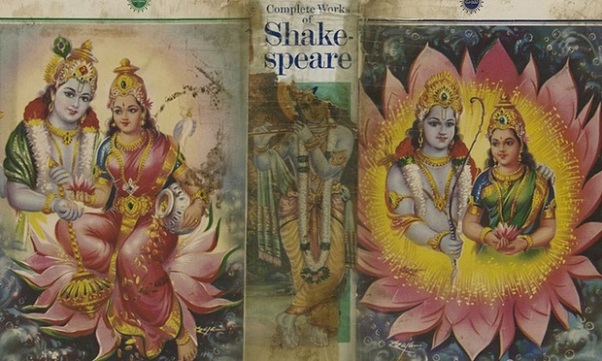
In what must be the most glorious mix-up of scriptures ever, this volume of Shakespeare‘s works:

Shakespeare Robben Island

was smuggled into the prison on Robben Island, S Africa, where Nelson Mandela and others were incarcerated, by Mandela’s fellow-prisoner Sonny Venkatrathnam, who invited other prisoners to sign it next to the passages that meant the most to them.

Shakespeare-Robben-Island-008

Mandela’s signature is next to the passage in Julius Caesar, Act II scene ii, beginning:

Cowards die many times before their deaths
The valiant never taste of death but once.

Featuring Krishna with his beguiling flute on its spine, the book has become known as the Robben Island Bible.

Consider: this book inspired the man who brought an end to apartheid. How important would you say literature can be in the development of leaders of moral stature?

**

Image sources:

  • Jonathan Bate, Ten books that changed the world
  • Mark Brown, British Museum Shakespeare exhibition to include prized Robben Island copy
  • Sunday surprise 1: next of kin on Netflix

    Sunday, August 9th, 2015

    [ by Charles Cameron — a trifling coincidence on Netfix and three recommended books ]
    .

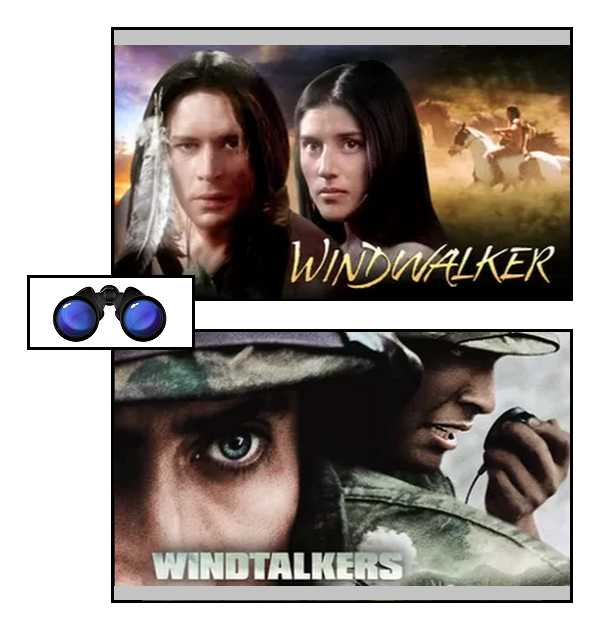
    Trevor Howard (from Margate, Kent) played Windwalker, “a Cheyenne warrior returning from the dead to defend his family,” in the 1980 film of the same name, whereas Adam Beach (of the Saulteaux, not of the Dine, but arguably closer) played the Navajo Ben Yazzie in the 2002 film, Windtalkers:

    SPEC DQ netflix flix

    I mention these facts becauze Netflix offered me these two flix side by side today, and it struck me that the Navaho Code Talkers were among the ones who truly walked their talk.

    **

    In my library, unpacked yesterday and gto be shelved today, a treasure of a book..

  • James C. Faris, The Nightway: A History and a History of Documentation of a Navajo Ceremonial
  • valued for its exposition of ‘Sa’ah naaghéi, Bik’eh hózhówalking in beauty, in old age wandering..

  • John R. Farella, The Main Stalk: A Synthesis of Navajo Philosophy
  • and hoped for, but likely sold long since to pay the rent, one of the loveliest books I have ever had the privilege to hold & behold..

  • Mary C Wheelwright, Hail Chant and Water Chant
  • Wargame boards, from chess to hexagons

    Sunday, August 9th, 2015

    [ by Charles Cameron — who can’t even reach the 7 monute mark in a Stallone movie without seeing a DoubleQuote ]
    .

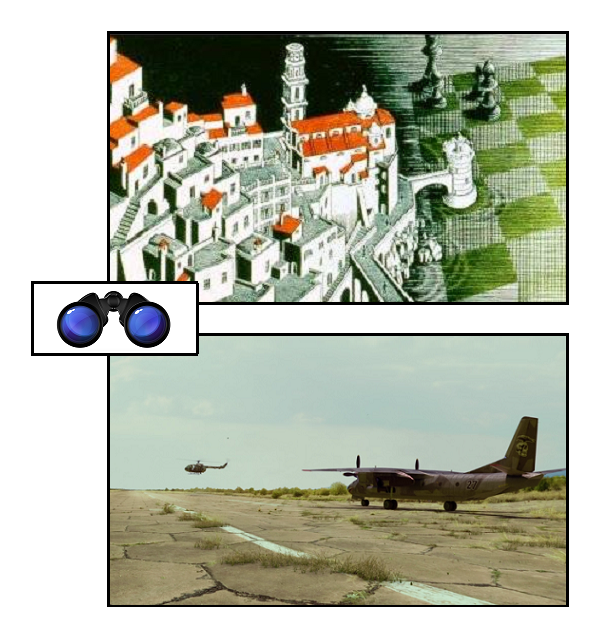
    Wargame boards, from chess to hexagons — when the map becomes the territory:

    SPEC DQ   hexagons

    **

    Contemplating..

  • Korzybski: the map is not the territory
  • Lao Tzu: the path that can be mapped is not the pathless path
  • and that second translation is one to set beside my other loose versions after Lao Tzu:

  • The pronounceable name isn’t the unpronounceable name.
  • The flow that can be capped isn’t the overflowing flow.
  • The quantity that can be counted is not the unaccountable quality.
  • The verbal formulation of x is not the x itself.
  • No way the way can be put into words.
  • The problem that can be described isn’t our actual situation.
  • More I grasp you, baby, more you disappear…
  • — which i posted here at Zenpundit in one of the posts that has sadly disappearedc, but which can be found — together with some interesting other commentary — on our emergency site, Zenpunditry.

    **

    At times, the map becxomes the territory, the gameboard becomes the world.

    The upper image in the DoubleQuote above is a teling detail from Maurits Escher‘s great work, Metamorphosis II. The lower image is a screencap of one of the opening shots from The Expendables 3.

    The things I do for science!

    The paradox of the Repugnant Conclusion & more

    Saturday, August 8th, 2015

    [ by Charles Cameron — two data points, one impoverished, one rich — and a redemptive (maybe) quote from Twiggy ]
    .

    SPEC DQ The Repugnant Conclusion

    **

    As I quoted in my recent post Not everything that counts can be counted, “Effective altruism is based on a very simple idea: we should do the most good we can” — which in turn suggests that “good” can be quantified, an idea I resist.

    The Stanford Encyclopedia of Philosophy article The Repugnant Conclusion, from which I drew the Parfit quote [upper panel, above], doesn’t mention Wittgenstein , though I suspect his view that we cannot sum individual sufferings to a grand total would suggest a similarposition with regard to the summation of individual happinesses..

    And as I’ve pointed out before, both CS Lewis and Arne Naess agree with Wittgenstein on this point.

    **

    Walker Percy, Ludwig Wittngenstiein and Clive Staples Lewis all being Christians, it seems appropriate to recall here the tale of Mary and Martha from the New Testament, Luke 10:38-42 —

    Now it came to pass, as they went, that he entered into a certain village: and a certain woman named Martha received him into her house. And she had a sister called Mary, which also sat at Jesus’ feet, and heard his word. But Martha was cumbered about much serving, and came to him, and said, Lord, dost thou not care that my sister hath left me to serve alone? bid her therefore that she help me. And Jesus answered and said unto her, Martha, Martha, thou art careful and troubled about many things: But one thing is needful: and Mary hath chosen that good part, which shall not be taken away from her.

    I somewhat cavalierly refer to this story on occasion as the story of Mary Qualit and Martha Quant. Eh. Mary Quant, you may recall if you’re as old as I am, gave us the mini-skirt, the Dashing Daisy doll, and Twiggy .

    **

    The quote from Walker Percy’s second novel [lower panel, above] nicely illustrates high level abstraction, as we instantly see when we compare it with the personal insight (from the same novel) on which it is based [lower panel, below]:

    SPEC DQ Walker Percy x 2

    The first is philosophy, the second — if you’ll pardon my saying so — is humanity.

    Literature. Art.

    **

    All of which ties in neatly with a conversation I was having on Facebook with my long-time friend the game designer Mike Sellers. And in all of which, I am trying not to forget the heart’s reasons of which Pascal famously wrote —

    The heart has reasons Reason knows not of

    — because we need them in our gaming, in our analysis, and our understanding of what Mike Sellers describes as our world that is “far more interconnected and interactive than ever before.”:

    **

    Sources:

  • Julia Galef, The Repugnant Conclusion (a philosophy paradox)
  • Walter Isaacson, Walker Percy’s Theory of Hurricanes
  • **

    Hey, Twiggy — sweet — gets the main point:

    twiggy quote

    Finance v. Malthus

    Friday, August 7th, 2015

    [by Lynn C. Rees]

    Listening to episodes of The History of England Podcast umpteen times as I code Java, TypeScript, *, &tc., I’ve heard host David Crowther (a “bloke in a shed”) make the point umpteen times that the primary job of a king of occupied Britain was to keep a firm hand on his barons. And what was the secret of successful kingly baronial management?

    Evenhanded distribution of political patronage.

    This Crowtherism appeals to me. A central pillar of my crackpottery is a personal rule of thumb I’ve flogged nearly umpteen times: politics is the division of power. You know you’re nigh unto umpteen when the POLITICS IS THE DIVISION OF POWER t-shirt goes on sale. We’re not there yet. Once more unto the umpteenth, dear friends, once more.

    Patronage is always a significant share of any activity involved in dividing power, which is to say a significant share of all activity involving mankind. Like politics, death, or taxes, patronage is an inescapable marker of mortality. An almost as ineradicable characteristic of mortal man is a belief that patronage in its many guises can be dispensed with altogether, usually by tilting the division of power in favor of the right sort of bloke. A bloke, of course, whose primary qualification is that he agrees with us. And will (sotto voce) give we who uphold his right sortedness a greater division of power than the wrong sorted. Anyone who claims they can create a society made up of mortal men free of patronage or of its common subspecies like cronyism, redistribution, logrolling, &tc. is either a fool, a knave, or, worse, both. You don’t choose not have patronage: in making such an attempt, you merely choose another diversion for patronage.

    Significant patronage is always diverted into the hands of barons. All flavors of power, however gradually, fall to those hands which most convincingly turn it into violent power. Baronial hands tend to be hands practiced (or regularly embraced by hands practiced) in the art of converting other forms of power into specifically violent power. Power is fungible: it can, with varying ease, be shifted from one form of power to another. “Purely” economic power, for example, is violent power in embryo. Inevitability will convert it into violent power, either sooner by incumbent baronial hands or, later, at the hands of barons who expropriate it from them.

    The hard-faced Bretons, Normans, and frogs imported into occupied Britain after its conquest by Guillaume le Bâtard AKA “Billy the Conq” were not the sort who found walkable cities, attend symposiums, order gourmet lattes, or hang out at artistic cooperatives. They had one business: violence and its fruits. Managing these stone-faced entrepreneurs of violence and their descendants demanded the most stone-faced killer of the lot. In a Billy the Conq, Guillaume le Roux, Henri I, Henri II, Richard I, Edouard I, Edouard III, or Henry V, you find men who kept their barons tightly leashed, partly through stone-faced Murder Death Kill, partly through evenhanded division of power through bestowal of patronage. In a Jean sans Terre (“Too late to be known as John the First, He’s sure to be known as John the Worst“, as we sang incessantly as children), Henri III, Edouard II, Richard II, or Henry VI, you have men who never got the mix right, aggressively vacillating between puddy-faced killer and fickle font of uneven patronage. In a Stephen or Henri IV, you find men who managed to get by, but only just.

    Some deserved sequels. Some make you wonder why they bothered making the original.

    Frustrated barons usually expressed their frustration by doing what they did best: being violent. There was actually a legal process of withdrawing fealty, a sort of right bestowed by custom to rebel against the boss if you thought the boss was a jerk. But, as in any exercise of agency, the right to make a choice is only loosely connected with the right to choose its consequences. The right to rebel is not necessarily the same as the right to rebel successfully. You could be a baron as frustrated by Henri II as you’d be by his son Jean. However, as Jean only experienced fleeting moments of relief from his chronic buffoonery, you’d have a greater chance of rebelling successfully against Jean than you would against stone-cold Henri.

    Many frustrated barons rebelled even against the most dread king. If they faced a strong baronial manager, they’d usually be crushed or, depending upon circumstances, bought off until they could be crushed. If they faced a weak baronial manager, there’s a chance they might not only grow their division of power, they might even get a turn at directing which troughs it’s poured into. It was very much a business decision, only with a distinct possibility of exit with extreme prejudice at the hands of the king if their enterprise failed.

    Patronage was, and remains, inescapable. But its flow can be managed and its effects mitigated. Though baronial violence is the historical default for resolving disaffection over patronage, it’s not the only way to manage patronage and specifically baronial patronage profitably.

    It’s certainly not the most productive.

    Switch to our mobile site