zenpundit.com » 2018

Archive for 2018

What’s the distance between inside, and within — and politics?

Sunday, January 7th, 2018

[ by Charles Cameron — eerie distances between thus and so, this and that — and Trump, Wolff ]
.

Speaking practically: switching between the delicate details of the North Korean situation, and those of the Iranian situation, each of which involves a potential nuclear adversary and some deterrent balance, and each of which contains the other as a subset — what’s the mental distance between those two mindsets? How fast can a sharp mind switch betweeen them. Or, for that matter, between foreign affairs and domestic politics? Or between dealing with House and Senate? Or between treating with Democrat and Republican?

Is there a zoom at work here, between these difficult distances?

**

I’d been wondering recently about some mental distances that illustrate the difference betweeen qualitative and quantitative realms, subjective and objective realities..

I’ve been asking myself, what’s the distance between inside and within, between x-ray and insight, or sky and heaven?


Wm Blake, Newton (left); Angel (right).

And what scale should we use to peer into such questions? — the compass Blake’s Newton uses to parcel out earth is purely terrestrial, purely rational, and Blake’s own blazing angels would have no place in it. Should we perhaps use Taleb‘s Wittgenstein‘s ruler?

Unless you have confidence in the ruler’s reliability, if you use a ruler to measure a table you may also be using the table to measure the ruler.

Here, the distance between the measurer and the measured is itself in flux.

**

Back to politics.

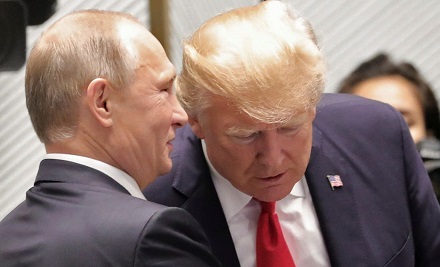
How do those whose entire lives have been concerned with the largely substantial, ascertainable or verifiable facts of focus groups, polls, votes, election results, majorities, minorities, policies and so forth — with no time for Rilke‘s “angels’ hierarchies” — function when weighing the “mental stability” or “very stable genius” of a President with that same President’s policy with regard to — gasp — Kim Jong-Un?

Who has his own issues of “very stable genius” or “mental stability”?

And who doesn’t even have a semi-reliable chronicler like Wolff to illuminate the swathe he is cutting through ideology, dogma, doctrine, advisors, generals, and.. Juche?

How many minds do we have among the generals, among the punditry, who can roam at all scales of the relevant realms, psychological and political, blatant and nuanced, knowable and profoundly unknown?

Manea interviews Bob Work at Small Wars Journal

Thursday, January 4th, 2018

[Mark Safranski / “zen“]

Octavian Manea interviews former Deputy Secretary of Defense Robert O. Work for Small Wars Journal. Work, generally regarded as a straight shooter and smart Pentagon insider, served in this position both for the Obama and the Trump administrations and is also a former Undersecretary of the Navy and CEO of CNAS.

The Role of Offset Strategies in Restoring Conventional Deterrence 

Manea: Usually when we are talking about the Cold War, the first thing that we think in terms of a strategic framework is containment. But what has been the role the offset strategies played in the broader Cold War competition? In 1997, William Perry made an interesting observation that I think is worth reflecting on: “these strategies, containment, deterrence and offset strategy were the components of a broad holding strategy during the Cold War. I call it a holding strategy because it did not change the geopolitical conditions which led to the Cold War, but it did deter another World War and it did stem Soviet expansion in the world until the internal contradictions in the Soviet system finally caused the Soviet Union to collapse. The holding strategy worked.”

Work: As Bill Perry suggests, technological offset strategies played an important role during the Cold War. The thinking about offset strategies can actually be traced to WW2. When the United States entered the war, planners concluded that the U.S. would need over 200 infantry divisions and about 280 air combat groups to ultimately defeat the Axis powers. However, U.S. leadership knew that if they built so many infantry divisions, the manpower they would need to work the arsenal of democracy wouldn’t be there. They therefore made a conscious decision to hold the number of infantry divisions to no more than 90 while keeping the 280 air combat groups. The thinking was that a “heavy fisted air arm” would help make up for the lack of infantry parity with the Axis powers.
The “90-division gamble” turned out to be a winner, but it was a close-run thing. In 1944, during the Battle of the Bulge, the U.S. Army literally ran out of infantry, forcing leaders to rush untrained troops to the front. Despite this, the idea that technology could help offset an enemy’s strength took hold in American strategic thinking. As a result, throughout the Cold War, the U.S. never tried to match the Soviet Union tank for tank, plane for plane, or soldier for soldier. It instead sought ways to “offset” the potential adversary’s advantages through technological superiority and technologically-enabled organizational constructs and operational concepts.

President Eisenhower was well aware of the 90-division gamble. When he became president, he asked how many infantry divisions it would take to deter a Warsaw Pact invasion of Europe. Coincidentally, he was told about 90 divisions. Eisenhower knew that having a “peacetime” standing army of that size was neither politically nor fiscally sustainable. To counter Soviet conventional superiority, he therefore opted for what is now thought of as the First Offset Strategy (1OS), which armed a much smaller U.S. ground force with battlefield atomic weapons, and an explicit threat to use them on invading Warsaw Pact forces.
The 1OS strategy worked. We know this because the Soviets and their Warsaw Pact allies adopted a new campaign design to forestall NATO’s use of nuclear weapons early in a campaign. They planned to conduct conventional attacks in powerful successive echelons to achieve a penetration of the NATO front lines. Once a breach was achieved, an Operational Maneuver Group (OMG) would drive deep into NATO’s rear.  The Soviets believed that once an OMG was operating behind NATO’s front lines, NATO leadership would be dissuaded or incapable of resorting to nuclear weapons. We’ll never know if NATO would have ever approved atomic attacks in response to a Warsaw Pact invasion.  But we do know the 1OS provided a credible deterrent and had a major impact on Soviet thinking.

Fast-forward twenty years…..

Read the rest here


Russia Conducts Nuclear Exercises Amid Orthodox End-Times Talk

Thursday, January 4th, 2018

[ by Charles Cameron — from nuclear weaponry to apocalyptic theology is quite a stretch — can two ex-KGB officers bridge them? ]
.

**

Under the headline I’ve made the title of this piece, Russia Conducts Nuclear Exercises Amid Orthodox End-Times Talk, ex-NSA Kremlin-watcher John Schindler touches upon yet another intersection of apocalyptic and natsec — not this time Islamic apocalyptic, as with most recently ISIS, nor evangelical apocalyptic, as with John Hagee‘s emphasis on Israel’s end times role and his support of Donald Trump‘s proclaimed intent to move the US embassy from Tel Aviv to Jerusalem.

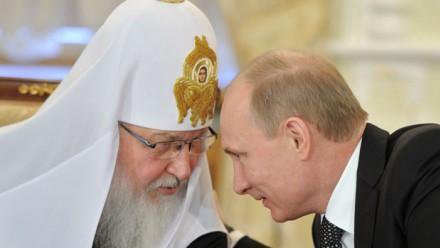
Central to Russia’s apocalyptic thrust here is Patriarch Kirill of Moscow‘s utterance:

One must be blind not to see the approach of the terrible moments of history about which the Apostle and Evangelist John the Theologian spoke in his Revelation.

**

Nuclear weaponry plus apocalyptic theology is an over-potent combination, and one we should be careful to understand both intellectually and emotionally, viscerally. If we can.

More exactly, nuclear weaponry under cover of apocalyptic theology is an over-potent combination, and one we should be careful with.

And yett more exactly, perhaps, post-KGB nuclear weaponry via Putin under cover of post-KGB apocalyptic theology via the Patriarch?

Understanding this sort of shifting, Rorschach-faced reality “both intellectually and emotionally, viscerally” is a task for true genius — or an unbelievably advanced and subtle AI.

**

And then there’s Donald Trump — anti-CIA? pro-Putin?

Central Standard Time, 2018 Edition

Monday, January 1st, 2018

[Mark Safranski / “zen“]

The new January 2018 issue of Joe Tortorici‘s Chicago-oriented culture e-zine, Central Standard Time is out with forays into politics,  news and Chicago’s arts and music scene. From Professor Joe:

The image you see above is from Martynas Milkevicius. His presence speaks to the times as we share a vision from half the world away. How fortunate we are to feature his gallery on the KIOSK page. The global community is real, and now.

I found a common thread of optimism weaving its way through the essays this month. We will survive the recent onslaught of electric-shock treatments to our cultural frontal lobe. These political troubles will pass. A populist voice is awakened and we are talking about the world. There is an air of activism at large.

This blog is made to go with coffee, of course….

Read the rest here


Switch to our mobile site