zenpundit.com

How are the mighty fallen…

December 8th, 2013

[ by Charles Cameron — an event in Kyiv, in which Lenin may remind one of Saddam… ]
.

Statue of Lenin, toppled, in Kiev / Kyiv, December 2013

**

I apologize for the bank which tries to hitch a ride on Ben Kingsley’s reading of Shelley here, but this is the best reading of Ozymandias I was able to find.

Shelley’s poem gives, I believe — in the context of recent events in Kyiv — some clarity to another well-known observation of his, in A Defence of Poetry:

Poets, according to the circumstances of the age and nation in which they appeared, were called, in the earlier epochs of the world, legislators, or prophets: a poet essentially comprises and unites both these characters. For he not only beholds intensely the present as it is, and discovers those laws according to which present things ought to be ordered, but he beholds the future in the present, and his thoughts are the germs of the flower and the fruit of latest time.

— or more succinctly:

Poets are the unacknowledged legislators of the world.

Towards Computational Strategy (Part I)

December 8th, 2013

(by Adam Elkus)

As Zenpundit readers may know from my previous entry, I am a PhD student in Computational Social Science at George Mason University. Though I am learning the technical craft of computer modeling of social processes, I have had a longstanding interest in future war and technology. I grew up in California, and in an environment very much shaped by the technology industry. This was diluted by the fact that I grew up in Southern California and also have had a mostly liberal arts education heavy on arts, (military and strategic) history, and social science. My own struggle these days is — having spent so long developing the humanities side of myself — to think more like an engineer in developing computational and quantitative approaches to studying social science.  You can see some of my notes on this process at my own personal research journal.

My term project for my CSS 600 class is a very, very crude and simple agent-based model of military mobilization. I’m also working on an equally crude model of strategic learning and a very crude simulation of strategic effectiveness in alliances. I don’t like them, and am on the fence about whether I’ll want to post them on Github after all — though I am definitely going to post the alliance effectiveness model (which relies on an interesting optimization algorithm) to a larger audience.

That is OK. Though I began practicing Python and NetLogo all the way back in early spring, learning to program from scratch takes time and effort. Through my classes, tutoring, and plenty of sleepless nights I bootstrapped my way to being able to make computational models in Python, NetLogo, and Java. And this winter I will be practicing Java and Lisp in preparation for spring classes. I could probably, with more time and less distractions (readers who know me in person will know that I unfortunately have had to devote a lot more attention this semester to resolving some logistical problems outside of academics) have done better than the models I’m making for my classes. So I chose easier and simpler for my first models. However, I have grander ambitions in the long term.

This post is the first of a series that I am constructing from notes I have scribbled throughout this semester, my first at GMU. I have, over the last year, relentlessly explored and narrowed down my idea of my research agenda. Aaron Frank, Jay Ulfelder, Mark Safranski, A.E. Stahl, David Masad, Russell Thomas, Lynn Rees, Dan tdaxp, Daniel Trombly, Joshua Foust, Trey Causey, Alex Hanna, Sina K., Anton Strezhnez, Nick Prime, Daniel Bilar, Sam Liles, W.K. Winecoff, H. Lucien Gauthier III, Dave Lyle, Daniel Solomon, Jon Jeckell, Alex Olesker, Brett Fujioka, Robert Caruso, the mysterious Dr. Kypt3ia, and many others too numerous to mention have served as sounding boards for a successive array of both promising ideas and also half and even quarter-baked “dry holes.”

I have a gigantic array of TextEdit files, Moleskine journals, and even theories scribbled in pseudocode in my Sublime Text 2 text editor. So as I turn them into coherent posts, I will space them out individually. This series concerns the concept of “computational strategy,” which I am shaping my own studies around. For example, I will be taking a survey artificial intelligence class next semester — one of two survey courses that computer science majors (which I am not  — I will have the same relationship with CS that political science has with probability and statistics in that I’ll try to borrow as much as I can but also will never be as good as an actual CS student) must take to survey breadth and depth of AI. I will also be taking a course on cognitive programming for computer models.

It will consist of the following posts:

(I) My own journey as a PhD student up to this point

(II) Contrasting generative social science with theoretical computer science — and their deficits when applied to strategy

(III) From “killer robots” to “robot historian” and computation as a universal language

(IV) Towards a preliminary research agenda for computational approaches for studying strategic theory

We begin with (I):

Between A Dead Prussian And Kenneth Waltz

Since my friend Aaron Frank convinced me to switch from International Relations to my current PhD program in Computational Social Science, I have experienced something of an identity crisis. Though I have an BA in Diplomacy in World Affairs, and two semesters’ of graduate coursework in International Relations, my largest substantive base of expertise is in military-strategic theory and history and War Studies. I am both self-taught in this subject (endless library hours in my BA) and have a MA in Security Studies from Georgetown with a concentration in Military Operations. Unfortunately, this has ensured that for most of my time in higher education I have been caught between various disciplinary boxes. International Relations and Political Science has been a home for strategic thinkers like Richard BettsMichael Horowitz, and Eliot Cohen. But on the whole, International Relations and Strategy have diverged since the high point of the 1960s nuclear theorists (Brodie, Schelling, and others).

As A.E. Stahl wrote, IR’s interest usually stops (with few exceptions) once the war begins. This is actually mirrored by the state of military history itself, which increasingly shies away from the study of strategy, battle, and tactics. Comparative politics, ironically, has picked up the slack. Quantitative comparative politics has some of the most valuable research on sub-state violence and civil war, but it is not connected to the larger strategic picture. The danger in studying one part of warfare in isolation from the whole of war and strategy is that it is easy to begin to think that your field has rules somehow distinct from the larger picture. Counterinsurgency, as Colin Gray wrote, has different particulars but on the whole does not have a separate logic from war as a whole.

To make matters worse, there is also a disciplinary disconnect in the study of strategy between a number of different camps. Game theorists — from the classical variety to more exotic subtypes like algorithmic game theory and evolutionary game theory — explore strategic interaction with mathematical models. Business strategists explore strategy and innovation from an organizational standpoint. And military strategists examine topics from a qualitative-historical mindset derived from Carl von Clausewitz’s philosophy of “critical analysis.” Though all of these perspectives have value, few attempt to bring them together (and of those who do, few are successful). This does not have to be the case. Mid 20th century strategists like Thomas SchellingJohn Boyd, and J.C. Wylie combined a set of eclectic influences. Lawrence Freedman’s new book, as I’ve been told (haven’t got a chance to read) — also takes an holistic view of strategy that manages to also throw in the Marxist social movement strategic thinking of foundational radicals (Lenin and Gramsci to Hardt/Negri). And applications of complexity science to the study of strategy have been congruent with classical strategic theory.

Strategic Schizophrenia 

Given the problems I have had finding places where I could study strategy freely, I could have aimed to do my PhD in War Studies, like my friend Nick Prime. However, the PhD program he is in is best suited to those with a very concrete and well-formed plan of study. I did not have one when I was applying for my PhD. And I also am both a product of the American political science tradition and the classical strategy school. I thought I could combine the two in my PhD at an International Relations department.

After I switched to Computational Social Science, I briefly abandoned the thought of doing something on strategy and decided I was going to look at risk and complexity. This coincided with my own sense of uncertainty over what I would do after graduation. I had always thought I was getting my PhD so I could teach at a military institution or work in military research. But with sequestration devastating many places I wanted to work, I began to radically hedge. I thought to myself, “maybe I would be happy selling widgets with computer models and writing about strategy on the side.” But as I went through intensively pushing myself through remedial mathematics, programming, and computer science I began to fear going down a million complexity-theoretic rabbit roles without a strong anchor that would guide me at least through my PhD program.

Mathematics, code, and programs are after all only just formal languages. One must first know what they seek to say before they start talking. And I also simply could not get past the basic fact that I had devoted 7 years of my life (BA up until now) to studying war and strategy. I could either use my existing base of expertise as a source of research questions and subject matter knowledge, or force myself to develop entirely new bases of social science expertise. To reduce my own sense of schizophrenia, drift, and confusion I began to think about how I could make my new studies fit my interests.

To be continued.

Cricket news — the Pakistani Taliban umpire speaks out

December 6th, 2013

[ by Charles Cameron — terror and games — an odd couple methinks, but one that’s not infrequently encountered ]
.

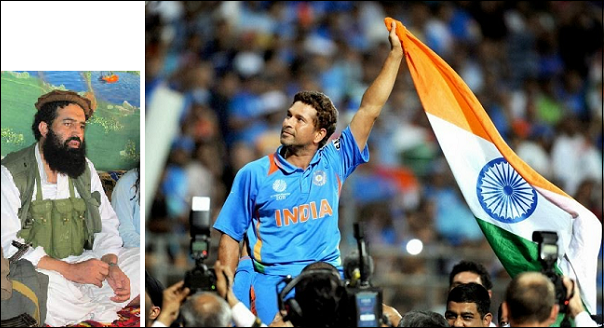
Pakistan Taliban umpire Shahidullah Shahid, left, speaks on Indian cricketer Sachin Tendulkar, right

.

As you may know, I’m not too keen on sports — far too physical for sedentary me, even at a young age — but if there ever was a sport I could enjoy, it would be cricket. In fact I used to spend hours as a boy “playing cricket” in the outfield, singing quietly to myself and spotting caterpillars in the hawthorn hedges that edged my side of the field.

Imagine my delight, then, to find the Pakistani Taliban has also developed a love for the game. From the Friday Times, today:

Taliban have threatened media organizations for “quoting out of context” their spokesman’s video statement in which he had likened those who praise the US and criticize the Taliban to those who praise Indian cricketer Sachin Tendulkar and criticise Pakistan’s cricket captain Misbahul Haq.

The 17-minute video recording was released to present the Taliban’s outlook on the future of talks with the government, Pakistan and its politics, and the role of the armed forces. But what grabbed media attention was a two minute portion in which their spokesman used a cricket analogy to defend the controversial statement of Jamaat-e-Islami leader Munawar Hassan that Pakistani soldiers who died fighting the Taliban were not martyrs.

“There is this Indian player called Tendulkar. He is being exceedingly praised by the Pakistani media and people. At the same time the media showed disapproval of Misbahul Haq. Even though Tendulkar is a great sportsman, you should not praise him because that is unpatriotic. Instead, you should praise Misbah despite the fact that he is a bad player, because he is ultimately a Pakistani,” said Shahidullah Shahid, the spokesman of Tehrik-e-Taliban Pakistan (TTP). “Those who praise the soldiers fighting for America, secularism, democracy and British-made laws are like those who lauded Tendulkar instead of Misbah.”

All in all, I suppose it was an inevitable development — Imran Khan had supported a position that the TTP favored, and it’s hard to “like” Imran Khan without also “liking” cricket. The report continues:

In the same video, he praised Tehrik-e-Insaaf leader Imran Khan for blocking NATO supplies to Afghanistan because the move was hurting US interests, adding that the Taliban had developed a soft corner for Khan because of the move.

Of course, the Indians like cricket quite a bit, too.

**

What matters to me about caterpillars, aside for the intriguing “looping” movement some of them have down to a fine art, is the fact that they turn into butterflies — and if I may transcend the material world into pure metaphor for a moment, that butterflies in turn symbolize psyche.

Me? I’m still in the outfield, still on the lookout for caterpillars, still playing my own highly contemplative form of cricket.

Mandela – countless silken ties of love and thought

December 6th, 2013

[ by Charles Cameron — mostly written as news came from the hospital that his condition had turned critical, updated and posted now that his death has been announced ]
.

Already I am feeling the presentiment of grief, and so much of what I feel stems from this picture:

**

Nelson Mandela is dear to me not so much as the great first President of the new South Africa, nor as the statesman he doubtless was, but the man who loved my own mentor, Trevor Huddleston, so much.

So it is not global with me, it is personal, and as news of his health reaches the critical mark and his family gathers in deep concern, I sense my own potential for grief rolling in over the near hills.

Robert Frost, in his great poem A Silken Tent, speaks of “silken ties of love and thought” that bind us one to another, indeed to “every thing on earth the compass round” — in my case it is his love of Trevor that binds me to the man — and the little detail in Mandela’s autobiography where he recalls Trevor addressing a group of South African police who were approaching to arrest him, saying:

No, you must arrest me instead, my dears.

It’s that “my dears” that I can hear so easily in Trevor’s voice, and that Mandela was so brilliant to catch, recall and tell…

Less personally it is the Isitwalandwe, the signal honor these two men shared, for each was “one who wears the plumes of the rare bird”.

**

I respect also the insurgent Mandela, who emerged from his long imprisonment with calm and clarity — Mandela the meditator if you will. This passage from a letter he wrote in jail in 1975 moves me, as Merton moves me:

Incidentally, you may find that the cell is an ideal place to learn to know yourself, to search realistically and regularly the process of your own mind and feelings. In judging our progress as individuals we tend to concentrate on external factors such as one’s social position, influence and popularity, wealth and standard of education. These are, of course, important in measuring one’s success in material matters and it is perfectly understandable if many people exert themselves mainly to achieve all these. But internal factors may be even more crucial in assessing one’s development as a human being. Honesty, sincerity, simplicity, humility, pure generosity, absence of vanity, readiness to serve others – qualities which are within easy reach of every soul – are the foundations of one’s spiritual life. Development in matters of this nature is inconceivable without serious introspection, without knowing yourself, your weaknesses and mistakes. At least if for nothing else, the cell gives you the opportunity to look daily into your entire conduct, to overcome the bad and develop whatever is good in you. Regular meditation, say about 15 minutes a day before you turn in, can be very fruitful in this regard. You may find it difficult at first to pinpoint the negative features in your life, but the 10th attempt may yield rich rewards. Never forget that a saint is a sinner who keeps on trying.

Here, I believe, is the secret which gave us this man.

**

And because it is so very beautiful, I offer you also Frost’s poem:

The Silken Tent
.

She is as in a field a silken tent
At midday when the sunny summer breeze
Has dried the dew and all its ropes relent,
So that in guys it gently sways at ease,
And its supporting central cedar pole,
That is its pinnacle to heavenward
And signifies the sureness of the soul,
Seems to owe naught to any single cord,
But strictly held by none, is loosely bound
By countless silken ties of love and thought
To every thing on earth the compass round,
And only by one’s going slightly taut
In the capriciousness of summer air
Is of the slightlest bondage made aware.

**

Update:

Mandela’s death has been announced, and I feel as though I knew it already, back in those days at the end of June when he was hospitalized, when every day and each breath might have been his last. I feel little grief now, I wish him peace — but more than that, I feel gratitude. Nelson Mandela showed us, through foul weather and fair, what a human with integrity is, and what such a single human, in the companionship of others, can do.

So many of us must be feeling this gratitude today. Mandela has gone from among the living, to exert his influence now — his person, his strength, his story — in the ever-opening realm of inspiration and human possibility.

“Friends of Zenpundit.com who Wrote Books” Post #2: Poetry, War & Business

December 4th, 2013

As the holiday season is here, I thought it would be amusing between now and Christmas to do a series of posts on books by people who have, in some fashion, been friends of ZP by supporting us with links, guest-posts, friendly comments and other intuitive gestures of online association. One keyboard washes the other.

The second installment focuses on Poetry, War and Business:

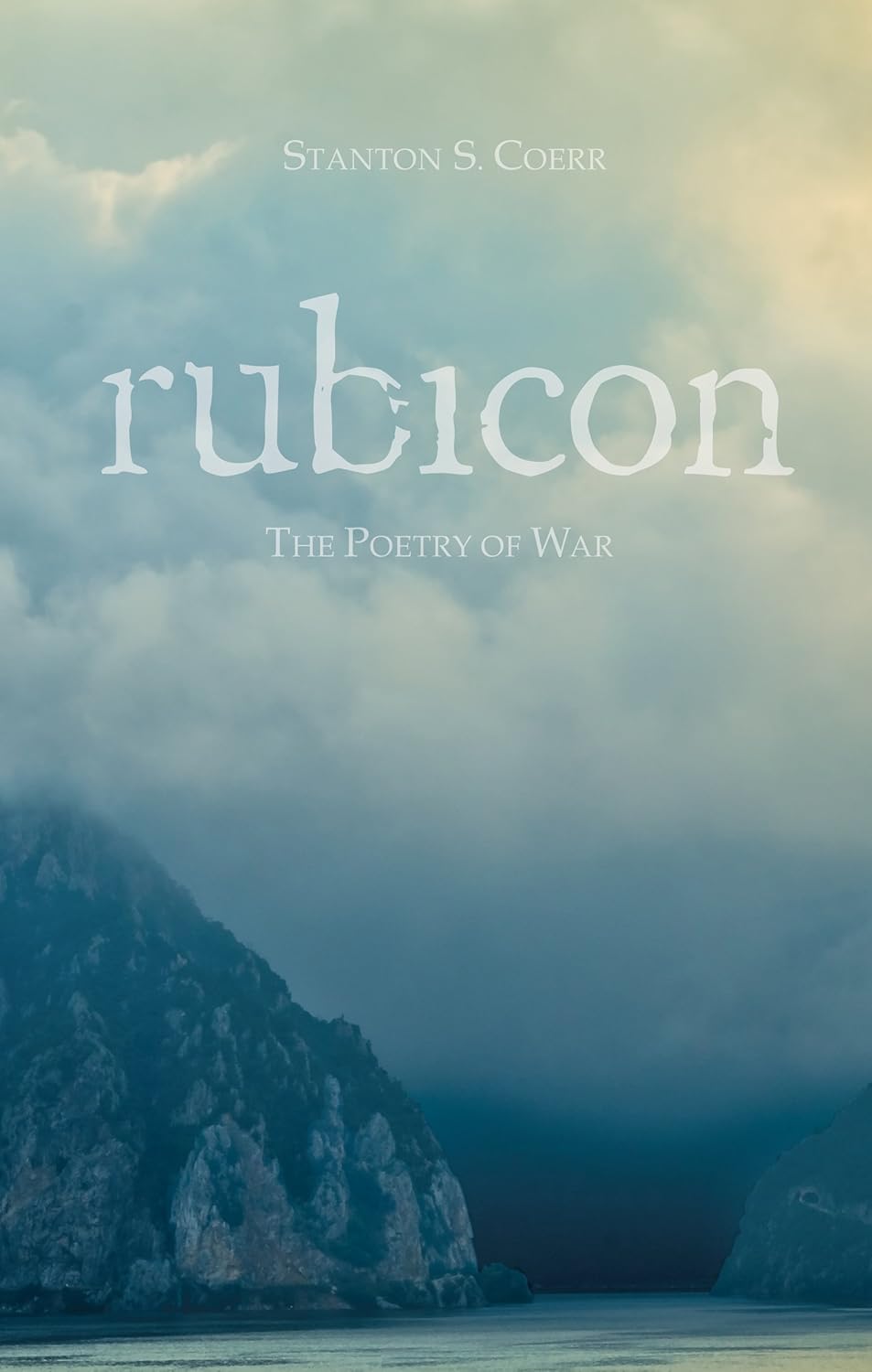
Stanton Coerr

Rubicon: The Poetry of War 

Colonel Stan Coerr is a combat vet (USMC) of Iraq, a naval aviator, poet and a key organizer of the Boyd & Beyond Conference. He is also intent on becoming a historian, to which I give a hearty thumb’s up!

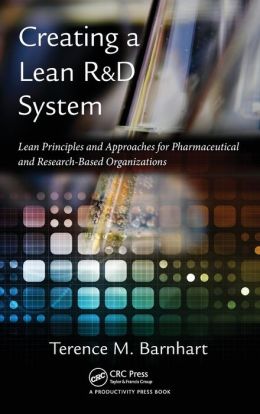
Terry Barnhart

Creating a Lean R&D System: Lean Principles and Approaches for Pharmaceutical and Research-Based Organizations

Scientist and organizational consultant, Dr. Terry Barnhart, is the originator of “fast learning” strategies for organizational excellence and problem solving. I personally use Terry’s “Critical Question Mapping” strategy with students and elicited amazing results each time.

James Frayne

Cover of Meet the People by James Frayne

Meet the People: Why businesses must engage with public opinion to manage and enhance their reputations

Across the pond, James Frayne is a leading British political and media strategy consultant and former government official. Some of you may remember James from his excellent ( now defunct) political strategy blog Campaign War Room and from his participation in the Reagan Roundtable at Chicago Boyz.

More to come…..

ADDENDUM:

The previous post in the series has been pulled temporarily due to emerging scripting execution errors – it will be restored in a few days


Switch to our mobile site