zenpundit.com

The Anabasis of Cyrus

May 21st, 2009

The Anabasis of Cyrus (Agora) by Xenophon. Translator,  Wayne Ambler

Arrived a few days ago. Now I am set for Lexington Green’s Xenophon Roundtable in September 2009.

….They decided, then, to pack up what they had, arm themselves, and proceed forward until they should meet with Cyrus. When they were about to set out, as the sun was rising, there arrived Procles, the ruler of Teuthrania, born of Demaratus the Laconian, and Glus, the son of Tamos. They said “Cyrus is dead” and said that Ariaeus had fled with the other barbarians….”

Pushtunistan Rising?

May 19th, 2009


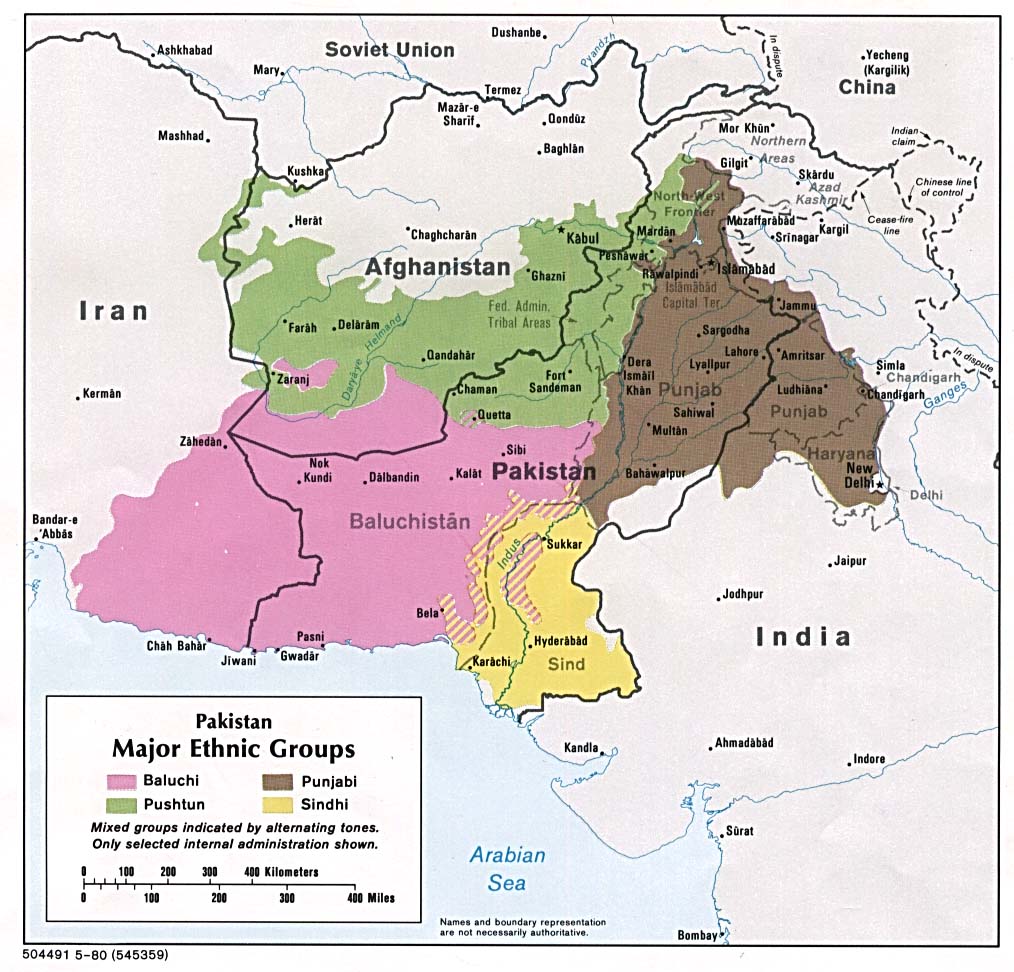
Steve Hynd at Newshoggers made the intriguing suggestion of an independent Pushtun state as a solution to the strategic problems of the Afghanistan-Pakistan region. The Pushtuns, like the Kurds are one of the world’s largest ethnic groups without a state:

The Punjabi and Sindh populations have always regarded the Pashtun as mountain wild men, bandits and reivers. The Pashtun have always regarded their neighbours as prey for their raids. It’s been that way since before the British arrived and shows no sign of abating anytime soon. The Pashtun were only forced at gunpoint into accepting the splitting of their traditional tribal ranges by the Durand Line in 1893. The situation is entirely analogous to the old border reiver clans of the English/Scottish border – another bunch of inter-related hill country wildmen who raided their neighbours irrespective of nationality for over 300 years before finally calming down and accepting imposed nationality. That territorial stramash was only solved by exiling the worst offenders to the American colonies.

….More, with the Pashtun in their own homeland free from outside overlords their reason for supporting the Taliban politically would disappear and the incompatibility between the Taliban’s extreme form of Islam and the Pashtun’s own traditional religious forms would put the two at odds more often than not.

Rather than insisting on fighting the Pashtun, the amswer in Af/Pak may lie in giving them back the independence they once had.

Read the rest here

Sort of like Ralph Peters famous re-drawing of the Mideast map a few years ago, Steve’s suggestion is provocative.The Kurds took decades to get beyond the Talabani-Barzani rivalry and seize the de facto independence that the U.S. invasion of Iraq made possible and “frontier agents”, whether British or from the ISI , have always succeeded in playing off one Pushtun group against another with only the Soviet invasion of Afghanistan in 1979 creating even semi-unity among Pushtuns – and then temporarily. This is the stuff of Pakistani nightmares but a latent sense of Pushtun nationalism lurks in the shadows, with Afghanistan being thought of as a “Greater Pushtunistan”.

Recommended Reading

May 18th, 2009

Top Billing! NYT – David Kilcullen and Andrew Exum  “Death From Above, Outrage Down Below

This was very interesting but the argument in the op-ed contains an important logical disconnect.

Exum and Kilcullen are certainly correct that technology, in this case the predator and global hawk drone strikes being used to kill al Qaida and Taliban targets in Pakistan, are no substitute for a coherent strategy. They are also correct that there are, in Exum’s words at Abu Muqawama “second and third order effects”on Pakistan from using predators and their end-goal of enlisting local allies is where the U.S. needs to go to be successful. That said, we should also note that there are also second and third order effects on al Qaida from these strikes – namely that AQ cannot function operationally as a transnational terrorist group in the catastrophic terrorism business. Optimum counter-terrorism objectives are not always going to be congruent with optimum COIN situations and in the Afghapakistan border region, they appear to be in significant conflict.

The logical disconnect in the op-ed is in that to get to that desirable strategic end-state described by Kilcullen and Exum, the U.S. needs to be able to send uniformed people to operate in FATA, which Islamabad adamantly refuses to entertain. Frankly, the Pakistani generals prefer the predators buzzing around to U.S. troops walking around. “Local allies” that are armed, funded and trained by the U.S. military are likely to make short work of the ISI’s radical Islamist militia proteges, which is why Kilcullen wants to get to that policy destination and why Islamabad is unlikely to ever agree except under the greatest duress and in completely bad faith. Our “local allies” are also likely to become a legacy headache for Pakistan once Bin Laden is swinging from a tree in Waziristan and we are long gone.

While Exum and Kilcullen are correct to point out the costs, it is hard for me to say that predators should be taken off the table in Pakistan until COIN can be put on the table. Not sure how we get to that point from here, either but they deserve credit for trying to get the strategic ball rolling in that direction.

Hat tip SWJ Blog.

CTLab –  The Occidental Guerrilla

Review of David Kilcullen’s book, The Accidental Guerrilla.

David Ronfeldt –  Organizational forms compared: my evolving TIMN table vs. other analysts’ tables

Very useful for those looking for org models.

Selil blog –  How to wage cyber warfare: A primer, Part 1, How to wage cyber warfare: Barriers to entry, Part 2,  How to wage cyber warfare: Puzzle pieces, Part 3, How to wage cyber warfare: The technology and structure, Part 4

Professor Liles has a book in progress, I believe.

Neurolearning Blog – Different Brain Networks for Novelty-Induced vs. Voluntary Attention

We are wired to see the new We learn to see the routine.

Kings of WarHybrid war v postmodern war

Argues that we are looking at war from the wrong angle.

SmartmobsPublication: Identity in the Age of Cloud Computing 

“The best report on cloud computing ever published”. E-book format.

That’s it.

Star Wars 1, Star Trek 0

May 17th, 2009

 “Now, prepare to witness the power of this fully operational battle station!”

Hat tip Mithras.

Barnett, the Bomb and Obama

May 15th, 2009

In line with the vigorous discussion in the comment section of the previous post, Tom Barnett weighs in on Obama’s nuclear utopianism in Esquire Magazine:

3. An America with fewer nukes breeds a new class of military powers.

By reducing “barriers to entry” to the marketplace called great-power war, I believe we would actually encourage the proliferation of nuclear weaponry. If Obama and his successors were to withdraw America’s virtually global nuclear umbrella, numerous middle powers would become highly incentivized to fill that security gap.

Of course, the dream would be to include all such states in a global rejection of nuclear weaponry, but that’s not likely if the system’s clear Leviathan (the United States) demotes itself to the status of a de-nuclearized great power. That scenario (Obama’s scenario) instantly elevates a slew of suddenly “near-peer” military powers in a manner that smaller states will likely find strategically unpalatable. As in, they could be blown into oblivion — strategic or literal — at any moment.


4. A new class of military powers breeds a new round of local wars.

The fallout from the collapse of our nuclear umbrella would be as frightening as it would be immediate: the resumption of great-power rivalries and proxy wars in regions once again subject to profound spheres of influence. That would further complicate the strategic landscape and undo so much of the Obama administration’s diplomatic success between now and then.

Read the rest here.

I think that Tom belted it out of the park here. Good policy seldom emerges from bad premises.


Switch to our mobile site