[ by Charles Cameron — some late night foolishness, with a plea for forgiveness ]
.
As you know, I’m interested in conflict in need of resolution and the means of achieving it — and I’m also of the opinion that it’s essential for all voices to the situation to be heard — hence the need for a method of graphically mapping contending voices in a verbal equivalent to polyphonic (many voiced, Palestrina, Giovanni Pierluigi da, eg) counterpoint (see especially Bach, JS).
Here’s a fairly absurd take on at least some parts of that er, equation:
**
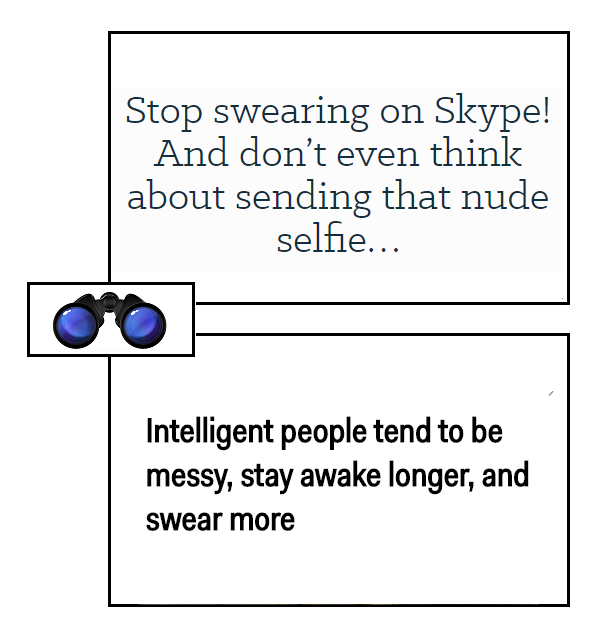
I was pointed to this video by PTheWeek. What caught my eye was their headline:
How could I resist?
**
Please forgive us all. As I said, these things took place late at night..
[ by Charles Cameron — Putin, Mueller, Trump, and Nada Bakos ]
.
IMO it is a pure coincidence that these two barely related headlines popped up on the same day:
That’s “not a target” squared. Not that I generally believe in coincidence — I favor synchronicity, but admittedly switch between magical and naturalistic worldviews as suits the moment.
**
while we’re on the subject of targets, here’s the Targeter par excellence, Nada Bakos, whose can’t wait book is currently targeted for redaction by the relevant CIA publications review office::
[ by Charles Cameron — from MLK via St Basil the Great to Mullah Nasruddin ]
.
Three lines from the Apostles Creed locate the Resurrection between a descent into hell and an ascent into heaven. These lines are worth pondering in concert:
He descended into hell;
on the third day He rose again from the dead;
He ascended into heaven,
In what world of three worlds are these three utterances, so poetically juxtaposed, credible as declarative propositions?
**
He is risen!
Bach’s Easter Oratorio, with Ton Koopman and the Amsterdam Baroque Choir and Orchestra:
The last doctrine in our discussion deals with the resurrection story. This doctrine, upon which the Easter Faith rests, symbolizes the ultimate Christian conviction: that Christ conquered death. From a literary, historical, and philosophical point of view this doctrine raises many questions. In fact the external evidence for the authenticity of this doctrine is found wanting. But here again the external evidence is not the most important thing, for it in itself fails to tell us precisely the thing we most want to know: What experiences of early Christians lead to the formulation of the doctrine?
The root of our inquiry is found in the fact that the early Christians had lived with Jesus. They had been captivated by the magnetic power of his personality. This basic experience led to the faith that he could never die. And so in the pre-scientific thought pattern of the first century, this inner faith took outward form. But it must be remembered that before the doctrine was formulated or the event recorded, the early Christians had had a lasting experience with the Christ. They had come to see that the essential note in the Fourth Gospel is the ultimate force in Christianity: The living, deathless person of Christ. They expressed this in terms of the outward, but it was an inner experience that lead to its expression.
**
The Jesuit priest Fr James Schalldefends that outward interpretation, as found in the Apostles and Nicene Creeds, taken for dogmatic purposes as declarations of fact:
To the wise Greeks, as St. Paul tells us, the whole aura around Christ’s death and resurrection seemed to be “foolishness.” And it is foolishness unless considerable evidence is found showing that something astonishing was in fact going on. This evidence is basically the testimony of the women and men who attested to the fact that Christ did rise again. This is the same Christ whose death on the Cross they had witnessed a few days before.
**
To take these declarations as reporting historical fact, it may help to have an upside-down worldview — that of the wisdom of the fool. Appropriately, this year Easter is celebrated on April Fools Day. Indeed, Fr Schall opens his piece from which I quoted above by noting that fact, then moves to a discussion of Christ himself as a Fool:
A tradition exists about “Christ the Fool.” It probably originates from when Pilate sent Christ to see Herod. Herod was anxious to see him. See him do what? See him perform. He had heard much about this man and his miracles. So naturally the king wanted to see what Christ could do; he wanted a private show to entertain the court. In response, Christ was simply silent.
Christ, we might say, played the naïf for Herod.
**
Scripture declares how a naturalistic worldview perceives the eruption of God’s wisdom into this world as folly, and vice versa:
For the wisdom of this world is foolishness in God’s sight.
while:
the message of the cross is foolishness to those who are perishing, but to us who are being saved it is the power of God.
and, in an almost tongue-twisting formulation:
For since in the wisdom of God the world through its wisdom did not know him, God was pleased through the foolishness of what was preached to save those who believe.
**
All of which leads Christians to imitate the foolishness of Christ:
We are fools for Christ’s sake
That too is St Paul, writing of himself and his contemporaries, followers of the pattern set by Christ — and his message has echoed down the centuries among those who wish to imitate that pattern closely:
One form of the ascetic Christian life is called foolishness for the sake of Christ. The fool-for-Christ set for himself the task of battling within himself the root of all sin, pride. In order to accomplish this he took on an unusual style of life, appearing as someone bereft of his mental faculties, thus bringing upon himself the ridicule of others. In addition he exposed the evil in the world through metaphorical and symbolic words and actions. He took this ascetic endeavor upon himself in order to humble himself and to also more effectively influence others, since most people respond to the usual ordinary sermon with indifference.
**
In the Orthodox tradition — in which, this year, Easter and the Resurrection will be celebrated next Sunday — the foolishness of saints is a recurrent story. As I noted, quoting from the National Catholic Register in an earlier post:
In Russian history the greatest of the “holy fools” was Basil the Blessed, a man so revered that the famous Cathedral in Moscow’s Red Square next to the Kremlin was named in his honor. Basil walked through Moscow wearing nothing more than a long beard. He threw rocks at wealthy people’s houses and stole from dishonest traders in Red Square.
Few doubted Basil’s holiness. Tsar Ivan the Terrible feared no one but Basil. Basil was also given to eating meat on Good Friday. Once he went to Ivan’s palace in the Kremlin and forced the tsar to eat raw meat during the fast saying, “Why abstain from eating meat when you murder men?” Countless Russians died for much less but Ivan was afraid to let any harm come to the saintly Basil.
**
I don’t suppose one could speak of left and right wing parties under the Terrible Ivan, but evcen if one could, I don’t think St Basil’s approach would fit either description — he’s acting in a manner that is plain contrary to all sane opinion — and indeed, the term “Contraries” is applied by anthropologists to trickster shamans and holy foots in many traditions. Interestingly, in Sufism the “path of blame” has at times been highly esteemed — its practitioners, like the Russian Holy Fools, draw blame on themselves to awaken those around them while subverting their own propensity to take pride in how “spiritual” they are.
**
Mullah Nasruddin really didn’t want to loan his donkey to a neighbor.
My brother borrowed him yesterday and hasn’t brought him back, the Mullah said..
Just then, the donkey brayed.
Who are you going to believe, the Mullah asked hastilyy — me or a donkey?
Now, who in that little vignette is more of an ass?
This post addresses ZP’s interest in creative thinking, and also the matter of freedom of expletive deleted speech on our currently preferred comm7nications channels.
The latest MicroSamurai code:
Don’t publicly display or use the Services to share inappropriate content or material (involving, for example, nudity, bestiality, pornography, offensive language, graphic violence, or criminal activity).
Ouch.
**
And boy, am I intelligent1?? I’m in the 93rd percentile messy, in the 100th for night owl — but only in the 43rd for swearing, dammit, which gives me an overall IQ so low I’m going to have to up my use of foul language!
[ by Charles Cameron — ffor whom the music lingers longest in the soul ]
.
Yesterday, Maundy Thursday in the western ritual calendar, the Christ washed the feet of his disciples after the Last Supper, and instructed them to do likewise. Today, the day called Good Friday, the Christ, scourged and bone-weary from dragging the wood chosen for his cross uphill to a place called Golgotha or Skull, is finally nailed, hand and foot, hands and feet. and raised up with a mocking inscription above his head proclaiming him King of the Jews in three languages -– and in his almost final gesture on earth, forgives the soldier who has just applied hammer to those terrible nails. He dies – “gives up the ghost” – and then the three days of a prophesied and clearly impossible return from the tomb open before us – a cliff-hanger like no other.
The suspense!
Our western civ loses a lot if we are unable to have, in the cycle of our 24/365 lives, such a moment of suspense, which IMO cuts deeper than any doctrine. Deeper than doctrine, too, is music, which reaches far beyond the bounds of verbal belief. Thus one of western music’s greatest treasures: Bach’s telling of Christ’s passion, as written by Matthew in his gospel. Pause a moment – pause a couple of hours – pause at least long enough for Bach’s great finale – and then wait, if the Christ story can still move you, wait with aching, with dread even – or as Bach suggests, rest with the resting Christ, take consolation in the promise of his resurrection.
**
Bach’s finale, Wir setzen uns mit Tränen nieder, WIki explains:
The work is closed by a grand scale chorus in da capo form, choir I and II mostly in unison for the first part Wir setzen uns mit Tränen nieder (We sit down in tears), but in dialog in the middle section, choir II repeating Ruhe sanfte, sanfte ruh! (“Rest gently, gently rest!”), choir I reflecting: “Your grave and headstone shall, for the anxious conscience, be a comfortable pillow and the resting place for the soul. Highly contented, there the eyes fall asleep.” These are the last words (before the recapitulation), marked by Bach himself: p pp ppp (soft, very soft, extremely soft).
Bach’s complete Matthew Passion, a Lutheran choral setting for today’s evening service:
**
And the end, in Matthew’s telling:
And Jesus cried out again with a loud voice and yielded up his spirit. And behold, the curtain of the temple was torn in two, from top to bottom. And the earth shook, and the rocks were split.
Zenpundit is a blog dedicated to exploring the intersections of foreign policy, history, military theory, national security,strategic thinking, futurism, cognition and a number of other esoteric pursuits.