zenpundit.com » computers

Archive for the ‘computers’ Category

Quick note — tweet and riposte

Tuesday, December 13th, 2011

[by Charles Cameron — on warfare and social media ]

.

Al-Shabaab‘s media wing now has a twitter interlocutor from the Kenyan Army

as the Islamic Emirate (Afghan Taliban) does from the ISAF Press Office:

Is this just “silliness”, as @Rory_Medcalf tweeted — or is there something fresh and with potential going on?  I’m thinking of richer social media initiatives, like Leah Farrall‘s conversations with Abu Walid, here, too…

Steve Jobs by Walter Isaacson, a review

Thursday, October 27th, 2011

 [by J. Scott Shipman]
steve-jobs.jpeg

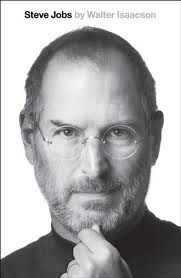
Steve Jobs by Walter Isaacson

Walter Isaacson, the acclaimed author of biographies of Benjamin Franklin and Albert Einstein, has produced a definitive and up-close biography of Steve Jobs. The book is a very readable 571 pages that took only a couple of days to read. Jobs approached Isaacson to write his bio in 2004, but Isaacson resisted until 2009 when  Jobs’ wife Laurene Powell “said bluntly, “If you’re ever going to do a book on Steve, you’d better do it now.”” Isaacson insists no restrictions were placed on him, in fact, Jobs and his wife facilitated access to many people who do did not hold Jobs in high regard—the man excited passions good and bad. I found it ironic that Jobs, a man who obsessed with control would willingly relinquish control in what will probably be the definitive biography of his life.

Isaacson offered early that his book is really about innovation. He offers: “At a time when the United States is seeking ways to sustain its innovative edge, and when societies around the world are trying to build creative digital-age economies, Jobs stands as the ultimate icon of inventiveness, imagination, and sustained innovation.” Given Apple’s growth, his point is well taken.

Isaacson clearly admires Jobs, but he does not spare the reader of Jobs volatile and brutal out-bursts directed at just about anyone he considered a “bozo” or worse. From the beginning, Jobs was a very difficult person to work with. He did not tolerate mediocrity and punished what he thought was mediocre thinking, often publicly. Isaacson offers some insights and ideas as to the cause of Jobs distinctly caustic personality, but most ring hollow. Jobs was a driven and passionate man, with very little empathy—even for family members. Isaacson suggests “people who were not crushed ended up being stronger” and many of the folks interviewed agreed—Jobs drove people to do things they didn’t know they could do. As one of Jobs colleagues Debi Coleman said, “You did the impossible, because you didn’t realize it was impossible.” So the folks he didn’t scare off, appear to have been inspired. Tim Cook, Jobs’ successor offered, “What I learned about Steve was that people mistook some of his comments as ranting or negativism, but it was really just the way he showed passion. So that’s how I processed it, and I never took issue personally.”

My favorite parts of the book were Isaacson’s liberal use of quotes from Jobs. Some quotes bristle with passion, and a few were profound. This one appealed to my notions on pattern cognition:

Your thoughts construct patterns like scaffolding in your mind. You are really etching chemical patterns. In most cases,  people get stuck in those patterns, just like grooves in a record, and they never get out of them.

Isaacson covers Jobs journey at Apple, NeXT, Pixar, and his triumphant return to Apple. I did not know much about Jobs at Pixar and found it interesting that Jobs was CEO at both companies simultaneously—and both companies had a “different” versions of Jobs. Isaacson says, “Pixar was a haven where Jobs could escape the intensity of Cupertino. At Apple, the managers often excitable and exhausted, Jobs tended to be volatile, and people felt nervous about where they stood with him….It was a Pixar that he learned to let other creative people flourish and take the lead.” Jobs was more hands-on at Apple I sense because he considered it his creation—essentially an extension of his person. I suspect Jobs viewed his role at Pixar as more that of a steward in comparison.

Jobs hated slide presentations (I agree—one great thing about Boyd & Beyond is the general ban on PowerPoint) and said, “People who know what they’re talking about don’t need PowerPoint.” There is a poignant passage towards the end where Jobs was meeting with his team of doctors and the doctor had a PowerPoint presentation. Jobs gently suggested the Apple Keynote program was better.

Jobs, despite his bristly exterior, reached deep in his Zen training and life experience (particularly after his cancer diagnosis) when he spoke at the 2005 Stanford commencement:

Remembering that I’ll be dead soon is the most important tool I’ve ever encountered to help me make the big choices of life. Because almost everything—all external expectations, all pride, all fear of embarrassment or failure—these things just fall away in the face of death, leaving only what is truly important. Remembering that you are going to die is the best way I know to avoid the trap of thinking you have something to lose. You are already naked. There is no reason not to follow your heart.  

We are a Apple/MacBook Pro family, we have iPhones, iPods, and the iPad on our wish list. Isaacson discusses one thing I’ve noticed with every Apple purchase; the thought put into packaging of the product. Apple packaging is patented and it shows. Jobs alter ego and head Apple designer Jonathan Ive, said, “Steve and I spend a lot of time on the packaging…I love the process of unpacking something. You design a ritual of unpacking to make the product feel special. Packaging can be theater, it can create a story.” I believe we have kept every box our Apple products arrived in—they are works of art.

This book will elicit the spectrum of emotions, there are parts where I was embarrassed or appalled at Jobs poor behavior, there were tender moments towards the end of his storied life that brought a tear to my eye. Isaacson has given us a valuable portrait of a man mathematician Mark Kac “called a magician genius, someone whose insights came out of the blue and require intuition more than mere mental processing power.”

Isaacson’s Steve Jobs comes with my highest recommendation.

NOTE: This is admittedly a different book review for this site. I’ll admit up front that I’m a fan of Jobs and his products—and I know many people hate him passionately and with good reason. I’m sharing this review because Jobs was an iconoclast very similar to John Boyd: people either loved him or hated him. Both men were driven, had poor people skills, and both left rich legacies in completely different areas, and are eminently interesting figures.

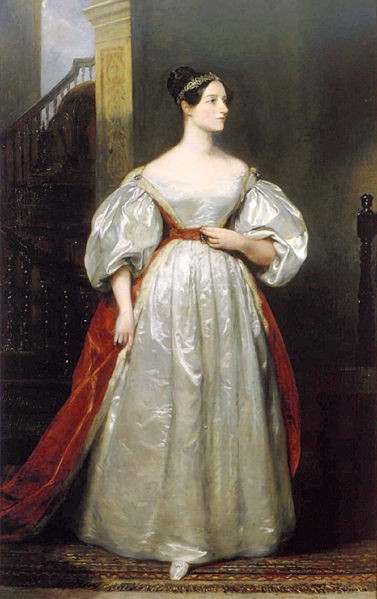
In honor of Ada, Countess of Lovelace

Friday, October 7th, 2011

[ by Charles Cameron — childhood memories, computer history, creative thinking, analogy, bead game ]

.

hors508.jpg

This menacing old pile, Horsley Towers — John Julius Norwich said of it in his Architecture of southern England, “The over-riding idiom seems to be vaguely Italianate Gothic, but in reality East Horsley is like nothing but itself, a grotesque Victorian Disneyland which has to be seen to be believed – and may not be even then” — was home to Ada, Countess of Lovelace, daughter of the poet Lord Byron.

Today is Ada Lovelace Day, and I have special reasons to honor her.

horsley-gateway.jpg

For one thing, I grew up inside these gate-towers, in the last little house before the Lovelace estate proper began, and certain features of the first fields on the way to the big pile were my childhood haunts, the old oak with its dark and mysterious hollow wound, the clovered grass and cow pats, the small mound for boyish climbing, the bramble bushes with their delicious blackberries…

*

But it is as a devotee of Hermann Hesse‘s great Bead Game that I want to celebrate Ada Lovelace today —

ada3.jpg

for she illustrates to perfection the importance of cross-disciplinary analogies in creativity.

*

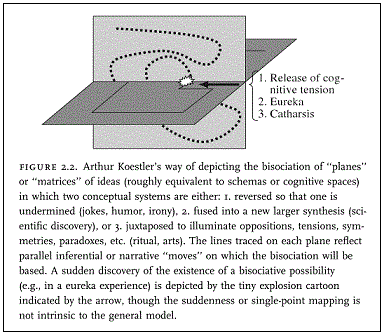
Consider this diagram from Mark Turner‘s The artful mind: cognitive science and the riddle of human creativity, based on those in Arthur Koestler‘s The Act of Creation (eg those on pp 35 and 37):

koestler-model.gif

Hesse proposes — in his Nobel-winning novel, the Glass Bead Game (aka Magister Ludi) the building of an architecture of ideas in which the great works of human culture are linked — bound together — by analogies between them.

Beginning players of his Game,  he writes, learn “how to establish parallels, by means of the Game’s symbols, between a piece of classical music and the formula for some law of nature.” As I wrote elsewhere, on a more complex level, Hesse speaks of scholars proposing materials for inclusion in the Game Archives, and specifically mentions someone who had been studying “the rhythmic structure of Julius Caesar’s Latin and discovered the most striking congruences with the results of well-known studies of the intervals in Byzantine hymns”…  Hesse couldn’t possibly have known about it when writing that particular sentence, of course, but there is actually a book by Jane-Marie Luecke, OSB, entitled Measuring Old English Rhythm: an Application of the Principles of Gregorian Chant Rhythm to the Meter of Beowulf, (Literary Monographs, vol 9, U. Wisconsin Press, 1978).

Hunh?  So?

*

Consider what Ada, Countess of Lovelace hath wrought.

She perceived just such an analogy — comparing Charles Babbage‘s Analytical Engine with Jacquard‘s mechanical loom, and writing:

The Analytical Engine … weaves algebraic patterns, just as the Jacquard-loom weaves flowers and leaves.

That analogy between weaving and algebra was the great creative leap: from there to the adoption and adaptation of Jacquard’s punched card system in computation was the lesser step from insight to application.

And think about it: her mind moved unerringly between “art” and “science” — or more exactly, craft and mathematics — in 1843, to deliver a technological insight on which the mainframes of the 1970s still relied…

That, my friends, was a superb move in the spirit of the Glass Bead Game — and impossible without a well-furnished and agile mind.

Stay hungry, stay foolish

Thursday, October 6th, 2011

[ Steve Jobs obit — posted by CC]
.
attachmentphp.jpg

Steve Jobs, February 24, 1955 – October 5, 2011

Remembering that I’ll be dead soon is the most important tool I’ve ever encountered to help me make the big choices in life. Because almost everything — all external expectations, all pride, all fear of embarrassment or failure – these things just fall away in the face of death, leaving only what is truly important. Remembering that you are going to die is the best way I know to avoid the trap of thinking you have something to lose. You are already naked. There is no reason not to follow your heart.

— from Steve JobsCommencement Address at Stanford University, June 2005

Oslo and Utoya — short version

Saturday, July 23rd, 2011

[ by Charles Cameron — leads related to Anders Breivik, suspected in Oslo bombings / Utoya shootings ]

.
I may follow this post up with a longer and more detailed version, time permitting – but for now, this presents the lines of inquiry I am following.

The alleged Oslo bomber and Utoya Island shooter, with 90+ deaths to his credit, was not a Muslim jihadist, as many at first suspected, and as at least one Islamist-identified group claimed. Anders Behring Breivik was a Norwegian with strong anti-Islamic views.

Large gobbits of his posts on the Norwegian blog site “document.no” are now available for serious study: there’s an English translation (possibly mechanical) on ScribD and a better one appearing in sections on Leo’s Passagen blog.

Juan Cole titled his blog comment, White Christian Fundamentalist Terrorism in Norway, referencing a Norwegian police spokesman who called Breivik a “Christian fundamentalist”. Breivik was not a Fundamentalist. He was a Protestant – but one who hoped individual Protestants would gradually join the Catholic Church, and one who was himself (paradoxically) active in Freemasonry. But his religious views, as expressed in his document.no postings, were peripheral to his main concerns.

He was an entrepreneur, a millionaire, and a political “conservative” who claimed to be anti-racist. His major political emphasis seems to have been on resisting the “Islamization” of Europe, which he regarded as a form of “demographic warfare” waged by Islamists with passive facilitation by the “multikulti” or multiculturalists. In one of his posts, he suggested the formation of a “cultural Euro-version of a Tea Party movement”.

He was also the owner of a successful farming enterprise, with a reported 700 employees — hence his ability to obtain large quantities (6 tons) of fertilizer of a kind useful in making bombs.

According to the Swedish “Expo” site, he was affiliated with a Nazi web forum.

Two other possible sources for information:

This is not standard evangelical behavior, this is not standard white, male, or white male behavior, this is not standard blogger behavior, this is not standard Norwegian behavior, this is not standard gamer behavior, this is not standard right wing behavior — but it is all too tragically human, this behavior…

There’s a lot to untangle here; this is one complex individual, and we’d do well to get a detailed and nuanced understanding of the various drivers in play…


Switch to our mobile site