zenpundit.com » cognition

Archive for the ‘cognition’ Category

Happiness in the proximity of faith and death

Monday, August 1st, 2016

[ by Charles Cameron — the emotional impact of faith, from a nun present at the Normandy attack to a failed suicide bomber in Syria ]
.

According to this IB Times article, Tragic last words of Catholic priest killed by Isis terrorists revealed, Sister Helene Decaux, one of the nuns who was present at the killing of Fr Jacques Hamel, reported his last words thus:

Jacques shouted at them, ‘Stop! What are you doing?’ It was then that one of them struck the first blow to his throat.

What caught my attention more forcefully, however, was the following:

Fearing for her life, she added: “Thinking I was going to die, I offered my life to God.” The nun then described how Petitjean and Kermiche had at first been aggressive, but quietened down after they had cut Jacques’ throat. Showing remarkable calm, Helene asked the two terrorists if she could sit down. “I asked for my cane, he gave it to me,” she said. One of the attackers asked: “Are you afraid to die?” To which the nun replied no. “I believe in God, and I know I will be happy,” Helene said. Sister Huguette Peron, who was also in the church, told Catholic newspaper La Vie: “I got a smile from the second (man). Not a smile of triumph, but a soft smile, that of someone who is happy.”

Not only is Sister Helene happy in the face of death because she believes in death, but Sister Huguette reports that one of the attackers gave her a smile, “Not a smile of triumph, but a soft smile, that of someone who is happy.”

**

Compare those two descriptions of people who are happy with this, from Murtaza Hussain‘s Intercept piece, New Documentary Pierces the Psychology of Modern Suicide Bombers:

In a scene from Norwegian journalist Paul Refsdal’s new documentary Dugma: The Button, Abu Qaswara, a would-be suicide bomber, describes the sense of exhilaration he felt during an aborted suicide attack against a Syrian army checkpoint. “These were the happiest [moments] I’ve had in 32 years. If anyone had felt exactly what I felt at that moment, Muslims would want to go through the same feeling and non-Muslims would convert just to experience it,” he enthuses to the camera, visibly elated by his attempted self-immolation.

Abu Qaswara’s attack failed after his vehicle was blocked by obstacles on the road placed by the Syrian military. But speaking shortly after he returned from his mission, it was clear that his brush with death had filled him with euphoria. “It was a feeling more than you can imagine,” he says. “Something I cannot describe, it cannot be described.”

My primary purpose in recording these instances of happiness is to emphasize how strongly religious faith exerts what to the modern secular mind must be an unexpected and perhaps even unimaginable emotional impact on those who possess it. And even if the Normandy attacker’s ‘soft smile” had more to do with a blood lust slaked, the same cannot be said either for Sister Helene or for Abu Qaswara.

If we are to understand the motivations of suicide bombers and other jihadists, comprehending not just intellectually but viscerally the emotions involved will be a task of some importance — and one for which many of our analysts will not be prepared.

**

There’s a second point to be made, however. Hussain goes on to write:

Only the few Syrians who appear in the film speak at length about their grievances over the crimes of the Syrian government. In contrast, the foreign volunteers appear largely driven by personal motivations. Liberating the local people from oppression appears at best a secondary concern. Perishing in the conflict and reaping the existential rewards of such an end takes precedence. Both Abu Qaswara and Abu Basir gave up comfortable lives to come to Syria, knowing that certain death would be the outcome of that decision. But rather than deterring them, the prospect of a rewarding death was a primary factor motivating their decision to fight.

That para sets the scene for the following one, in which Mustafa Hamid, as reported in his book with Leah Farrall, notes how contrary this motivation is to the practical pursuit of victory:

This impulse toward self-destruction is actually seen as selfish by some fellow insurgents. In his co-authored 2014 memoir The Arabs at War in Afghanistan, Mustafa Hamid, a former high-ranking Egyptian volunteer with the Afghan mujahideen in the 1980s, described his own frustration with many of the later waves of volunteers arriving to that conflict. “One of the negatives that emerged from the jihad, and which continues to have severe consequences today, was the tendency for the youth to focus not on success and achieving victory and liberating Afghanistan, but on their desire for martyrdom and to enter paradise,” Hamid wrote. This overriding preoccupation with becoming a martyr meant that participation in the conflict, “became individual instead of for the benefit of the group or the country where the fight for liberation is taking place.”

That’s one of the more striking of Hamid’s observations in The Arabs at War in Afghanistan — itself an astonishing book, product of the collaboration between Hamid (aka Abu Walid al-Masri) the man who brought bin Laden‘s oath of allegiance to Mullah Omar, and Farrall, a respected scholar-analyst who was the Australian Federal Police al-Qaida subject matter specialist at the time of the Bali bombings.

It is an extraordinary book, and one I cannot recommend too highly.
Four angles plus one on reading Trump

Sunday, July 31st, 2016

[ by Charles Cameron — on the need for an analytic open mind — or hedging one’s bets? ]
.

I suppose we have to start with Trumpian Fundamentalism — by wbich I mean, taking the literal meaning from whatever he says. This view is simple, even simplistic.

One down, three to go.

**

There’s Lt. Gen. Flynn‘s view:

In the linked Politico article, Flynn is quoted thus:

Former Defense Intelligence Agency Director Lt. Gen. Michael Flynn says he’s trying to get Donald Trump to be more precise in how he talks about foreign policy, but he defended some of his hardline proposals as simply opening offers in negotiations on world affairs.

“First of all, I don’t agree with everything that he said. But he’s an individual who’s willing to take on a challenge,” the retired lieutenant general, a former President Barack Obama appointee who advises Trump on foreign policy, told Al Jazeera English’s “UpFront.” “The other aspect is there must be more precision in the use of the language that he uses as the potential leader of the free world. There has to be more precision, and those are the types of pieces of advice that I’m trying to get into him to say [to] be more precise, be more conscious about what you say about foreign policy issues because they are complicated.” [ .. ]

In Trump’s defense, Flynn said the real estate mogul sees the world from the perspective of a global businessman and suggested the billionaire’s bombastic rhetoric is just a starting point for negotiations.

Trump’s strategy is to “start really, really high and really, really hard, OK?” Flynn explained. “And then, be prepared to get down to where you think you can actually negotiate.”

This view has the advantage of following a business model, and Trump may or may not be anything else, but he’s surely a businessman. It also leaves a lot of room for “play” between his stated intentions on the one hand, and what he’s liable to settle for when talk comes to signature on the other.

**

Third, there’s Trump’s ghostwriter’s view:

Schwartz‘ tweet was quickly paired — for instance — with:

This angle has the advantage of psychological plausibility.

How can I put this kindly? The poet Rumi is quoted as saying “Many of the faults you see in others, dear reader, are your own nature reflected in them.”

**

Fourth..

I gather there is or was until fairly recently a US submarine defensive system called a MOSS (mobile submarine simulator) MK70 — a decoy launched from a torpedo tube which Wikipedia tells us [1, 2] lacked an explosive warhead but was “able to generate both an active sonar echo and a passive sound signature recorded to be extremely similar to that of the launching submarine” — thus effectively simulating a full size submarine.

I learned this today after looking up “chaff” in the belief that Trump may simply be scattering all manner of provocative yet contradictory statements in his wake, with a view to confusing the hell out of his enemies — whether his fellow Republicans, his presumptive Democratic opponent, or potentially hostile state and nonstate actors abroad.

Call that the Kim Jong Il factor — and consider by way of analogy Why it’s sane for Kim Jong-il to be crazy.

**

And quintessentially?

Those were my four original angles — but thought of Trump and Kim Jong Il reminded me of talk of Trump and Vladimir Putin — and I can’t really leave this topic without noting blog-friend Cheryl Rofer‘s recent writings on the subject:

  • Cheryl Rofer, Trump and Russia
  • Cheryl Rofer, Trump’s Russian Deals
  • Cheryl Rofer, What Trump Has Said About Russia
  • Cheryl Rofer, Donald Trump: Fellow Traveler Or Useful Idiot?
  • **

    In my view, reading Trump comes close to qualifying as a wicked problem:

    A wicked problem is one for which each attempt to create a solution changes the understanding of the problem. Wicked problems cannot be solved in a traditional linear fashion, because the problem definition evolves as new possible solutions are considered and/or implemented. The term was originally coined by Horst Rittel.

    Wicked problems always occur in a social context — the wickedness of the problem reflects the diversity among the stakeholders in the problem.

    Perhaps this explains in part why there’s such considerable polarization in our various responses to Donald J Trump and his many tweets and speeches.

    For more on wicked problems:

  • Jeff Conklin, Wicked Problems and Social Complexity
  • The epigraph to Conklin’s chapter is from Laurence J. Peter, and reads:

    Some problems are so complex that you have to be highly intelligent and well informed just to be undecided about them.

    I have to say, I feel that way a lot these days.

    Recommended Reading—Summer 2016

    Monday, July 11th, 2016

    [by J. Scott Shipman]

    Storm of Creativity2017

    wright-brothers-biographyserendipities

    Paradisejssundertow

    white horsewashington


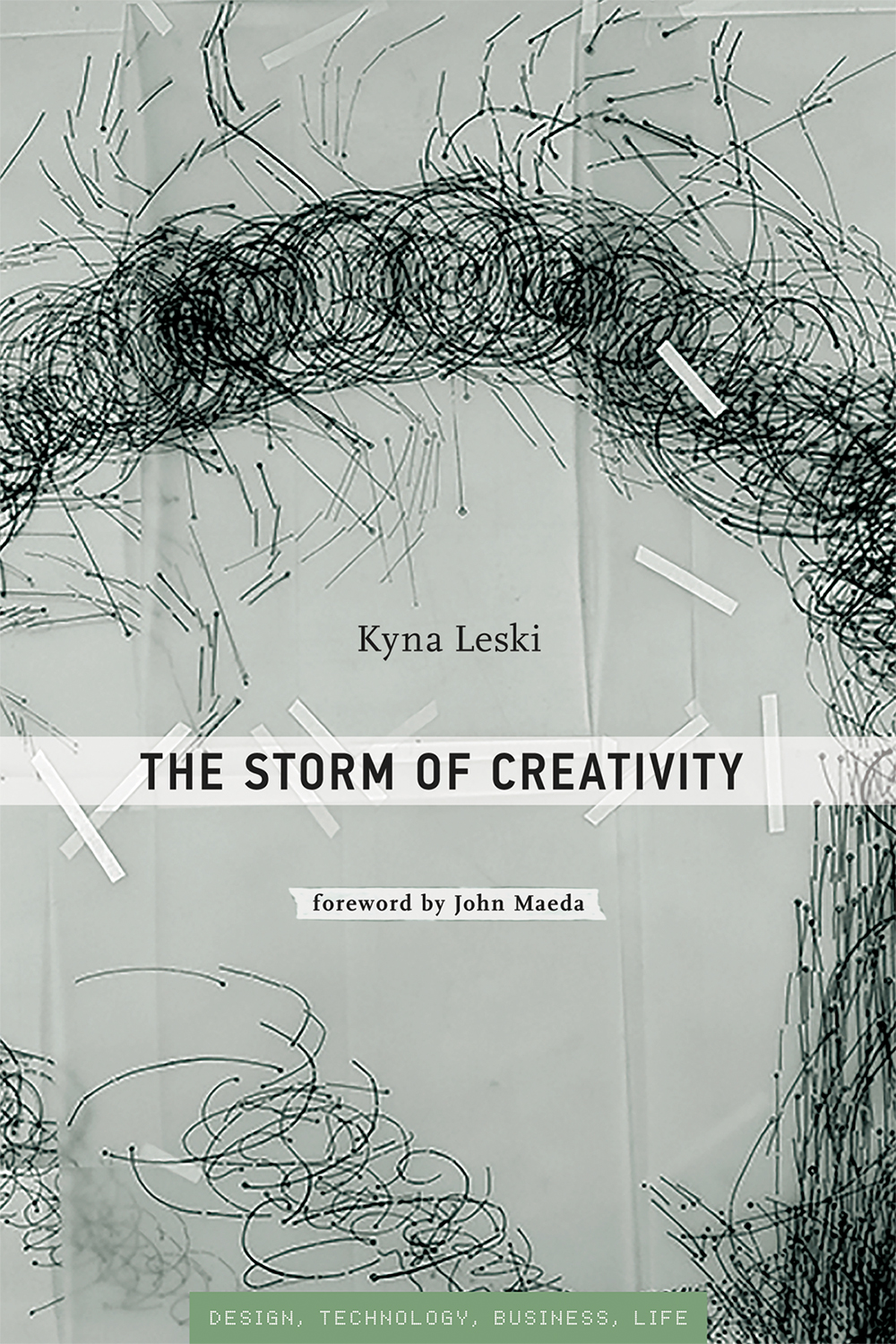
    The Storm of Creativity, by Kyna Leski

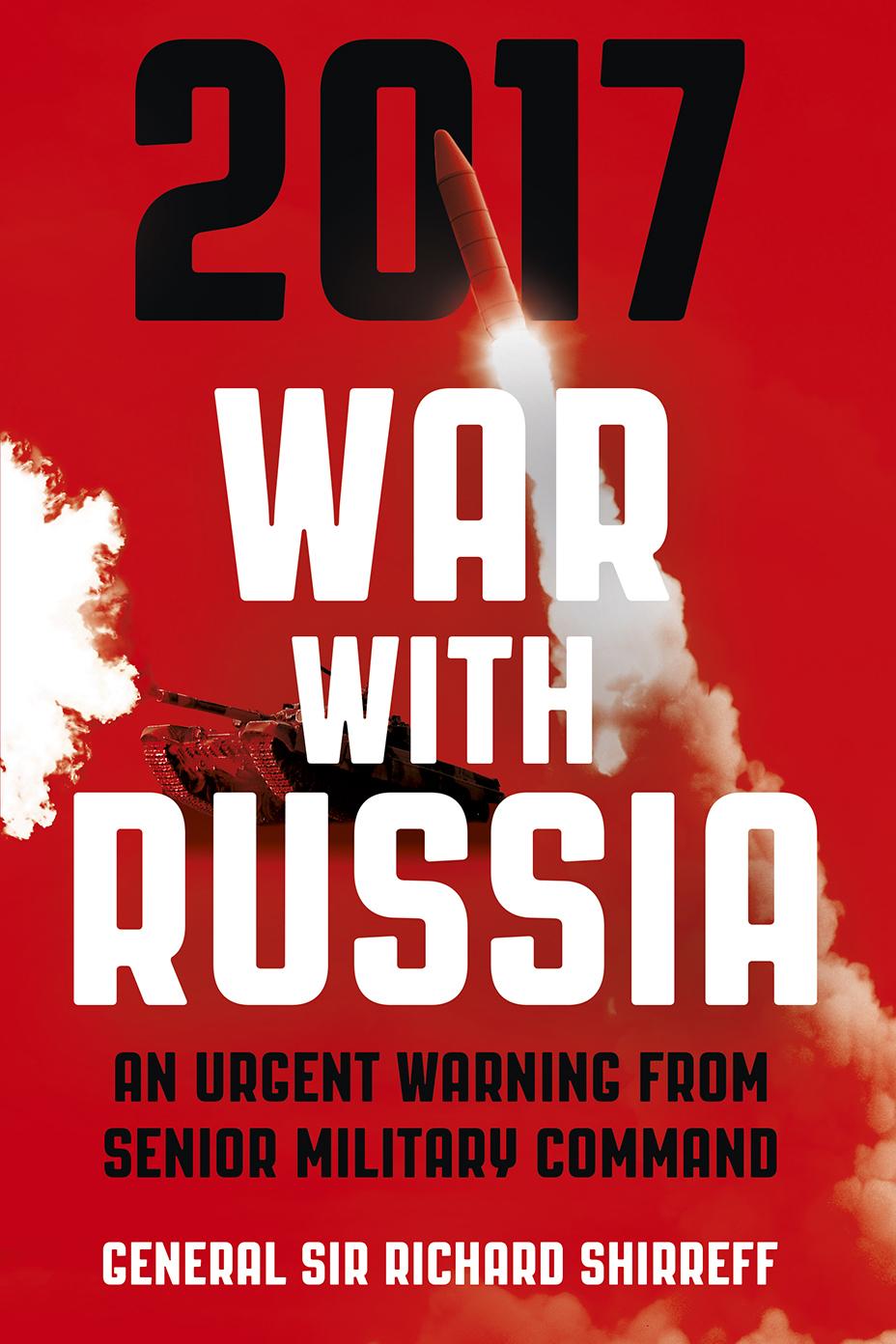
    2017 War With Russia, by General Sir Richard Shirreff

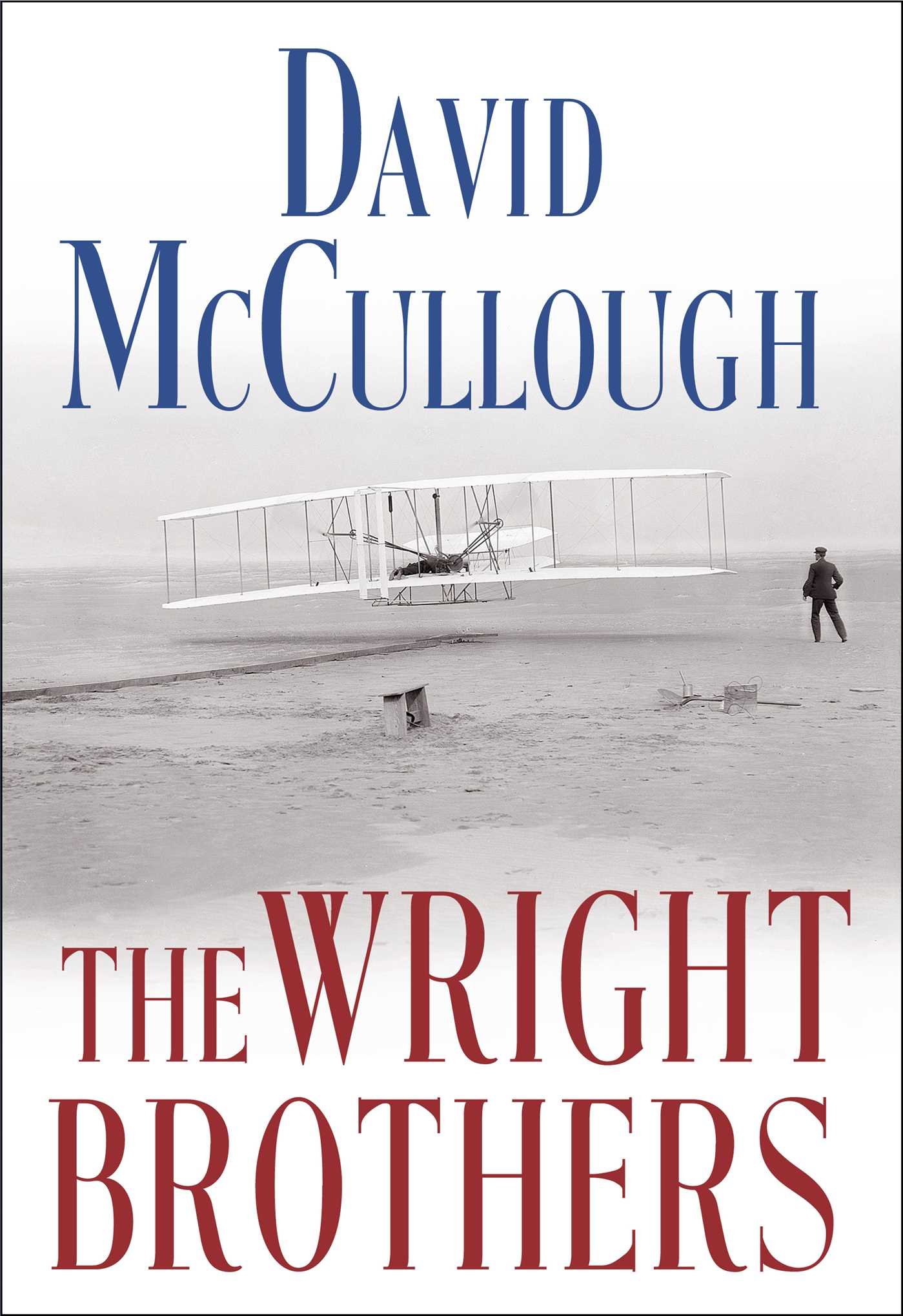
    The Wright Brothers, by David McCullough

    Serendipities, Language and Lunacy, by Umberto Eco

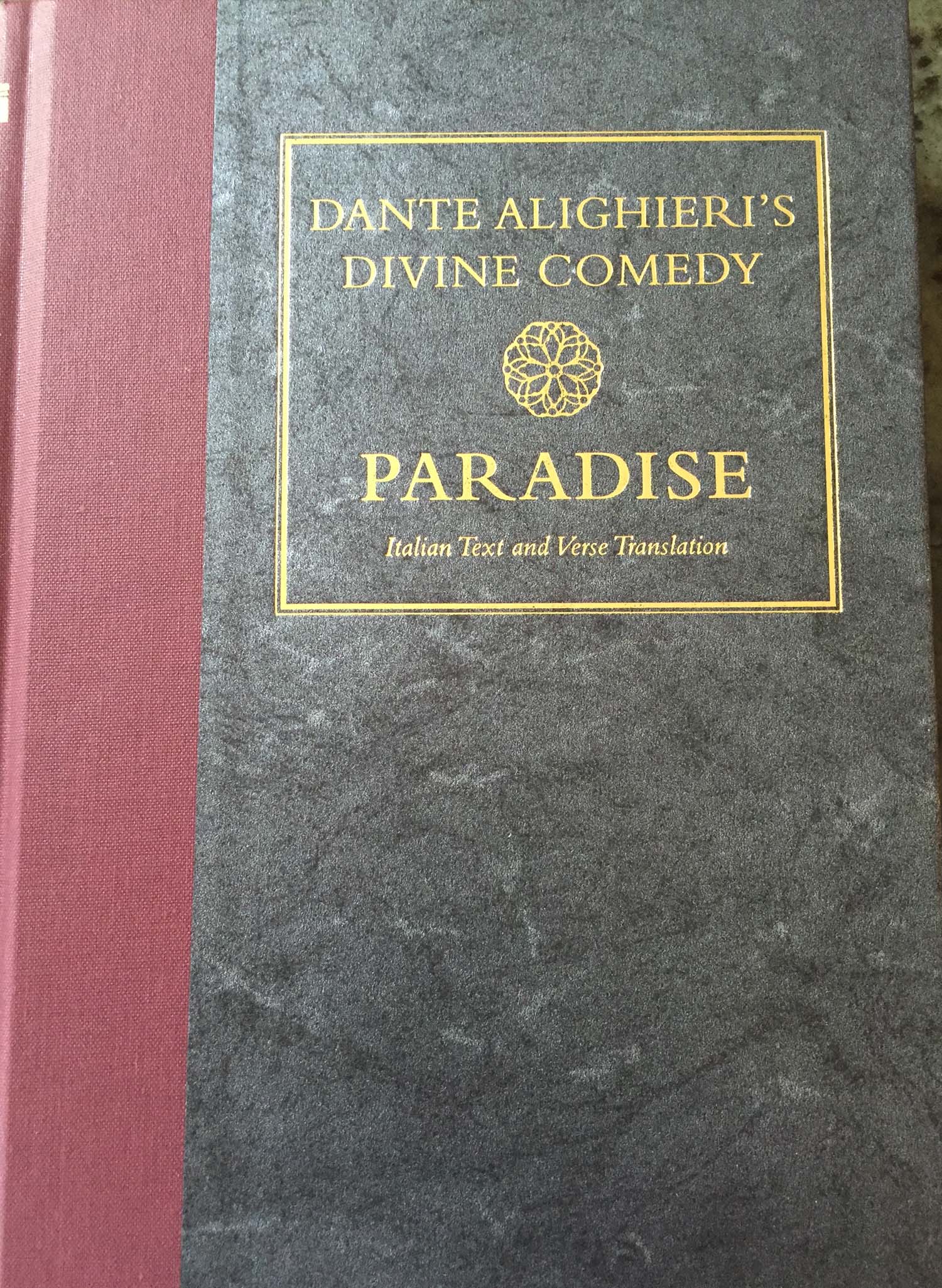
    Paradise, Dante Alighieri, translated by Mark Musa

    Undertow, by Stanton S. Coerr

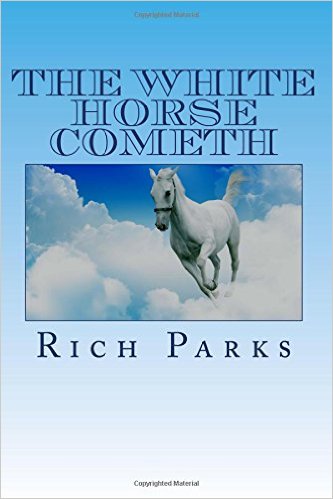
    The White Horse Cometh, by Rich Parks

    Washington The Indispensable Man, by John Thomas Flexner

    This list starts the first week of May, so perhaps the title should be Spring/Summer. Most of these books are quick reads and all are recommended.

    I picked up Ms. Leski’s book at an MIT bookshop on a business trip in early May and read on the train ride home. Books on creativity are ubiquitous, but Ms. Leski takes an interesting approach by describing the creative process using the metaphor of a storm. Several ZP readers will find of interest.

    2017 was recommended by a friend. The author was the Deputy Supreme Allied Commander Europe and the book focuses on a Europe/NATO response to a Russian invasion of the Baltics. Written in a Tom Clancy-like style, the plot is fast-paced even though the good general provides sometimes provides detailed insights into the inner workings of NATA and the North Atlantic Council (this is one of the values of the book—bureaucracy writ-large).

    David McCullough’s Wright Brothers delivers an approachable and human accounting of the first men of powered flight. Some reviews on Amazon complain McCullough lifts and uses too many quotes to tell the story. At times the quotes were distracting, but not enough to prevent the enjoyment of the story of two brothers who changed the world. This book was a gift otherwise I probably would not have read.

    Serendipities is a short book, but was a long read for me. Eco explains how language and the pursuit of the perfect language has confounded thinkers since time immemorial. He refers to Marco Polo’s unicorn (also used in his Kant and the Platypus which is excellent) explaining how language is often twisted to meet a preconceived notion or idea. The first couple of chapters were quite good, chapters three and four did not hold my interest or were over my head. The closing chapter was good enough to convince me I’ll need to read this little book again. (My Eco anti-library has been growing of late.)

    Eco’s book led me to reread Musa’s excellent translation of Paradise. My son gave me the deluxe edition with parallel Italian and English, plus commentary. Eco referenced Canto 26 and 27, and I enjoyed the break so much I read the whole thing!

    Undertow is my good friend Stan Coerr’s second book of poetry.  His first book Rubicon was a moving collection of poetry of men at war. Undertow deals more with the heart and is quite good, too. You won’t be disappointed.

    White Horse is also a book by an old friend, Rich Parks (we’ve known each other since the mid-80’s). White Horse is self-published and in places it shows, but the overall story is quite good for a first book (I’ve already told him his book would make an excellent screenplay.). The plot is quick and entertaining even if a bit unbelievable, but the story is fiction. Rich is following up with a sequel in August in 2016 and I’ll be reading it, too.

    Mr. Flexner’s Washington was a gift, too. In this quick biography Washington is made approachable and human. And when I say “quick,” I mean quick…Trenton and Princeton took one chapter compared to David Hackett Fischer’s Washington’s Crossing which took up a standalone book. If someone were looking for a first Washington biography, this would be a good place to start.

    This isn’t the conclusion of my summer reading, but a pretty good start.What are  you reading this summer?

    Firefights, breath, & meditation

    Monday, June 20th, 2016

    [ by Charles Cameron — remembering my father, Capt Orford Gordon Cameron, DSC, RN ]
    .

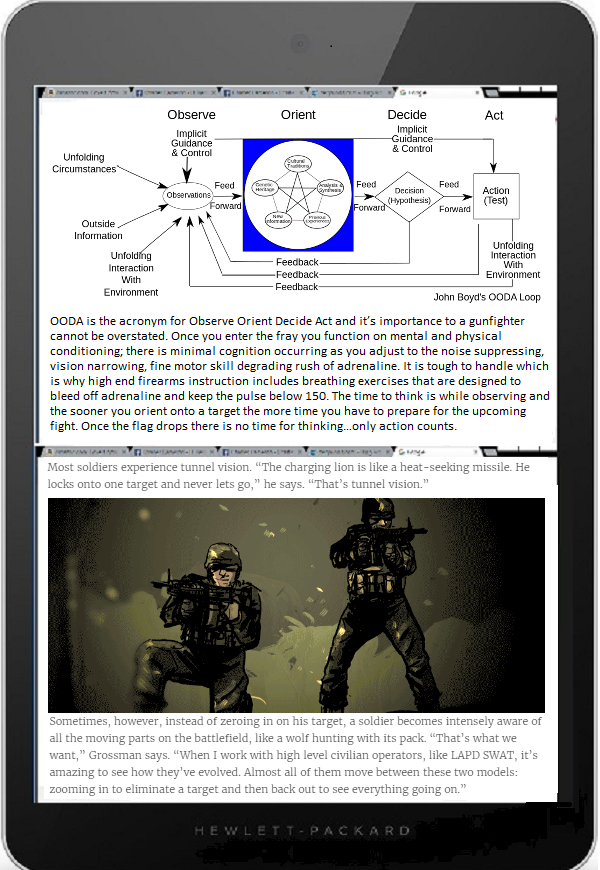
    I came across two pieces with overlapping descriptions of what happens to the body, perceptions, and thought, in a firefight. As is my habit, I’ve picked some of the essential text and accompanying illustration in each case, and offer them to you in my DoubleQuote format:

    DQ Breath and time dilation

    **

    The first quote, with the Boyd OODA Loop diagram heading it, comes from Tim Lynch‘s Fourth Generation War Comes To America: What Are You Going To Do About It?, which Michael Yon linked to.

    Lynch’s piece is his response to the Orlando shooting, its thrust being that the event went on way too long, and that we need more people to identify (and prepare) themselves as sheepdogs:

    Human Sheepdogs are, by nature, not a threat to their fellow citizens but are death dealing fighting machines when they, their loved ones or the sheep (other citizens) are in peril.

    In particular, Lynch delivers a mini-seminar on the essential contents of two books:

  • LTC Dave Grossman, On Killing
  • Gavin de Becker, The Gift of Fear
  • The second comes from Adam Linehan‘s This Is Your Brain On War at Task & Purpose. Again, the topic centers around Grossman’s work, but in this case the framing has to do with the tranfer of psychological insight from sports medicine to the military profession.

    There’s more in Linehan’s piece that’s relevant to my posting here than I’ve been able to quote in my “tablet” DQ format, so here’s some additional detail:

    The moment an engagement kicks off, the body initiates a dramatic response, beginning with the circulatory system, which immediately shunts blood away from the body surface. This, Grossman explains, is the body preparing to suck up damage.

    Preparing to absorb damage, the circulatory system moves blood away from the body’s surface to its core.

    “It’s called vasoconstriction. Just before the capillaries, there’s a mechanical shutdown of the blood flow, and now the arteries and the body core are holding up to twice as much blood. That’s why the face goes white.”

    There are two primary reasons for this. One, it helps prevent bruising, which is what happens when the capillaries and veins burst from blunt force trauma. If there’s no blood, they remain intact. But more importantly, the redirected blood flow helps keep the person alive long enough to finish the fight. [ .. ]

    Blood drains from the brain’s rational control center (the forebrain), leaving the midbrain in full control, at which point, you will do what you’ve been trained to do.

    That’s because, at its most extreme, vasoconstriction affects the brain, too. “As the blood drains from the face, blood drains from the forebrain, and there’s no rational thought,” Grossman explains. “I call that ‘condition black.’ And at condition black, the midbrain is in charge, and you’ll do what you’ve been trained to do — no more, no less. You will do what you’ve been programmed to do — no more, no less.”

    Thus, if a soldier reaches condition black and lacks adequate training, there’s a good chance he or she will freeze up. A well-trained soldier, on the other hand, will likely take action to neutralize the threat. “Given a clear and present danger, with today’s training almost everyone will shoot,” Grossman says.

    There are specific impacts on perception, too:

    Many soldiers report barely being able to hear the blast of their own rifles during combat.

    “The lion’s roar is a deafening, stunning event,” says Grossman. “But the lion doesn’t hear his roar, just like the dog doesn’t hear his bark. Their ears shut down, and so do ours. Gunpowder is our roar.”

    Under high stress, the nerve connecting the inner ear and the brain shuts down, resulting in temporary hearing loss, or “auditory exclusion.”

    This phenomenon is called “auditory exclusion,” and it’s a result of the nerve that connects the inner ear and the brain shutting down in the heat of battle. According to Grossman, 90% of combat soldiers report having experienced auditory exclusion. “You get caught by surprise in an ambush. Boom. Boom. Boom. The shots are loud and overwhelming. You return fire, boom. The shots get quiet, but you’re still getting hearing damage.”

    A soldier’s vision can also be affected by combat, and Grossman uses two different so-called predator models — the “charging lion” and the “wolf-pack dynamic” — to explain this.

    This is where the quote I selected about two types of vision — one in tight focus, one diffusely aware of everything going on around you — kicks in.

    And one more thing: there’s time-dilation.

    A number of soldiers and law enforcement officers whom Grossman has interviewed reported being able track incoming rounds with their eyes.

    There is another phenomenon involving vision that is widely disputed, but which Grossman insists is real, and that’s the experience of what he calls “slow-motion time.”

    “I have had hundreds of people tell me they can see the bullet in combat,” he says. “Many have been able to later point to where the bullet hit, and they could not have done that without tracking the bullet with their eyes. Not like the matrix. It’s like a paintball, where the bullet is slow enough you can track it with your eyes.”

    **

    I’m not much of a gun person — though this is Father’s Day, and I do recall going on exercises aboard my father‘s command (Royal Navy) when I was nine, and firing the Oerlikon and Bofors guns. Why, then, am I interested enough in these two articles to recap them together here?

    It’s because I’m a meditator, and concerned with breath and matters of cognition — so “high end firearms instruction includes breathing exercises that are designed to bleed off adrenaline and keep the pulse below 150” speaks to my daily practice — not because I’m in firefights, but because I want to enter a state of peace, and remain peaceable even when not meditating.

    And that, my friends, means there’s some common ground between warfare and peacefare right here, in the breath. Which is something I think should be of keen interest to all of us.

    Linehan’s article goes into more detail regarding cognition under fire, but two points particularly strike me. The first is that he mentions two states, often in rapid alternation, one involving tightly focused awareness, and the other a wide-angled awareness of 360 degrees around you, not to mention above and below..

    That interests me because there are two major strands of meditative practice, one using a tight focus (eg on the breath, a mantra, etc), and the other picking up on whatever crosses the threshold of consciousness, not only from all around your external environment, but also from the various streams of bodily sensations, emotions, and thoughts. Mantra meditation is of one kind, zen sitting an example of the other.

    Don’t take my word for it, though, I’m probably missing some important subtleties, and practice under the watchful eye of a teacher will give you a far better sense of the distinction and its niceties than I can.

    The last thing? Time dilation.

    It’s my experience — sometimes in meditation, but perhaps most noticeably when I was in a car rolling over and over in the Nevada desert — that time as perceived can both slow down and speed up. There can be all the time in the world to notice every last detail of what’s happening — and it can all be over in a flash, a split-second.

    Words really don’t do such experiences justice, so I’ll leave it at that. But the similarities and commonalities between military experience under fire and meditative experience in the cool of the day are striking enough to warrant in-depth study — or as the meditation community might out it, further contemplation.

    Doing it right, doing it wrong, & it could be your Sunday surprise

    Sunday, May 22nd, 2016

    [ by Charles Cameron — a quick note about putting the mind through hoops, aka connecting dots ]
    .

    For the record, the mind is not a phalanx but a swarm — IOW it gets creative when the links are leaps, not serried ranks.

    So when your evidence board, memory jolt, graphical display looks like this (and it’s not the unavoidable dimness of the screen-grab I’m talking about):

    wrong way to stir memories The Killing s3 e8 around 39 mins 2

    the mind won’t see as many possibilities as when it’s more like this:

    **

    Randomize. Create uneven spaces between items. Shift items around. The idea here is to create fresh possibilities, not to look tidy.

    I had a friend once who was an artist. His studio and his life were both disasters — and in his studio, in the middle of that life, he created dazzling, gorgeously colored and delicately graduated geometric patterns — as though he was a disorder organizer, and the more disorderly his input, the greater the precision of his output.

    Think about that.

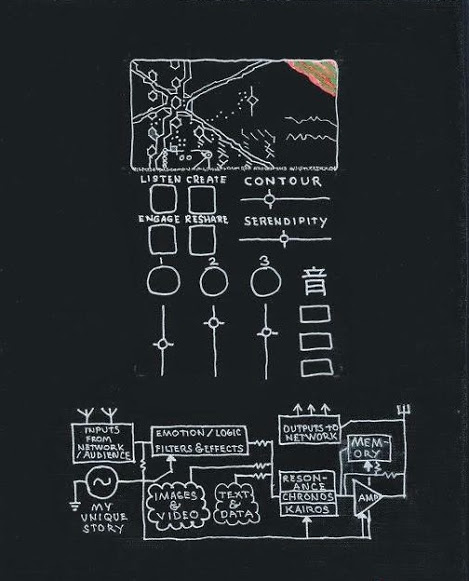
    Here is what may be a diagrammatic version of what I’m saying, or maybe not, but which stirs my mind in any case, just thinking about it — from Ron Scroggin about a year ago, shared in John Kellden‘s Conversations on G+:

    projectmixtape RC

    **

    Sources:

  • Evidence board, The Killing, series 3 episode 8
  • Al Qaida board, Manhunter

  • Switch to our mobile site