[ by Charles Cameron — i have a major post, possibly two, on Ezekiel and Esther, Israel and Iran in prep, and zen just posted a major piece on the era of the creepy-state — so don’t mind me, this is just a brief aside on religious devotion, relics, the heart, the skull, the breath ]
.
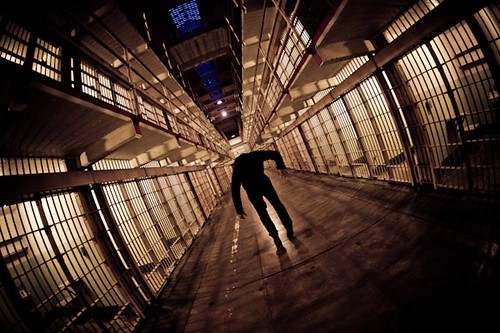
There’s an eerie beauty to relics — and when I read a BBC news piece today titled Dublin patron saint’s heart stolen, about the theft of a relic of St Laurence from Dublin’s Christ Church cathedral (upper image), while the “contemporary” part of me found it perhaps worth a chuckle and certainly paradoxical —
The thief would have needed metal cutters to prise open the iron bars protecting the wooden heart-shaped box holding St Laurence O’Toole’s heart.
— another part of me was saddened, much as I was saddened some years back by the destruction of the Buddhas of Bamiyan.
I hope Dublin gets its spiritual heart back.
*
And so my mind went back to another relic, and another recent encounter with that eerie beauty — the relic of St Valentine, martyr, which I ran across in a photo by Fr. Lawrence Lew OP (lower image), posted on the saint’s day, February 14th, by Shawn Tribe in the New Liturgical Movement blog, a regular read of mine.
St Valentine, memorialized not by silly cupids (silli putti?) and plump, winged hearts, but by the fellow’s skull…
*
There’s something there about dust — that we are dust, animated by breath until the dust settles…
Congress passed a law – by unanimous consent in the Senate and by a suspension of rules in the House – to permit the Federal government to arbitrarily arrest and imprison for up to ten years members of the serf class (formerly known as “American citizens”) whose presence annoys or offends specally designated members of the elite and foreign dignitaries. A list that will no doubt expand greatly in future legislation to include very “special” private citizens.
Think about that, future “Joe the Plumbers” or Cindy Sheehans, before you ask an impertinent question of your betters or wave your handmade cardboard sign. Is ten seconds of glory on your local ABC affiliate news at 5 o’clock worth that felony arrest record and federally funded anal exam?
No? Then kindly shut your mouth, sir. Learn your place.
Two nebbish Representatives, one Republican and one Democrat, distinguished only by their lack of legislative or political importance, sponsored the bill on behalf of the big boys who fast-tracked it under the radar (they learned from the SOPA debacle). Forget ideology or boasts about carrying a copy of the Constitution in the breast pocket of their suit, whether you are in an archconservative Congressional district or an ultraliberal one, almost every member of Congress voted “aye” to trash multiple amendments in the Bill of Rights.
Almost every one.
This is an accelerating trend in recent years and in particular, a bipartisan theme of the 112th Congress, which views Constitutional rights of nobodies as an anachronistic hindrance to the interests (or convenience) of their powerful and wealthy political supporters. Our elected officials and their backers increasingly share an oligarchic class interest that in important matters, trumps the Kabuki partisanship of FOXnews and MSNBC and inculcates a technocratic admiration for the “efficiency” of select police states.
We have reached the point where we as Americans need to stop, step back from moment by moment fixation on nonsensical, “white noise” fake political issues like “contraception” ginned up to keep the partisans distracted and become seriously involved in determining the direction in which our nation is headed. Our elite are telegraphing their strong preference for a “soft dictatorship” but we still have time to check their ambitions and rein in their looting.
It is almost quaint these days to pick up Friedrich von Hayek’s classic, The Road to Serfdom and thumb through it. The libertarian antistatists of the 20th century were so focused on the clear and present dangers of totalitarianism that the idea of a weak state that endangered liberty through a mixture of corruption and regulatory capture eluded them. The Westphalian state at it’s apex was so overweening that the enemy of free societies, after foreign monsters like Hitler and Stalin, could be ambitious intellectual pygmies like Harold Laski or Tom Hayden. The state was so omnipotent that even it’s efforts at benevolence, to build a “Great Society” of the Welfare State were injurious to individual freedom because the expanse of statism crowded and weakened civil society , the market and private life. The argument gained political traction because, to varying degrees, it was true and looked prophetic when the Welfare-state began to crash economically in the 1970’s on stagflation.
Give the Welfare-state liberals and Social Democrats of the past their due though, their intentions by their own lights were benign. They wanted to make a safer, more secure, more equal, more just life through a more powerful state (whether that was a good idea or a realistic endeavor was the central political question between right and left). The current elite in comparison is so inferior in moral character and overconfident in their abilities that they may soon make us yearn for the former’s return.
What have now in our ruling class, are the builders of a Creepy-state and their intentions are not benign, except toward themselves, for as long as the looting of the American economy can last.
Unlike the Welfare-state, the Creepy-state, shot through with corruption, is not omnipotent because it is to be the servant and gendarme of the emerging oligarchy and not their master – but it is to be omniscient and omnipresent, constantly watching, monitoring, investigating, recording, interrogating, coercing, sorting, muzzling, gatekeeping and shearing the sheep on behalf of the shepherds.
Or the wolves.
The Creepy-state is not there to protect you or give you a higher standard of living or ensure justice or democracy, but to maintain a hierarchical public order from “disruption” (formerly known as “politics” or “democracy”). If the classical liberal ideal was the night watchman state, this state is the shadowy and ill-disposed watcher in the night.
The American political elite, Democrat and Republican, Conservative and Liberal, are in are largely in consensus that the government should, in regard to the American people:
Read your email Listen to your phone calls Track your movements on GPS Track your online activity Track your spending Track your political activity Read your medical records Read your financial records Scan your body Scan your house Scan your DNA Keep you under video surveillance in public Detain you at random in public places for security checks Close off public spaces for private use Seize private property for private use Censor your speech Block your access to judicial relief Determine your educational and career path Regulate your diet, place of residence, lifestyle and living standards (ever downwards) Charge you with secret crimes for breaking secret regulations Share or leak information about you at will
Is this the America we wish for our children or grandchildren? One that epitomizes the values of our Constitution or Declaration of Independence, or is it some kind of tawdry and shameful dime store fascism of a small Latin American country? Perhaps life is finally imitating fiction?
Fortunately, it is not too late. Irrevocable changes in the constitutional order have yet to be engineered. Our politicians are followers, not leaders here. They are a small and cowardly lot for the most part and will recoil in fear from this authoritarian ethos if a sufficiently large number of elected officials are thrown out of office at once. We can still roll this back – at least the most egregiously anti-American aspects – if we get sufficiently angry come November.
I was just reading Matthieu Aikins‘ GQ account of The Siege of September 13 in Kabul, when a couple of sentences caught my eye, not because of the attack itself, but because they reminded me of a point I want to make about the way we think these days about networks, nodes and linkages:
Salangi’s SUV was passing down the main road north of the embassy when the sound of gunshots and his police radio simultaneously erupted. He told his driver to turn around and head toward the sounds.
At Massoud Circle, the next roundabout down from Abdul Haq, they encountered a bottleneck of police vehicles, and so Salangi continued on foot, ducking as he heard the crack and whine of bullets passing close by…
What specifically caught and rerouted my attention was that phrase, “Massoud Circle, the next roundabout down from Abdul Haq” — Abdul Haq Circle, I’d read earlier in the article, “is a wide traffic roundabout named for a deceased mujahideen commander”, as presumably is the circle named for Massoud.
So we have two roundabouts connected by a road… and two deceased mujahideen commanders.
Or to put that another way, we have two nodes and a connection between them, twice over — in once case the nodes are places, and in the other the nodes are people.
*
Further into the article, I found a graphic showing the two places and the road connecting them — and an image of two people in Kabul that day, one extending an arm of care to the other. These two men weren’t Abdul Haq and Massoud, of course, but two people nonetheless. So in each graphic, we have two nodes and a connection:
A great deal of time and treasure goes into the analysis of networks of communication — cellphone to cellphone, person to person — or travel — place to place — (a) because the patterns can be revealing, and (b) because the data (what number called what number, e.g., how often Nidal Hassan emailed al-Awlaki, or what route bought Abu Dujanah from Amman to Khost) is unambiguous when obtained.
*
We’re also fond of neural nets, eh? — whether the “artificial” nets of AI or the “biological” nets of the brain — and again, these are unambiguous, scientists and technicians love them, and software developed with Congress-friendly budgeting implications is required to process them.
But what about ideas?
What about minds, what about the subjective side of persons and travels and communications and contacts and brains — what about thoughts, what about admiration?
That’s the node-link-node mapping that I find most interesting: it utilizes the most complex software (human intelligence), and demands the least complex support system (cappucino, napkin and pencil) — and some of its nodes and their linkages (beliefs, e.g., leading to actions) are among the richest features of the human behavioral landscape.
*
The idea that jihad is an individual obligation, for instance, is a staple of AQ-style theology. It is my contention, indeed, that acceptance of that idea is the religious foundation on which acts of jihadist suicide are based.
And by the same token, these suicide acts are then viewed in terms of martyrdom, since they were enacted in the cause of Allah, giving rise to such eulogies as this one, offered by AQ to Abu Dujanah after the Khost event:
May Allah have mercy on you, our dear Abu Dujanah, and may He raise your ranks in register of the inhabitants of Paradise. By the Lord of the Ka’bah, indeed you have succeeded, our dear Abu Lailah, Allah willing. You were truthful, and you became known. You set an example, and you were truthful in word and deed. You followed the speakers and writers before you. May Allah be pleased with you . Your patience, Jihad, and tolerance of hardships were in Allah’s Cause. Your prayers and insistency was for Allah, and was your solitude and secret conversation. Thus, your reward is with Allah. Allah is your Lord and Protector, and Allah willing, our next meeting will be in Al-Firdaws Al-A’la, our dear beloved brother.
Such logic, such rhetoric, and such devotion are of the essence of what we confront in the jihad…
*
And richest of all for us to come to terms with: the person to person transmission of such ideas…
….Surely, it cannot be as bad as all that, you might say. True. It may not be as bad as I say, but it will surely be more messy than the glib op-ed that Anne-Marie Slaughter threw together for the New York Times last week. CNN reports that the military is looking at using as many as 75,000 troopsjust to secure potential Syrian chemical weapons sites. The realities of a Syrian intervention are far messy than Dr. Slaughter is willing to countenance in her infantile fantasy masquerading as policy prescription. Therein lies the rub. Dr. Slaughter is a respected policy elite and people take her ideas seriously. Therefore, she has a responsibility to be honest and open in her advocacy with regard to the risks and complexities of her proposal. Dr. Slaughter tweeted a few weeks ago that those outside of government could partake in one-sided advocacy, leaving policy-makers in government to sort out the details. This is the height of irresponsibility. Essentially, she is saying that people like her are free to sell the American people on a policy in NYT op-eds without fully disclosing the costs and complexities, leaving the unhappy recipients in government with the task of dealing with the unstated costs and risks, while public debate shaped by dishonest people like her has closed off some of their policy options.
Slaughter states that simply arming the opposition would lead to destabilizing civil war. However, arming the Free Syrian Army to create “no-kill zones,” that is enabling the FSA to control swathes of territory just within the sovereign borders of Syria would somehow bring an end to the butchery. Not mentioned is how the FSA would take or hold this territory against the likely violent disagreement of the regime. We are talking about battle here. Not potshots against regime forces, but the taking and holding of territory. This is not just glossed over in the Slaughter plan, but completely ignored. She speaks blithely of the use of special forces to enable the FSA, and how they could enable the FSA to cordon population centers and rid them of snipers. What you don’t see here is the bloody battle and likely airstrikes needed to push the bulk of the regime forces away from these population centers to be cordoned. Nor does it discuss the brutal and psychologically exhausting game of counter-sniper operations.
Peter just gave one of the nation’s best known FP academics a USMC wire-brushing worthy of R. Lee Ermey.
Israel, it must be said, is no friend of the Assad regime and the loathing in Damascus is mutual. Yet despite having demonstrable air superiority over Syria since at least 1986 and numerous provocations, Jerusalem has never attempted an Operation Desert Fox-style EBO campaign to grind down the Assad regime’s machinery of coercion to powder. That fact ought to give advocates of intervention in Syria some pause.
….I have long supported the mission both in Afghanistan and Iraq, and it troubles me to no end to see that progress is mired in choosing the wrong weapons to deal with what nature, geography, and a people, who only understand the ancient pre-religious tenets of revenge and blood honor, to guide their every move; has seen our best hopes dashed on the rocks of reality. As politically in-correct as it might sound, looking back at the original strategy of surgical strikes, should have also carried the accompanied effort to risk what ever troops necessary in the beginning, too capture or kill every leader from Osama, to the entire Taliban and AQ leadership. Then make it crystal clear that any future sanctuaries would bring a rain of carpet bombing upon that region until all are gone. That, as harsh as it sounds strategy, would send a “straightforward” message in a language all Afghan’s and their allied cohorts understand, and have used to settle disputes for millenniums. An old friend and mentor, whose military and historical credentials are as deep as the sea, predicted the outcome the US is currently experiencing and a decade ago, suggested the most politically in-correct path, would have resulted in surgically cutting out the cancer, much like we rely on radiation and surgery as proven tools. Then following up with check-ups and changes in behavior to keep the cancer from returning. Finally, if the cancer of terrorism returns, more surgery, and if needed, doses of radiation to kill those dangerous cells.
….This scenario sounds utterly practicable as part of a theory conjured up in the comfort of the ivory tower. But in practice, Western military technology cannot stop messy civil wars in foreign lands. Ending the internal conflict in Syria and producing a peaceful aftermath would entail a long-term American commitment to armed nation building. The wars in Iraq and Afghanistan should have made this clear. Armed nation building isn’t done in eight or eleven years but eighty or a hundred years beyond.
But here is where good strategy should kick in. Good strategy might and probably should discern that in these kinds of civil wars, considering U.S. security interests, using military force is not the solution. Force might be a good option if Americans were willing to stay for generations, but then strategy might also determine that a prolonged engagement is simply not worth it.
Infinity Journalhas released it’s first Special Edition – Clausewitz and Contemporary Conflictfeaturing articles by Antulio Echevarria, David Kaiser, A.E. Stahl, Beatrice Heuser, Hugh Smith, Wilf Owen and Adam Elkus
[ by Charles Cameron – extended analytic game on Israeli-Palestinian conflict — continuing ]
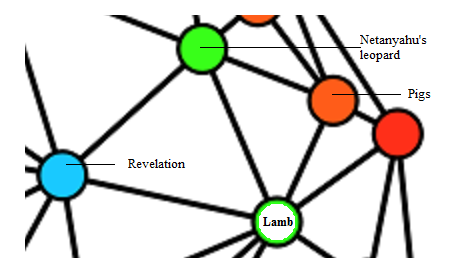
Move 18: The Lamb of God
Move content:
If you want it in short form, the move content here is: “the Lamb slain from the foundation of the world” (Revelation 13:8) — note in particular the curious involvement of time in this formulation…
*
The Lamb of God is a superposition, a simultaneous envisioning of multiple meanings with their inherent values – it’s a thought (concetto) in a style of thinking that once was and should properly be known by the name of Poetry – a style of thinking in which a rich cluster of meanings is concentrated, potentiated, distilled as wine is distilled into brandy.
It is not, therefore, simply a decorative motif for churches, hymnals and religious pamphlets, not is it that brilliant but weak thing, a metaphor. Layered after the manner of Blake‘s fourfold vision (move 4), it is at once:
the radiance of Godhead;
focused in the person, life and death of the window, Christ, through which that radiance streams;
in his act of permitting his own slaughter, nailed and bleeding, on the tree that echoes the tree in an eternal garden;
prefigured in his breaking of bread and offering of wine, wheat ground by millstone and grape trodden in winepress, the fruits of the earth, the seasons and human labor;
offered in substitution as a Passover sacrifice;
repeated wherever and whenever Eucharist is celebrated;
portending the great union to which we are invited, the Marriage Supper;
seen in the image of a lamb, a child of sheep…
through all of which the divine radiance takes form, is colored, may be glimpsed, may be made ours… by means of which — “take, eat, this is given for you” — we may be made his.
This sounds like religion, and no doubt it is – but the mode of perception required to apprehend it is not material, not literal, not within reach of camera or microscope or x-ray, of fact, but symbolic, transcendent, within the reach of insight, of poetry, of love.
Likewise, the relation of time with the timeless in sacrifice is expressed as poetic truth in the words “slain from the foundation of the world “.
*
You may know these things from experience, you may see them as I write this, or this may all be as dust to you, the merest dull preachment, so many wasted pixels, so much spilled ink.
Perhaps I can convey some of the life of this matter through the works of great artists… for that is what they are great for.
Visually, the appropriate illustration would be the Adoration of the Lamb from van Eyck‘s Ghent Altarpiece, sonically the Agnus Dei from Bach‘s B Minor Mass – which I can happily present together in this video of John Eliot Gardiner conducting the Monteverdi Choir and English Baroque Soloists:
Here too, from Handel‘s Messiah, is the final chorus Worthy is the Lamb that was Slain and concluding Amen, sung by the Ichud Choir with the Herzliya Chamber Orchestra under Harvey Bordowitz:
I am particularly delighted to feature a choir and orchestra from Hertzliya here, because I generally associate Hertzliya with Dr Reuven Paz of the Interdisciplinary Center (IDC) in Herzliya, a noted counter-terrorism (CT) analyst — and besides, a Jewish choir and orchestra singing Messiah is interesting in its own way. More on that later…
Links claimed:
To pigs, move 16: it is indeed a pleasure to move from the use of animals such as the pig in an imagery of hatred to that of the lamb in an imagery of love, and it may be noted that this shift accompanies the motif of sacrifice…
To Revelation, since “the Lamb slain from the foundation of the world” is a quotation from Revelation 13:8.
To Netanyahu’s leopard, via this lovely quote from Isaiah 11.6:
The wolf also shall dwell with the lamb, and the leopard shall lie down with the kid; and the calf and the young lion and the fatling together; and a little child shall lead them.
Comment:
Different moves can be seen as the “heart” of the game from different perspectives: this one presents the heart of the game’s (and my) metaphysics.
Specifically, there’s a great deal more I want to say in terms of the move content, laying out in more detail the relationship of “the Lamb slain from the foundation of the world” to the Wedding Supper of Revelation, the Eucharist, the Seder, ritual in general, time and eternity. For the sake of clarity, I’ll lay this out in a cadenza, an excursus — please read it as part of the move content for purposes of play.
____________________________________________________________________________________________
Cadenza
Time lies at the heart of this move – or more precisely, time with eternity.
The thing being, that “time” contains “eternity” in the hidden heart of every moment, while “eternity” simultaneously contains every moment of “time”. Christ seems to be thinking along these lines in mind when he says “Before Abraham was, I am” – and the Zen Master Hui Neng‘s koan, “What is your face before your mother and father were born” carries a similar implication.
Indeed, this whole business of time, space and the Lamb is highly paradoxical, when viewed from a linear, secular perspective.
I am aware that this perception of the symbolic superposition of one time on another — like washes of watercolor on a painting and with “eternity” like the white canvas beneath them all — is an unfamiliar one in our clock-driven world. But it is an essential mode of perception if we are to understand the long memories of the Jewish and Palestinian peoples, and the eschatological hope that each of the three Abrahamic religions perceives in the spiritual topography of the Temple Mount / Noble Sanctuary in Jerusalem.
In playing this move, I wish to give the reader a background awareness of this style of perception: for it is this manner of thinking which allows centuries-ancient scriptures to map to the disputed terrain of these contested times.
It may thus serve us well as, moving further into the game, we encounter the more urgent and immediate voices of our contemporaries, friend and foe, skeptic and believer, warrior and peacemaker alike:
*
Within Judaism:
It was ever thus with prayer and sacrifice, as Martin Buber observes:
… prayer is not in time but time in prayer, sacrifice not in space but space in sacrifice, and to reverse the relation is to abolish the reality …
We find this sensibility spelled out explicitly in Jacob Neusner‘s account of the Passover seder, in his Introduction to Judaism:
Through the natural eye, one sees ordinary folk, not much different from their neighbors in dress, language, or aspirations. The words they speak do not describe reality and are not meant to. When Jewish people say of themselves, “We were the slaves of Pharaoh in Egypt,” they know they never felt the lash; but through the eye of faith that is just what they have done. It is their liberation, not merely that of long-dead forebears, they now celebrate.
Here lies the power of the Passover banquet rite to transform ordinary existence into an account of something beyond. … Now, in the transformation at hand, to be a Jew means to be a slave who has been liberated by God. To be Israel means to give eternal thanks for God’s deliverance. And that deliverance is not at a single moment in historical time. It comes in every generation and is always celebrated. Here again, events of natural, ordinary life are transformed through myth into paradigmatic, eternal, and ever-recurrent sacred moments.
Indeed the Haggadah, the liturgical text of the seder, itself expresses the need for this folding of time upon time:
In every generation a person is obligated to regard himself as if he had come out of Egypt, as it is said: “You shall tell your child on that day, it is because of this that the L-rd did for me when I left Egypt.”
*
Within Christianity:
Christ, who is simultaneously the sacrificing Priest and the sacrificial Lamb, is understood in the theology of the Eucharist as extending throughout and beyond all times and spaces – he is “slain from the foundation of the world” (Rev. 13.8 as quoted above), he re-enacts the original Passover in the Last Supper (Mark 14.14) and at his Crucifixion (his body broken and blood spilled), and is present at every Eucharist…
Dom Gregory Dix, after 700 pages of exceedingly detailed scholarship on the early formation of the Eucharistic rite in his seminal book, The Shape of the Liturgy — suddenly bursts out with this stunning paragraph:
Was ever another command so obeyed? For century after century, spreading slowly to every continent and country and among every race on earth, this action has been done, in every conceivable circumstance, for every conceivable human need from infancy and before it to extreme old age and after it, from the pinnacles of human greatness to the refuge of fugitives in the caves and dens of the earth. Men have found no better thing than this to do for kings at their crowning and for criminals going to the scaffold; for armies in triumph or for a bride and bridegroom in a little country church; for the proclamation of a dogma or for a good crop of wheat; for the wisdom of the Parliament of a mighty nation or for a sick old woman afraid to die; for a schoolboy sitting an examination or for Columbus setting out to discover America; for the famine of whole provinces or for the soul of a dead lover; in thankfulness because my father did not die of pneumonia; for a village headman much tempted to return to fetich because the yams had failed; because the Turk was at the gates of Vienna; for the repentance of Margaret; for the settlement of a strike; for a son for a barren woman; for Captain so-and-so, wounded and prisoner-of-war; while the lions roared in the nearby amphitheatre; on the beach at Dunkirk; while the hiss of scythes in the thick June grass came faintly through the windows of the church; tremulously, by an old monk on the fiftieth anniversary of his vows; furtively, by an exiled bishop who had hewn timber all day in a prison camp near Murmansk; gorgeously, for the canonisation of S. Joan of Arc — one could fill many pages with the reasons why men have done this, and not tell a hundredth part of them. And best of all, week by week and month by month, on a hundred thousand successive Sundays, faithfully, unfailingly, across all the parishes of christendom, the pastors have done this just to make the plebs sancta Dei — the holy common people of God.
And every Eucharist, the Constitution on the Sacred Liturgy of the Second Vatican Council tells us, offers us “a foretaste of that heavenly liturgy which is celebrated in the Holy City of Jerusalem toward which we journey as pilgrims, where Christ is sitting at the right hand of God, Minister of the sanctuary and of the true tabernacle.”
*
Within Islam:
We find the same in the profound reaches of Islam, where as Gerhard Böwering notes in The Concept of Time in Islam:
Through a distinct meditational technique, known as dikr, recollection of God, the mystics return to their primeval origin on the Day of Covenant, when all of humanity (symbolically enshrined in their prophetical ancestors as light particles or seeds) swore an oath of allegiance and witness to Allah as the one and only Lord. Breaking through to eternity, the mystics relive their waqt, their primeval moment with God, here and now, in the instant of ecstasy, even as they anticipate their ultimate destiny. Sufi meditation captures time by drawing eternity from its edges in pre- and post-existence into the moment of mystical experience.
*
I’ll leave off with the celebrated words of St. Augustine on time:
For what is time? Who can easily and briefly explain it? Who even in thought can comprehend it, even to the pronouncing of a word concerning it? But what in speaking do we refer to more familiarly and knowingly than time? And certainly we understand when we speak of it; we understand also when we hear it spoken of by another. What, then, is time? If no one ask of me, I know; if I wish to explain to him who asks, I know not.
— Augustine of Hippo, Confessiones lib xi, cap xiv, sec 17 (ca. 400 CE)
Zenpundit is a blog dedicated to exploring the intersections of foreign policy, history, military theory, national security,strategic thinking, futurism, cognition and a number of other esoteric pursuits.