zenpundit.com » 2016

Archive for 2016

Sunday surprise: three entangled faiths

Monday, June 20th, 2016

[ by Charles Cameron — two exhibits linking the Abrahamic faiths ]
.

For disciplinary as well as doctrinal purposes, the three Abrahamic faiths — Judaism, Christianity, Islam — are generally thought of separately — a separation which the two exhibitions this post revolves around are intended to bring into question.

**

One: Of gods and men: how Egypt was a crucible for multiple faiths

For instance, there’s a “stele of Abraham” in the British Museum show from last autumn that is worth pondering:
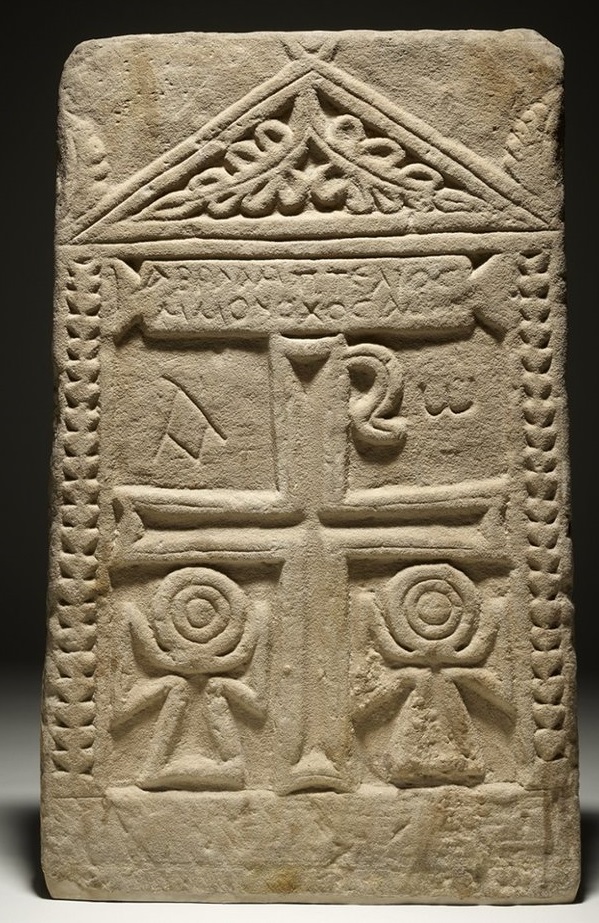
stele of Abraham

The accompanying text tells us:

On public display for the first time will be a gravestone, or stele, for a man called Abraham. “It commemorates someone with a Jewish name and yet it bears Christian symbols inside a classical frame next to the ankh symbol, the ancient Egyptian sign of life,” said O’Connell. “What is more, the engraving on it says he was ‘the perfected monk’ and is written in Coptic Egyptian.”

More about the show:

Curators at the London museum will use a series of items, many never put on public display before, to demonstrate the level of “entanglement” of religious symbols and rituals; with Egyptian emblems regularly appearing in classical Greek designs, depicting Jewish stories that were decorated with Christian crosses and Roman wreaths.

“Over the last 10 or 15 years in scholarship, there has been growing interest across the disciplines in looking at the way religions interacted, rather than just in isolation,” said Elisabeth O’Connell, a keeper in the museum’s Department of Ancient Egypt and the Sudan and a co-curator of the exhibition. “It is becoming clear that a lot of religious history has been founded on our modern distinctions simply being projected back.”

Note in the next paragraph the use of the terms ” troublesome” and subversive”:

Two hundred of these troublesome objects, many deliberately ignored by scholars in the past, have been gathered together to challenge the conventions of religious history. From architectural fragments, jewellery, paintings, gravestones and toys, to the paraphernalia of religious worship, they are all subversive evidence that faiths were once amalgamated in a way that was accepted by the ordinary people of Egypt, regardless of their birth-race or family’s religion.

Those are the Guardian writer’s words — Vanessa Thorpe‘s — not the words of the curators, but it seems the exhibit is intended to emphasize the “melting pot” side of Egyptian religion across the millennium after the fall of the Pharaohs rather than the separations:

“If you only take the work we have from Dioscorus of Aphrodito, it blows apart these distinctions,” said O’Connell. “He was a lawyer and poet, who lived in Egypt and wrote in Greek, although he was a Christian Copt.

“He is a great example of what was going on widely, because he used biblical sources and also wrote Homeric verse, one of them dedicated to a man with a Christian name, Matthew.”

**

Much the same impulse appears to have been behind a British Library exhibit in 2007:

Two: Sacred texts that reveal a common heritage

For the first time, the oldest and most precious surviving texts of the Jewish, Christian and Islamic faiths have gone on display side by side at the British Library. They include a tattered scrap of a Dead Sea Scroll and a Qur’an commissioned for a 14th-century Mongol ruler of modern Iran who was born a shaman, baptised a Christian, and converted first to Buddhism, then Sunni and finally Shia Islam.

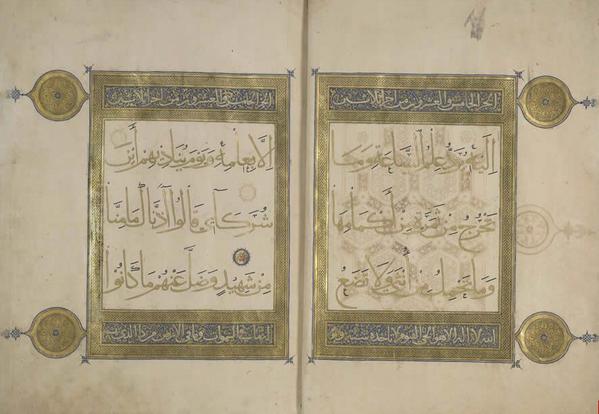
Here’s a two-page spread of that “Mosul Qur’an“:

quran
reduced image via the British Library

The Guardian article continues:

The exhibition also has some exotic private loans, including an embroidered 19th-century curtain which once covered the door of the Ka’bah, the shrine which is at the core of the hajj pilgrimage to Mecca, a hand embroidered Jewish bridal canopy – and a gold shalwar kameez worn by Jemima Goldsmith in 1995, when she married the former Pakistan cricket captain Imran Khan.

Phew, pop-cultural enthusiasts will at least have had the shalwar kameez to give them comfort!

More:

Graham Shaw, the lead curator, said: “We were determined not to create faith zones, but to show these wonderful manuscripts side by side, and demonstrate how much we share – not least that these are three faiths founded on sacred texts, books of revelation.” Many exhibits are among the oldest of their kind, including a Qur’an made in Arabia within a century of Muhammad’s lifetime.

The exhibition also shows how calligraphers and manuscript illuminators shared influences and styles. The microscopically detailed decorated capital letters of the Lindisfarne Gospels are echoed in Islamic and Jewish manuscripts, while Christian and Jewish texts borrowed Islamic-inspired decoration, so that a 14th century Qur’an and a translation of the gospels into Arabic are indistinguishable at a glance, and two 13th-century French texts, one Christian, one Jewish, use virtually identical images of King David.

And this part tickled my fancy, and will surely find a place in my book on Coronation and Monarchy if it ever finds a publisher:

A later psalter owned by Henry VIII outrageously uses his portrait as the great Jewish king – accompanied by Henry’s court jester, William Somer, beside a text which translates as “the fool says in his heart ‘there is no God'”.

The wise fool Will Somer or Sommers wasn’t quite a member of Henry VIII’s Royal Family, but stands nearby, in the arch far right, in this detail from a family portrait of 1545 or thereabouts:
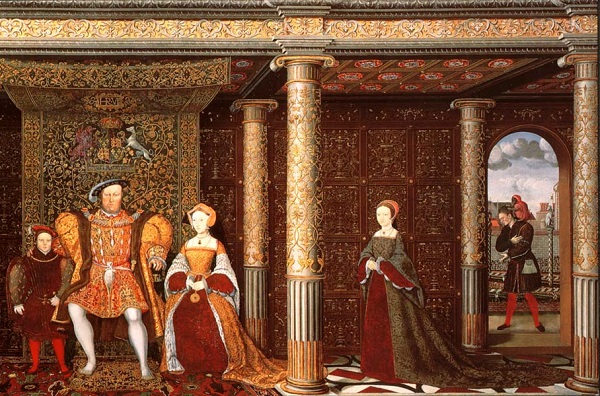
detail Will Sommers Family_of_Henry_VIII_c_1545

Michael Wilson

Monday, June 20th, 2016

[ by Charles Cameron — quick update on Cameron’s Recomended Reading: Michael Wilson from 2008 ]
.

Back in 2008, Zen wrote of Michael Wilson‘s papers:

I’ve only just begun to look at these and I’m posting them here for those readers whose interests gravitate toward issues of intel analysis and futurism.

I checked recently, and most if not all of Michael’s papers are still available via the Internet Archive:

  • 7Pillars, Papers by Michael Wilson
  • Decision Support Systems, DSSi Publications
  • **

    A quick quote that caught my eye from Al-Qaida’s Endgame? A Strategic Scenario Analysis:

    Osama bin Laden has a number of viable ‘role models’ from the history of the Middle East, including Saladin and the Assassins. For example, Saladin (the enormously successful commander during the Crusades) wrote in a letter to the Caliph in Baghdad that “European merchants supply the best weaponry, contributing to their own defeat.” This is similar to Lenin’s famous comment that “the Capitalists will sell us the rope with which we will hang them.”

    Now there’s a DoubleQuote!

    **

    Here’s something I hadn’t seen before — a video of Michael speaking at DefCon 9, a couple of years after we met:

    **

    And here’s the .pdf vesion of the course I took with him, first online and then in person — if you read one piece of his, this should be the one:

  • Michael Wilson, Continual and Complete Intelligence: a 21st Century Approach
  • Guest Post: Why the United States cannot put Boots on the Ground to Fight ISIS

    Saturday, June 18th, 2016

    [Mark Safranski / “zen“]

    Today, I’m pleased to offer a guest post by LtCol. Bob Weimann, USMC (ret.) .  Weimann is the former Commanding Officer, Kilo Co., 3/1 and Weapons Company 3/1. He also served as a Marine Security Force Company commanding officer, an infantry battalion Operations Officer and the Executive Officer of 1/6 during Desert Storm. A frequent presenter at the Boyd & Beyond Conferences, Bob is on the Board of Directors of UAP (United American Patriots) and a contributing editor to www.defendourmarines.com . UAP is a non-profit charity that aids military service members to help defray expenses for an adequate and fair legal defense. See What UAP Believes here: http://www.unitedpatriots.org/ .

    Why the United States Cannot Put Boots on the Ground to Fight ISIS

    By Bob Weimann

    The expression “boots on the ground” has an extended military-jargon history…The term is used to convey the belief that military success can only be achieved through the direct physical presence of troops in a conflict area … The term is particularly applied currently (2010) to counter-insurgency operations.[1]

    The expression “boots on the ground” basically means we need to send in ground troops, grunts, warriors, dog-faces, jarheads, combatants…those shifty eyed fowl mouth two fisted go for broke Soldiers and Marines that close with and destroy the enemy by fire and maneuver in order to kill the enemy. These are the folks that must place the front site of their rifle on an enemy and pull the trigger. These are warriors brave enough to step through the doorway of an enemy occupied house, detect and disarmed an IED, engage a treacherous enemy that does not take prisoners and an enemy that does not hesitate to torturer and murder innocents. Our warriors are the sons, daughters, sisters, brothers, fathers, mothers, neighbors, and acquaintances from every community, town, city and state across this country and one of the greatest representative cross sections of patriotic American citizens in existence.

    Our warriors are a different generation but they possess the same spirt America’s warriors have establish and exhibited since the Revolutionary War. For over 240 years these folks have never let us down and have volunteer for the nasty, dirty, immoral, brutalizing effects of combat. You can say we lost in Viet Nam, Somali, Iraq and Afghanistan but the scary truth is we lost those wars strategically after we won them tactically. The unfortunate reality is that the strategic always trumps the tactical. Tactical is all about the troops; strategy is all about the generals.

    The other scary fact is that since 2003, we have seen an unprecedented number of courts martial that the media labels “war crimes” … more “war crime” legal cases since 2003 than in all the battle history of all the United States war’s combined. How can this be possible when we have fielded to today’s battles the best trained, best equipped, smartest warriors in this country’s history?

    The issue is not the troops, the issue here is the senior military leadership, the general officers that have forgotten they are warriors and exhibit the traits and leadership characteristics of politicians. Today’s general officers understand careerism but do not understand the Laws of War that should be their stock and trade.  They hid behind lawyers and Rule of Law equivocations that cannot co-exist on a battlefield.

    For this reason, we cannot put combat boots on the ground because the troops are being used as political cannon fodder. Over and over again we see American combatants thrown under the bus for the sake of justifying a policy objective of executing a bad military strategy.  Names like Lt Ilario Pantano, Sgt Larry Hutchins, SSgt Frank Wuterich, Sgt Michael Williams, Sgt Jose Nazario, 1Sgt John Hatley, Sgt Derrick Miller, Capt Roger Hill, Lt Michael Behenna, Major Fred Galvin, Major Matt Goldsteyn, PFC Corey Clayett, GySgt Timothy Hogan, SPC Franklin Dunn, SSgt Osee Fagan, SPC Michael Wagnon, and Lt Clint Lorance are the more notable cases. You can be certain that the list will continue to grow not only with the recent Afghanistan Kunduz Hospital Airstrike[2] but also any combat actions against the terrorist in Iraq and Syria.

    Military campaigns are always based on a “kill or capture” strategy, however, our leadership does not believe in a kill strategy nor do they believe in a capture strategy. Our military leadership believes that our Soldiers and Marines are in combat to die for the “greater good”.[3] Instead of capture, we have a “catch and release” program that continually frees known enemy combatants and terrorist to again kill, not only our service members, but also civilians. “Catch and release” is nothing more than a treachery award program for the enemy. Our generals believe that our combatants have no right to self-defense on the battlefield.[4] The idea that our warriors are there to make the enemy die for their cause is a lost priority in our general officer’s politically correct minds.

    We cannot put boots on the ground because our generals do not trust our Soldiers and Marines to show the initiative necessary for successful combat operations. The generals have forgotten how to fight and win. They have forgotten how to support our warriors by setting the correct strategic policies to allow them to fight. We no longer have combat commanders. The Washington DC political cronies continue to dedicate failed policies that undermine and kill our warriors in order to acquire political curry and favoritism.

    War is not a moral exercise. There is no morality that can justify the slaughter of war. War is the ultimate competition that is won by killing the bad guys and bringing our warriors home alive. Collateral damage is an unescapable reality. Yes, collateral damage considerations are important but collateral damage must be weighed against military necessity. The Laws of War principle of military necessity allows for a rigorous war; a rigorous war is a short war; and a short war minimizes civilian casualties. Mixed into military necessity is the idea that field commanders have a responsibility to bring home alive as many of our warriors as possible. Sending them to Leavenworth is not part of the “bringing them home” equation.


    [1] https://en.wikipedia.org/wiki/Boots_on_the_Ground

    [2]https://en.wikipedia.org/wiki/Kunduz_hospital_airstrike

    [3] http://www.wnd.com/2012/03/sacrifice-marines-for-the-greater-good/

    [4] http://newsok.com/article/3690397

    Dune, Islam, Jihad, and the perennially missing Mahdi

    Friday, June 17th, 2016

    [ by Charles Cameron — on the proleptic brilliance of Frank Herbert’s 1965 novel, Dune ]
    .

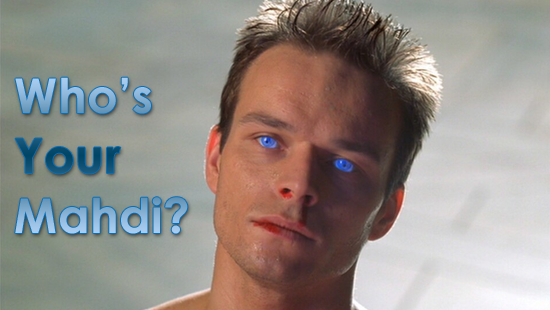
    who's your mahdi
    image via Ian Rountree

    **

    In Arabic and Islamic themes in Frank Herbert’s “Dune”, the writer Khalid admits “I did not read the original novels. I have watched and enjoyed the movie and the mini-series, and read summaries of the novels” — but he’s an Arabic speaker, and offers us an annotated list of Arabic bterms and phrases he encountered in his necessarily limited exposure to the Dune novels. One term which he does annotate is “Mahdi” — about which he has this to say:

    In the Fremen messianic legend, ‘The One Who Will Lead Us to Paradise.’ Paul Atreides, the central figure in the Dune novel is the son of the murdered Duke, he is exiled with his mother, manages to escape, and after a confrontation with the Fremen, gains their respect, and becomes their leader in their struggle against the evil Harkonen. He is called the Mahdi. In Islam, the Mahdi (“The Rightly Guided One”) is an all human Messianic figure, who comes to “fill the world with justice” after much of the opposite. The views of Sunni Islam differ quite a bit from Shia Islam on this, but they both at least agree on this part. Mahdi si a much more central figure in Shia Islam than it is in Sunni Islam, where the concept is often denied and attributed to legends and myths.

    And that’s it.

    **

    lya Somin‘s Volokh Conspiracy piece, Radical Islamism and Frank Herbert’s Dune doesn’t mention Mahdism. Wikia’s Muad’Dib’s Jihad doesn’t either — but Wikia is a fan outlet, and fandom can be excused if it is only occasionally scholarly, it’s a form of devotion, and worthy in its own right. There’s no mention of the Mahdi in Liel LeibovitzTablet review of Jodorowsky’s failed but fascinating attempt to film Dune, What science fiction tried to teach us about Jihad, and why no one listened.

    Oy: my own equivalent would be titled What science fiction tried to teach us about Mahdism, and why no one listened!

    Indeed, one might hope that Ashley Andrews Learn PhD, in her Jihad: Comparing the Fremen Revolt to Contemporary Islamic State, would at least briefly mention the Mahdi, given that IS refers to the Mahdi by name in their magazine Dabiq issue 3:

    And he [the Prophet] (sallallahu ‘alayhi wa sallam) linked this blessed land with many of the events related to al-Masih, al-Mahdi, and the Dajjal.

    and featured a hadith expressly about the Mahdi, though it does not name him, on the final page of issue #5:

    Ibn Mas’ud (radiyallahu ‘anh) narrated that Rasulullah (sallallahu ‘alayhi wa sallam) said, “If there were not left except a day from the dunya, Allah would lengthen that day to send forth on it a man from my family whose name matches my name [Muhammad] and whose father’s name matches my father’s name [‘Abdullah]. He will fill the Earth with justice and fairness as it was filled with oppression and tyranny.” [Sahih: Reported by Abu Dawud]

    But no.

    **

    Why do we so often miss the Mahdi?

    There’s space available for a serious look at Dune in light of today’s jihadism and Mahdism, and I’d fill it if I could find the time. I thought space-time was supposed to be a single continuum, though — how come there’s space but no time?

    You’ll seldom find time with no space, except when attempting to park a car..

    Orlando & Charleston: Lawfare raising questions

    Friday, June 17th, 2016

    [ by Charles Cameron — “Orlando Thoughts Towards a Better Taxonomy of Mass Violence” and “White Hate but Islamic Terror?” ]
    .

    Recommended readings:

    Two pieces from the Lawfare blog offer us plenty to chew on regarding our categorization of violent acts, triggered by Orlando and Charleston, Thomas Mair and Dylann Roof.

    Benjamin Wittes
    , Orlando Thoughts Towards a Better Taxonomy of Mass Violence:

    I have been struck, however, by the range of people who have seen confirmation of their particular worldviews in this horrific event, some plausibly in my view, some not:

  • To the LGBT community, understandably enough, it’s about violence against gays.
  • For many Latinos, a salient fact is that the victims were overwhelmingly Latino, many of them Puerto Rican.
  • To those who believe our society is too heavily armed, this latest mass shooting proves they were right about gun availability.
  • For those who believe our society is insufficiently armed, this latest mass shooting proves they were right about more good guys needing guns.
  • For those who are anxious about foreign terrorism, the shooter’s claimed allegiance to ISIS places this on the long list of attacks and attempted attacks by ISIS and Al Qaeda and those they inspire.
  • To the Trumpists and others who don’t like Muslims, it’s all about Islam more generally.
  • To those who have a problem with immigration, well, the shooter is the child of immigrants from Afghanistan.
  • Apparently it’s also about the surveillance debate.
  • I even saw one tweet—the logic of which I admit I could not follow—blaming the incident on white supremacy.
  • I’m pretty sure that the shooter’s aim was not to validate anyone’s preexisting political stance.

    and:

    To be sure, sometimes legal path dependencies do arise out of our categories. Most importantly, the criminal laws on material support for terrorist groups don’t apply to domestic terrorist organizations, only designated foreign terrorist organizations. And the law presumptively treats as terrorism those crimes committed with bombs, but does not do the same with crimes committed by domestic individuals or groups with guns. (For an excellent explication of these points, see this piece by Jane Chong.)

    But the more important impact of our taxonomical confusion, in my view, is intellectual, not legal: We just don’t know what to call an incident of (a) mass murder (b) by means of a gun (c) in which motive is unclear or mixed but involves clear elements of (d) bigotry, (e) mental illness, and (f) expressions of affiliation with a foreign terrorist group. And because we don’t know how to describe it, we also don’t know what aspects of it to prioritize in responding and preventing future such events.

    One interesting question is why we care? It’s a crime; it’s a tragedy; it’s big. Why do we fight over what to call it?

    There’s more, naturally, and I recommend the whole piece.

    **

    Wittes also links specifically to another, earlier Lawfare post..

    Jane Chong, White Hate but Islamic Terror? Charleston, Hate Crimes and Terrorism Per Quod:

    Netizens have taken particular interest in contrasting the immediate reaction to Charleston with the immediate reaction to the 2013 Boston Marathon bombings. Presumably these two attacks have emerged as fertile subjects for comparison partly because of the early dearth of evidence that either alleged perpetrator had official ties to or an operational role in a designated terrorist organization.

    South Carolina Senator Lindsey Graham is among those who have been singled out for his disparate treatment of Charleston and Boston. Commenting on what the Charleston shooting might signify for his home state, Senator Graham described Roof as “one of these wacked out kids” and stated, “I don’t think it’s anything broader than that.”

    This presents a sharp contrast with the views Graham espoused back in 2013 on the appropriate treatment of Dzhokhar Tsarnaev: “This man, in my view, should be designated as a potential enemy combatant and we should be allowed to question him for intelligence gathering purposes to find out about future attacks and terrorist organizations that may exist that he has knowledge of, and that evidence cannot be used against him in trial. That evidence is used to protect us as a nation.”

    Judd Legum of Think Progress cited the Senator’s statements as a glaring example of our collective insistence on seeing violence motivated by Islamic extremism as a systemic threat while minimizing right-wing supremacist violence as the work of individual madmen. As Charles Kurzman and David Schanzer noted in a New York Times op-ed the day before the Charleston attack, such bias is particularly indefensible given the data: Attacks carried out by Muslim Americans account for 50 fatalities in the thirteen and a half years since 9/11, while plots by right-wing extremists have resulted in 254 fatalities between 9/11 and 2012.

    The conflation of terrorism with Islamic extremism is an undeniable error. But distinguishing Boston and Charleston need not unequivocally boil down to bias of this particular kind.

    Chong continues:

    Consider President Obama’s reactions shortly after each attack—reactions that, if read in isolation, might seem to reflect this bias. On April 16, 2013, the day after the Boston bombings, President Obama delivered a speech in which he stated the following:

    [G]iven what we now know about what took place, the FBI is investigating it as an act of terrorism. Any time bombs are used to target innocent civilians it is an act of terror. What we don’t yet know, however, is who carried out this attack, or why; whether it was planned and executed by a terrorist organization, foreign or domestic, or was the act of a malevolent individual. That’s what we don’t yet know.

    Now contrast this with President Obama’s speech last Thursday, one day after the attacks in Charleston, which nowhere made mention of terrorism:

    The FBI is now on the scene with local police, and more of the Bureau’s best are on the way to join them. The Attorney General has announced plans for the FBI to open a hate crime investigation. We understand that the suspect is in custody. And I’ll let the best of law enforcement do its work to make sure that justice is served.

    Superficially speaking, there are at least two ways to read the administration’s initial decision to investigate one attack as a terrorist act and the other as a hate crime. A critic might contend that President Obama, like Senator Graham, appears to have untenably reserved the terrorist designation for Muslim extremists. Alternatively, we could take President Obama’s words at face value and recognize the weapon of choice as a critical factor in how a massacre tends to be classified when facts remain sparse and the evidence is still forthcoming. Those words again: “Any time bombs are used to target innocent civilians it is an act of terror.”

    And so our inquiry evolves. Is Dylann Roof being widely portrayed as a hater and not a terrorist because, based on the available evidence, he is a white supremacist and not a Muslim extremist? Or is it because his weapon of choice was a gun and not a bomb?

    Again, I’d encourage you to read the whole piece.

    **

    As an addendum, if you want some thoughtful consideration of Thomas Mair, the (alleged) killer of the British MP Jo Cox, you way want to read Barth’s Notes on the topic:

    Richard Bartholomew, Some Notes on Claims about Thomas Mair


    Switch to our mobile site