zenpundit.com » Uncategorized

Archive for the ‘Uncategorized’ Category

It’s not one pole of polarization that’s the problem

Sunday, July 3rd, 2016

[ by Charles Cameron — polarization itself has a dehumanizing effect, eg Brexit — follow the music! ]
.

I can sympathize with Matt Griff‘s frustration at the Brexit vote —

— however, a polarization of youth against the elderly is hardly an improvement. There’s something intangible the Leavers are loving, and perhaps Blake‘s Jerusalem, sung at the wedding of Kate Middleton and Prince William, captures that love without the hateful rhetoric that has accompanied Farrage‘s side of the exit campaign:

**

Speaking of which, I’m no great admirer of Bill Maher, who is too snide to be considered much of a wit in my book — but this little jewel of an aphorism may be the best haiku-like summation of Remainer’s regret I’ve seen.

Civilization requires civility — and polarization seems to encourage incivility on both sides of many, many issues. Sorry, folks.

**

My friend Michael Robinson posted this elegaic comment the other day:

Flabbergasted | “The fearmongering and outright lies of Boris Johnson, Michael Gove, Nigel Farage, The Sun and the Daily Mail have won. The UK, Europe, the west and the world are damaged. The UK is diminished and seems likely soon to be divided. Europe has lost its second-biggest and most outward-looking power. The hinge between the EU and the English-speaking powers has been snapped. This is probably the most disastrous single event in British history since the second world war. …

The UK’s decision to join the EU was taken for sound reasons. Its decision to leave was not. It is a choice to turn its back on the great effort to heal Europe’s historical divisions. This is, for me, among the saddest of hours. ” (Martin Wolf FT)

Follow the music.
Sunday surprise the second — the Laws of Nature and Nature’s God

Sunday, July 3rd, 2016

[ by Charles Cameron — wishing you all blessings on the Fourth ]
.

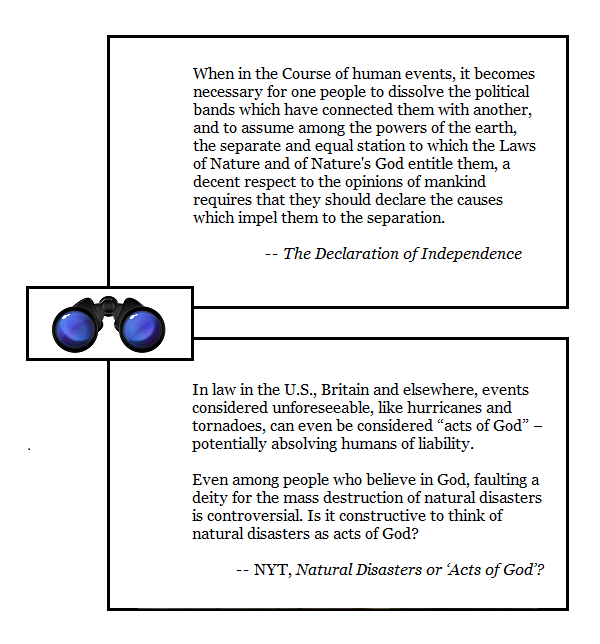
My eye was caught today by yet another disaster — which in turn reminded me of tomorrow, the Fourth of July. It’s just one example among many:

— but it brings up again the question of whether we think in terms of “acts of God” or “laws of Nature” or — somehow — both. And that’s where thw roding of the Constitution comes in, with the phrase “the Laws of Nature and of Nature’s God”:

Nature and Nature's God DQ

**

If I used that phrasing — “the Laws of Nature and of Nature’s God” — today, I might well be attempting to please or at least placate readers who variously:

  • believe in a God separate from and superior to Nature, and author of Nature’s laws
  • believe in a God essentially indistinguishable from Nature, wholly immanent, &
  • disbelieve in any kind of God, but recognize Nature as a catchall term for the Whole System.
  • I don’t suppose that would necessarily be the case in 1776, though, and wonder whether the phrase should be read as:

    the Laws — of Nature and of Nature’s God

    or:

    the Laws of Nature — and of Nature’s God

    and if the second, whether the and marks a distinction between Nature and nature’s God, or also covers the possibility of their being one and the same.

    And once we’ve cleared that up, and bearing in mind that John Donne could write “At the round earth’s imagin’d corners” — thus conflating the old, imaginative, square earth with the new, scientific, spherical one — how feasible do you think it is to hold simultaneously the idea that a given earthquake, hurricane, tsunami or volcanic eruption is an act of God and a natural disaster?

    A worldview paradox?

    **
    Sources:

  • July 4, 1776, The unanimous Declaration of the thirteen united States of America
  • November 18, 2013, Room for Debate: Natural Disasters or ‘Acts of God’?
  • Sunday surprise the first — neat tweets from KarlreMarks

    Sunday, July 3rd, 2016

    [ by Charles Cameron — Brexit, graphical thinking, serpents — there’s never a dull moment with Karl Sharro on Twitter! ]
    .

    Karl Sharro is reMarkable and indeed reTweetable:

    **

    An hour or so before I saw that tweet from Sharro, I’d tweeted a quote from Suzanne Langer:

    I was quoting Langer’s Philosophy in a New Key — hat-tip: Steven H. Cullinane:

    Visual forms— lines, colors, proportions, etc.— are just as capable of articulation, i.e. of complex combination, as words. But the laws that govern this sort of articulation are altogether different from the laws of syntax that govern language. The most radical difference is that visual forms are not discursive. They do not present their constituents successively, but simultaneously, so the relations determining a visual structure are grasped in one act of vision.”

    I think that’s generally right, and goes some way to explaining why “reading” a HipBone Game is cognitively different, even when the game is played entirely in verbal moves, from an equivalent reading of the same “move” tests in sequence.

    I noted Sharro’s visual example — worth clicking all the way through to see it full scale — because although it’s a visual representation of a cluster of texts, it follows a timeline from left to right, and is thus simultaneously sequential and synchronic. A neat trick.

    BTW, Sharro is celebrated for an earlier diagram I’ve posted here — with glee, and with his amazing purely textual equivalent!

    **

    OK so now my focal length is just right for KarlreMarks Twitter feed, and I find this beauty — also about Brexit — too:

    What’s so neat here? Well, it appears to be a paradox of self-reference — ourobouros, a serpent biting its own tail if you like — and it’s very nicely done. The “large numbers of people” gathered in London, of course, aren’t the “large numbers of people” they say shouldn’t be heard, and if Sharro had tweeted —

    Large numbers of people gather in London to demand that large numbers of other people shouldn’t be heard”

    — the paradox would have been gone, the serpent biting its own tail morphed into a serpent biting another serpent — a far less interesting spectacle.

    Or would it? At the level of particular crowds, yes, the paradox would vanish, one crowd biting another, but at the level of implied principle, a crowd voicing the denial of the principle that the voices of crowds deserve a hearing would still be self-refuting in just the way Sharro plays on.

    So the paradox would be like Schrodinger’s cat, dead while alive — or even better, the Cheshire Cat, niow here now gone, perhaps?

    **

    Life, she is rich in paradox.

    Christianity, ready for the stars

    Saturday, July 2nd, 2016

    [ by Charles Cameron — the Russians were first with Sputnik, can Orthodoxy in space be far behind? ]
    .

    lift off

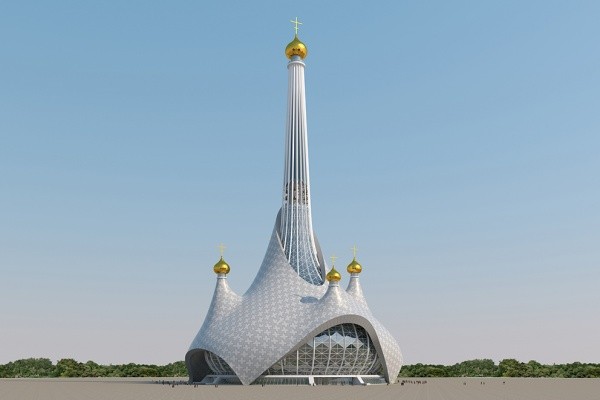
    Unfinished TV tower in Yekaterinburg may be turned into St. Catherine Church:

    Yekaterinburg architects created a concept of the highest church in the world: they suggested combining in one project a cult building and the notorious unfinished construction, Yekaterinburg TV reports.

    “According to the concept, they are going to combine the unfinished construction and the cult building in one cosmic-shaped construction, though it is far from architecture of Orthodox churches,” the TV channel reports.

    According to the authors of the idea, they wanted to suggest an alternative to “the church on water,” which was voiced among others projects of Yekaterinburg church.

    Church or TV? What’s your preference?

    **

    Then there’s that enchanted phrase, “the church on water”..

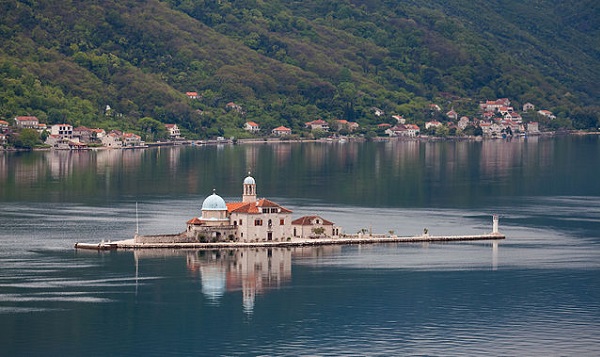
    Well, there’s the church of Our Lady of the Rocks in the Bay of Kotor, off Perast, Montenegro:

    Our Lady of the Rocks, Perast, Montenegro
    photo: Diego Delso, Wikimedia Commons, License CC-BY-SA 3.0

    It’s supported on water, to be sure, though it doesn’t appear to walk on it —

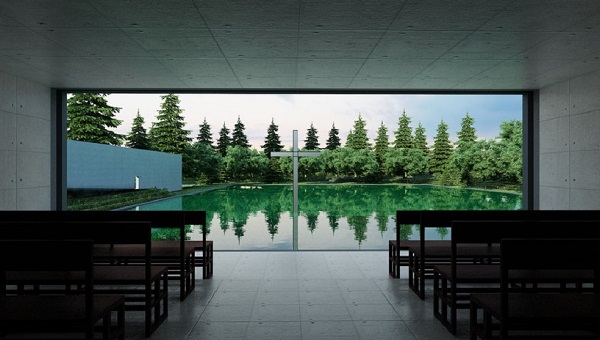
    More explicitly, there’s the church that seems to be actually named Church on the Water in Hokkaido, designed by architect Tadao Ando

    Church on the water, Tadao Ando ,Hokkaido (1)

    **

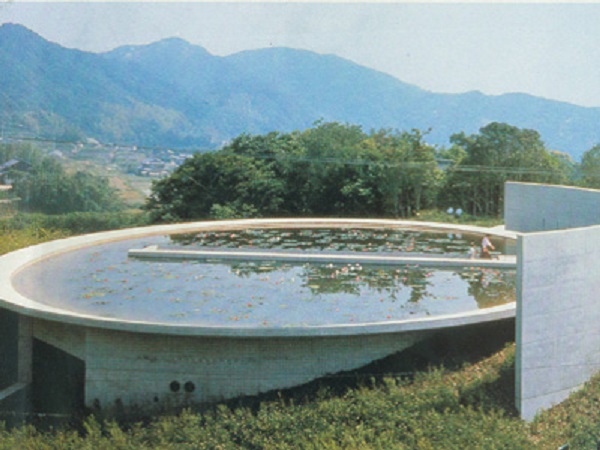
    In what might be seen as an interfaith move, Pritzker Prize winner Tadao Ando also designed the Water Temple in Hompukuji, on the island of Awaji, Japan:

    Water Temple

    Wikiarquitectura tells us:

    The Water Temple is the residence of Ninnaji Shingon, the oldest sect of Tantric Buddhism in Japan, founded in 815.

    **

    Revelation 22.17:

    And let him that is athirst come. And whosoever will, let him take the water of life freely.

    Which ground is holy?

    Friday, July 1st, 2016

    [ by Charles Cameron — a question of what makes “holy ground” holy? ]
    .

    which place is holy

    **

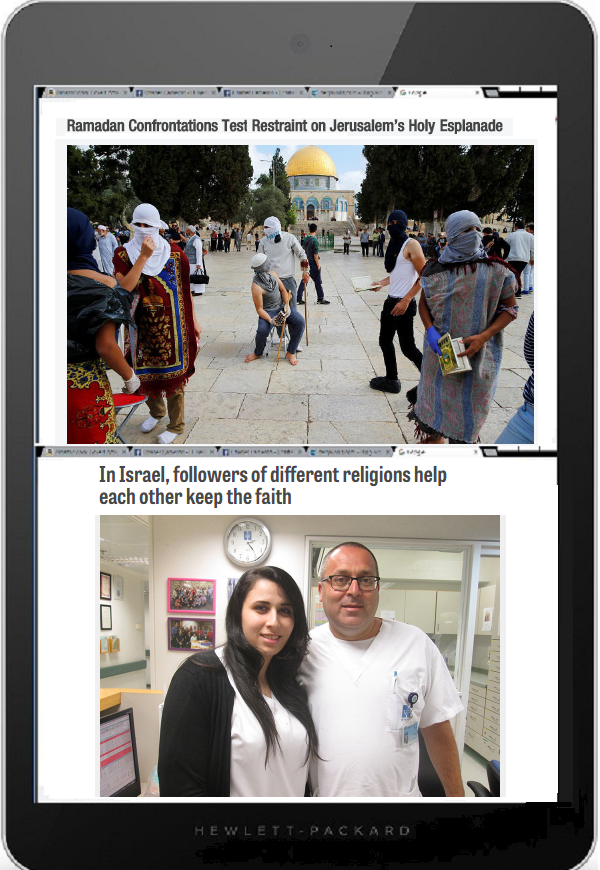
    Upper panel, Ramadan Confrontations Test Restraint on Jerusalem’s Holy Esplanade:

    For the first twenty days of the Muslim holy month of Ramadan, an unusual calm prevailed on Jerusalem’s Holy Esplanade – known to Jews as the Temple Mount and to Muslims as the Noble Sanctuary or the Al-Aqsa Mosque. This was largely a result of Israel and Jordan implementing four commitments agreed eighteen months ago to keep the peace through mutual limits on access.

    Yet on 26 June, the beginning of the most sacred and sensitive part of Ramadan, Israel changed an informal, recent additional restriction on access to the site. Violence broke out. It exposed once again the root of the controversy: diverging perceptions between Israelis, Jordanians (whose Waqf charitable foundation administers the Esplanade) and Palestinians over who should be able to visit the site and when.

    In the last five years Israel had prevented the entry of Jews and other non-Muslims during precisely the last ten days of Ramadan. This was in order to reduce the risk of escalation when Muslims worshippers often number many tens of thousands. This year, however, Israel’s Internal Security Minister Gilad Erdan allowed non-Muslim entry on the 10th day before the end of Ramadan.

    Erdan was not just facing pressures to reverse the ban on access after a quiet start to the month. Israeli decision-makers also saw it as correcting of a temporary and self-imposed constraint. They feared that the de facto ban would become part of the informal status quo. Jordanians and Palestinians, for their part, saw it as a violation of what had become an established norm.

    Lower panel, In Israel, followers of different religions help each other keep the faith:

    Stuart Levy, a nurse at a Jerusalem hospital, updates his ward’s work schedule several times a week, with staffers’ vacations, birthdays and more religious holidays than many people know exist.

    “We have 18 hospital beds, and on any given day we may have an Orthodox Jew next to a devout Muslim next to a Catholic next to a Druze next to a Russian Orthodox patient,” said Levy, head nurse of the oncology/hematology ward at Hadassah Medical Center-Ein Kerem. “And many of our staff are religiously observant.”

    During the Muslim holy month of Ramadan that began on June 7, Levy asks Jewish nurses to work evening shifts whenever possible to allow Muslim nurses to break their fasts at home. Non-Jewish nurses reciprocate by working on Jewish holidays.

    While many may think Israel is a land of conflict, the hospital is but one example of inter-religious harmony, a pocket of peaceful co-existence.

    **

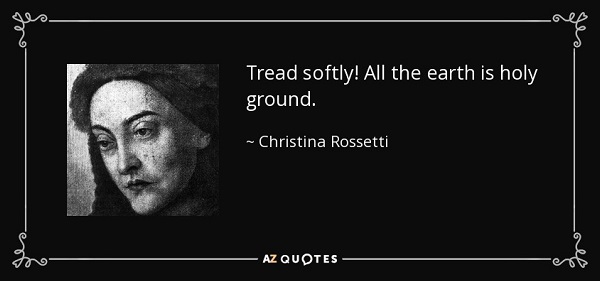
    Echoing Exodus 3:5, in which Moses is about to move towards the burning bush, Acts 7:33 reads:

    Put off thy shoes from thy feet: for the place where thou standest is holy ground.

    What makes ground holy? And specifically, which of these two sites in Jerusalem is hallowed, and how?

    Doctrinally, the Esplanade is Judaism’s holiest site, the Temple Mount, and Islam’s third holiest, the Noble Sanctuary.

    But what if sanctity is a movable feast, invoked by the deeds of those who are present at a certain place and time?

    At times it seems as though surgery heals what prayer tears apart

    **

    Christina Rosetti:

    quote-tread-softly-all-the-earth-is-holy-ground-christina-rossetti-37-10-65


    Switch to our mobile site