zenpundit.com » strategy

Archive for the ‘strategy’ Category

Strategy, Winston Churchill, and the power of positive thinking

Monday, October 7th, 2013

[by Lynn C. Rees]

Winston Churchill had terrible parents.

Randolph Churchill was a Tory meteor who shot brightly across British politics only to die of syphilitic inanity by age 45. The elder Churchill’s attitude towards his firstborn was cold and dismissive: while he may never have said anything as chilly as Arthur Wellesley’s mother (“my ugly boy Arthur was food for powder and nothing more”), Randolph Churchill agreed with Ann Wesley’s sentiments enough to pack young Winston off to Sandhurst to become cannon fodder.

Randolph Churchill

Randolph Churchill

Jennie Jerome was an American heiress who spent most of her time pursuing (and being pursued by) high London society. Winning Mum of the Year was item 113 on her 100 item todo list. When his mother finally allowed him to develop a personal relationship with her deep into his twenties, Churchill described their relationship as more brother-sister than mother-son.

Jennie Jerome Churchill

Jennie Jerome Churchill

Churchill reacted to his parental deep freeze by idealizing mum and dad. If the beacon of maternal love in Churchill’s memoirs will never be mistaken for the real Jennie Jerome Churchill, Churchill ignored the incongruity. If the romanticized father he worshipped bore only a slight resemblance to the real Randolph Churchill, Churchill’s desire for the approval of this shade conjured by his own vast imagination was enough to spur him to great deeds. Asked later in life what his greatest regret was, Churchill surprised one interviewer by wistfully wishing that Randolph Churchill had lived to see his son’s career success. Churchill even had a dream starring Randolph Churchill in 1947, 50 years after his father’s died. His father’s ghost appeared and interrogated Churchill about happenings in the world since his death. Churchill got to most of early 20th century history but, tellingly, he didn’t have enough time to tell his father of his key own role in those events before the dream ended.

Churchill’s eager over-imaginings not only gave him wonderful parents but other equally sustaining fictions. Churchill believed in (and almost willed into existence) a United Kingdom of Great Britain and Ireland that was as strong and vital in the early 20th century as it was under Pitt or Temple. In reality, the Britain of Churchill’s time was a run-down and dispirited shadow of glory, more fixated on bread and butter at home than dash and destiny abroad. In Churchill’s imagination, the Britain of 1940 was a Tyrannosaur among sheep. In reality, it was a dodo among eagles and bears.
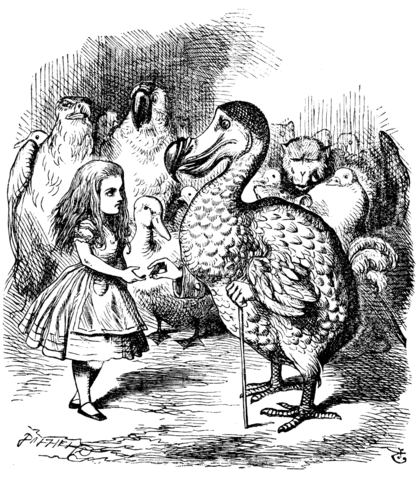
United Kingdom of Great Britain and Ireland

The United Kingdom of Great Britain and Ireland

Lawrence Freedman has argued that Churchill’s strategy in 1940-1941 is vastly different from the strategy contemporary strategic studies holds up as an ideal. His strategy was the triumph of hope over experience, one of the great fantasy spectaculars of the 20th century. His soldiers were tired, his people were dispirited, his aircraft carriers carried biplanes, his generals were mulish, and his empire was restive. The only anchors in reality for Churchill’s strategy were the inability of Nazis to march over or part the English Channel and American reluctance to see faltering Britain replaced by revanchist Germany. All else was theater.
Mule

Mule

Churchill won the Nobel Prize for literature in 1953. This is revealing: Churchill was a better writer than orthodox strategist. His delusions were as larger than life as his correct notions were. But Churchill’s resort to grand narrative was far more successful than strategic orthodoxy can capture or comprehend. More often than not, the strength of conviction behind a strategy’s more tenuous elements wins more in war than its tenuous connection to reality warrants.

Churchill’s strategy in childhood consisted of holding on to a series of deluded and contradictory beliefs about his parents in the hope that something good would turn up. Churchill’s strategy in World War II consisted of holding on to a series of deluded and contradictory beliefs about the British Empire in the hope that something would turn up. Self-appointed strategic professionals often diagnose a possible strategic outcome as impossible only to be confounded when someone clings to impossibility until the possible turns up. Mere clinging has a long and distinguished record of unmasking the impossible as only the improbable under the wrong circumstances and the all too probable under the right circumstances.

The Myhrvold Report and Understanding Strategic Threats

Monday, October 7th, 2013

[by Mark Safranski, a.k.a. “zen“]

Several weeks ago, Cheryl Rofer wrote an important post analyzing the report “Strategic Terrorism: A Call to Action” by Microsoft billionaire, venture capitalist, theoretical mathematician and cookbook author, Dr. Nathan Myhrvold. I found Cheryl’s argument quite persuasive and would like to add a few points of my own; because while some of the concerns raised by Myhrvold are valid and his intent is no doubt well-meaning, the approach he suggests is, at times, problematic.

If in the past ten years you have been a serious student of terrorism studies, insurgency and COIN, national security, counter-terrorism policy, counter-proliferation policy,  intelligence community affairs and military theory, there is little that will be new for you in the first part of the report. Many of these problems had previously been raised (at least in part) by figures as disparate as Michael Scheuer, John Robb, Martin van Creveld, Thomas P.M. Barnett, William Lind,  Robert Bunker and dozens if not hundreds, of thinkers, practitioners and scholars. In addition, this ground was also covered by government agencies like the National Intelligence Council in its periodic Global Trends reports, and in classified analysis by the Office of Net Assessment and various three letter agencies. The blogosphere also had a lively discussion of catastrophic WMD terrorism, superempowered individuals, 4GW/5GW, apocalyptic Mahdism and related subjects throughout the mid to late 2000’s.  Diffusion of society-shifting power into the hands of small groups and individuals was a theme of Alvin and Heidi Toffler back in the 70’s and 80’s, so this is an old rather than new problem.

Dr. Myhrvold is a polymathic character, but his original area of specialization was mathematical research so it is not surprising that his approach to things “strategic” is dominated by scalar considerations. Namely, a threat taxonomy based upon potential magnitude of  disaster events up to the extinction of the human race (High M 10).  Wondering here, as the bibliographic references of this report are extremely scanty, if Myhrvold was influenced by Herman Kahns ideas on escalation or game theory based literature on deterrence or something else. Regardless, while there’s some merit to this definition – obviously if your civilization is destroyed or everyone is dead you have suffered the ultimate in strategic defeat – there are weaknesses too as the linear progression of destruction implies an apolitical environment and inevitable process. That’s not how things work with strategy in the real world, neither today nor back in the era of Cold War superpower nuclear brinksmanship. Even John Foster Dulles and Vyacheslav Molotov were more politically nuanced than that.

This is an important point. Myhrvold is focused on capacity alone rather than in conjunction with political purpose in defining strategic threats.  Capacity in bad hands is worth worrying about and Myhrvold is right when he criticizes the government for their obstinate refusal to develop a robust threat detection system for shipping to US ports of entry ( that’s boring, hard work with little payoff from a political perspective, but the NSA building a system for surveilling all Americans is fun and gives government bureaucrats great potential power to ruin anyone they wish); that said, outside of comic books and James Bond movies, people do not historically initiate violence on an epochal scale out of a Joker-like admiration of nihilism, not even terrorists. Instead, they have a political end in mind for which violence is a tool. This variable appears to be absent from Myhrvold’s thinking.

More troubling, Myhrvold’s solution to the potential threat of bioweapon terrorism would appear to be, as I infer it, even greater centralization of power in the hands of a national security surveillance state. As I expect Dr. Myhrvold is a great respecter of data-driven, probabilistic logic, he might want to consider that nearly every man-made, high magnitude, lethal event in the past century and a quarter years has been initiated by governments for reasons of policy, up to and including the auto-genocide of tens of millions of their own citizens. Most people on this planet are in far greater danger of harm at the hands of the state than they are as a result of terrorism or foreign attack and it would seem foolish, in light of such statistics, to increase our risk by delegating greater grants of power to the entity most likely to cause us harm. In the words of the late defense and security expert Dr. Fred Ikle, we would be risking Annihilation from Within.

Ikle anticipated years ago much of what Myhrvold wrestled with in his report and, in my view, prescribed better answers.

Dawn and Decadence, Innovation, & The Face of Battle — top 3

Friday, October 4th, 2013

[by J. Scott Shipman]

From Dawn to Decadence, 500 Years of Western Cultural Life, by Jacques Barzun

In a year where I’ve not been able to read as much as normal and with 89 days remaining in 2013, these three titles are the best so far. I’m not finished with Dawn, but it seems like the late Professor Barzun is an old friend (here is a video from 2010). Barzun’s opus was published when he was 93 and was almost ten years in the making. Dawn has been sitting on my shelves for four or five years and I’d started it two or three times only to get bogged down and lose interest. Well over half way finished and I’m pretty sure I’ll be rereading this title for years to come (co-blogger Lynn Rees reports he’s read it four times). Barzun’s scope covers the gamut: religion, literature, poetry, theater, painting, sculpture, philosophy, and the aristocracy/life at court. Since many of these topics are interconnected he uses an ingenious method to assist the reader in keeping up. He uses this: (<page number)(page number>) to direct the reader to something previously discussed or something he will cover later. In the text, he will recommend “the book to read is” “the book to browse is” in brackets. I’ve found this method distracting as I’ve read three books he referenced since I started… Barzun also provides generous lift quotes in the margins to give the reader a flavor for a particular writer or idea/example. If the book had a traditional bibliography, I dare say it would cover a couple hundred pages–at least. Dawn has been a pleasure I’ve been taking in small doses and am in no hurry to finish. This is the best book of the genre that I’ve read.

Men, Machines and Modern Times, by Elting Morison

Elting Morison’s Men, Machines is reviewed at Amazon by former House Speaker Newt Gingrich as “purely and simply one of the best books ever written on the process of innovation and the interaction of technology, culture, systems, and individual personalities.” I could not agree more. Morison’s book is a collection of essays dealing with change and man’s inherit but paradoxical reaction to it:

Yet, if human beings are attached to the known, to the realm of things as they are, they also, regrettably for their peace of mind, are incessantly attracted to the unknown and things as they might be. As Ecclesiastes glumly pointed out, men persist in disordering their settled ways and beliefs by seeing out many inventions…Change has always been a constant in human affairs…

From gunnery at sea to 19th Century railroads, Morison provides illustration after illustration of man, his institutions, and the almost universal resistance of both to change. Morison observes of inventors (real “disruptive thinkers’) [this was written in the early 1950’s]:

I once collected evidence on the lives of about thirty of these men who flourished in the nineteenth century. A surprising number turned out to be people with little formal education, who drank a good deal, who were careless with money, and who had trouble with wives or other women.

Morison devotes one essay to the characteristics and ills of a “bureau.” He describes the difficulty of getting anything accomplished within an average bureaucracy—largely because bureaucrats live for process and harmony. He says:

Taken together, a set of regulations provides a pattern of behavior for the energies bureaus are set up to regulate….Regulations are a way of keeping a system of energies working in harmony and balance…First it is easier to make a regulation than to abolish it.

Morison’s eighth and concluding essay provide Some Proposals for dealing with change and newness—in a word, solutions to many of the problems identified earlier. That said, only the most dedicated reader will complete the seventh (and longest) chapter, according the Morison, originally intended to be a book about the history of 19th Century American railroad innovation. Overall, I concur with Speaker Gingrich and highly recommend this title.

The Face of Battle, by John Keegan

A title needing no introduction at Zenpundit, I’ll only offer this title as one of the best books of the genre I’ve read. Keegan covers three battles across 500 years of history, Agincourt, Waterloo, and The Somme. In each, he brings alive the battlefield and provides the conditions faced by combatants—often up close and personal. Keegan’s scholarship, insight, and importantly, his humility in addressing a topic he admittedly had no first hand experience make this a must read for anyone in the profession of arms, and recommended for anyone seeking more insight into how we fight.

That’s a wrap, be back soon! 

Charles Hill on Freedman’s Strategy: A History

Thursday, October 3rd, 2013

[by Mark Safranski, a.k.a. “zen“]


Charles Hill pens a favorable but also fairly critical review of Sir Lawrence Freedman’s tome-like, Strategy: A History.

The snares of strategizing

.…Sir Lawrence Freedman’s 750-page magnum opus, Strategy: A History, is encyclopedic, although not alphabetical, a pleasure to dip into here and there to get a carefully considered summary briefing on the strategy of the Hebrew Bible, the 1815 Congress of Vienna, Jane Addams, Black Power, or the strange array of social science attempts to redefine human behavior as a contribution to strategy. Everybody talks about strategy, but no one seems to know what it is. But now there are no excuses; it’s all here, at least in chronological array. As with my childhood set of Compton’s, I read it straight through for its several-thousand-years’-long narrative arc; it only remains to try to make sense of the whole thing as one big idea.

Freedman begins by admitting that there is no agreed-upon definition of strategy. When one encounters the word applied to battle plans, political campaigns, and business deals, “not to mention means of coping with the stresses of everyday life,” the concept may begin to seem meaningless. But not so for Sir Lawrence, a most distinguished professor of war studies at King’s College, London, who unapologetically focuses his modern section on American approaches because “the United States has been not only the most powerful but also the most intellectually innovative country in recent times.”

The “origins” of strategy run from David and Goliath to Machiavelli to Milton’s Paradise Lost, a vast stretch of time covered, for this big book, in a relatively short space, as though the author is hurrying to get to strategy in our modern age. All the old warhorses are here. Thucydides is analyzed as the start of “real” strategy and the distortions of language as a cause of Athens’ fall is featured. Plato’s Republic is taken seriously as a “strategic coup” by which philosophy defeats strategy. (I am one of those who read Plato’s Socrates as ironic, playing along with an overnight concoction of a perfect polity—which turns out horribly—as the most effective way of showing us what not to do when thinking strategically.) Sun Tzu is properly portrayed not so much as a strategist as a master of stratagems, a subset of the art in full: To do the opposite of what is expected is not enough to qualify as strategy. Overall, the centuries of “Origins” analyzed here could be characterized as “a series of footnotes to Homer,” a running debate between advocates of force (Achilles) and those who prefer guile (Odysseus). The Trojan Horse was guile personified; it worked, but thereafter could be scorned as a despicable trick unworthy of heroes. The strategic approach of Milton’s Satan to his own demonic team, as well as toward Adam and Eve, was all seductive guile and still seems to be working….

The book comes across as being rather unwieldy in size, scope and definition of strategy, though informative. I disagree with Hill’s interpretation of Sun Tzu as well as Plato ( Socrates was an ironist, Plato? Well, he wandered quite far from his master’s teachings in the fullness of time). Nevertheless, worth a read.

Guest Post: Cheryl Rofer – I Hope the Government Doesn’t Listen to Nathan Myhrvold

Monday, September 23rd, 2013

Cheryl Rofer, scientist, WMD expert and founder of Nuclear Diner.com and long-time friend of ZP blog, will be cross-posting here today regarding the report “Strategic Terrorism: A Call to Action” by Microsoft billionaire, venture capitalist, theoretical mathematician and cookbook author, Dr. Nathan Myhrvold

I Hope The Government Doesn’t Listen to Nathan Myhrvold

by Cheryl Rofer

Shane Harris at Foreign Policy tells us that Nathan Myhrvold, fresh off introducing the world to liquid nitrogen and other expensive innovations for cookery, is now going to straighten out the US government on terrorism. He has produced a thirty-three page paper that he is shopping around Washington to help the government get things right.

Except that Myhrvold does not understand the definition of a threat: intent + capability. And he gets a lot of things wrong.

He has a lot to say about what he calls, and barely defines, “strategic terrorism.” This is apparently intended to be parallel to the strategic nuclear threats of the Cold War. But during the Cold War, both the United States and Russia had nuclear weapons aimed at each other. They still do. The terrorists that Myhrvold discusses do not have weapons that can kill millions of Americans, which seems to be central to “strategic terrorism.” It’s not even clear that they have intent, but, for the sake of argument, let’s assume they do. That is only half a threat.

Could they get that capability? Myhrvold is convinced they can, but he offers little in the way of evidence, and some of that is incorrect. Further, he confuses possibility with actuality throughout the paper, slipping easily from might to could to can.

Let’s get the biggest factual error out of the way first. On page 5, Myhrvold says:

The collapse of the Soviet Union has also greatly aided the dispersal of nuclear knowledge and potentially even complete weapons.

Note that potentially. again on page 10:

Today, tremendously lethal technology is available on the cheap. Anyone—even a stateless group—can have the deadliest weapons on earth. Several trends led to this inflection point. One is nuclear proliferation, which in recent years reached a tipping point at which access to nuclear weapons became impossible to control or limit in any absolute way. The collapse of the Soviet Union scattered ex-Soviet weapons across many poorly governed and policed states, and from there, the weapons may spread further into the hands of terrorists. At the same time, the set of ragtag countries that have developed homegrown nuclear devices is large and growing. The entrance to the nuclear-weapons club, once limited to a small number of sophisticated and stable countries, is now far more open.

Myhrvold is simply wrong that “The collapse of the Soviet Union scattered ex-Soviet weapons across many poorly governed and policed states.” He may have heard that when the Soviet Union split into fifteen separate states in December 1991, four of them had nuclear weapons: Russia, Ukraine, Kazakhstan, and Belarus. This was a consequence of Soviet basing policy and the rapidity with which the Soviet Union fell apart. Kazakhstan decided it didn’t want to be a nuclear power and sent its missiles back to Russia. It took a bit more persuasion to convince Belarus and Ukraine, but they sent theirs back too. Twenty-two years after the breakup, there is no evidence that any Soviet nuclear weapons are outside Russia.

And the “large and growing” number of “ragtag countries” that “have developed homegrown nuclear devices”? Well, let’s count them. Outside the five nuclear weapons countries enumerated in the Nuclear Nonproliferation Treaty, India, Israel, and Pakistan that are known to have significant numbers of nuclear weapons. North Korea has tested three nuclear devices; whether they have weaponized any is not known. And, despite Iran’s insistence that it is not developing nuclear weapons, some people believe that is the case. That’s all I can think of. Nine is not a large number, nor is it growing particularly rapidly. I’ll leave it to Myhrvold to tell us which of those countries are “ragtag.”

So his assumption that nuclear weapons are easily available to terrorist organizations fails. I’m not as closely acquainted with the issues of biological weapons, but if Myhrvold’s arguments there are equivalent to the ones on nuclear weapons, I’m not worried. Likewise, he cites only one example, Aum Shinrikyo, for the terrorist use of chemical weapons, but there have been no incidents since. And he uses his expansionary sense of capability: If they had been able to disperse the sarin more effectively, more people would have died. But they didn’t; these weapons are difficult to make effective, and small groups, even with expertise, have shown themselves not up to the capability of states.

It’s worth going back to that paragraph from page ten to examine Myhrvold’s rhetorical methods, which persist throughout the paper. The first two sentences are sensational assertions with no specific content. And it is an inflection point – everything has changed! This is a common trope for computer guys, and the rest of us are on to it. Again, no specifics. Then the “facts,” which turn out to be wrong and unsupported. And then the sensational conclusion that the first two sentences told us we would come to.

He provides a number of old chestnuts, again with no support. Many of them have been shown to be doubtful.

  • Terrorists have no home address; therefore retaliation and deterrence are difficult or impossible.
  • “If a nation-state really wants to hurt the United states, why risk reprisal? Why not inflict damage by giving encouragement, resources, and direction to a group such as al Qaeda?”
  • “The quickest path to power for a ruthless and ambitious 21st-century man in many parts of the world is now to lead a stateless terror group.”
  • “The bully pulpit afforded by modern communications has allowed what once would have been isolated fringe groups to knit together into formidable adversaries against the most powerful nations on earth.”

He conflates all terror groups with al-Qaeda and almost asserts that their single goal is to build a caliphate. I say “almost” because throughout the paper, he implies or states pseudo-conclusions loosely connected to earlier statements, not quite willing to own his implications. However, since he includes them, one might assume that they represent his thinking. This method of presentation, however, leaves him ample room to say “I didn’t say that.”

He defines (or, in his loose way, almost defines) tactical and strategic terrorism, presumably attempting a parallel with tactical and strategic nuclear weapons. Tactical terrorism – the shooting up of shopping malls and bombing of marathons – can be handled by normal means of law enforcement. Strategic terrorism – which seems to mean actions that can kill millions of Americans – needs Myhrvold’s advice.

The parallel, however, doesn’t work, because strategic nuclear weapons exist, but the capability for a terrorist group to kill millions of Americans doesn’t and isn’t likely to for some time, if ever.

But let’s consider Myhrvold’s advice. It is to centralize and highly fund (ah, now we see why he’s getting an audience in Washington) an organization with a single executive to prevent strategic terrorism.

Business knows best, he says, and this is how business does it. But, whatever the virtues, this has been tried before. Any number of politicians and lobbyists have advocated a special agency with an executive focused like a laser on their preferred goals. Sometimes the agency is formed. It would be helpful if Myhrvold would list the successful examples.

The government is doing many of the things that Myhrvold advocates; he seems not to have researched what is being done and what is not. And some of his (almost) suggestions are scary: we must reconsider whether the dangers from the Bill of Rights outweigh the benefits. Not even that explicitly, his goals of preventing strategic terrorism imply a great deal of surveillance, probably a lot more than the NSA is now being accused of.

Harris says that Myhrvold is talking to people in federal agencies concerned with terrorism, although Myhrvold is shy about saying whom. There are always a few people in federal agencies who are impressed by a Big Name with Big Money. Perhaps they just wanted him to sign their copy of his cookbook. And perhaps some see an opportunity to use Myhrvold’s recommendations to enhance their agency’s budget or reach.

But it’s the sameold sameold: be very afraid, the terrorists are coming to get you! The country seems to be moving past that after twelve long years.


Switch to our mobile site

