zenpundit.com » geopolitics

Archive for the ‘geopolitics’ Category

More on R2P

Friday, September 23rd, 2011

Received a tremendous amount of feedback on this topic, mostly offline, but also on twitter and on other sites. Interestingly, of the minority who are strongly disagreeing with me, they tend to have their own problems with R2P doctrine. The next installment should be up tomorrow evening. In the meantime, here are a few more posts:

Bruce Kesler at Maggie’s Farm:

R2P: Right To Protect or Right To Preen?

….Neither COIN nor R2P are strategies. Unlike COIN, however, which is a set of tactics that may be applicable in some circumstances in pursuit of strategic goals (even if those goals may be arguable), R2P doesn’t have any operational tactics. R2P is more a clarion call to action, including actions that are contrary to US laws or popular will, in pursuit of internationalist goals for global governing as defined by transnational elites.

Further, R2P is cloaked in humanitarian rhetoric that allows liberal elites to preen, displaying their caring feathers, regardless of their ignorance of the military, regardless of the cost-benefit to US national security, and regardless that it isn’t their children being sent into harm’s way.

Lastly, R2P is reactive, not prescriptive of avoiding future threats to US security as a strategy must be. Much the same coterie who want to raise R2P to dominance over US foreign and military policies are largely dismissive of severely hobbling US allies or hollowing our military.

A brutally succinct assessment. 

Kesler, a veteran of the war in Vietnam and a former foreign policy analyst, is in sync here with many veterans whose experiences have made them skeptical of basing military intervention on grandiose idealism, along with the school of foreign policy realists. On the other hand, Anti-interventionists of all political stripes and backgrounds look askance at the assurance from R2Paternalistic advocates that enshrining R2P is not risky because such military interventions will be “rare” ( myself, I’d just like to see them done competently , in line with a coherent strategy, when the potential benefits significantly outweigh the costs).

Ken White, a respected senior voice at the Small Wars Council had this to say in an extended analysis of R2P in the comments section at SWJ Blog:

…. I’ll note that those whom Zenpundit rightly says will be “fired” will not be those who do the actual Protecting nor will they be the ones who pay the costs of such abject foolishness.

The R2P theory is the tip of an iceberg wherein the State — a State? — has overarching responsibility in all things and individuals have no responsibilities for them selves, indeed, no responsibility other than to act as the State directs. That is indeed monstrous.

In her paper linked by Zenpundit, Dr. Slaughter writes: “States can only govern effectively by actively cooperating with other states and by collectively reserving the power to intervene in other states’ affairs.” The first clause is possibly correct, the second is a road to unending warfare — quite simply, humans will not long tolerate it. I suggest that if that idea is applied to individuals, then I am endowed with the ability to get together with my neighbors and we can attack another neighbor whose only crime is to behave differently than do most of us. My suspicion is that will not work on several levels.

….She also writes: “The principal advantage is that subjecting government institutions directly to international obligations could buttress clean institutions against corrupt ones and rights-respecting institutions against their more oppressive counterparts.” Admirable. My question is what standard is applied to the determination of corruption and oppressiveness? What cultural norms are to be heeded and which are to be ignored? Who makes these determinations? If it is a collective decision, what precludes either mob rule or a ‘might makes right’ led possibly quite wrong determination…

Popular support for R2P may be inverse to the degree of public scrutiny the idea receives.

R2P is the New COIN

Monday, September 19th, 2011

Introduction: 

The weirdly astrategic NATO campaign in Libya intervening on the side of ill-defined rebels against the tyrannical rule of Libyan strongman Colonel Moammar Gaddafi brought to general public attention the idea of “Responsibility to Protect” as a putative doctrine for US foreign policy and an alleged aspect of international law. The most vocal public face of R2P, an idea that has floated among liberal internationalist IL academics and NGO activists since the 90’s, was Anne-Marie Slaughter, former Policy Planning Director of the US State Department and an advisor to the Obama administration. Slaughter, writing in The Atlantic, was a passionate advocate of R2P as a “redefinition of sovereignty” and debated her position and underlying IR theory assumptions with critics such as Dan Drezner, Joshua Foust, and Dan Trombly.

In all candor, I found Dr. Slaughter’s thesis to be deeply troubling but the debate itself was insightful and stimulating and Slaughter is to be commended for responding at length to the arguments of her critics. Hopefully, there will be greater and wider debate in the future because, in it’s current policy trajectory, R2P is going to become “the new COIN”.

This is not to say that R2P is a military doctrine, but like the rise of pop-centric COIN, it will be an electrifying idea that has the potential fire the imagination of foreign policy intellectuals, make careers for it’s bureaucratic enthusiasts and act as a substitute for the absence of a coherent American grand strategy. The proponents of R2P (R2Peons?) appear to be in the early stages of following a policy advocacy template set down by the COINdinistas, but their ambitions appear to be far, far greater in scope.

It must be said, that unlike R2P, an abstract theory literally going abroad in search of monsters to destroy, COIN was an adaptive operational and policy response to a very real geopolitical debacle in Iraq, in which the United States was already deeply entrenched. A bevy of military officers, academics, think tank intellectuals, journalists and bloggers – some of them genuinely brilliant – including John Nagl, Kalev Sepp, Con Crane, Jack Keane, David Petraeus, Michèle Flournoy, David Kilcullen, Fred and Kim Kagan, James Mattis, Montgomery McFate, Thomas Ricks, Andrew Exum,  the Small Wars Journal and others articulated, proselytized, reported, blogged and institutionalized a version of counterinsurgency warfare now known as “Pop-centric COIN“, selling it to a very reluctant Bush administration, the US Army and USMC, moderate Congressional Democrats and ultimately to President Barack Obama.

The COIN revival and veneration of counterinsurgent icons like Templer and Galula did not really amount a “strategy”; it was an operational methodology that would reduce friction with Iraqis by co-opting local leaders and, for the Bush administration, provide an absolutely critical political “breathing space” with the American public to reinvent an occupation of Iraq that had descended into Hell. For US commanders in Iraq, adopting COIN doctrine provided “the cover” to ally with the conservative and nationalistic Sunni tribes of the “Anbar Awakening” who had turned violently against al Qaida and foreign Salafist extremists. COIN was not even a good theoretical  model for insurgency in the 21st century, never mind a strategy, but adoption of COIN doctrine as an American political process helped, along with the operational benefits, to avert an outright defeat in Iraq. COIN salvaged the American political will to prosecute the war in Iraq to a tolerable conclusion; meaning that COIN, while imperfect, was “good enough”, which in matters of warfare, suffices.

During this period of time and afterward, a fierce COINdinista vs. COINtra debate unfolded, which I will not summarize here, except to mention that one COINtra point was that COINdinistas, especially those in uniform, were engaged in making, or at least advocating policy. For the military officers among the COINdinistas, this was a charge that stung, largely because it was true. Hurt feelings or no, key COINdinistas dispersed from Leavenworth, CENTCOM and military service to occupy important posts in Washington, to write influential books, op-eds and blogs and establish a think tank “home base” in CNAS. Incidentally, I mean this descriptively and not perjoratively; it is simply what happened in the past five years. The COINDinistas are no longer “insurgents” but are the “establishment”.

R2P is following the same COIN pattern of bureaucratic-political proselytization with the accomplished academic theorist Anne-Marie Slaughter as the “Kilcullen of R2P”. As with David Kilcullen’s theory of insurgency, Slaughter’s ideas about sovereignty and R2P, which have gained traction with the Obama administration and in Europe as premises for policy, need to be taken seriously and examined in depth lest we wake up a decade hence with buyer’s remorse. R2P is not simply a cynical fig leaf for great power intervention in the affairs of failed states and mad dictatorships like Gaddafi’s Libya, R2P is also meant to transform the internal character of great powers that invoke it into something else. That may be the most important aspect and primary purpose of the doctrine and the implications are absolutely profound.

Therefore, I am going to devote a series of posts to analyzing the journal article recommended by Dr. Slaughter, “Sovereignty and Power in a Networked World Order“,  which gives a more robust and precise explanation of her ideas regarding international relations, sovereignty, legitimacy, authority and power at greater length than is possible in her op-eds or Atlantic blog. I strongly recommend that you read it and draw your own conclusions, Slaughter’s argument is, after all, about your future.

ADDENDUM – Related Posts:

Slouching Toward Columbia – Guest post: Civilian Protection Policy, R2P, and the Way Forward

Phronesisaical –Dragging History into R2P

Dart-Throwing Chimp – R2P Is Not the New COIN

Committee of Public Safety –With Outstretched Arm | The Committee of Public Safety

The Nine Eleven Century?

Sunday, September 11th, 2011

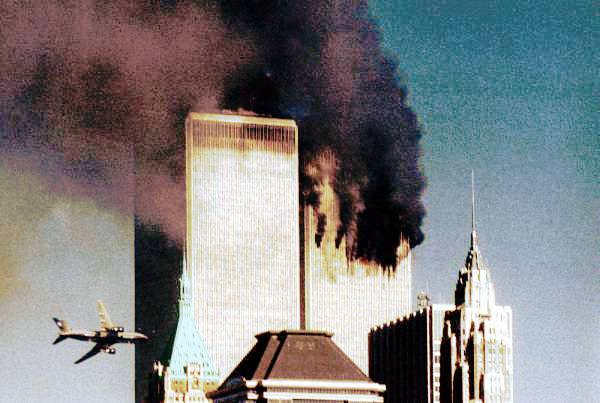
nineleven2.jpg

Ten years ago to this day, almost to the hour of which I am writing, commercial jetliners were highjacked by al Qaida teams armed with boxcutters, under the direction of Mohammed Atta, were flown into the towers of the World Trade Center and the Pentagon. A fourth plane, United Airlines Flight 93, believed to be headed to the US Capitol building, crashed in Pennsylvania when passengers led by Todd Beamer heroically attempted to stop the highjackers. The whole world watched – most with horror but some with public glee – on live television as people jumped out of smoke-engulfed windows, holding hands, to their deaths. Then, the towers fell.

From this day flowed terrible consequences that are still unfolding like the rippling shockwave of a bomb.

We look back, sometimes on the History Channel or some other educational program, at the grainy, too fast moving, sepia motion pictures of the start of World War I. The crowds wildly cheered troops with strangely antiquarian uniforms that looked reminiscent of Napoleon’s day, march proudly off to the war that gave Europe the Somme, Gallipoli, Passchendaele and Verdun. And the Russian Revolution.

After the armistice, the victors had a brief chance to reset the geopolitical, strategic and economic patterns the war had wrought and in which they were enmeshed. The statesmen could not rise to that occasion, failing so badly that it was understood even at the time, by John Maynard Keynes and many others, that things were being made worse. World War I. became the historical template for the short but infinitely bloody 20th century of 1914-1991, which historians in future centuries may simply describe as “the long war” or a “civil war of western civilization”.

There is a serious danger, in my view, of September 11 becoming such a template for the 21st century and for the United States.

On the tenth anniversary of 9/11, as we remember the fallen and the many members of the armed services of the United States who have served for ten years of war, heroically, at great sacrifice and seldom with complaint, we also need to recall that we should not move through history as sleepwalkers. We owe it to our veterans and to ourselves not to continue to blindly walk the path of the trajectory of 9/11, but to pause and reflect on what changes in the last ten years have been for the good and which require reassessment. Or repeal. To reassert ourselves, as Americans, as masters of our own destiny rather than reacting blindly to events while carelessly ceding more and more control over our lives and our livelihoods to the whims of others and a theatric quest for perfect security. America needs to regain the initiative, remember our strengths and do a much better job of minding the store at home.

The next ninety years being molded by the last ten is not a future I care to leave to my children. I can think of no better way to honor the dead and refute the current sense of decline than for America to collectively step back from immersion in moment by moment events and start to chart a course for the long term.

Kesler on R2P

Saturday, September 10th, 2011

Bruce Kesler, a long time friend of this blog, links here as he digs into R2P, the “Responsibility to Protect” doctrine and like me, finds the logical implications hold much to worry about in terms of being anti-democratic as well as destabilizing :

Transnational Elites Uber Alles

 It is the liberal internationalists’ concept of how US foreign policy ought to be. R2P reflects limitations of the US abilities to militarily intervene elsewhere as perceived by our liberal elites but raises our humanitarian impulses selectively by them to justify certain interventions, again, as they perceive which to be worthwhile. Further, R2P raises hazy international law or consensus of international liberal elites to supremacy over national law or consensus.

One of R2P’s main propounders, Anne Marie Slaughter, even advocates each US agency and members of our judiciary to act independently of Executive or Congressional oversight or law to conform to the consensus of foreign liberal elites. Slaughter is not just someone blathering. Slaughter was Dean of Princeton’s influential Woodrow Wilson School of Public and International Affairs from 2002-2009 then from 2009-2011 she served as Director of Policy Planning for the United States Department of State, now back at Princeton. Slaughter’s thinking is telling in the pieties mouthed by Secretary of State Hillary Clinton and President Obama as they ignore US laws, ignore Syria’s worse repression and threat as they intervene in Libya, and extol a hostile majority in the UN to undeserved credence. Slaughter isn’t alone. Obama administration insiders Samantha Powers and Susan Rice are R2P foxes in the henhouse.

Methinks, given what passes for strategic thinking these days, that they pushed against an open henhouse door. Kesler continues:

For a taste of Anne Marie Slaughter

At first glance, disaggregating the state and granting at least a measure of sovereignty to its component parts might appear to weaken the state. In fact, it will bolster the power of the state as the primary actor in the international system…Giving each government institution a measure of legitimate authority under international law, with accompanying duties, marks government officials as distinctive in larger policy networks and allows the state to extend its reach.

Actually, it extends the uncontrolled reach of liberal elites within our government to act regardless of our laws or popular will.

Read the rest here.

This is not an argument over whether genocide is bad and should be prevented or the positive good of Western liberal societal values but rather over how power will be exercised in our name, for what reasons and by whom. Any good ends sought under a putative R2P doctrine can be done today if the political will for intervention is present. That will is crystalized when the ends, ways and means are scrutinized in open, free, debate under our constitutional norms, not by a self-appointed vanguard.

R2P is a Doctrine Designed to Strike Down the Hand that Wields It

Saturday, September 3rd, 2011

There has been much ado about Dr. Anne-Marie Slaughter’s ennunciation of “Responsibility to Protect” as a justification for the Obama administration’s unusually executed intervention (or assistance to primarily British and French intervention) in Libya in support of rebels seeking to oust their lunatic dictator, Colonel Moammar Gaddafi. In “R2P” the Obama administration, intentionally or not, has found it’s own Bush Doctrine, and unsurprisingly, the magnitude of such claims – essentially a declaration of jihad against what is left of the Westphalian state system by progressive elite intellectuals – are beginning to draw fire for implications that stretch far beyond Libya.

People in the strategic studies, IR and national security communities have a parlor game of wistfully reminiscing about the moral clarity of Containment and the wisdom of George Kennan. They have been issuing tendentiously self-important “Mr. Z” papers for so long that they failed to notice that if anyone has really written the 21st Century’s answer to Kennan’s X article, it was Anne-Marie Slaughter’s battle cry in the pages of The Atlantic.

George Kennan did not become the “Father of Containment” because he thought strategically about foreign policy in terms of brutal realism. Nor because he was a stern anti-Communist. Or because he had a deep and reflective understanding of Russian history and Leninism, whose nuances were the sources of Soviet conduct. No, Kennan became the Father of Containment because he encapsulated all of those things precisely at the moment when America’s key decision makers, facing the Soviet threat, were willing to embrace a persuasive explanatory narrative, a grand strategy that could harmonize policy with domestic politics.

Slaughter’s idea is not powerful because it is philosophically or legally airtight – it isn’t – but because R2P resonates deeply both with immediate state interests and emotionally with the generational worldview of what Milovan Djilas might have termed a Western “New Class”.

While it is easy to read R2P simply as a useful political cover for Obama administration policy in Libya, as it functioned as such in the short term, that is a mistaken view, and one that I think badly underestimates Anne-Marie Slaughter. Here is Slaughter’s core assertion, where she turns most of modern diplomatic history and international law as it is understood and practiced bilaterally and multilaterally by sovereign states in the real world (vice academics and IGO/NGO bureaucrats) on it’s head:

If we really do look at the world in terms of governments and societies and the relationship between them, and do recognize that both governments and their citizens have rights as subjects of international law and have agency as actors in international politics, then what exactly is the international community “intervening” in?

…For the first time, international law and the great powers of international politics have recognized both the rights of citizens and a specific relationship between the government and its citizens: a relationship of protection. The nature of sovereignty itself is thus changed: legitimate governments are defined not only by their control of a territory and a population but also by how they exercise that control. If they fail in that obligation, the international community has the responsibility to protect those citizens.

Slaughter is a revolutionary who aspires to a world that would functionally resemble the Holy Roman Empire, writ large, with a diffusion of power away from legal process of  state institutions to the networking informalities of the larger social class from whom a majority of state and IGO officials are drawn, as a global community. In terms of policy advocacy, this is a brilliantly adept move to marry state and class interests with stark moral justifications, regardless of how the argument might be nibbled to death in an arcane academic debate.

As with Kennan’s X Article, which faced a sustained critique from Walter Lippmann who realized that Containment implied irrevocable changes in the American system, R2P has attracted criticism. Some examples:

Joshua Foust –Why sovereignty matters

Much as advocates of the “Responsibility to Protect,” or R2P, like to say that sovereignty is irrelevant to the relationship of a society to its government (which Slaughter explicitly argues), it is that very sovereignty which also creates the moral and legal justification to intervene. For example, the societies of the United States and NATO did not vote to intervene in Libya – their governments did.

Foreign Affairs – The Folly of Protection

….RtoP, responding to the sense that these domestic harms warranted international response, solidified the Security Council’s claims to wider discretion. Yet it also restricted its ability to sanction intervention to the four situations listed in the RtoP document — genocide, war crimes, ethnic cleansing, and crimes against humanity — and thus precluded, for example, intervention in cases of civil disorder and coups. Although the resolution authorizing force against Libya will certainly further entrench the principle of RtoP, it will not completely resolve the tension between RtoP — in itself only a General Assembly recommendation — and the UN Charter itself, which, according to the letter of the law, limits action to “international” threats.

Dan Trombly –The upending of sovereignty and Responsibility to Protect Ya Neck

Beauchamp, along with Slaughter, have revealed R2P for what it actually is: a doctrine based on regime change and the destruction of the foundations of international order wherever practically possible. After all, are intervening powers really fulfilling their responsibility if they fail to effect regime change after intervening? This is exactly why I believe R2P is far more insidious than many of its advocates would have us believe or intend in practice. It is essentially mandating a responsibility, wherever possible, to seek the sanction, coercion, or overthrow of regimes which fail to meet a liberal conception of acceptable state behavior. Even if R2P is never applied against a major power, it is hard to see why such behavior would not be met with just as much suspicion as humanitarian intervention and previous Western regime change operations were. Indeed, a full treatment will reveal there is immense pressure for R2P to initiate the more fundamental, and more universal, impulse to revert to the potential ruthlessness inherent in international anarchy.

Understandably, such critiques of R2P are primarily concerned with sovereignty as it relates to interstate relations and the historical predisposition for great powers to meddle in the affairs of weaker countries, usually with far less forthrightness than the Athenians displayed at Melos. It must be said, that small countries often  are their own worst enemies in terms of frequently providing pretexts for foreign intervention due to epic incompetence in self-governance and a maniacal delight in atavistic bloodshed. Slaughter is not offering up a staw man in relation to democide and genocide being critical problems with which the international community is poorly equipped and politically unwilling to counter.

But R2P is a two edged sword – the sovereignty of all states diminished universally, in legal principle, to the authority of international rule-making about the domestic use of force is likewise diminished in it’s ability to legislate it’s own internal affairs, laws being  nothing but sovereign  promises of state enforcement. Once the camel’s nose is legitimated by being formally accepted as having a place in the tent, the rest of the camel is merely a question of degree.

And time.

As Containment required an NSC-68 to put policy flesh on the bones of doctrine, R2P will require the imposition of policy mechanisms that will change the political community of the United States, moving it away from democratic accountability to the electorate toward “legal”, administrative, accountability under international law; a process of harmonizing US policies to an amorphous, transnational, elite consensus, manifested in supranational and international bodies. Or decided privately and quietly, ratifying decisions later as a mere formality in a rubber-stamping process that is opaque to everyone outside of the ruling group.

Who is to say that there is not, somewhere in the intellectual ether, an R2P for the the environment, to protect the life of the unborn, to mandate strict control of small arms, or safeguard the political rights of minorities by strictly regulating speech? Or whatever might be invented to suit the needs of the moment?

When we arrest a bank robber, we do not feel a need to put law enforcement and the judiciary on a different systemic basis in order to try them. Finding legal pretexts for intervention to stop genocide does not require a substantial revision of international law, merely political will. R2P could become an excellent tool for elites to institute their policy preferences without securing democratic consent and that aspect, to oligarchical elites is a feature, not a bug.

R2P will come back to haunt us sooner than we think.

ADDENDUM:

Doug Mataconis at Outside the Beltway links here in a round-up and commentary about R2P posts popping up in the wake of the Slaughter piece:

The “Responsibility To Protect” Doctrine After Libya

….It’s understandable that the advocates of R2P don’t necessarily want to have Libya held up as an example of their doctrine in action. Leaving aside the obvious contrasts with the situation in Syria and other places in the world, it is by no means clear that post-Gaddafi Libya will be that much better than what preceded it. The rebels themselves are hardly united around anything other than wanting to get rid of Gaddafi and, now that they’ve done that, the possibility of the nation sliding into civil and tribal warfare is readily apparent. Moreover, the links between the rebels and elements of al Qaeda that originated in both Afghanistan and post-Saddam Iraq are well-known. If bringing down Gaddafi means the creation of a safe haven for al Qaeda inspired terrorism on the doorstep of Europe, then we will all surely come to regret the events of the past five months. Finally, with the rebels themselves now engaging in atrocities, one wonders what has happened to the United Nations mission to protect civilians, which didn’t distinguish between attacks by Gaddafi forces or attacks by rebels.

….Finally, there’s the danger that the doctrine poses to American domestic institutions. If Libya is any guide, then R2P interventions, of whatever kind, would likely be decided by international bodies of “experts” rather than the democratically elected representatives of the American people. American sailors and soldiers will be sent off into danger without the American people being consulted. That’s not what the Constitution contemplates, and if we allow it to happen it will be yet another nail in the coffin of liberty.

Read the rest here.


Switch to our mobile site