zenpundit.com » war

Archive for the ‘war’ Category

A Better von Clausewitz

Wednesday, October 15th, 2008

 Recently, I’ve seen  Dr. Chris Bassford’s site, Clausewitz.com mentioned at the Small Wars Council and then one of my co-authors, A.E. of Rethinking Security, favorably cited a link to Clausewitz.com on a social networking platform. Intrigued, I wandered over and read for a while. I’m glad that I did.


On War was a book I read as an undergraduate for a class that focused on German intellectual history and was included by the prof more or less as an afterthought, along with works by Kant, Marx, Nietzsche and a few others. I recall that I was not terribly impressed at the time by On War; my real interest then was Cold War diplomatic history and I paid far greater attention to Marx. To me, Clausewitz was a turgid writer, another Germanic pedant, though an important one for his contribution to strategy. I never developed any particular dislike for him either, since military affairs wasn’t a priority and I stuck Clausewitz on my shelf and ceased to give him much consideration thereafter. Other philosophers and thinkers seemed to be more relevant.
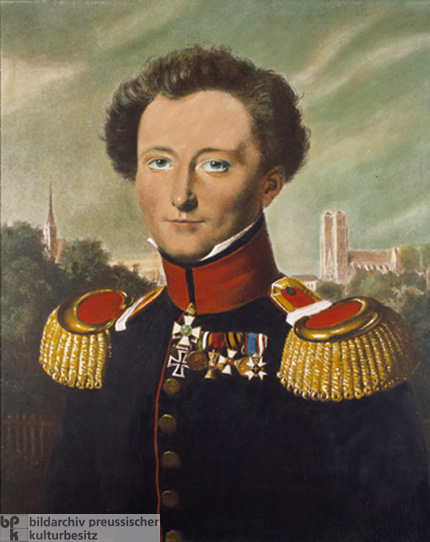
While reading at Clausewitz.com, I came across Bassford’s critique of various translations of On War and he panned one in particular:

7. Penguin Edition (1968). AVOID. The most widely available version of the Graham/Maude translation (see #4 above) is the weirdly edited and seriously misleading Penguin edition (still reprinted and sold today), put together by Anatol Rapoport in 1968. Rapoport was a biologist and musician-indeed, he was something of a renaissance man and later made some interesting contributions to game theory. However, he was extremely hostile to the state system and to the alleged “neo-Clausewitzian,” Henry Kissinger. He severely and misleadingly abridged Clausewitz’s own writings, partly, of course, for reasons of space in a small paperback. Nonetheless-for reasons that surpasseth understanding-he retained Maude’s extraneous introduction, commentary, and notes, then used Maude’s errors to condemn Clausewitzian theory. Between Graham’s awkward and obsolete translation, Maude’s sometimes bizarre intrusions, and Rapoport’s hostility (aimed more at the world in general, and at Kissinger in particular, than at Clausewitz personally), the Penguin edition is badly misleading as to Clausewitz’s own ideas. The influential modern military journalist/historian John Keegan apparently derives much of his otherwise unique misunderstanding of Clausewitz from Rapoport’s long, hostile introduction-necessarily so, since he has obviously never read Clausewitz’s own writings, not even the rest of the text of this strange edition. If you have any version of the Graham or Graham/Maude translation, but especially this twisted Penguin version, we advise you to get the modern Howard/Paret edition (discussed above).

Curious, I went over to a bookcase and pulled my copy of On War. Sure enough, it was the “twisted” Rapoprt version that I had read . I don’t know if the backstory Bassford gives about Rapoport and Henry Kissinger is true or not but it is certainly a plausible one. Kissinger, for all his intellectual abilities and charm was, in his heyday, a highly aggravating and insecure personality who made a legion of enemies with abrasive, dismissive and derogatory remarks and machiavellian conduct. I’ve seen scholars tilt at windmills for stranger reasons than that. My own mentor in diplomatic history had consuming hatreds for Alexander Hamilton and Arthur Schlesinger, Jr. to which I could never  relate.

As a result of reading Bassford’s comments, I picked up a Paret translation of On War yesterday and a cursory flipping through told me that he was correct in his assessment. I had read an edition that was both mediocre and weird in college. So I bought the copy and look forward to getting acquainted with a much more accurate presentation of Carl von Clausewitz’s ideas.

ADDENDUM:

As it happens, SWJ Blog has a related post-  Between Clausewitz and Mao.

CTLab Symposium – On the Hamdan Tribunal

Thursday, September 25th, 2008

As I mentioned previously, CTLab is featuring a symposium this week on the Hamdan Tribunal with Professor Brian Glyn Williams  who testified as an expert witness, and an invited panel of legal scholars and academics ( including blogfriend/SWC member Dr. Marc Tyrell). This week begins with a five-part series on the tribunal itself by Dr. Williams. His posts, so far:

Defending Hamdan: The Capture and Defense of Bin Laden’s Driver

Defending Hamdan: On Ruffling Establishment Feathers

Defending Hamdan: Letter and Spirit of the Law

Online Symposium at CTLab

Tuesday, September 16th, 2008

Next week CTLab in it’s slick, officially rolled-out, version kicks off it’s new iteration by hosting an online symposium on the Hamdan trial ( note, this is not the SCOTUS decision in Hamdan v. Rumsfeld – though I’m certain that case is also fair game for discussion –  but instead Hamdan’s subsequent trial by military tribunal).

Social Science In War / Online Symposium

“CTlab member Brian Glyn Williams, PhD, Assistant Professor of History at the University of Massachusetts, Dartmouth, recently testified as an expert witness for the defence in the trial of Salim Ahmed Hamdan, “Bin Laden’s Driver”, in the first US military tribunal since World War II…

…On 22 September 2008, CTlab will launch an online symposium on the scholarly and substantive implications of the Hamdan trial. Dr. Williams has drafted an original, narrative account of his experience, and is making it available for discussion through the CTlab weblog. It will be released for public consumption, followed by comments and observations from a panel of invited legal scholars and social scientists based in the United States, the United Kingdom, Canada, Australia, and New Zealand.”

I’ll put in my two cents regarding the symposium and Hamdan after the conclusion.

Book Review: We Are All War Nerds Now….

Wednesday, September 10th, 2008

Of all the book reviews I have done at Zenpundit, this one will be the shortest.

Prodded to read War Nerd by co-blogger Lexington Green, I found Gary Brecher’s writing is a weird fusion of Robert Young Pelton crossbred with Dave Barry, yielding some sort of one-man, Mad Magazine of modern warfare but without the cartoons by Don Martin and Sergio Aragones. Beneath Brecher’s crafted shtick, however, lies a genuine grasp of military history and an analytical shrewdness with which I found myself nodding in agreement all too frequently.

Buy this book.

Battles of Military Doctrine

Sunday, September 7th, 2008

 I am behind the news curve on this one but here’s a good article from InsideDefense.com ( Hat tip Chris Castelli) on the controversey over the call by USMC General James Mattis to banish “EBO” (Effects-Based Operations) and “Systems” terminology from military doctrine. Unsurprisingly, the U.S. Air Force is less than pleased:

Mattis Sparks Vigorous Debate

….How Mattis’ guidance will be implemented remains unclear, but the memo signals a sea change in the way JFCOM will address EBO.

By declaring that JFCOM will no longer use, sponsor or export the terms and concepts related to EBO, ONA and SoSA in its training, doctrine development and support of military education, Mattis tees up a major opportunity for EBO critics to curtail the use of these terms and ideas in American military discourse. Some EBO proponents see this as a threat, while other EBO advocates see an opportunity to hone the concept and discard unhelpful baggage.

Mattis explicitly calls for refining two joint doctrine publications that dictate how military officials use effects in joint operations in terms of desired outcomes.

….Before Deptula provided comments on the missive to ITP, Air Force headquarters referred questions on the topic to retired officers like McInerney, who unloaded heaps of criticism.

“Even though I am no longer on active duty I am embarrassed for a combatant commander to publish such a document,” McInerney says. “I am a fan of Mattis but this is too much.”

McInerney even encouraged combatant commanders to “ignore” what he sees as a shocking memo.In an e-mail to ITP, McInerney calls JFCOM’s missive the “most parochial, un-joint, biased, one-sided document launched against a concept that was key in the transformation of warfare — and proven in the most successful U.S. military conflicts of the past 20 years (Desert Storm and Allied Force).”

He belittles the two-page memo as a “tantrum” and the accompanying five-page guidance as “puerile” and “totally unbecoming” of a JFCOM commander.Mattis should be “encouraging multiple perspectives for the enhancement of joint operations — not trashing them,” McInerney asserts. The JFCOM memo is “intellectually bankrupt” and the policy’s conclusions are “profoundly out of touch with reality,” he adds.”The rationale ignores any notion of strategic art much less operational art, and instead relies on centuries’ old, discredited ‘commander’s intuition’ to design, plan and execute campaigns rather than offering a demonstrated better alternative,” he insists.

All strategic theories as they percolate through a massive bureaucracy tend to become distorted, misunderstood, inflated, stretched to cover pre-existing agendas, get advanced in tandem with career interests and be misapplied to situations for which they were never intended. EBO is no exception but “banning” concepts wholesale from discussion is less healthy for the long term intellectual good of an organization than is simply subjecting them to warranted criticism.

Those interested in a USAF practitioner’s counterpoint might look at a series from the now defunct FX-Based blog where Sonny was responding to an op-ed by  Ralph Peters, one of the more colorful EBO critics:

In Defense of EBO

In Defense of EBO, Part II.

In Defense of EBO, Part III.

In Defense of EBO, Part IV.

Extensive discussion of the Mattis pronunciamento can be found ( and engaged in) at The Small Wars Council.


Switch to our mobile site

