zenpundit.com » academia

Archive for the ‘academia’ Category

Turning Away From Strategy

Thursday, August 23rd, 2012

It appears that the Pentagon no longer intends to educate the most talented members of the officer corps to think strategically.

I say this because the status of the premier professional military education institutions – the war colleges and NDU – have been devalued, their leadership slots demoted and their educational mission degraded. As a guest columnist for Tom Ricks noted back in June:

….The new uniformed leadership of the Armed Forces, i.e., General Dempsey and his staff, apparently intend to prune NDU back to where it was a few decades ago. There will be some modest resource savings, but since the entire university budget doesn’t amount to the cost of a single joint strike fighter, one has to wonder what is motivating all of what is happening here. In the cuts that have been discussed, Dempsey’s deputy, Marine Lt. Gen. George J. Flynn has wielded the meat axe, often with the aid of micromanaging action officers. No one here in the rank-and-file is sure if the urbane chairman is on board with the details of all of this. (Ironically, both the chairman and J-7 are NDU graduates with advanced degrees.)

This set of changes took place in stages. First, while very few general or flag officer slots were cut in the armed forces, the three-star president of the university slot was downgraded to two, and the school commandants, downgraded from two to one star. No big deal, one might say, but one would be wrong, very wrong. A three star in Washington can go head-to-head with a principal on the joint staff or a senior OSD bureaucrat to protect the university. To compound the problem, the last three star president was retired in the spring and the university was left for a few months under the command of a senior foreign service officer, a former ambassador, a woman of great diplomatic talent and experience with no clout in the Pentagon. The new commandant — a highly regarded Army two-star — will not report until deep into June, when all or most of the cuts have been set in concrete. (Interesting question: can an employee of the State Department legally or even virtually assume command of a DoD organization?)

….A new “charter” was subsequently published by the Chairman. It focused the university on joint professional military education and training, which in itself, is a good thing. Immediately, however, the research and outreach activities of the university, often more focused on national strategy than military affairs, came under intense scrutiny. These outfits had grown way beyond their original charters and had become effective and highly regarded servants of a wider interagency community. Much of their work was not done for the joint staff but for OSD Policy, and some of that in conjunction with civilian think-tanks. The research arm of the university was productive, even if not always useful in a practical way to the joint staff. It also was helpful to the colleges in a much more proximate and direct fashion than other think tanks, like RAND.

….The research, gaming, and publications arms of the university — a major part of the big-think, future concepts and policy business here — will be cut to somewhere between half and a third of their original sizes. To make things worse, many of the specific cuts appear to have been crafted in the Pentagon, and nasty emails have come down from on high, about how the university is bankrupt and going into receivership, which was never the judgment of the military and civilian accrediting officials, who inspect us regularly and have generally given the university high marks.

If it would be impressive if some of our senior generals had been as effective on the battlefield as they are in the bureaucracy.

Uncreative destruction of intellectual seed corn is a bureaucrat’s way of telling everyone to shut up, don’t question and get in line. There’s nothing wrong with having excellence at joint operations as an educational goal for most future brigadiers and major generals but our future theater commanders, combatant commanders, service chiefs and their respective staff officers need something more – they need strategy.  More importantly, the Secretary of Defense, the President, the Congress and the American people need the DoD to have an in-house capacity to generate deeply thought strategic alternatives, question assumptions and red-team any self-aggrandizing options the services or bureaucracy feel like offering up in a crisis.

The motivation here is simple, really. If you put out all the strategic eyes of the Pentagon, then the one-eyed men can be King. Or he can always contract out his strategic thinking to highly paid friends to tell him what he wishes to hear.

Naturally, this will have bad effects downstream in a superpower whose civilian leadership seldom has as good a grasp of geopolitics and the fundamentals of classical strategy as they do of law or the partisan politics of running for office. They will be in need of sound strategic advice from uniformed military leaders and they will be much less likely to get it. Instead, they will have senior officers who are less likely to balk when the President’s back-home fixer turned “adviser” or superstar academic with delusions of grandeur pushes a half-baked plan at an NSC meeting to “do something”. When that happens, the jackasses kicking down this particular barn will have long-since retired and cashed out with consultancies and sinecures on boards of directors.

While a lack of strategic thinking can undermine even a lavishly funded and well-trained military, the reverse is also true; strategic leadership can revive an army that is but a half-dead corpse.

A brief illustration:


After WWI the two states that made the most extreme cuts in military power were defeated Germany and the victorious United States. Germany was forced to do so by Versailles, but responded by opting under General von Seeckt to reduce to 100,000 men by making the Reichswehr a qualitatively superior nucleus of a future expanded German Army. Prohibited from having mass, the Germans opted for class with every long-serving recruit being considered officer material and being superbly trained (even to the extent of covert training and weapons testing jointly with the Red Army deep inside the Soviet Union to evade Allied inspections). Von Seeckt also instituted a shadow general staff office that thought deeply about tactical lessons, operations and strategy for the next war. Without the Reichswehr being what it was it is highly dubious that Hitler could have so rapidly expanded the Wehrmacht into a world-class land fighting force in so few years time.

.

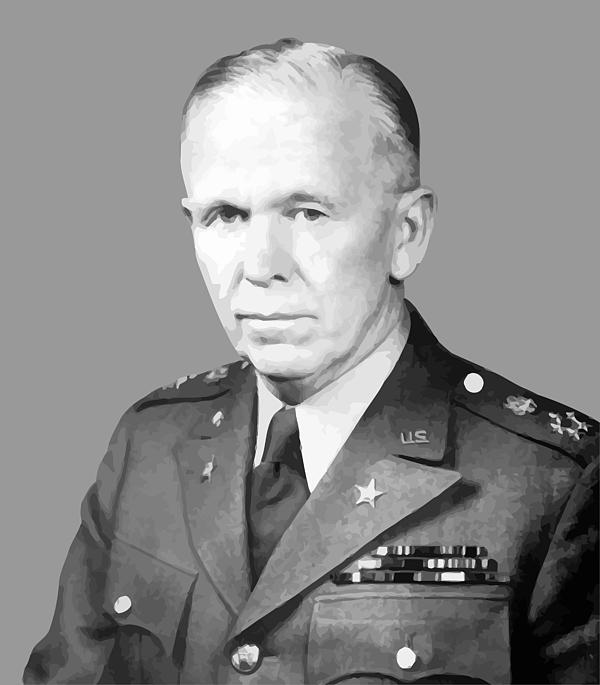
In contrast, the United States radically reduced the size of the regular Army and starved it of weapons, ammunition, gasoline, training and basic supplies. Promotions slowed to a crawl where ancient colonels and elderly majors lingered on active duty and future four and five star generals like Eisenhower, Patton, and Marshall all despaired and contemplated leaving the service. The Army’s – and to extent, America’s – salvation was in the fact that George Marshall persevered as a major and colonel in keeping a little black book of talented, forward thinking, officers and thought deeply and reflectively about building armies, helping enact “the Fort Benning Revolution” in military training. When FDR placed the power in Marshall’s hands as Chief of Staff he knew exactly what to do because he had a well-conceived vision of where the US Army needed to go to meet the national emergency of WWII. He was the American von Seeckt, except that Marshall was an infinite improvement morally, strategically and politically on his German counterpart. We were extremely fortunate to have had him.
.
We may not be as lucky next time.

State Failure is the Child of Oligarchy

Sunday, August 12th, 2012

An interesting piece in Democracy Journal by James Kwak:

Failure Is an Option

….Countries differ in their economic success because of their different institutions, the rules influencing how the economy works, and the incentives that motivate people,” write Acemoglu and Robinson. Extractive institutions, whether feudalism in medieval Europe or the use of schoolchildren to harvest cotton in contemporary Uzbekistan, transfer wealth from the masses to elites. In contrast, inclusive institutions—based on property rights, the rule of law, equal provision of public services, and free economic choices—create incentives for citizens to gain skills, make capital investments, and pursue technological innovation, all of which increase productivity and generate wealth. Economic institutions are themselves the products of political processes, which depend on political institutions. These can also be extractive, if they enable an elite to maintain its dominance over society, or inclusive, if many groups have access to the political process. Poverty is not an accident: “[P]oor countries are poor because those who have power make choices that create poverty.” Therefore, Acemoglu and Robinson argue, it is ultimately politics that matters.

The logic of extractive and inclusive institutions explains why growth is not foreordained. Where a cohesive elite can use its political dominance to get rich at the expense of ordinary people, it has no need for markets and free enterprise, which can create political competitors. In addition, because control of the state can be highly lucrative, infighting among contenders for power produces instability and violence. This vicious circle keeps societies poor. In more fortunate countries, pluralistic political institutions prevent any one group from monopolizing resources for itself, while free markets empower a large class of people with an interest in defending the current system against absolutism. This virtuous circle, which first took form in seventeenth-century England, is the secret to economic growth….

Read the rest here. 

The Twilight War—a review

Monday, July 23rd, 2012

[by J. Scott Shipman]

The Twilight War, The Secret History of America’s Thirty-year Conflict with Iran, by David Crist

When President Obama made a heartfelt opening, a smug Iranian leadership viewed it as a ruse or the gesture of a weak leader. Iran spurned him. Obama fell back on sanctions and CENTCOM; Iran fell back into its comfortable bed of terrorism and warmongering. Soon it may no longer be twilight; the light is dimming, and night may well be approaching at long last. [emphasis added]

Thus concludes senior government historian David Crist’s The Twilight War, and be assured Crist’s language is not hyperbole. Crist masterfully details the tumult of U.S.-Iranian relations from the Carter administration to present day. Using recently released and unclassified archived data from principals directly involved in shaping and making American foreign policy, Crist provides the reader an up-front view of “how the sausage is made;” and, as with sausage, the view often isn’t pretty for either side. Crist’s access wasn’t limited to U.S. policy makers, as he conducted interviews with principles on the other side as well, for instance, he had secret meetings/interviews with pro-Iranian Lebanese officials in south Beirut. In all, Crist estimated he interviewed over “four hundred individuals in the United States and overseas.”

Crist begins his story with the Shah of Iran in the last days of his leadership, as popular sentiment was turning against both his regime, as well as his American enablers. He reveals the Carter administration’s fleeting notion of military intervention following the fall of the Shah, and includes details how the clerics reigned in professional Iranian military members, purging the “unreconstructed royalists.” From the start, the U.S. learned how difficult, if indeed impossible, relations were going to be with the new Iranian leadership. One State Department report summed up the situation:

It is clear that we are dealing with an outlook that differs fundamentally from our own, and a chaotic internal situation. Our character, our society are based on optimism—a long history of strength and success, the possibility of equality, the protection of institutions, enshrined in a constitution, the belief in our ability to control our own destiny. Iran, on the other hand has a long and painful history of foreign invasions, occupations, and domination. Their outlook is a function of this history and the solace most Iranians have found in Shi’a Islam. They place a premium on survival. They are manipulative, fatalistic, suspicious, and xenophobic.

While I am certain the writer of this report was not intending to be prophetic, as it turns out this paragraph captures the essence of our conflict. Each American president has thought himself equal to the challenge and each has thus far failed.

The Twilight War includes the birth of Hezbollah, accounts of the Marine barracks bombing in 1983 (from the men who were there), and the details of the Kuwaiti request for American protection of their tanker fleet from the Iranians. From this decision, the U.S. committed military force to protect Middle East oil—a difficult and at times, contentious decision. This decision resulted in continued sporadic confrontations between the U.S. and Iranian forces in the Persian Gulf.

Crist’s book is an illustration writ-large of a book previously reviewed here at Zenpundit.com; Derek Leebaert’s Magic and Mayhem, The Delusions of American Foreign Policy—as both “magic” and “mayhem” figure large in our on-going relationship with Iran. Most U.S. administrations when dealing with Iran came to rely on the “magic, ” and often divorced, or worse, ignored the realities.

At 572 pages, the fast paced narrative is a must read for anyone wanting insight into the origins and issues that remain in the ongoing U.S.-Iran conflict. The Twilight War is exhaustively sourced.  Crist says in the Notes his book was twenty-years in the making and it shows. Further, this book comes with excellent maps, so keeping up with the geography is made easier.

Tom Ricks said, “this is the foreign policy book of the year, perhaps many years,” and Ricks may be right. The Twilight War is an important and timely book on a vital topic, and comes with my strongest recommendation.

Postscript:

A copy of The Twilight War was provided to this reviewer by the publisher.

Book Review: Thucydides:The Reinvention of History by Donald Kagan

Thursday, July 5th, 2012

Thucydides: The Reinvention of History by Donald Kagan 

Donald Kagan, who has been a professor of history and classics at Yale University almost as long as I have been alive has written a provocative book about Thucydides that challenges both conventional scholarly wisdom regarding the man who shares the title of “The Father of History” and the purpose of the book Thucydides meant to be “a possession forever”, The Peloponnesian War. In Kagan’s interpretation, Thucydides is the father of historical revisionism whose careful methodology furthered a political agenda: to defend the record of the Periclean state in Athens, where democracy was moderated by the wise statesmanship of the old aristocratic elite; and lay the blame for the downfall of Athens at Spartan hands on the vulgar hubris of radical democracy of mob and demagogue.

Thucydides is tightly focused argument about Thucydidean omissions, juxtapositions and treatment of sources and bias in his analytical rendering of military events and debates in the Assembly, not a comprehensive examination of  The Peloponnesian War. Specifically, the treatment of Pericles and Nicias (whom Kagan argues Thucydides favors and whom Kagan blames for failures of strategy and execution, especially the latter) vs. that he meted out to Cleon, Alcibiades and Demosthenes. Kagan criticizes Thucydides for the deliberate omission of speeches of Periclean opponents in debates where he  had been present and purporting to know the thoughts of actors where definitely had been absent, in exile; of faulty military analysis of the situation of the Spartan garrison besieged on Sphacteria due to personal enmity with Cleon and of the original expedition to Syracuse, because of favortism toward Nicias.

On Nicias in particular, a fellow aristocrat in favor of strategic restraint whom Kagan ascribes blame for the disaster in Sicily, did Thucydides seek a radical revision of the contemporary Athenian opinion. It was Thucydides belief that the post-Periclean democracy was a reckless, superstitious and greedy mob that led him, Kagan argues, to craft his narrative as an apologia for the inept statesmanship and incompetent generalship of Nicias that brought Athens to utter ruin in Sicily. Kagan’s accusations of bias on Thucydides part are more persuasive than his contention that the original expedition to Syracuse of sixty ships was a justifiable and sensible endeavor.

Kagan’s charges against Thucydides indirectly raise the larger question of politics in postwar Athens. A democracy shorn of it’s empire, long walls and fleet, defeated in external war but triumphant in brutal civil strife over it’s internal oligarchic enemies, was in all likelihood a dangerous place. Xenophon felt as a follower of Socrates, who had been associated with the reviled Alcibiades and Critias, that it was politic to leave Athens for his march upcountry under the banner of Cyrus. Socrates was unjustly put to death by the democratic faction. Writing from retirement in the luxury of a distant estate was a wiser option for a man of Thucydides’ opinions in that era than a return to the political fray in Athens and in part, would explain his supposed “revisionism”.

Strongly recommended.

Gray on Strategic Theory and COIN

Wednesday, June 27th, 2012

I linked to this only in passing previously:  here is eminent Clausewitzian scholar Colin S. Gray at NDU PRISM:

Concept Failure? COIN, Counterinsurgency, and Strategic Theory 

….Argument

If this debate about COIN is to be reset along more productive lines than those typically pursued in the often heated and bad-tempered exchanges of recent times, it is necessary to place some reliance on the conceptual tools that strategic theory provides. Unsurprisingly, in its several forms that theory yields what Clausewitz specified: it sorts out what needs sorting. There is much that should be debated about COIN, but the controversy is not helpful for national security if the structure and functioning of the subject matter, suitably defined, are not grasped and gripped with intellectual discipline. To that end, what follows is a nine-part argument intended to make more sense of the not-so-great COIN debate triggered by the unmistakable evidence of confusion, frustration, and either failure or unsatisfactorily fragile success in Iraq and Afghanistan. This is neither policy nor strategy advocacy, but generically it is advocacy of policy (and its politics) and strategy, properly employed.

Formal education in strategy is not an adequate substitute for experience or talent and aptitude, but it should help.COIN debate would benefit if the debaters took a refresher course in the basics of strategy. Many fallacies and inadequate arguments about COIN in Afghanistan, for instance, are avoidable if their proponents were willing to seek and were able to receive help from theory. Harold Winton offers useful guidance when he identifies five functions for competent theory: such theory “defines, categorizes, explains, connects, and anticipates.”10 About what does theory perform those functions? The answer, which for strategy is the equivalent of E = mc2, is ends, ways, means, and (with caveats) assumptions. If a strategist’s narrative performs well on this formula, he has indeed cracked the code that enables—though it cannot guarantee—strategic success. The strategist needs to understand his subject, which is not COIN or counterterrorism; it is strategy for his particular challenge in COIN or counterterrorism. It is hard to find compensation for a lack of case-specific local knowledge, but it is even harder, and can be impossible, to compensate for weakness in understanding of strategy.

There is a classical canon of authors worth reading for their contributions, both intended and not, to the general theory of strategy. This theorist has reshaped and assembled the theory in the form of dicta (formal statements that are not quite principles and definitely not laws).11 Rather than test readers’ patience with a recital of my dicta, here I capture much of their meanings and implications by offering a list of “strategists’ questions,” some of which, with some amendments, I have borrowed with gratitude from the late Philip Crowl, followed by my own redrafting of the now long-traditional “Principles of War” as a set of Principles of War that I believe more suitably serves the declared purpose. First, the following are the strategists’ questions:

  • What is it all about? What are the political stakes, and how much do they matter to us?
  • So what? What will be the strategic effect of the sundry characters of behavior that we choose to conduct?
  • Is the strategy selected tailored well enough to meet our political objectives?
  • What are the probable limits of our (military) power as a basket of complementary agencies to influence and endeavor to control the enemy’s will?
  • How could the enemy strive to thwart us?
  • What are our alternative courses of action/inaction? What are their prospective costs 
    and benefits?
  • How robust is our home front?
  • Does the strategy we prefer today draw prudently and honestly upon the strategic education that history can provide?
  • What have we overlooked? 

Ok, so far but take a look at this claim:

….It is not sensible to categorize wars according to the believed predominant combat style of one of the belligerents.Guerrilla-style warfare is potentially universal and, on the historical evidence, for excellent reasons has been a favored military method of the weaker combatant eternally. There are no such historical phenomena as guerrilla wars. Rather, therehave been countless wars wherein guerrilla tactics have been employed, sometimes by both sides. To define a war according to a tactical style is about as foolish as definition according to weaponry. For example, it is not conducive of understanding to conceive of tank warfare when the subject of interest is warfare with tanks and so forth, typically, if not quite always, in the context of combined arms. It is important conceptually not to allow the muscle to dominate the brain. 

So there is no qualitative difference between a nuclear war (WWIII) and a war in which some nuclear weapons were used (WWII)? What?

No. Gray is correct that many  wars partake of a blend of tactical fighting styles or that most wars are better defined (or at least should be in terms of causation) by their political character. That said, a specific fighting style sometimes is a definitive descriptive characteristic of a war, particularly if a dominant tactical style explains one side’s consistent comparative advantage (ex. the Macedonian phalanx vs. the Persians) in battle and some of the resultant choices which were forced upon the adversary.


Switch to our mobile site