zenpundit.com » academia

Archive for the ‘academia’ Category

Currently Reading…

Monday, March 14th, 2011

Making an effort this week to finish up books I have picked up or been sent to me by publishers, PR folks and authors, so I can review them….and two books pulled from the ominous antilibrary.

 Here’s what is currently on my desk and nightstand:

Reading and taking notes:


Grand Strategies by Charles Hill
Narcos Over the Border
by Dr. Robert J. Bunker (Ed.)
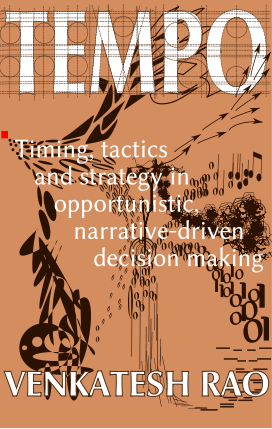
TEMPO
by Dr. Venkat Rao
Mind Wide Open
by Steven Johnson

This would be an interesting group of authors to put on a panel for a strategy-related question, such as – “How can we fix our AfPak policy?” – as you would get a high-level practitioner-policy wonk-cognition expert mix.

TEMPO is not yet available for sale, but Dr. Rao was kind enough to send me a PDF of his manuscript, which I am reading on my iPad along with another author’s manuscript and a screenplay, both of which are embargoed. I’m enjoying them all but reading most of them for review is slower going than just reading one for my own interest. I frequently end up taking detours because the authors bring up so many intriguing points. For example, Charles Hill has a section on Grand Strategies on Montaigne, the brilliant intellectual diplomat of the politically tumultuous French Renaissance and Father of the literary essay. Hill made a number of assertions, so I stopped, pulled a copy of The Essays ( which I have never read) off a shelf, flipped it open to a page, and started reading for and discovered that a) Hill was right and b) it will be a profitable use of my time to go back and read The Essays some day.

Next Up in the Queue:


The Shaping of Grand Strategy: Policy, Diplomacy, and War by Drs. Williamson Murray, Richard Hart Sinnreich and James Lacey (Ed.)
Counterinsurgency by Dr. David Kilcullen

The first book I mentioned recently, the second is one I have had sitting unread for quite a while but I need to read for an article I started writing. Among practitioners and policy makers, Colonel Kilcullen is the George Kennan of COIN.

What are you reading?

Systemic Curricular Choices Shape National Cognitive Traits

Thursday, March 10th, 2011

A brief point.

AFJ has a feature article by General Martin Dempsey on the need for the Army in it’s professional military education system to build future leaders who are critical thinkers:

Building Critical Thinkers

….The Army Leader Development Strategy identifies three critical leadership attributes for all Army leaders: character, presence and intellect. In addition to those three foundational attributes, we assert that strategic leaders must be inquisitive and open-minded. They must be able to think critically and be capable of developing creative solutions to complex problems. They must be historically minded; that is, they must be able to see and articulate issues in historical context. Possessed of a strong personal and professional ethic, strategic leaders must be able to navigate successfully in ethical “gray zones,” where absolutes may be elusive. Similarly, they must be comfortable with ambiguity and able to provide advice and make decisions with less, not more, information. While all leaders need these qualities, the complexity of problems will increase over the course of an officer’s career and require strategic leaders to develop greater sophistication of thought….

Read the rest here.

The nation is currently undergoing a debate about public education, of sorts. I say “of sorts” because the debate has largely been very dishonest on the part of proponents of certain kinds of “reforms” in which they hope to have a future financial interest, if radical changes can be legislatively imposed that will a) drastically lower labor costs and b) permit a “scalable” curriculum, to use the grammar of certain equity investor CEOs and lobbyists. The former does not concern this topic as much as the second, though the two will work in unison to create a profitable business model for a for-profit management company desiring to contract with local and state governments to run school systems.

“Scalability” builds upon Bush era NCLB legislation that emphasized standardized testing in basic math and reading skills, with punitive accountability measures for schools and districts failing to make “adequate yearly progress”. Due to the penalties and escalating standards, public schools have frequently narrowed their curriculums considerably, reducing instructional time for history, science, complex literature and the arts to put greater emphasis on basic skill drill instruction in just two subjects.

The net effect is that American public school students, roughly 88 % of all school children, spend a greater proportion of their day at concrete level cognitive activities than they did five or ten years ago and far less time on higher-level “critical thinking” like analysis or synthesis, making evaluative judgments, inquiry based learning or problem solving.

 “Scalability” means expanding on this dreary and unstimulating paradigm with digitally delivered, worksheet-like exercises to comprise the largest percentage of the instructional time for the largest number of children possible. It will be a low-cost, high-profit system of remedial education for would-be contractors, provided students are not able to “opt out”, except by leaving the public system entirely.

But only if their parents can afford it.

The US military relies upon the public schools to deliver the initial k-12 education of the overwhelming majority of their officer corps, to say nothing of the enlisted ranks. The soldiers, sailors, marines and airmen who went to Andover or similar private institutions before enlisting are very, very few. Today some public schools are excellent, some are failing and the rest are in-between. Most make an effort to challenge students of all ability levels, from those needing extra help to those in AP courses and gifted programs. There is systemic resiliency in a diversity of experiences.

What will be the effect on  the military leadership in the future if critical thought is methodically removed from public education by a nationally imposed, remedially oriented, uniform, “scalable” curriculum that is effectively free of science, history, literature and the arts? What kind of cognitive culture will we be creating primarily to financially benefit a small cadre of highly politically connected, billionaire-backed, would-be contractors?

Can inculcating critical thinking really be left entirely to universities and, in the case of the military, mid-career education?

What kind of thinkers will that system produce?

Better?

Or worse?

“What we think, we become” – Buddha

The Sociobiological Origins of Beauty

Sunday, March 6th, 2011


Great multidisciplinary talk by Dr. Denis Dutton on the possible evolutionary origins on culturally universal concepts of aesthetic beauty.

Marginalia

Sunday, March 6th, 2011


The New York Times, which I read on my iPad, particularly the non-political news sections of the paper where the obnoxious spin is reduced and the content quotient is higher, had an article that I think will ring a bell with ZP readers:

Sam AndersonWhat I Really Want Is Someone Rolling Around in the Text’

One day in college I was trawling the library for a good book to read when I found a book called “How to Read a Book.” I tried to read it, but must have been doing something wrong, because it struck me as old-fashioned and dull, and I could get through only a tiny chunk of it. That chunk, however, contained a statement that changed my reading life forever. The author argued that you didn’t truly own a book (spiritually, intellectually) until you had marked it up.

….All of which means I’ve been feeling antsy over the last five years, as I’ve watched the inexorable rise of e-readers. I sympathize with the recent wave of public teeth-gnashing about the future of marginal notes. The digital book – scentless, pulp-free, antiseptic – seems like a poor home for the humid lushness of old-fashioned marginalia. You can’t even write by hand in an e-book – at least not comfortably, not yet. As John Dickerson recently put it on Slate, describing his attempt to annotate books on an iPad: “It’s like eating candy through a wrapper.” Although I’ve played with Kindles and iPads and Nooks, and I like them all in theory, I haven’t been able to commit to any of them. As readers, they disable the thing that, to me, defines reading itself. And yet I’ve continued to hope that, in some not-too-distant future, e-reading will learn to take marginalia seriously. And it looks as if that might be happening right now.

According to the marginalia scholar H. J. Jackson, the golden age of marginalia lasted from roughly 1700 to 1820. The practice, back then, was surprisingly social – people would mark up books for one another as gifts, or give pointedly annotated novels to potential lovers. Old-school marginalia was – to put it into contemporary cultural terms – a kind of slow-motion, long-form Twitter, or a statusless, meaning-soaked Facebook, or an analog, object-based G-chat. (Nevermind: it was social, is my point.) Samuel Taylor Coleridge, the undisputed all-time champion of marginalia, flourished at the tail end of this period, and his friends were always begging him to mark up their books. He eventually published some of his own marginalia, and in the process even popularized the word “marginalia” – a self-consciously pompous Latinism intended to mock the triviality of the form.

Incidentally, How to Read A Book is by Mortimer J. Adler. A classic 

Marginalia is of critical importance to biographers and historians studying controversial figures. We know far more about such disparate figures as John Adams and Joseph Stalin because they enthusiastically marked up their books and documents with sharp and brutally frank opinions, revealing the true feelings often masked to contemporaries. Stalin, who sometimes used a crayon, would mark certain passages with “ha ha!” which, far from being a sign of the dictator’s amusement indicated rage toward the author – sometimes with lethal consequences. Stalin’s rival and equally deadly disciple, Mao ZeDong scrawled erudite literary, scholarly, sometimes poetical, comments about philosophy and Chinese history that belied his taste for the maniacal ruin of a classical Confucian culture in which he was deeply versed.

Richard Nixon, who clinked toasts of maotais with Mao and Zhou ( mostly Zhou as Mao was seriously ill) during Nixon’s historic visit ran his semi-isolated presidency via marginalia he methodcally wrote on news clippings, memos and yellow legal pads all day long, which he sent to his “Lord High Executioner” H.R. Haldeman, who like Henry Kissinger, discreetly ignored Nixon’s angrier, stranger and more ill-considered notations while carrying out Nixon’s incisive or at least harmless instructions. Harry Truman, known for employing blistering profainity in private, was also capable of the searing marginal commentary favored by John Adams.

It isn’t just e-readers, iPads and PCs that have reduced marginalia. The culture of literacy is in a general decline in America and the “gotcha” nature of modern politics and the criminalization of policy differences have caused political figures to adopt a strategy of eschewing diaries, journals, letters and email on the advice of attorneys. Statesmen are following the old rule of Chicago alderman, “Don’t write it down when you can say it, don’t say it when you can nod, don’t nod when you can wink”. It’s a loss to history. We will know far more about Teddy Roosevelt’s true interior life or Richard Nixon’s than we will of Barack Obama’s. Very little that is recorded will not be, in part, artifice and marginalia is a poor strategy for artifice designed to craft an image or advance an argument.

As part of the diminishing cadre of marginalians, I like to mark up books with colored, ultra fine point, sharpies. Generally lighter hues so it won’t bleed heavily through the page. Occasionally, for especially important passages, maybe one or two a book, a highlighter is used so that in the future, I can lazily pull the book from the shelf and quickly flip to the paragraph in question. I tend to do a lot of underlining and bracketing; when I was younger, I “argued” more with the authors in the margins. Older now, I expand on their points whether I agree with them or not. The Kindle has the capacity to type in notes, but I have not used the function much because most of the books I have read on it are fiction.

What do you do with the margins of your books?

The Shaping of Grand Strategy: Policy, Diplomacy and War

Sunday, February 27th, 2011

The Shaping of Grand Strategy: Policy, Diplomacy, and War by Williamson Murray, Richard Hart Sinnreich and James Lacey (Ed.)

Just received this review copy courtesy of Nicole at Cambridge University Press. 

The authors contributing chapters also include Colin S. Gray, Marcus Jones, Jeremy Black and John A. Lynn III and the tome has been dedicated to the current combatant commander of CENTCOMGeneral James Mattis, USMC. Thumbing through, it is an academic but not an abstruse book, one equally suitable for serious laymen interested in foriegn policy and military affairs as well as policy wonks, military officers, scholars and students.

The chapters tackle aspects of strategy that are of much interest to ZP readers and I look forward to reviewing The Shaping of Grand Strategy here soon


Switch to our mobile site