zenpundit.com » intellectuals

Archive for the ‘intellectuals’ Category

Zen at War on the Rocks on China and Avoiding War

Thursday, November 14th, 2013
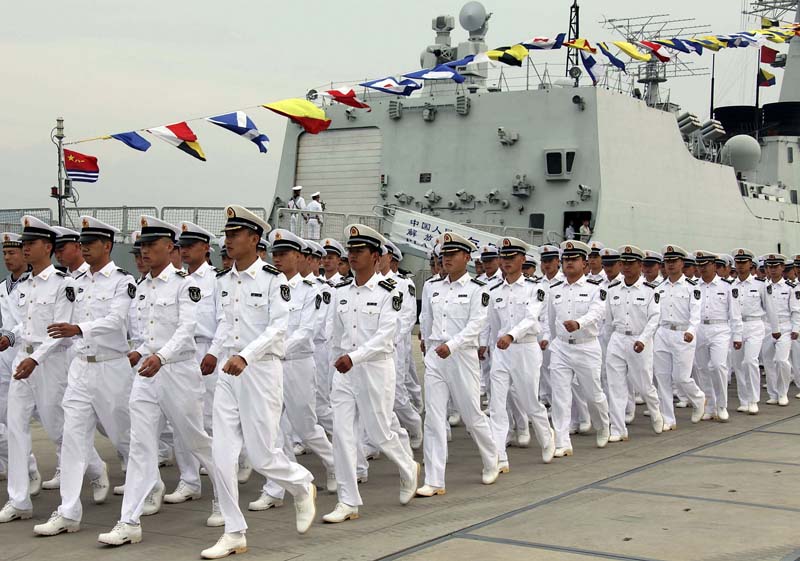
Chinese Navy

Chinese Navy

[by Mark Safranski, a.k. a. “zen“]

The editors of the excellent War of the Rocks invited me to post a short rebuttal to the op-ed “How Not to Go to War With China”, by Scott Cheney-Peters, which appears in their “Hasty Ambush” section:

UNDERSTANDING CHINA: THE REAL KEY TO AVOIDING WAR

….A place to begin our efforts in avoiding war with China might be avoiding engagement in some of the same incorrect mirror-imaging assumptions we once made about the Soviet Union, not least of which was MAD.  As a doctrine, Soviet leaders never accepted MAD and the Red Army general staff ignored it in drafting war plans to fight and prevail in any nuclear war. While the Soviets had no choice but to tackle the logic of deterrence as we did, the operative Soviet assumptions were predicated on a different strategic calculus, a different force structure and above all, different policy goals from their American counterparts.  A dangerous gap between American assumptions of Soviet intentions and the reality of these intentions came to light when in 1983 the Reagan administrationdiscovered to their alarm that Soviet leaders had interpreted the NATO exercise Abel Archer 83 as preparations for a real, imminent nuclear first strike on the USSR and ordered Soviet nuclear forces on high alert.

The military-to-military confidence-building initiatives outlined by Cheney-Peters intended to construct “habits of cooperation” are not entirely useless. There is some value in ensuring that high-ranking American military officers have personal and limited operational familiarity with their Chinese counterparts in the People’s Liberation Army (PLA), but as potential game-changers, they need to be taken with a grain of salt. Such a policy misses the essential strategic and political centers of gravity in the Sino-American relationship.  Namely that for the first time in 600 years, China is building a blue water Navy that will foster power projection as far away as the Indian ocean and Australia.  Secondly, this naval expansion, coupled with a new Chinese foreign policy, aggressively presses grandiose territorial demands on nearly all of its neighbors, including India and Japan.  These are fundamental conflicts with American interests that cannot be explained away or papered over by banquet toasts with visiting delegations of Chinese admirals. […]

Read the rest here.

Also read another WotR  China piece “99 Red Balloons: How War with China would Start” by Matthew Hipple

New Article up at Pragati: Lethal Ideas & Insurgent Memories – Review of The Violent Image

Friday, October 25th, 2013

[by Mark Safranski, a.k.a. “zen“]


The Violent Image by Neville Bolt 

I have a new book review up at Pragati this morning:

Lethal ideas and insurgent memory 

….One expert who does acknowledge a paradigmatic shift and posits a powerful explanatory model for the behavior of what he terms “the new revolutionaries” is Dr Neville Bolt of the War Studies Department of King’s College, London and author of The Violent Image: Insurgent Propaganda and the New Revolutionaries. Taking a constructivist view of irregular military conflict as the means by which insurgents weave an enduring political narrative of mythic power and shape historical memory, Bolt eschews some cherished strategic tenets of realists and Clausewitzians. The ecology of social media, powered by decentralised, instant communication platforms and the breakdown of formerly autarkic or regulated polities under the corrosive effects of capitalist market expansion, have been, in Bolt’s view, strategic game changers “creating room to maneuver” in a new “cognitive battlespace” for “complex insurgencies”.  Violent “Propaganda of the Deed”, once the nihilistic signature of 19th century Anarchist-terrorist groups like the People’s Will, has reemerged in the 21stcentury’s continuous media attention environment as a critical tool for insurgents to compress time and space through “…a dramatic crisis that must be provoked”.

As a book The Violent Image sits at the very verge of war and politics where ideas become weapons and serve as a catalyst for turning grievance into physical aggression and violence. Running two hundred and sixty-nine heavily footnoted pages and an extensive bibliography that demonstrates Bolt’s impressive depth of research. While Bolt at times slips into academic style, for the most part his prose is clear, forceful and therefore useful and accessible to the practitioner or policy maker. Particularly for the latter, are Bolt’s investigations into violent action by modern terrorists as a metaphor impacting time (thus, decision cycles) across a multiplicity of audiences.  This capacity for harvesting strategic effect from terrorist events was something lacking in the 19th and early 20thcentury followers of Bakunin and Lenin (in his dalliances with terrorism); or in Bolt’s view, the anarchists “failed to evoke a coherent understanding in the population” or a “sustained message”.

Read the rest here.


Two Manea COIN Interviews at SWJ

Thursday, October 10th, 2013

[by Mark Safranski AKA “zen”]

Octavian Manea has two excellent interviews up at SWJ; for those interested in COIN theory and history, these are must-reads:

Learning From Today’s Crisis of Counterinsurgency

SWJ: What is the relevance of post-9/11 counterinsurgency campaigns for future Western expeditionary operations? What are the challenges you expect to see repeated in future campaigns? Is the past a prologue to the future?

Robert Egnell: In a simplified version, General David Petraeus already answered this question: “the counterinsurgency era is not over [because] the insurgency era is not over.” So long as the operating environment looks as it does today, so long as the character of conflict looks as it does today, the lessons at the tactical level of the last ten years remain highly relevant. Even if we can debate the concept of counterinsurgency and its application today and tomorrow, the lessons of operating in urban environments, foreign languages and foreign cultures will be relevant also in the future. Expeditionary powers cannot escape these challenges. It is not going to get easier: how to engage with a civilian population, how to establish and maintain civil order, how to collect and process human intelligence, how to operate in a foreign environment, how to provide basic services. These are challenges that are here to stay with us as we move forward.

David Ucko: Beyond these common operational challenges, one of the most pressing lessons from the cases discussed in the book is the need for greater strategic thinking. This sounds like a cliché these days, and becomes a catchall explanation with little substance. But despite great talk about the need for strategy, I don’t think the term or the art is widely understood. Looking at what happened in the last ten to fifteen years – whether we call it counterinsurgency, war, contingency operations, it doesn’t really matter – the ability to craft and implement a viable strategy is absolute, for any power involved in any kind of expeditionary operations. This is the relevance of the post-9/11 expeditionary operations and our book seems to place counterinsurgency within this strategic context. There are great lessons from these campaigns and we would be absolutely foolish to dismiss them as aberrations just because we don’t like the word “counterinsurgency.”

and

Gangs, Slums, Megacities and the Utility of Population-Centric COIN

SWJ: Are these trends here to stay with us? Are we heading towards a world that provides more opportunity for these dark networks to proliferate, to incubate? On one side, we see concentrated urbanization in coastal, hyper-connected areas that will need to accommodate more and more waves of rural immigrants. Presumably this will put pressure on an already overstretched city infrastructure. On the other side, we see what Moises Naim is talking in his latest book the decline/decay of power, the decoupling of power from size, the decoupling of the capacity to use power effectively from the control of a large Weberian bureaucracy.

VF-B: They will definitely stay and perhaps will intensify, partially for the reason that urbanization is taking place in a way and magnitude with which many governments struggle to cope. Much of Mexico City, a megacity of 20 millions people, for example, is really disconnected from the central government and the central business areas. Another example is Karachi: yes, the blood bath that we see there is partially instigated by state actors, but it is also a phenomenon of a very tenuous and limited control of the state in many areas of the city. I am intrigued by the Moises Naím’s suggestion of the decoupling of the effective exercising of power from the Weberian bureaucracy. I would say that the Weberian construct of power has never been as widespread as we imagine. Many areas in the world, Africa being the prime example, have had a different notion of the state, one much closer to the medieval conceptualization where the purpose of the state and the purpose of power competition for controlling the state apparatus is to make money for oneself as opposed to the public service state whose main raison d’etre is to deliver public goods to citizens in exchange for legitimacy and sustainability. In the end the social contract emerged because the self-interested elites understood that they need to offer something to the population. The notion that the state is weakening and collapsing might not be really appropriate for many parts of the world where the state has always been defined as a mafia bazaar. You take over the state so you can issue exceptions from law enforcement to your friends, so that you and your friends can make money.

In other parts of the world, the state might have also not been quite conceptualized in terms of social contract and Weber like notions.  For example, in parts of Latin America, the state lies somewhere in between the European/Western model and some of the Asian or African states. In Latin America, the state is often captured by and serves a very narrow elite. Many countries in Latin America are still highly exclusionary. Even in places like Colombia with all of its progress over the past decade, there is still a fundamental unequal society. Yes, the middle class is increasingly able to participate in state making, along with the political and economic elites, and being able to demand accountability. But still vast segments of population are really not experiencing the state in any positive manner or not experiencing the state at all. Much of Central America faces massive challenges: tax collection might be as low as 10%, and the political and economic power is enormously concentrated in the hands of narrow  elites.

All that said, the future, if troubling trends are not mitigated now, might bring some fundamental challenges. Imagine if in the long term, there is substantial global warming, major sea level rise, and large parts of Bangladesh, for example, are submerged. This will generate huge waves of immigrants, but also radically empower the non-state actors who are able to provide some sort of protection and public goods to the population.

Read the rest here.

The Myhrvold Report and Understanding Strategic Threats

Monday, October 7th, 2013

[by Mark Safranski, a.k.a. “zen“]

Several weeks ago, Cheryl Rofer wrote an important post analyzing the report “Strategic Terrorism: A Call to Action” by Microsoft billionaire, venture capitalist, theoretical mathematician and cookbook author, Dr. Nathan Myhrvold. I found Cheryl’s argument quite persuasive and would like to add a few points of my own; because while some of the concerns raised by Myhrvold are valid and his intent is no doubt well-meaning, the approach he suggests is, at times, problematic.

If in the past ten years you have been a serious student of terrorism studies, insurgency and COIN, national security, counter-terrorism policy, counter-proliferation policy,  intelligence community affairs and military theory, there is little that will be new for you in the first part of the report. Many of these problems had previously been raised (at least in part) by figures as disparate as Michael Scheuer, John Robb, Martin van Creveld, Thomas P.M. Barnett, William Lind,  Robert Bunker and dozens if not hundreds, of thinkers, practitioners and scholars. In addition, this ground was also covered by government agencies like the National Intelligence Council in its periodic Global Trends reports, and in classified analysis by the Office of Net Assessment and various three letter agencies. The blogosphere also had a lively discussion of catastrophic WMD terrorism, superempowered individuals, 4GW/5GW, apocalyptic Mahdism and related subjects throughout the mid to late 2000’s.  Diffusion of society-shifting power into the hands of small groups and individuals was a theme of Alvin and Heidi Toffler back in the 70’s and 80’s, so this is an old rather than new problem.

Dr. Myhrvold is a polymathic character, but his original area of specialization was mathematical research so it is not surprising that his approach to things “strategic” is dominated by scalar considerations. Namely, a threat taxonomy based upon potential magnitude of  disaster events up to the extinction of the human race (High M 10).  Wondering here, as the bibliographic references of this report are extremely scanty, if Myhrvold was influenced by Herman Kahns ideas on escalation or game theory based literature on deterrence or something else. Regardless, while there’s some merit to this definition – obviously if your civilization is destroyed or everyone is dead you have suffered the ultimate in strategic defeat – there are weaknesses too as the linear progression of destruction implies an apolitical environment and inevitable process. That’s not how things work with strategy in the real world, neither today nor back in the era of Cold War superpower nuclear brinksmanship. Even John Foster Dulles and Vyacheslav Molotov were more politically nuanced than that.

This is an important point. Myhrvold is focused on capacity alone rather than in conjunction with political purpose in defining strategic threats.  Capacity in bad hands is worth worrying about and Myhrvold is right when he criticizes the government for their obstinate refusal to develop a robust threat detection system for shipping to US ports of entry ( that’s boring, hard work with little payoff from a political perspective, but the NSA building a system for surveilling all Americans is fun and gives government bureaucrats great potential power to ruin anyone they wish); that said, outside of comic books and James Bond movies, people do not historically initiate violence on an epochal scale out of a Joker-like admiration of nihilism, not even terrorists. Instead, they have a political end in mind for which violence is a tool. This variable appears to be absent from Myhrvold’s thinking.

More troubling, Myhrvold’s solution to the potential threat of bioweapon terrorism would appear to be, as I infer it, even greater centralization of power in the hands of a national security surveillance state. As I expect Dr. Myhrvold is a great respecter of data-driven, probabilistic logic, he might want to consider that nearly every man-made, high magnitude, lethal event in the past century and a quarter years has been initiated by governments for reasons of policy, up to and including the auto-genocide of tens of millions of their own citizens. Most people on this planet are in far greater danger of harm at the hands of the state than they are as a result of terrorism or foreign attack and it would seem foolish, in light of such statistics, to increase our risk by delegating greater grants of power to the entity most likely to cause us harm. In the words of the late defense and security expert Dr. Fred Ikle, we would be risking Annihilation from Within.

Ikle anticipated years ago much of what Myhrvold wrestled with in his report and, in my view, prescribed better answers.

Guest Post: Cheryl Rofer – I Hope the Government Doesn’t Listen to Nathan Myhrvold

Monday, September 23rd, 2013

Cheryl Rofer, scientist, WMD expert and founder of Nuclear Diner.com and long-time friend of ZP blog, will be cross-posting here today regarding the report “Strategic Terrorism: A Call to Action” by Microsoft billionaire, venture capitalist, theoretical mathematician and cookbook author, Dr. Nathan Myhrvold

I Hope The Government Doesn’t Listen to Nathan Myhrvold

by Cheryl Rofer

Shane Harris at Foreign Policy tells us that Nathan Myhrvold, fresh off introducing the world to liquid nitrogen and other expensive innovations for cookery, is now going to straighten out the US government on terrorism. He has produced a thirty-three page paper that he is shopping around Washington to help the government get things right.

Except that Myhrvold does not understand the definition of a threat: intent + capability. And he gets a lot of things wrong.

He has a lot to say about what he calls, and barely defines, “strategic terrorism.” This is apparently intended to be parallel to the strategic nuclear threats of the Cold War. But during the Cold War, both the United States and Russia had nuclear weapons aimed at each other. They still do. The terrorists that Myhrvold discusses do not have weapons that can kill millions of Americans, which seems to be central to “strategic terrorism.” It’s not even clear that they have intent, but, for the sake of argument, let’s assume they do. That is only half a threat.

Could they get that capability? Myhrvold is convinced they can, but he offers little in the way of evidence, and some of that is incorrect. Further, he confuses possibility with actuality throughout the paper, slipping easily from might to could to can.

Let’s get the biggest factual error out of the way first. On page 5, Myhrvold says:

The collapse of the Soviet Union has also greatly aided the dispersal of nuclear knowledge and potentially even complete weapons.

Note that potentially. again on page 10:

Today, tremendously lethal technology is available on the cheap. Anyone—even a stateless group—can have the deadliest weapons on earth. Several trends led to this inflection point. One is nuclear proliferation, which in recent years reached a tipping point at which access to nuclear weapons became impossible to control or limit in any absolute way. The collapse of the Soviet Union scattered ex-Soviet weapons across many poorly governed and policed states, and from there, the weapons may spread further into the hands of terrorists. At the same time, the set of ragtag countries that have developed homegrown nuclear devices is large and growing. The entrance to the nuclear-weapons club, once limited to a small number of sophisticated and stable countries, is now far more open.

Myhrvold is simply wrong that “The collapse of the Soviet Union scattered ex-Soviet weapons across many poorly governed and policed states.” He may have heard that when the Soviet Union split into fifteen separate states in December 1991, four of them had nuclear weapons: Russia, Ukraine, Kazakhstan, and Belarus. This was a consequence of Soviet basing policy and the rapidity with which the Soviet Union fell apart. Kazakhstan decided it didn’t want to be a nuclear power and sent its missiles back to Russia. It took a bit more persuasion to convince Belarus and Ukraine, but they sent theirs back too. Twenty-two years after the breakup, there is no evidence that any Soviet nuclear weapons are outside Russia.

And the “large and growing” number of “ragtag countries” that “have developed homegrown nuclear devices”? Well, let’s count them. Outside the five nuclear weapons countries enumerated in the Nuclear Nonproliferation Treaty, India, Israel, and Pakistan that are known to have significant numbers of nuclear weapons. North Korea has tested three nuclear devices; whether they have weaponized any is not known. And, despite Iran’s insistence that it is not developing nuclear weapons, some people believe that is the case. That’s all I can think of. Nine is not a large number, nor is it growing particularly rapidly. I’ll leave it to Myhrvold to tell us which of those countries are “ragtag.”

So his assumption that nuclear weapons are easily available to terrorist organizations fails. I’m not as closely acquainted with the issues of biological weapons, but if Myhrvold’s arguments there are equivalent to the ones on nuclear weapons, I’m not worried. Likewise, he cites only one example, Aum Shinrikyo, for the terrorist use of chemical weapons, but there have been no incidents since. And he uses his expansionary sense of capability: If they had been able to disperse the sarin more effectively, more people would have died. But they didn’t; these weapons are difficult to make effective, and small groups, even with expertise, have shown themselves not up to the capability of states.

It’s worth going back to that paragraph from page ten to examine Myhrvold’s rhetorical methods, which persist throughout the paper. The first two sentences are sensational assertions with no specific content. And it is an inflection point – everything has changed! This is a common trope for computer guys, and the rest of us are on to it. Again, no specifics. Then the “facts,” which turn out to be wrong and unsupported. And then the sensational conclusion that the first two sentences told us we would come to.

He provides a number of old chestnuts, again with no support. Many of them have been shown to be doubtful.

  • Terrorists have no home address; therefore retaliation and deterrence are difficult or impossible.
  • “If a nation-state really wants to hurt the United states, why risk reprisal? Why not inflict damage by giving encouragement, resources, and direction to a group such as al Qaeda?”
  • “The quickest path to power for a ruthless and ambitious 21st-century man in many parts of the world is now to lead a stateless terror group.”
  • “The bully pulpit afforded by modern communications has allowed what once would have been isolated fringe groups to knit together into formidable adversaries against the most powerful nations on earth.”

He conflates all terror groups with al-Qaeda and almost asserts that their single goal is to build a caliphate. I say “almost” because throughout the paper, he implies or states pseudo-conclusions loosely connected to earlier statements, not quite willing to own his implications. However, since he includes them, one might assume that they represent his thinking. This method of presentation, however, leaves him ample room to say “I didn’t say that.”

He defines (or, in his loose way, almost defines) tactical and strategic terrorism, presumably attempting a parallel with tactical and strategic nuclear weapons. Tactical terrorism – the shooting up of shopping malls and bombing of marathons – can be handled by normal means of law enforcement. Strategic terrorism – which seems to mean actions that can kill millions of Americans – needs Myhrvold’s advice.

The parallel, however, doesn’t work, because strategic nuclear weapons exist, but the capability for a terrorist group to kill millions of Americans doesn’t and isn’t likely to for some time, if ever.

But let’s consider Myhrvold’s advice. It is to centralize and highly fund (ah, now we see why he’s getting an audience in Washington) an organization with a single executive to prevent strategic terrorism.

Business knows best, he says, and this is how business does it. But, whatever the virtues, this has been tried before. Any number of politicians and lobbyists have advocated a special agency with an executive focused like a laser on their preferred goals. Sometimes the agency is formed. It would be helpful if Myhrvold would list the successful examples.

The government is doing many of the things that Myhrvold advocates; he seems not to have researched what is being done and what is not. And some of his (almost) suggestions are scary: we must reconsider whether the dangers from the Bill of Rights outweigh the benefits. Not even that explicitly, his goals of preventing strategic terrorism imply a great deal of surveillance, probably a lot more than the NSA is now being accused of.

Harris says that Myhrvold is talking to people in federal agencies concerned with terrorism, although Myhrvold is shy about saying whom. There are always a few people in federal agencies who are impressed by a Big Name with Big Money. Perhaps they just wanted him to sign their copy of his cookbook. And perhaps some see an opportunity to use Myhrvold’s recommendations to enhance their agency’s budget or reach.

But it’s the sameold sameold: be very afraid, the terrorists are coming to get you! The country seems to be moving past that after twelve long years.

Switch to our mobile site

