zenpundit.com » intellectuals

Archive for the ‘intellectuals’ Category

A Better von Clausewitz

Wednesday, October 15th, 2008

 Recently, I’ve seen  Dr. Chris Bassford’s site, Clausewitz.com mentioned at the Small Wars Council and then one of my co-authors, A.E. of Rethinking Security, favorably cited a link to Clausewitz.com on a social networking platform. Intrigued, I wandered over and read for a while. I’m glad that I did.


On War was a book I read as an undergraduate for a class that focused on German intellectual history and was included by the prof more or less as an afterthought, along with works by Kant, Marx, Nietzsche and a few others. I recall that I was not terribly impressed at the time by On War; my real interest then was Cold War diplomatic history and I paid far greater attention to Marx. To me, Clausewitz was a turgid writer, another Germanic pedant, though an important one for his contribution to strategy. I never developed any particular dislike for him either, since military affairs wasn’t a priority and I stuck Clausewitz on my shelf and ceased to give him much consideration thereafter. Other philosophers and thinkers seemed to be more relevant.
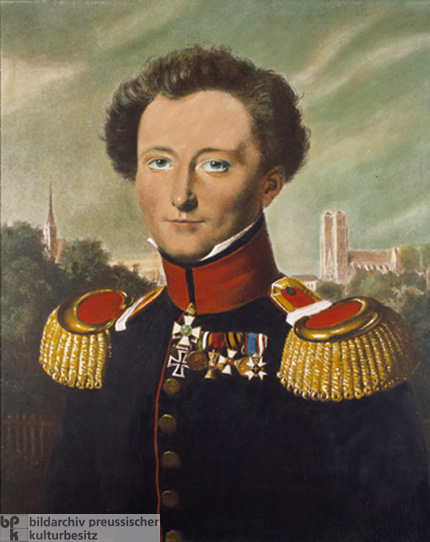
While reading at Clausewitz.com, I came across Bassford’s critique of various translations of On War and he panned one in particular:

7. Penguin Edition (1968). AVOID. The most widely available version of the Graham/Maude translation (see #4 above) is the weirdly edited and seriously misleading Penguin edition (still reprinted and sold today), put together by Anatol Rapoport in 1968. Rapoport was a biologist and musician-indeed, he was something of a renaissance man and later made some interesting contributions to game theory. However, he was extremely hostile to the state system and to the alleged “neo-Clausewitzian,” Henry Kissinger. He severely and misleadingly abridged Clausewitz’s own writings, partly, of course, for reasons of space in a small paperback. Nonetheless-for reasons that surpasseth understanding-he retained Maude’s extraneous introduction, commentary, and notes, then used Maude’s errors to condemn Clausewitzian theory. Between Graham’s awkward and obsolete translation, Maude’s sometimes bizarre intrusions, and Rapoport’s hostility (aimed more at the world in general, and at Kissinger in particular, than at Clausewitz personally), the Penguin edition is badly misleading as to Clausewitz’s own ideas. The influential modern military journalist/historian John Keegan apparently derives much of his otherwise unique misunderstanding of Clausewitz from Rapoport’s long, hostile introduction-necessarily so, since he has obviously never read Clausewitz’s own writings, not even the rest of the text of this strange edition. If you have any version of the Graham or Graham/Maude translation, but especially this twisted Penguin version, we advise you to get the modern Howard/Paret edition (discussed above).

Curious, I went over to a bookcase and pulled my copy of On War. Sure enough, it was the “twisted” Rapoprt version that I had read . I don’t know if the backstory Bassford gives about Rapoport and Henry Kissinger is true or not but it is certainly a plausible one. Kissinger, for all his intellectual abilities and charm was, in his heyday, a highly aggravating and insecure personality who made a legion of enemies with abrasive, dismissive and derogatory remarks and machiavellian conduct. I’ve seen scholars tilt at windmills for stranger reasons than that. My own mentor in diplomatic history had consuming hatreds for Alexander Hamilton and Arthur Schlesinger, Jr. to which I could never  relate.

As a result of reading Bassford’s comments, I picked up a Paret translation of On War yesterday and a cursory flipping through told me that he was correct in his assessment. I had read an edition that was both mediocre and weird in college. So I bought the copy and look forward to getting acquainted with a much more accurate presentation of Carl von Clausewitz’s ideas.

ADDENDUM:

As it happens, SWJ Blog has a related post-  Between Clausewitz and Mao.

Sturm und Angst Politischen Ökonomie

Tuesday, October 7th, 2008

Thought German might fit the Wagnerian mood of the markets today in a brief post discussing the economy. A few links on related tangents that I found intriguing, and then a brief comment:

John Robb –  A Real Nuclear Option in Finance

John relishes being not only out front but the edge thinker. He’s right that derivatives have to be addressed though I’m not qualified to comment as to “how”. I haven’t the faintest idea and the sums that derivative markets leverage vastly exceed our planetary GDP ( that’s right, not the economy of United States, the GDP  of planet Earth)  In particular, I wonder how you monkey with one class of derivatives without spooking the traders in other derivative instruments into stampeding us over a cliff in ten minutes. OTOH, Robert Paterson, who unlike me really does understand derivatives and the nuances of trading, agreed with Robb, who offered:

One solution: Nuke entire parts of the system. In short, destroy the system’s network connectivity. For example, credit default swaps ensure that failure will spread through internetworked contracts. Nuke CDS derivatives ($60 trillion or so) by making them illegal. Destroy parts of the network in order to save the remainder — firewalls and firebreaks.

Fabius Maximus –  No coins, no COIN

FM sees the economic crisis forcing huge changes in American foreign policy, defense structure, military doctrine and acquisitions:

In most of these money is no object in the pursuit of security (or other goals, often quite chimerical).  That is an exceptional way of thinking.  More so when one considers how our current account deficit has steadily increased since 1971 (when we went off the gold standard) – and the even more rapid increase in the foreign debts that finances the annual deficit.

That era will close soon, and the United States will return to earth.  Like everyone else, we will have to consider what foreign adventures we can afford before starting them – weighing their costs and benefits – and stop wars whose costs spiral out of control.  This will force a military revolution more profound than any since WWII, when we entered the “money is no object” era for weapons and foreign wars.  

….Not that the annual budget wars were not fought fiercely, but they will be conducted differently once budgets start their rapid and long-term decline.  Like any organization thrust into radically changed environment, restructuring – drastic changes in structure and doctrine – will be needed.

Maritime, air, and land – our approach to all will change.  Maintaining full-scale forces against purely theoretical future threats will become impossible.  Seeking dominance in every theater will become unrealistic.  Prioritization will become imperative.

FM also offers up  A solution to our financial crisis . Right now, China, the leader in global dollar reserves is in a position where our crash is their crash and their crash may be the end of the PRC as we know it. Good time to strike a deal.

Tom at HG’s World cites Niall Ferguson in Ferguson’s greatest area of expertise, as an economic historian:

The End of Prosperity, or A Better Future?

Historian and author, Niall Ferguson penned this article in Time magazine, about the question that is on everyone’s mind if not their lips. “Are we headed into a second Great Depression?”He begins: Congress’s initial rejection of the Bush Administration’s $700 billion bailout plan calls to mind an unhappy precedent. Back in 1930, the Senate passed the Smoot-Hawley Tariff Act, which raised duties on some 20,000 imported goods. Historians define this as one of the critical steps that led to the Great Depression – a tipping point when the world realized that partisan self-interest had trumped global leadership on Capitol Hill.”He explains what happened to tip the scales.“The U.S. – not to mention Western Europe – is in the grip of a downward spiral that financial experts call deleveraging. Having accumulated debts beyond what’s sustainable, households and financial institutions are being forced to reduce them. The pressure to do so results from a decline in the price of the assets they bought with the money they borrowed. It’s a vicious feedback loop. When families and banks tip into bankruptcy, more assets get dumped on the market, driving prices down further and necessitating more deleveraging. This process now has so much momentum that even $700 billion in taxpayers’ money may not suffice to stop it.”

Like Tom of HG’s World, I’ve been a big fan of Ferguson and have numerous books of his on my shelf . That said, it’s very odd to me that he not mention another parallel with the Great Depression of a Federal Reserve in the hands of a relatively new Chairman after the long tenure of an outsized and much respected predecessor. Or the inability of the Fed to effectively coordinate with European counterparts ( several days after loudly bloviating about American weakness/incompetence by the German Finance Minister it appears that he might have better spent his time addressing German and EU economic fundamentals. Good Lord, even by politician standards, what an asshole!) which back then scrambled to ditch the gold standard like a poor relation carrying hepatitis.

The solution, if you can call it that, from my crude perspective would be to gather the Fed with other central banks, treasury and it’s G-8 finance ministry counterparts plus China and the biggest sovereign funds and agree on a few, very simple, lowest common denominator “brakes” or safety nets to backstop the system, plus a 2 year “hot money” flight tax to give a window of time to let the markets settle and work out clear minded reforms rather tha jerry-rigged insider looting binges posing as band-aids. That and driving what money/credit remains toward entrepreneurship and innovation rather than another burst of McMansion consumption by a demographic of dudes without any verifiable means of support.

This scheme won’t create any rainbows. It would be a tourniquet but better a tourniquet than an amputation.  If we come out with a recession on the scale of 1981-1982 we should consider ourselves to be fortunate. The Great Depression has begun to pass out of living memory but reviewing the mistakes of those years might be instructive.

Foreword

Friday, September 26th, 2008

Tom Barnett posted up on his foreword to  The John Boyd Roundtable: Debating Science, Strategy, and War:

…To truly think in grand strategic terms is hard because, in order to communicate concepts to the universe of relevant players, one needs a sort of “middleware” language able to traverse domains far and beyond the most obvious one of warfare. As America heads deeper into this age of globalization-a global order fundamentally of our creating-our need for such bridging lexicons skyrockets. In a networked age, everything connects to everything else, so most of what constitutes strategic thinking nowadays is really just the arbitraging of solid thinking regarding the dynamics of competition, leveraging the surplus of conceptual understanding in one realm to raise such understanding in others….

Read the rest here.

Barnett and Boyd shared a teaching modality, “the brief”. Here’s a head to head comparison:

Colonel John Boyd:

Dr. Thomas P.M. Barnett:

CTLab Symposium – On the Hamdan Tribunal

Thursday, September 25th, 2008

As I mentioned previously, CTLab is featuring a symposium this week on the Hamdan Tribunal with Professor Brian Glyn Williams  who testified as an expert witness, and an invited panel of legal scholars and academics ( including blogfriend/SWC member Dr. Marc Tyrell). This week begins with a five-part series on the tribunal itself by Dr. Williams. His posts, so far:

Defending Hamdan: The Capture and Defense of Bin Laden’s Driver

Defending Hamdan: On Ruffling Establishment Feathers

Defending Hamdan: Letter and Spirit of the Law

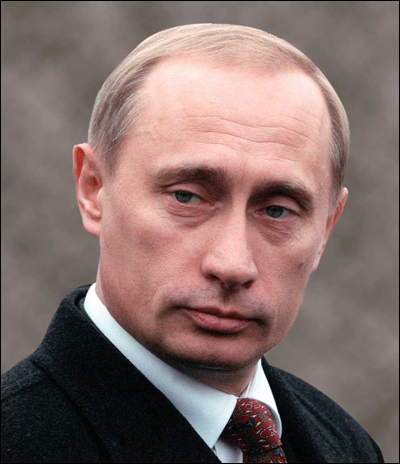
Barnett on Peters analyzing Putin

Sunday, September 21st, 2008

Ralph Peters has written a remarkably restrained ( for Peters) overview-analysis of Russian Prime Minister/strongman Vladimir Putin:

Why Putin should scare us

Putin has a quality found in elite intelligence personnel: the ability to discard all preconceptions when scrutinizing a target. And when he decides to strike, he doesn’t look back. This is not good news for his opponents, foreign or domestic.

Among the many reasons we misjudge Putin is our insistence on seeing him as “like us.” He’s not. His stage-management of the Georgia invasion was a perfect example: Western intelligence agencies had been monitoring Russian activities in the Caucasus for years and fully expected a confrontation. Even so, our analysts assumed that Russia wouldn’t act during this summer’s Olympics, traditionally an interval of peace.

Putin had been conditioned to read the strategic cards differently: The world’s attention would be focused on the Games, and key world leaders would be in Beijing, far from their crisis-management staffs. Europe’s bureaucrats and senior NATO officials would be on their August vacations. The circumstances were ideal.


It has also become a truism that Putin’s foolish for relying on oil, gas and mineral revenue while failing to diversify his economy. But Russia’s strongman knows what he’s doing: He prefers a wealthy government to a wealthy society. Putin can control a handful of oligarchs whose fortunes flow from a narrow range of sources (once Russia’s richest man, Mikhail Khodorkovsky sits in prison for crossing the Kremlin), but a diversified economy would decentralize power.

Dr. Barnett, himself, like Peters, a former Cold War-era Sovietologist, critiqued Peters article:

Peters on Putin: nationalist and pragmatic, mystical and cold, and plays by own rules

I tend to underappreciate Peters’ gushy over-estimation of Putin’s “brilliance” (he just acts boldly in ways that excite this former intell officer), and note his lack of any mention regarding the economic price Moscow has so far paid over Georgia (mil analysts tend to downplay financial repercussions in general).

It’s just the conclusion that I find clearly overwrought: Putin is possibly problem #1 for the next prez.

In sum, a very traditional analysis of a guy who exploits tradition nicely at home but also indicates he “gets” the current world fairly accurately and takes advantage only where we let him through our choices. No clear analysis of how our strategic interests are actually harmed, but no matter. A quick comparison (favorable) to Osama, but at least he skipped the usual Hitler one. No sense of Russia’s poor long-term economic trajectory.

I think Tom largely pegged it. Peters overshot on “mysticism” and “brilliance” but did a pretty good analysis, minus the blindness toward economic factors that represent the long-term definers of strategic, though not tactical, options for Russia.  The chances of Putin being even culturally influenced by traditional Orthodoxy are approximately zero, though Putin the shrewd politician probably appreciates the the mystical and romantically sentimental streak in Russia’s national psyche where affronts to Mother Russia are concerned. Putin’s nationalistic gestures are keyed to the Russian equivalent of Nixon’s “Silent Majority”. Putin is always “going to the people” with his foreign policy or domestic law and order crackdowns.

One departure for me from Peters and from Tom ( at least in the sense that he did not mention it) is that I do not see Putin as consumed by anger or temper in his moves against Saakashvili, though Putin may very well have a temper. Instead, I see a ruthless calculator who decided, some time ago, that Saakashvili was too intransigent and too egomaniacal to ever cut any kind of a deal with Russia, in open or secret. More or less the way the United States viewed Saddam Hussein, that the man had to go once and for all – not that Saakashvili is morally akin to Saddam in any way, just intolerable from Moscow’s perspective. 

Putin is driven to “win”, IMHO, because racking up those kinds of wins teaches good geopolitical lessons. That said, Putin did not know when to quit while he was ahead. After making the point by humiliating Georgia and Saakashvili militarily and the EU and the Bush administration diplomatically, Putin only gained great hostlility for Russia by dragging out troop withdrawal and by using belligerent rhetoric. A prompt departure would have retained the sense of awe and confidence that Russia’s military campaign had projected. So much for infallible “brilliance”.

Putin puts his pants on like the rest of us and makes mistakes. The difference between him and other statesmen is that Putin more often than not is thinking strategically when he makes a move.


Switch to our mobile site