zenpundit.com » army

Archive for the ‘army’ Category

The Tip of a Shadowy Spear

Wednesday, July 6th, 2011

300.jpg

Fight in Afghanistan to turn east: Petraeus

The outgoing commander of US and NATO forces in Afghanistan says the focus of the war will shift in coming months from Taliban strongholds in the south to the eastern border with Pakistan where insurgents closest to al-Qaeda and other militants hold sway.

With a new job pending as the CIA director, General David Petraeus said on Monday that by the northern autumn, more special forces, intelligence, surveillance, air power will be concentrated in areas along Afghanistan’s rugged eastern border with Pakistan….

Commander: Special operations forces under stress

….Senators pressed McRaven on the impact that the planned U.S. troop withdrawal from Afghanistan would have on special operations troops, asking whether Afghan elite forces would be able to step in.

McRaven said that right now U.S. forces need to continue to monitor and guide many of the Afghan special forces, but some units are highly trained and are increasingly taking on a larger role.

While the number of special operations forces has doubled to about 61,000 over the past nine years, the total of those deployed overseas has quadrupled. There are at least 7,000 special operators in Afghanistan and about 3,000 in Iraq. Those numbers can vary as units move in and out of the war zone, and often the totals don’t include the most elite of the commandos – special mission units such as Army Delta Force and Navy SEALs that may go in and out more quietly and quickly.

….In Afghanistan, special operations forces serve a number of roles. Not only do they mount an aggressive counterterrorism campaign across the country, but they also form teams to train or mentor Afghan forces. In one example, McRaven said that over the past 12 months, the task force he commanded conducted about 2,000 operations, roughly 88 percent of which were at night….

Supply and demand is an economic principle with universal application.

The demands of war have outstripped our supply of tax dollars, so elite units of speed, stealth and striking power are being substituted, in synergy with airpower, paramilitaries and on the spot analysts of the CIA, for whole divisions. In the drawdown from Afghanistan, FID will replace COIN , covert ops will replace surging, class will replace mass.

Mass in an AVF is very, very expensive (so is, incidentally, choosing grandiose political objectives to be achieved by military means). The shift that is happening in Afghanistan, partly by fiscal necessity, is going to become our default defense paradigm for at least the 2010’s. Highly mobile, extremely fast, networked, partially covert, backed by lethal high-tech firepower.

Rumsfeld’s revenge. And Wild Bill Donovan’s. And Art Cebrowski’s.

As a rule, I think recreating a modernized OSS-like community in all but name is a good idea that will pay dividends in terms of tactical and strategic flexibility. I fully expect the bureaucratic gravitational pull and sheer utility in fighting the murky, mutable, Islamist enemy to eventually draw in cyber elements of various agencies, elite law enforcement, DOJ, DARPA, Treasury and State Department personnel in to the mix, albeit sparingly. Such an interdependent and collaborative military and intelligence community is optimized as a striking force against our most immediate or proximate security threats – though definitely not all of our security threats (those who wish to disband all our armored units or unilaterally give up nuclear weapons can stop fantasizing now).

However, there are some caveats that need to be considered, in my view.

First, supply and demand applies here as well.  There’s a high practical barrier to growing the size of our special forces, which are presently badly overstressed. The commonly cited figure for growth is 3-5 % annually, if we want something better in our special forces than the highly conditioned thugs that the Soviets used to roll out in large numbers in their SPETSNAZ divisions. That’s not much and it represents the max that is probably possible without returning to conscription, which theoretically would give the US military the pick of the litter of entire age cohorts, but in reality much less. You have to be highly motivated to become a Navy SEAL or want to jump out of a perfectly good Army helicopter. Unwilling conscripts won’t fit the bill. Right now we are “stretching” our special forces by mixing them with high quality regulars; a hidden cost to this practice is that most of these folk are essentially “officer material” and drawing out the most capable personnel systemically weakens the regular units of their natural leaders.  The tip of this shadowy spear is always going to be small and difficult to replace and not something suited for waging total war (shades of Byzantium).

Secondly, normal use of this kind of force requires a political climate that keeps the antiwar and anti-American factions of the Left marginalized because many operations in the blurry realm between war, terrorism, crime and covert ops will legally require presidential findings to be reported to Congressional oversight committees. If the US Congress had the political composition of the 1980’s, with Vietnam era anti-war types being extremely vocal, especially in the House, much of what we are doing and have done in Afghanistan, Pakistan or Yemen would not be politically possible, including the raid that killed Osama bin Laden. It would require a considerable electoral turn, but friction in the form of modern day Boland amendments, special prosecutors, ChurchPike hearings and gratuitous leaks will make use of these forces impractical and highly risky for any president. Or for the military and intelligence personnel themselves who might face ex post facto prosecution due to the agitation of zealous leftist partisans in Congress and the media.

Thirdly, an emphasis on a special forces dominant force structure may have the unintended consequence of causing the executive branch civilian officials to move even further away from strategic thinking and incline them more toward reactive, tactical, retaliation. Misuse of special forces is the American historical norm.  Special forces are so well suited for “emergency use” that they are frequently employed for every “priority” mission except those that are intended to have a strategic effect, even when a regular military unit of combat infantry is more than adequate for the task at hand (Or for that matter, using non-military options!) The mental focus and threat awareness starts to unconsciously migrate to those problems such a force structure is well-suited to solve and away from those that they are not. Unfortunately, those other security threats might ultimately be a lot more important in the long run to American interests.

America is headed into the Light Footprint Era, ready or not.

Martin van Creveld on The Lebanon War

Monday, June 27th, 2011


Eminent and controversial military historian, Martin van Creveld, analyzes the 2006 Israeli-Hezbollah War in the latest issue of Infinity Journal. Some Excerpts:

The Second Lebanon War: A Re-assessment

….Though the decision to retaliate in force was inevitable, it also meant that the Israel Defense Force (IDF) was taken by surprise and did not have time to prepare properly. Of the entire vast order of battle, only five regular brigades were immediately available. Moreover, these brigades had spent years doing little but carrying out counter-insurgency operations in the Occupied Territories. As a result, they had almost forgotten how to fight a real enemy; he who fights the weak will end up by becoming weak. Some of the burden fell on the Israeli Navy which shelled Lebanon’s coast, imposed a blockade, and cut the country off from the world. In doing so, one of its modern ships was hit by an Iranian-built surface to sea missile, suffering damage and taking some casualties. Since this was the first time in thirty-nine years anything of the kind had happened, it was a considerable propaganda victory for Hezbollah. At the same time it proved how much the crew had underestimated the enemy, since they (perhaps acting on their superiors’ orders) had not even switched on the vessel’s electronic defenses.

….”Stark raving mad” (majnun, in Arabic) was, in fact, the way many people in Lebanon and the rest of the Arab world reacted to the Israeli attack. As the statements of several of Hezbollah’s top leaders indicated, they too were surprised by the strength of the Israeli reaction. None of the organization’s original objectives were achieved. Its fighters remain in prison; the Israeli “occupation” of Shaba Farm continues; and Jerusalem, which it set itself as its ultimate objective to liberate, remains as firmly in Israeli hands as it has been during the last forty-four years. What the war did do was to show that, in case of war, neither Syria nor Iran would necessarily come to Lebanon’s rescue. The country’s infrastructure was left in ruins. Thirty thousand dwellings were destroyed or damaged, and dozens of bridges, underpasses, and gas stations demolished. Hundred of thousands of people were forced to flee, and as many as 2,000 killed.

Free registration required to read the article.

This piece is heavily IDF-centric in the analysis, perhaps reflecting van Creveld’s established authority on command and logistics and his recent work on air power, but I was surprised by the lack of space devoted to Hezbollah’s operations, given the author’s deep influence on 4GW theory and the study of postmodern irregular and asymmetric warfare. That may reflect, in part, the thrust of Infinity as a publication or the need for brevity but there’s an almost Clausewitzian subtext in the conclusion.

The US Army War College National Security Seminar 2011

Sunday, June 12th, 2011

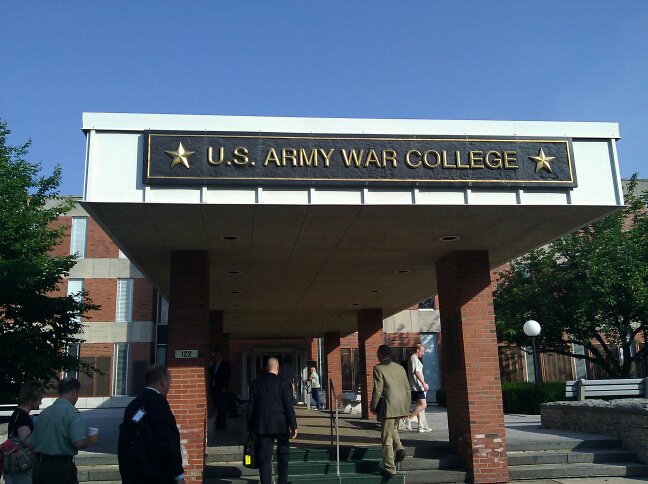
warcollege.jpg

As noted previously, I was fortunate to attend the National Security Seminar at the the US Army War College this year and wanted to relay my impressions while they were still fresh.

First, in terms of reception and cordiality, I have rarely experienced such an extensive and personal outreach as was demonstrated by the War College staff, faculty, administration and students. Every new member had a “sponsor” – a student, usually a colonel or Navy captain, who acted as a liason and personal guide from the time their plane touched down until the moment they returned to the airport. My sponsor, the former commander of the WolfhoundsColonel Richard “Flip” Wilson, whom I consider a friend, really extended himself on my behalf, making me feel welcome and a full member of Seminar Group 20. Most of the students have multiple tours of duty in Iraq and Afghanistan under their belt and many can report the same for the first Gulf War, Panama, Bosnia or Kosovo.

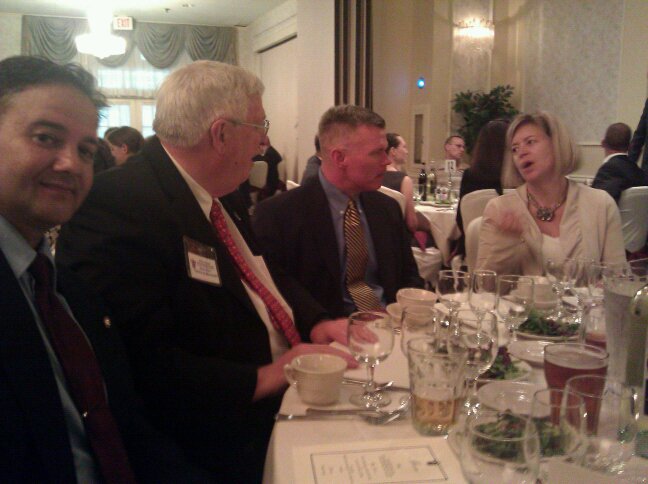
The War College, the Commandant and the Seminar Group all hosted receptions and dinners designed to get students and civilian new members to mix and further discuss issues raised in the seminar sessions or lectures. At these events I had the opportunity to meet and talk to the leadership of the Army War College including the Commandant Major General Gregg Martin, the Deputy Commandant for International Affairs, Ambassador Carol Van Voorst, the Executive Director of the Army Heritage Foundation, Mike Perry, the Director of SSI, Dr. Douglas Lovelace,  the Chief of Staff and numerous faculty and seminar members. The New Members such as myself were exceedingly well fed at these events as I suspect the Army was attempting to prove that it really does march on it’s stomach.


warparty.jpg

warparty2.jpg

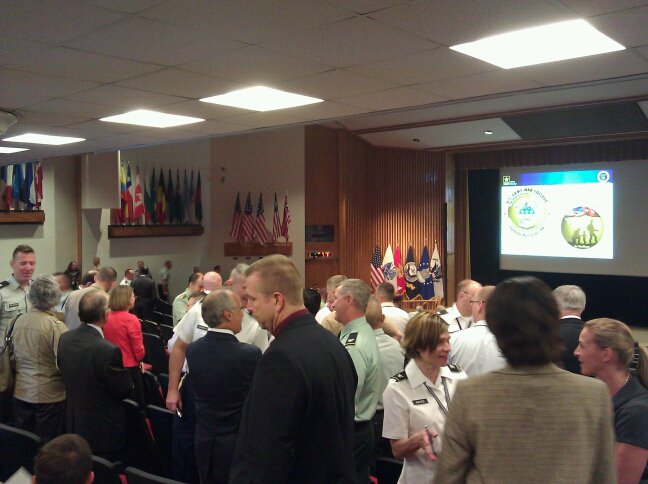
The serious business of the National Security Seminar was divided into two segments, the talks given by distinguished speakers to the entire class of 2011 and the New Members and the Seminar Group sessions of approximately twenty students, New Members, academics and foreign visitors. We received a brief on the war in Afghanistan from the ISAF Chief of Staff, who was standing in last minute for General Petraeus who was called to meet with senior adminstration officials; and a very interesting concluding talk by Foreign Affairs Editor Gideon Rose, author of How Wars End, which covered issues of strategy, grand strategy and the disconnect with policy.

warseminar.jpg

  The National Security Seminar is run strictly on a non-attribution basis, in order to encourage candor and frank exchange of views, which handicaps my ability to discuss specifics here. I can say that my views on Pakistan ( which I compared to “North Vietnam” ) riled more than a few people – Pakistan is the only country in the world given 2 exchange student slots at the Army War College at the request of the most senior leadership of the US Army – and several students and faculty members took the time, outside of seminar sessions, to make certain I heard countervailing POV regarding Pakistan’s value as an ally. Other topics included, but were not limited to:

Defense budget cuts and force structure
Narco-cartels in Mexico: Insurgency or No?
Civil-Military Relations
Repeal of DADT
AfPak War
al Qaida and GWOT/US Strategy
COIN
Critical thinking and Leadership
Logistics
Libya and NATO
AWC Strategy Curriculum/Program
What the US public expects from their military
China as a peer competitor
Effects of ten years of war on officer corps/military
Illegal combatants and international law
PTSD
Battle of Gettysburg and Grand Strategy
Cyberwar
Differences in Armed Services strategy, command climate, discipline, leadership
The Arab Spring
US Global leadership and Economics
Interagency Operational jointness

Most of the discussion took place in the seminar groups, with Q&A periods in the mass sessions with featured speakers. I came away deeply impressed with the seriousness and insights as practitioners that AWC students brought to the table. The AWC strategic studies program seeks to broaden students who are assumed to arrive with tactical expertise and prepare them for higher command that carries operational, strategic and even policy responsibilities (at least in terms of interpreting and executing within policy guidelines). Many students were articulating ideas associated with Thomas P.M. Barnett, the “mission order” and “commander’s intent” style of leadership or Clausewitzian strategic premises during debates and discussion.

The National Security Seminar Week was for me, an enlightening and exceptionally enjoyable experience, one I would highly recommend to readers who may have such opportunities in future years.

On the Road

Saturday, June 4th, 2011

In a few days, I will be headed to the US Army War College to become a new member of their National Security Seminar, an honor I owe entirely to the kind offices of Dr. Steven Metz, as Big Steve saw fit to nominate me. Once at Carlisle, I will have the opportunity to participate with AWC students in a variety of sessions and discussions related to national security and strategy and hear speakers who are top experts in their field. The keynote, if I understand correctly, will be given by General David Petraeus. The liason assigned to me, Col. Richard “Flip” Wilson, has been gracious and friendly and I am very much looking forward to visiting the War College, meeting new friends and learning a thing or two.

My blogging here at ZP may be erratic next week, though Charles and Scott will carry on in my absence, but I will try to put up a few items or pictures as time and internet connectivity permits. Twitter may be a much better bet for frequent updates and I can be followed @zenpundit for readers who are interested.

General Sam on the Battle of Saylers Creek

Thursday, April 7th, 2011


Callie Oettinger alerted me to some reflections on Civil War history by one of the fathers of Delta Force, LTG Samuel Vaughan Wilson over at Command Posts:

Memories of the Battle of Saylers Creek

I remember the holes in the wood siding of Lockett House, where my grandmother, Lucy Lockett was born and raised. The holes were made by mini balls fired by both sides.  There were thirty-two of them in the front side of the house alone, along with four larger scars made by cannon balls.

In the course of the battle, the farmhouse had been turned into a hospital for both the Northern and Southern forces, and Lucy Lockett’s young niece, Mamie Lockett, had spent most of the fight crouched on a pile of last fall’s potatoes there on the floor of the basement, her tiny frame shielded by that of her nanny’s.

When I would visit her in the early 1930’s, “Cousin Mamie-we sometimes called her “Aunt Mamie”-would sit there in the front parlor rocking and holding on to her cane, and, if I was patient and kept quiet long enough, she would talk about the battle of Saylers Creek, which shattered Lee’s Army of Northern Virginia on the way to Appomattox Courthouse.

“After a while,” she would say….

Read the rest here.


Switch to our mobile site