zenpundit.com » military history

Archive for the ‘military history’ Category

Book Review: The Bloody White Baron

Wednesday, July 29th, 2009

The Bloody White Baron: The Extraordinary Story of the Russian Nobleman Who Became the Last Khan of Mongolia by James Palmer

The 20th Century was remarkable for its voluminous bloodshed and civilizational upheaval yet for inhuman cruelty and sheer weirdness, Baron Roman Nikolai Maximilian Ungern von Sternberg manages to stand out in a historical field crowded with dictators, terrorists, guerillas, revolutionaries, fascists and warlords of the worst description. Biographer James Palmer has brought to life in The Bloody White Baron an enigmatic, elusive, monster of the Russian Civil War who is more easily compared to great villains of fiction than real life war criminals. Palmer’s bloodthirsty Mad Baron comes across like a militaristic version of Judge Holden from Cormac McCarthy’s Blood Meridian or perhaps more like Hannibal Lecter with a Mongol Horde.

Ill-tempered, impulsively violent, insubordinate and socially isolated even among fellow aristocratic officers, Baron Ungern was, as Palmer admits, without much wit or charm, a complete failure in Tsarist society and the Imperial Army until the coming of the Great War. As with many “warlord personalities“, the chaos and ruin of the battlefield was the Baron’s natural element and for the first time in his life, he experienced great success, his maniacal bravery under fire winning Ungern promotions and the highly coveted St. George’s Cross. This is an eerie parallel with the life of Adolf Hitler, and numerous times in the text, Palmer alludes to similarities between the Baron’s apocalyptic views on Communists and Jews, and that of Baltic-German refugees like Alfred Rosenberg and Max Scheubner-Richter who contributed eliminationist anti-semitism and theories about “Jewish- Bolshevism” to Nazi ideology.

A fanatical monarchist and philo-Buddhist fascinated with far-off Mongolia and Tibet, the Baron regarded the Russian Revolution as the greatest of calamities and joined the Whites under the leadership of the gangster-like Ataman Semenov to rape, loot, torture and murder with a hodgepodge Cossack horde across the Transbaikal region of Siberia. The Baron’s fiefdom under Semenov was a macabre, bone-littered, execution ground ruled by reactionary mysticism and ghoulish exercises in medieval torture visited upon the Baron’s own soldiers scarcely less often than on hapless peasants or captive Reds.

Dismayed by Semenov’s corruption and dependence on the Japanese and the collapsing fortunes of Russia’s White armies, Palmer recounts how the Baron fled with a ragtag band of followers to Chinese occupied Mongolia, where, in a series of bizarre circumstances, the Baron managed to destroy a sizable Chinese army (charging on horseback straight into enemy machine gun fire and emerging unscathed), seized the fortified capital, restored the “living Buddha” the Bogd Khan to the throne and become celebrated the eyes of the Mongolians, variously as the reincarnation of Ghengis Khan and/or the prophesied coming of the “God of War”. Naturally, to further his dream of building a pan-Asian Buddhist Empire, Baron Ungern unleashed a nightmarish reign of terror in Mongolia, taking especial and personal delight in the executions of Jews and captured commissars.

Ungern’s final foray in battle, before his capture, trial and execution at the hands of the Bolsheviks, is like something out of the Dark Ages:

With this final defeat, Ungern shed any trace of civilization. He rode silently with bowed head in front of the column. he had lost his hat and most of his clothes. On his naked chest numerous Mongolian talismans and charms hung on a bright yellow cord. He looked like a prehistoric ape-man. People were afraid to look at him.

Despite the best efforts of the Bolshevik prosecutor to focus upon political motives, even the Soviet revolutionary tribunal that condemned him to death on Lenin’s orders, considered the Baron to be a dangerous madman.

James Palmer has shed a great deal of light on one of the darkest corners of the Russian Civil War, Baron Ungern von Sternberg, a subject that largely eluded prominent historians like W. Bruce Lincoln, Orlando Figes and Richard Pipes. The Bloody White Baron is a fascinating read and a window into the life of the 20th century’s strangest warlord.
Cantigny Museum

Wednesday, July 22nd, 2009

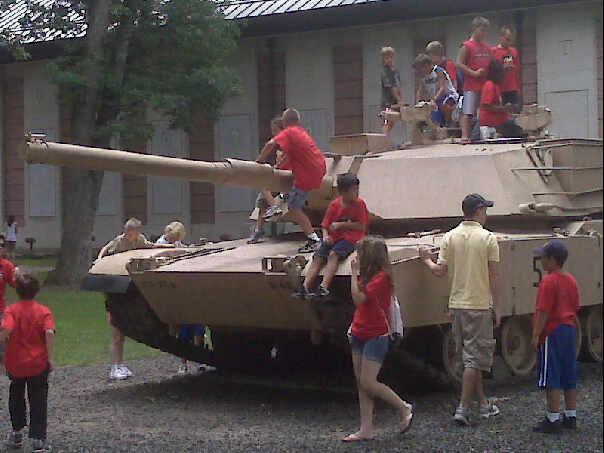
tank.jpg

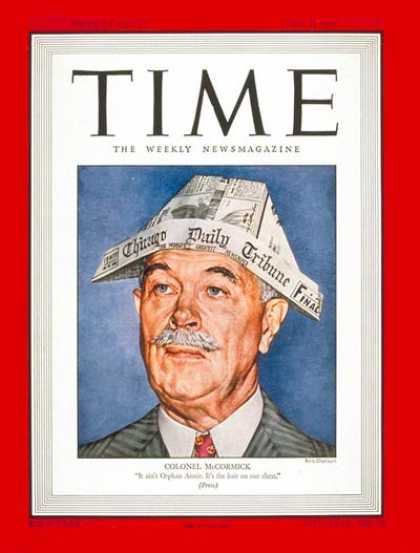
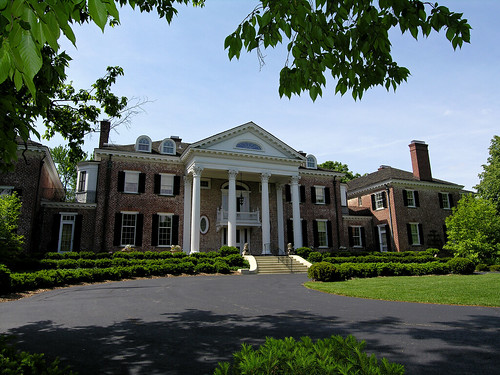
Spent a pleasant afternoon at Cantigny, the estate of legendary Chicago Tribune publisher, broadcast pioneer and ardent isolationist,  Colonel Robert McCormick. After his death in 1955, McCormick had willed that the 500 acre grounds located in Wheaton, Illinois,  be turned into a memorial to the 1st Infantry Division of the US Army, in which he had served ( McCormick was a veteran of the Mexican Expedition and the Great War). Operated by the McCormick Foundation, a charitable and educational trust with an endowment that rivals that of Yale or Harvard universities, Cantigny now is home to an opulent garden, golf course, mansion museum, several restaurants, a greenhouse, a tank and artillery park, a children’s playground, visitor’s center and the Museum of the First Division.

The grounds contain an array of armor on display for the tank aficianado, including the Sheridan, Sherman and variations of the Patton series up to the M-1 Abrams, including several “experimental” models plus a selection or artillery pieces going back well before WWI. Just added was a fully restored D-Day landing craft (still being unloaded from the trailer).  Aside from children’s tours and families present, I saw not a few veterans today, some very elderly and in wheelchairs, reminiscing together quietly by particular tanks or displays.

The museum has a collection of artifacts that run the gamut from the Revolutionary War to the Iraq War but the major sections are concerned with the two World Wars and the Vietnam War. Museum staff are friendly and helpful but unobtrusive and the basement contains a military library and archive that is open to the public for research.

The grounds are very extensive and the landscaped garden, which covers many acres,  is a world class feature in itself. The fee for admission is a mere $ 5 to park – the amenities and facilities (except the golf course and restaurants) are all free of charge.

Guest Post: “The Spartan Sense of Humor” by Steven Pressfield

Monday, July 20th, 2009

Steven Pressfield is the acclaimed author of Gates of Fire and Killing Rommel: A Novel and other works of historical fiction, who recently began blogging at It’s the Tribes, Stupid! . Steve graciously agreed to contribute a guest post here at Zenpundit and I’m very pleased to present the following: 

                                                                     THE SPARTAN SENSE OF HUMOR

                                                                      by Steven Pressfield

[Fair warning: this is NOT a political column.]

In ancient Sparta, there was a law prohibiting all citizens from hewing the roofbeams of their houses with any tool finer than an axe.  The Spartans wanted their homes to be–spartan.  Result: roofbeamsin Sparta were just tree trunks with the limbs lopped off.

Once a Spartan was visiting at Athens, staying in an elegant home with frescoes, marble statuary–and impeccably-squared ceiling beams.  Admiring these, the Spartan asked his host if trees grew square at Athens.  The gentleman laughed.  “Of course not; they grow round, as trees grow everywhere.” 

“And if they grew square,” asked the Spartan, “would you make them round?”

Probably the two most celebrated Spartan sayings come from the battle of Thermopylae.  First is King Leonidas’ admonishment to his comrades onthe final morning, when the defenders knew they were all going to die.”Now eat a good breakfast, men, for we’ll all be sharing dinner in hell.”

The second is from the warriorDienekes, on the afternoon before Xerxes’ million-man army first appeared.  The Spartans had taken possession of the pass but had not yet seen the enemy.  As they were going about their preparations, a local Greek came running in, wild-eyed, having just gotten a glimpse of the Persian multitudes approaching.  The invaders’ archers were so numerous, the man breathlessly told the Spartans, that when they fired their volleys, the mass of arrows blocked out the sun.  “Good,” replied Dienekes, “then we’ll have our battle in the shade.”

Spartans liked their quips terse and lean.  They trained their young men for this.  Youths in the agoge (“the Upbringing”), the notorious eleven-year training regimen that turned Spartan boys into warriors, would from time to time be called out before their elders and grilled with rapid-fire questions.  The boys were judged on the wit and economy of their answers.

The reason for this was fear.  The Spartans developed their style of humor from combat and from the apprehension that precedes combat.  Hoplite warfare was surely among the most terror-inducing for the individual fighter, not only because he knew that all the killing would be done hand-to-hand, but because he often had hours preceding a battle to stare at the enemy phalanx across the field, while his own imagination ran riot.The Spartans prized the type of wit that cut such tension, the kind of humor that could release fear with a laugh and pull each individual out of his own head and his own isolation.

Think about Dienekes’ quip for a moment.  If we imagine ourselves there at the “Hot Gates,” it’s not hard to picture our imaginations working overtime as we wait for the enemy host to make its appearance.  What would these alien invaders be like? We knew they were fierce horsemen and warriors, drawn from the bravest nations of the East.  And we knew they’d outnumber us 100 to one.  What weapons would they carry?  What tactics would they employ?  Could we stand up to them?  Now suddenly a local farmer comes racing into camp, bug-eyed and out of breath, and starts regaling us with tales of the scale and magnitude of the enemy army.  Were we scared?  Hell, yes!  You can bet the young warriors clustered around this messenger, each of them thinking, “What the hell have I gotten myself into?”  Then Dienekes, a commander of proven valor about forty years old, offered his icy, unperturbed quip.  What happened?  You can bet that after the defendershad their laugh, they noticed that their palms weren’t as clammy as they had been thirty seconds earlier.  The warriors looked at each other–darkly no doubt, and grimly–and went back to their tasks of preparation for battle.

Several qualities are worth noting, I think, about both Dienekes’ and Leonidas’ one-liners.  First, they’re not jokes.  They’re not meant just to raise a laugh.  Yet they’re funny, they’re on-point.  Second, they don’t solve the problem.  Neither remarkoffers hope or promises a happy ending.  They’re not inspirational.  They don’t point to glory or triumph–or seek to allay their comrades’ anxiety by holding out the prospect of some rosy future outcome.  They face reality. They say, “Some heavy shit is coming down, brothers, and we’re going to go through it.”

And they’re inclusive.  They’re about “us.”  The grim prospect they acknowledge is one that all of us will undergo together.  They draw each individual out of his private terror and yoke him to the group.

That’s it.  That’s enough.

The reason contemporary Marines relate so instinctively to the Spartan mind-set, I suspect, is that their own attitude is so similar.  Marine training, as anyone who has gone through it knows, doesn’t build supermen.  Marines don’t have any special tricks to kill you with a butter knife.  But what Marines know how to do better than anybody isto be miserable.  That’s what Marine training teaches.  Marines take a perverse pride in having the crappiest equipment, coldest chow and highest casualty rates of any American armed force.  What’s the dirtiest, crummiest, most dangerous assignment?  That’s the one Marines want.  They’re pissed off if they don’t get it.  Nothing infuriates Marines more than to learn that the army has gotten a crappier assignment than they have.

I recommend this attitude, by the way, for all artists, entrepreneurs and anyone (including bloggers) who has to motivate himself and validate himself all on his own.  For facing the blank page, nothing beats it.  It also engenders a wholesome species of dark, gallows pride.

Another Spartan was visiting Athens.  (The river at Athens, we should note, is the Cephisus; at Sparta the river is theEurotas.  The Spartans were famous, as well, for never letting any invader get anywhere near their city.)  The Athenian was bragging about prior wars between the two rivals.  “We have buried many Spartans,” he declared, “beside the Cephisus.” 

“Yes,” replied the Spartan, “but we have buried no Athenians beside the Eurotas.”

Two Articles

Friday, July 10th, 2009

Both good but entirely unrelated.

Tom Barnett belts on out of the park at Esquire magazine:

What the Hell Is Really Going Down in Honduras?

….The primary charge was treason relating to Zelaya’s stubborn effort to mobilize popular support, through a non-binding poll, for a constitutional assembly. But the underlying suspicion was that the lame-duck and deeply unpopular (as in, sub-30-percent approval ratings) president was plotting to extend his personal rule with the strong encouragement of his new “oil daddy,” Venezuelan strongman Hugo Chavez, whose well-established blueprint has worked with political protégés elsewhere (e.g., Bolivia’s Evo Morales, Ecuador’s Rafael Correa).

Essentially, this Chavez scenario was a Pandora’s box that Honduras’s political elite refused to open. Why? Because after too many decades of nasty military dictatorship, Honduras, while still quite poor, had managed seven straight civilian transitions thanks to its 1982 constitution. So the Honduran legislature, which had previously ordered Zelaya’s arrest (but not his deportation), promptly voted him out of office and – following the constitution – selected its ranking member, Speaker Roberto Micheletti, as the interim president. Two key points to remember here: Martial law was never instituted, and the national elections, slated for November, are still a go. In effect, Zelaya’s removal from power was an impeachment without trial – a classic rush job that denied him his day in court even as he had already lost his battle with the country’s supreme court and displayed overt contempt for its rulings on his proposed poll.

From the Honduran military’s point of view, their actions broke no law, and since the military never assumed power, calling these events a “military coup” is completely misleading. From America’s point of view, it seems clear enough that Chavez-style politics has its limits, so overreactions are to be avoided. But from a national-security perspective, when your own Drug Enforcement Agency is telling you (as a Bush official did a year ago) that Chavez has become a “major facilitator” of the flow of Colombian cocaine to America, and when there are credible reports that Honduras, under Zelaya, has joined that network as a trans-shipment waypoint, there definitely needs to be some limits to your diplomatic efforts to reinstate this suddenly revered “pillar of democracy.”

I am in full agreement with Tom here about Mel Zelaya, who is the Rod Blagojevich of Latin America as well as a supplicating client of Hugo Chavez. The Obama administration, with the thrust coming from the State Department, has been too supportive of Zelaya’s outrageous behavior in an effort to avoid giving the Latin American left room to blame America for Zelaya’s removal. Now that moment has passed, it is time to distance the US from Zelaya and let him twist in the wind as OAS encouraged negotiations with the legitimate interim government in Honduras drag out for weeks or months

Chris Albon at War & Health has an excellent book review of Before My Helpless Sight (The History of Medicine in Context) by Leo van Bergen:

Leo van Bergen’s book, Before My Helpless Sight, is a history of suffering in World War I, a description the author readily admits: “At the roots of the book lies the question of what can happen to a soldier between the moment he steps onto a train or ship bound for the theatre of battle an the point at which he is evacuated wounded, or whether dead or alive, buried in the ground” (pg. 1). Needless to say, the book is not a light read.

….Van Bergen cannot be criticized on methodology. The book is impressively well researched (and cited), including qualitative and quantitative sources in numerous languages. Apart from the organization of the book itself, you see very little of the author in the pages. Readers are bounced from anecdotal accounts to descriptive statistics with little commentary or fanfare. This is not necessarily a negative, the sources speak for themselves. Their sheer, horrifying weight is ample to progress the book forward.

….However, in the light of the book’s contribution these issues are quickly forgotten. Before My Helpless Sight is a powerful counter to the innumerable discourses on WWI tactics and strategy. Van Bergen pulls back the curtains of glorious offensives and magnanimous generals, revealing the grim, muddy reality of life on the Western Front. It is a story of pus, rats, hunger, dirt, disease and madness. You do not know World War I before reading this book.

More and more, as passing time gives historians greater perspective, the Great War appears as a civilizational turning point for the West on the broad spectrum of human activity. WWI produced, really for the first time, a significant number of horrifyingly disfigured and maimed survivors, who would have perished from their wounds in, say, the Civil War or the Napleonic Wars. John Keegan writes, in his The First World War how postwar European governments resorted to segregating these most unfortunate of war invalids away from the eye of their publics and being at a loss how to deal with those soldiers  mentally shattered by “shell shock”, what we now recognize as PTSD.

Modern war as an industrial, mass-synchronized, 2GW meat grinder was so awful that the West turned to all kinds of stratagems to avoid a repeat of the Western Front – from political pacifism, isolationism and maginot lines to political revolution, blitzkrieg  tactics and technological innovations like the tank or airplane. None of them were a complete answer to the horrors born in 1914.

Horse Soldiers

Friday, June 19th, 2009

Just received a review copy of Doug Stanton’s Horse Soldiers: The Extraordinary Story of a Band of US Soldiers Who Rode to Victory in Afghanistan, which is about the special operations soldiers who infiltrated Taliban held Afghanistan and who were forced to blend the ancient with the postmodern on the battlefield. Horse Soldiers is doing very well on The New York Time’s bestseller list and is up near the very top of that prestigious category.

The promotion people also included the audio book as well in a 7 hour  CD set. I’ve never listened to a “book on tape”, as they used to be called back in the day, so this might be the opportunity to give that format a try and review.

Flipping through the pages, the Horse Soldiers is not at all dry military history but action-packed narrative to which a general audience might relate. Here is an excerpt from the prologue:

Qala-i-Janghi Fortress
Mazar-i-Sharif, Afghanistan
November 24-25, 2001Trouble came in the night, riding out of the dust and the darkness.
Trouble rolled past the refugee camp, past the tattered tents
shuddering in the moonlight, the lone cry of a baby driving high into
the sky, like a nail. Sunrise was no better; at sunrise, trouble was
still there, bristling with AKs and RPGs, engines idling, waiting to
roll into the city. Waiting.
These were the baddest of the bad, the real masters of mayhem, the
death dealers with God stamped firmly in their minds. The city groaned
and shook to life. Soon everyone knew trouble had arrived at the gates
of the city.

Major Mark Mitchell heard the news at headquarters nine miles away and
thought, You’re kidding. We got bad guys at the wire?

He ran downstairs, looking for Master Sergeant Dave Betz. Maybe he
would know what was happening.

But Betz didn’t know anything. He blustered, “One of the Agency guys
came down and told us we got six hundred Taliban surrendering. Can you
believe that?”

Surrendering? Mitchell couldn’t figure out why. He thought the Taliban
had fled from the approaching forces of the Northern Alliance to
Konduz, miles away. American Special Forces and the Northern Alliance
had been beating them back for weeks, in battle after battle, rolling
up territory by coordinating airstrikes from the sky and thousands of
Northern Alliance soldiers on the ground. They now stood on the verge
of total victory. Konduz was where the war was supposed to go next.
Not here. Not in Mazar. Not at Club Mez.

Besides, these guys didn’t surrender. They fought to the death……

Hmmmmm. Note to self. If you want to sell books, write more like this and less like an academic in a dusty cubicle at an obscure think tank.:)


Switch to our mobile site