zenpundit.com » navy

Archive for the ‘navy’ Category

Turning Away From Strategy

Thursday, August 23rd, 2012

It appears that the Pentagon no longer intends to educate the most talented members of the officer corps to think strategically.

I say this because the status of the premier professional military education institutions – the war colleges and NDU – have been devalued, their leadership slots demoted and their educational mission degraded. As a guest columnist for Tom Ricks noted back in June:

….The new uniformed leadership of the Armed Forces, i.e., General Dempsey and his staff, apparently intend to prune NDU back to where it was a few decades ago. There will be some modest resource savings, but since the entire university budget doesn’t amount to the cost of a single joint strike fighter, one has to wonder what is motivating all of what is happening here. In the cuts that have been discussed, Dempsey’s deputy, Marine Lt. Gen. George J. Flynn has wielded the meat axe, often with the aid of micromanaging action officers. No one here in the rank-and-file is sure if the urbane chairman is on board with the details of all of this. (Ironically, both the chairman and J-7 are NDU graduates with advanced degrees.)

This set of changes took place in stages. First, while very few general or flag officer slots were cut in the armed forces, the three-star president of the university slot was downgraded to two, and the school commandants, downgraded from two to one star. No big deal, one might say, but one would be wrong, very wrong. A three star in Washington can go head-to-head with a principal on the joint staff or a senior OSD bureaucrat to protect the university. To compound the problem, the last three star president was retired in the spring and the university was left for a few months under the command of a senior foreign service officer, a former ambassador, a woman of great diplomatic talent and experience with no clout in the Pentagon. The new commandant — a highly regarded Army two-star — will not report until deep into June, when all or most of the cuts have been set in concrete. (Interesting question: can an employee of the State Department legally or even virtually assume command of a DoD organization?)

….A new “charter” was subsequently published by the Chairman. It focused the university on joint professional military education and training, which in itself, is a good thing. Immediately, however, the research and outreach activities of the university, often more focused on national strategy than military affairs, came under intense scrutiny. These outfits had grown way beyond their original charters and had become effective and highly regarded servants of a wider interagency community. Much of their work was not done for the joint staff but for OSD Policy, and some of that in conjunction with civilian think-tanks. The research arm of the university was productive, even if not always useful in a practical way to the joint staff. It also was helpful to the colleges in a much more proximate and direct fashion than other think tanks, like RAND.

….The research, gaming, and publications arms of the university — a major part of the big-think, future concepts and policy business here — will be cut to somewhere between half and a third of their original sizes. To make things worse, many of the specific cuts appear to have been crafted in the Pentagon, and nasty emails have come down from on high, about how the university is bankrupt and going into receivership, which was never the judgment of the military and civilian accrediting officials, who inspect us regularly and have generally given the university high marks.

If it would be impressive if some of our senior generals had been as effective on the battlefield as they are in the bureaucracy.

Uncreative destruction of intellectual seed corn is a bureaucrat’s way of telling everyone to shut up, don’t question and get in line. There’s nothing wrong with having excellence at joint operations as an educational goal for most future brigadiers and major generals but our future theater commanders, combatant commanders, service chiefs and their respective staff officers need something more – they need strategy.  More importantly, the Secretary of Defense, the President, the Congress and the American people need the DoD to have an in-house capacity to generate deeply thought strategic alternatives, question assumptions and red-team any self-aggrandizing options the services or bureaucracy feel like offering up in a crisis.

The motivation here is simple, really. If you put out all the strategic eyes of the Pentagon, then the one-eyed men can be King. Or he can always contract out his strategic thinking to highly paid friends to tell him what he wishes to hear.

Naturally, this will have bad effects downstream in a superpower whose civilian leadership seldom has as good a grasp of geopolitics and the fundamentals of classical strategy as they do of law or the partisan politics of running for office. They will be in need of sound strategic advice from uniformed military leaders and they will be much less likely to get it. Instead, they will have senior officers who are less likely to balk when the President’s back-home fixer turned “adviser” or superstar academic with delusions of grandeur pushes a half-baked plan at an NSC meeting to “do something”. When that happens, the jackasses kicking down this particular barn will have long-since retired and cashed out with consultancies and sinecures on boards of directors.

While a lack of strategic thinking can undermine even a lavishly funded and well-trained military, the reverse is also true; strategic leadership can revive an army that is but a half-dead corpse.

A brief illustration:


After WWI the two states that made the most extreme cuts in military power were defeated Germany and the victorious United States. Germany was forced to do so by Versailles, but responded by opting under General von Seeckt to reduce to 100,000 men by making the Reichswehr a qualitatively superior nucleus of a future expanded German Army. Prohibited from having mass, the Germans opted for class with every long-serving recruit being considered officer material and being superbly trained (even to the extent of covert training and weapons testing jointly with the Red Army deep inside the Soviet Union to evade Allied inspections). Von Seeckt also instituted a shadow general staff office that thought deeply about tactical lessons, operations and strategy for the next war. Without the Reichswehr being what it was it is highly dubious that Hitler could have so rapidly expanded the Wehrmacht into a world-class land fighting force in so few years time.

.

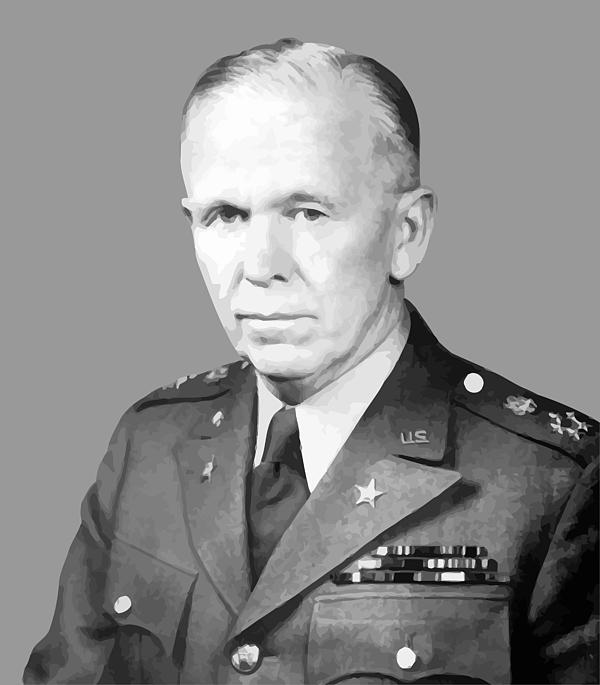
In contrast, the United States radically reduced the size of the regular Army and starved it of weapons, ammunition, gasoline, training and basic supplies. Promotions slowed to a crawl where ancient colonels and elderly majors lingered on active duty and future four and five star generals like Eisenhower, Patton, and Marshall all despaired and contemplated leaving the service. The Army’s – and to extent, America’s – salvation was in the fact that George Marshall persevered as a major and colonel in keeping a little black book of talented, forward thinking, officers and thought deeply and reflectively about building armies, helping enact “the Fort Benning Revolution” in military training. When FDR placed the power in Marshall’s hands as Chief of Staff he knew exactly what to do because he had a well-conceived vision of where the US Army needed to go to meet the national emergency of WWII. He was the American von Seeckt, except that Marshall was an infinite improvement morally, strategically and politically on his German counterpart. We were extremely fortunate to have had him.
.
We may not be as lucky next time.

Two TED Talks: Stavridis and van Uhm

Thursday, July 26th, 2012

[ by Charles Cameron — talking across the military / civilian divide ]
.

Adm. Stavridis' rheostat

.

I thought these two TED talks — one given in Amsterdam by Gen. Petrus J.M. “Peter” van Uhm, current Chief of the Netherlands Defence Staff, the other by Adm. James Stavridis, current Commander, U.S. European Command (USEUCOM) and NATO’s Supreme Allied Commander Europe (SACEUR) — were interesting in terms of the speaker-audience combination in each case, and the topics the two speakers chose to present.

**

First, Adm. Stavridis, speaking to A Navy Admiral’s thoughts on global security:

I’m particularly intrigued by the sub vs raft image, and by the admiral’s hard and soft power rheostat (image above) — I hope we’ll get to discuss that image.

**

Then Gen. van Uhm, speaking to Why I chose a gun:

**

Stavridis is the guy who says:

We are excellent at launching Tomahawk missiles … we need to get better at launching ideas.

and told his audience at National Defense University convocation:

in the end, 21st-century security is about brain on-brain warfare.

**

There’s some interesting bridge-building going on here — from military speakers to civilian audiences. I welcome your comments.

The Twilight War—a review

Monday, July 23rd, 2012

[by J. Scott Shipman]

The Twilight War, The Secret History of America’s Thirty-year Conflict with Iran, by David Crist

When President Obama made a heartfelt opening, a smug Iranian leadership viewed it as a ruse or the gesture of a weak leader. Iran spurned him. Obama fell back on sanctions and CENTCOM; Iran fell back into its comfortable bed of terrorism and warmongering. Soon it may no longer be twilight; the light is dimming, and night may well be approaching at long last. [emphasis added]

Thus concludes senior government historian David Crist’s The Twilight War, and be assured Crist’s language is not hyperbole. Crist masterfully details the tumult of U.S.-Iranian relations from the Carter administration to present day. Using recently released and unclassified archived data from principals directly involved in shaping and making American foreign policy, Crist provides the reader an up-front view of “how the sausage is made;” and, as with sausage, the view often isn’t pretty for either side. Crist’s access wasn’t limited to U.S. policy makers, as he conducted interviews with principles on the other side as well, for instance, he had secret meetings/interviews with pro-Iranian Lebanese officials in south Beirut. In all, Crist estimated he interviewed over “four hundred individuals in the United States and overseas.”

Crist begins his story with the Shah of Iran in the last days of his leadership, as popular sentiment was turning against both his regime, as well as his American enablers. He reveals the Carter administration’s fleeting notion of military intervention following the fall of the Shah, and includes details how the clerics reigned in professional Iranian military members, purging the “unreconstructed royalists.” From the start, the U.S. learned how difficult, if indeed impossible, relations were going to be with the new Iranian leadership. One State Department report summed up the situation:

It is clear that we are dealing with an outlook that differs fundamentally from our own, and a chaotic internal situation. Our character, our society are based on optimism—a long history of strength and success, the possibility of equality, the protection of institutions, enshrined in a constitution, the belief in our ability to control our own destiny. Iran, on the other hand has a long and painful history of foreign invasions, occupations, and domination. Their outlook is a function of this history and the solace most Iranians have found in Shi’a Islam. They place a premium on survival. They are manipulative, fatalistic, suspicious, and xenophobic.

While I am certain the writer of this report was not intending to be prophetic, as it turns out this paragraph captures the essence of our conflict. Each American president has thought himself equal to the challenge and each has thus far failed.

The Twilight War includes the birth of Hezbollah, accounts of the Marine barracks bombing in 1983 (from the men who were there), and the details of the Kuwaiti request for American protection of their tanker fleet from the Iranians. From this decision, the U.S. committed military force to protect Middle East oil—a difficult and at times, contentious decision. This decision resulted in continued sporadic confrontations between the U.S. and Iranian forces in the Persian Gulf.

Crist’s book is an illustration writ-large of a book previously reviewed here at Zenpundit.com; Derek Leebaert’s Magic and Mayhem, The Delusions of American Foreign Policy—as both “magic” and “mayhem” figure large in our on-going relationship with Iran. Most U.S. administrations when dealing with Iran came to rely on the “magic, ” and often divorced, or worse, ignored the realities.

At 572 pages, the fast paced narrative is a must read for anyone wanting insight into the origins and issues that remain in the ongoing U.S.-Iran conflict. The Twilight War is exhaustively sourced.  Crist says in the Notes his book was twenty-years in the making and it shows. Further, this book comes with excellent maps, so keeping up with the geography is made easier.

Tom Ricks said, “this is the foreign policy book of the year, perhaps many years,” and Ricks may be right. The Twilight War is an important and timely book on a vital topic, and comes with my strongest recommendation.

Postscript:

A copy of The Twilight War was provided to this reviewer by the publisher.

Look, I’m sorry to be so blunt — II: all you need is math

Thursday, July 19th, 2012

[ by Charles Cameron — global warming, global curriculum ]
.

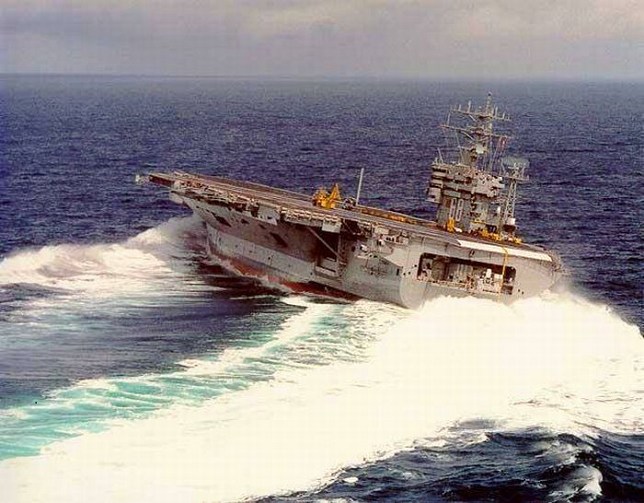
you can turn an aircraft carrier pretty fast -- but the human population?

.

Bill McKibben has an article out in Rolling Stone, Global Warming’s Terrifying New Math, in which he says:

When we think about global warming at all, the arguments tend to be ideological, theological and economic. But to grasp the seriousness of our predicament, you just need to do a little math.

Well, no you don’t.

You need something closer to global understanding. Once you’ve gathered — via that “little math” — that we’re not on a sustainable track, you’ll need to understand a few other things. Like:

Look, I’m sorry to be so blunt, but… the problem isn’t understanding, it’s changing.

Psychology. Inwardness.

And I can’t speak for economy or ideology, but believe me — theology will have a role to play!

Liminality II: the serious part

Monday, July 16th, 2012

[ by Charles Cameron — follow-up to Liminality I: the kitsch part, dealing with the strange business of liminality, submarines, monks and more ]
.

Limen is the Latin for threshold, and the liminal is therefore what happens at thresholds.

**

Something pretty remarkable happened as 1999 turned into 2000 — something liminal. And it happened aboard the USS Topeka, SSN-754 (below):

USS Topeka, credit: United States Navy, released ID 090623-N-1126G-005

The Associated Press reported:

Its bow in one year, its stern in another, the USS Topeka marked the new millennium 400 feet beneath the International Dateline in the Pacific ocean. The Pearl Harbor-based navy submarine straddled the line, meaning that at midnight, one end was in 2000 while the other was still in 1999… The 360-foot-long sub, which was 2,100 miles from Honolulu, Hawaii, straddled the Equator at the same time, meaning it was in both the northern and southern hemispheres. Some of the 130 crewmembers were in Winter in the North, while others were in Summer in the South…

Sitting pretty on the threshold between two millennia, two centuries, two decades, years, seasons, months, days and hemispheres was an extraordinarily liminal idea — as the two-faced January is a liminal month — and I think illustrates effectively the terrific power of the liminal to sway human thinking

Navy commanders in charge of billion dollar ships seldom get up to such “fanciful” behaviors!

**

And if we might turn from the contemporary US Navy and its submarine to ancient Indian mythology and Hindu religion for a moment:

Narsingh avatar depicted in Nepali dance, credit: Navesh Chitrakar, Reuters / Landov

The story of Narsingh (above), the fourth avatar of Vishnu in Vaisnavism, also captures the idea of what’s meant by thresholds very nicely:

A tyrannous and oppressive king obtained a boon from the gods that he should die “neither by day nor night, neither within the palace nor outside it, neither at the hand of man nor beast” and thought his boon conveyed immortality — but when he persecuted his son, a devotee of God, a half-man half-lion figure — the Narsingh avatar of Vishnu — met him on his own doorstep at dusk and slew him, so that he died neither by day nor by night, neither within the palace nor outside it, and neither at the hand of beast nor of man.

Dusk, doorsteps and metamorphs are all liminal, — with respect to day and night, home and abroad, man and beast respectively.

**

Anthropologist Mary Douglas has pointed out how things that are “not this, not that” (ie that don’t fit our categories) are precisely the ones that taboos form around – hence her remark in Purity and Danger:

Uncleanness or dirt is that which must not be included if a pattern is to be maintained

Consider for instance the dietary condemnation of amphibians in Leviticus, as being neither walking nor swimming creatures — fitting neither the normative category of “animal” nor that of “fish”. But Douglas is thinking in static categories, while Victor Turner thinks in process.

**

Turner takes the condition that’s between “this” and “that” and views it as part of a process in time, where “this” is how things have been, and “that” is how they can be in future – effectively, the turning point between one way of life and another.

Turner is interested in this primarily because the tribes he studies as an anthropologist create rituals which act as magnifiers of this sort of transition (his scholarly reason), and because such turning points, so ritualized, turn out to be important junctions in human lived experience (his human reason).

Turner tells us that those who are passing through a limen in social life are usually thrown in the stockade — the vice-chief who is about to become chief along with the village drunk, the pickpocket and the crazed idiot — and can then be taunted and tomatoed by all and sundry, while feeling that intense kinship with their stockade mates no matter the symptoms (success, failure) which brought them there. Which keeps them humble, builds character, and builds their capacity for empathy.

Only then can the vice-chief be brought back into society and proclaimed as the new chief.

**

Basing his own work on van Gennep‘s account of rites of passage, Turner sees such rites as involving three phases: before, liminal, and after.

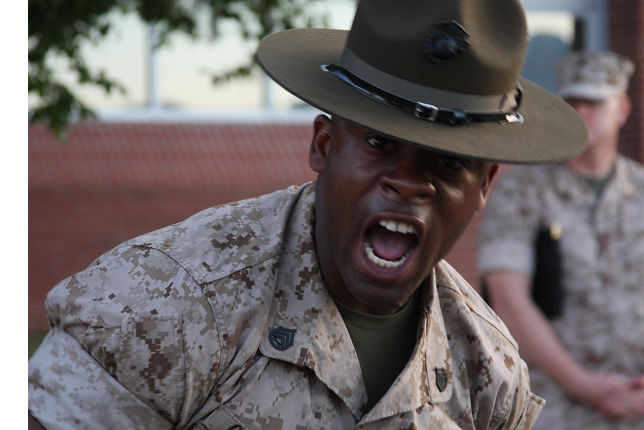
  • Before, you’re a civilian, after, you’re a Marine — but during, there’s an extraordinary moment when you’ve lost your civilian privileges, not yet earned your Marine status, and are less than nothing — as the drill sergeant constantly reminds you — and yet feel an intense solidarity with your fellows.
  • .

    .

    • Before, you’re a novice, not yet “professed”, after, you’re a monk — but during, you lie prostrate on the paving stones of the abbey nave in as you transition into lifelong vows poverty, chastity and obedience.
    • .

      .
      There are two things to note here. One is that liminality is a *humility* device, the other is that is creates a strong sense of bonding which turner calls *communitas*: in one case, the Marine’s esprit de corps, in the other quite literally a monastic community. Part of what is so fascinating here is the (otherwise not necessarily obvious) insight that humility and community are closely related.

      **

      There are also liminal festivals, like India’s Holi Festival or the mediaeval Catholic Feast of Fools (about which Harvey Cox wrote a book), in which the usual hierarchy is turned upside down for a day — so that a choirboy celebrates Mass and the bishop becomes the busboy, or the brahmins are pelted with old shoes and paint balloons by the village prostitutes and drunks…

      This may all sound pretty silly, but consider again the specific quality of humility which it brings out:

      Something of the sacredness of that transient humility and modelessness goes over, and tempers the pride of the incumbent of a higher position or office. Liminality implies that the high could not be high unless the low existed, and he who is high must experience what it is like to be low.

      Turner comments that these are socially sanctioned devices for *making the certain degree of hierarchy that’s inevitable in human affairs tolerable once again* — that we need such devices, that the “modernizing” west tends to forget them, and that liminality as process is deeply embedded in human social wiring, and should be appreciated rather than overlooked.

      **

      Turner himself was a Catholic, and it’s not surprising that he turns to Saint Francis for another example of liminality, pointing out that Francis was basically trying to convene a group of friends to live a *permanently liminal life* with him – that was what his idea of the Franciscan Order was all about — and that all such attempts fail (he compares flower power in the sixties) because the liminal cannot sustain itself but must naturally pass across into hierarchy, where it refreshes and revivifies structures which would otherwise become dry and lifeless:

      It is as though there are here two major “models” for human interrelatedness, juxtaposed and alternating. The first is of society as a structured, differentiated, and often hierarchical system of politico-legal-economic positions with many types of evaluation, separating men in terms of ” more ” or ” less.” The second, which emerges recognizably in the liminal period, is of society as an unstructured or rudimentarily structured and relatively undifferentiated comitatus, community, or even communion of equal individuals who submit together to the general authority of the ritual elders.

      In Turner’s view, this liminal refreshment is constantly arising in the margins of structures, and should be welcomed and incorporated — the strange, edgy and uncomfortable fellow in beggars rags being invited to the high feast – the limen offering spontaneity and inspiration to match and complement the discipline and reliability of the structure.

      **

      And where does all this leave us?

      Hopefully, with the understanding that our categories of the sacred and the profane are too simplistic for the complex workings of human culture and religion.

      Liminality is a mode of intensification.

      And I’m wondering to myself: regiments and battalions and brigades are clear cut categories, there’s nothing (apart from their initiation rites) liminal about them. But insurgents, able to blend in and out of a population, civilian yet militant, militant yet civilian?

      Is insurgency warfare inherently liminal? And if so, what does that have to teach us?


Switch to our mobile site