zenpundit.com » authors

Archive for the ‘authors’ Category

Congratulations!!

Tuesday, December 4th, 2012

To Lexington Green and James Bennett, for finishing their new book, America 3.0 – due out (I think) in 2013 published by Encounter Books.

A political vision for an era desperately short on imagination and needing statecraft of inspiration.

The Antilibrary of the Living Dead

Friday, November 30th, 2012

From time to time we talk here about “the pile” of books waiting to be read, or the larger “Antilibrary” which briefly also became a blog, now defunct:

….The writer Umberto Eco belongs to that small class of scholars who are encyclopedic, insightful, and nondull. he is the owner of a large personal library ( containing thirty thousand books), and separates vistors into two categories: those who react with ‘Wow! Signore professore dottore Eco, what a library you have! How many of these books have you read?’ and others – a very small minority- who get the point that a private library is not an ego boosting appendage but a research tool. Read books are far less valuable than unread ones. The library should contain as much of what you do not know as your financial means, mortgage rates, and the currently tight real estate market allow you to put there. You wil accumulate more knowledge and more books as you grow older, and the growing number of unread books on the shelves will look at you menacingly. Indeed, the more you know, the larger the rows of unread books. Let us call the collection of unread books an antilibrary.

–    Nassim Nicholas Taleb 

It occurred to me the other day, that the Antilibrary contains some unread books that, while bought we the best of intentions, perhaps even an air of anticipation, yet were never read – and at the current rate of new book purchases, never will be. To get “living dead” status a book needs to have been sitting on a shelf for a minimum of five years (the archives of book collectors don’t count since they are buying to own or invest and not always to read) and ten is even better. Here are a few of mine:

Tecumseh: A Lifeby John Sugden

My only explanation is that this one was a gift by a well-meaning friend who knew in a vague sort of way that I am “into history”. I really don’t care very much about Tecumseh and still less about his brother the Prophet ( maybe if he had a better handle on the prophecy thing their confederation would have won).

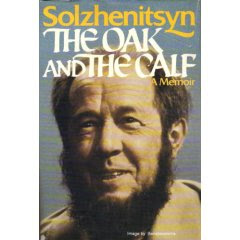
The Oak and the Calf by Aleksandr Solzhenitsyn

This has been sitting on my shelf for 20+ years. This is odd, because I’ve read The Gulag Archipelago twice, along with Cancer Ward,  The First Circle and August 1914.  Not sure if I burned out on Russian-Soviet studies at the time or if the collapse of Communism made it less relevant but it has never been cracked open.

Conquest by Hugh Thomas

Sweeping, magisterial, impressively detailed…..and decidedly unread for at least 15 years.

Nietzsche by Rudiger Safranski

As my Great-great Grandfather hailed from Germany, I now suspect the author may be a distant relation. That hasn’t helped me get started reading it.

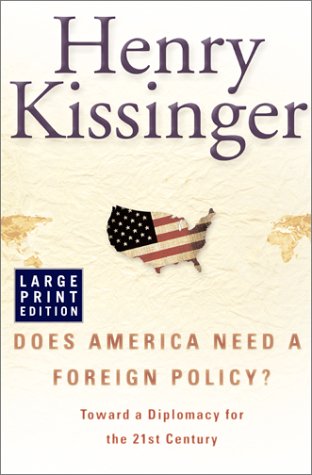
Does America Need a Foreign Policy by Henry Kissinger

One of the more ironically-timed books ever written, coming out a mere six months before 9/11, I have had this one for 10 years + and I think I bought it in hardcover for $4 (you can it used on Amazon for one cent. Ouch!). I have read a fair amount of Kissinger, including his acromegalic, multi-volume memoirs, but I can’t muster the energy to read this one.

What are you not reading and why?

New Book: The Rise of Siri by Shlok Vaidya

Tuesday, November 13th, 2012

The Rise of Siri by Shlok Vaidya 

Shlok Vaidya has launched his first novel,  dystopian techno-thriller in e-Book format entitled The Rise of Siri.  Having been the recipient of a late draft/early review copy, I can say Shlok on his first time out as a writer of sci-fi has crafted a genuine page turner.

Companion site to the book can be found here –  The Rise of Siri.com

Blending military-security action, politics, emerging tech and high-stakes business enterprise, the plot in The Rise of Siri moves at a rapid pace. I read the novel in two sittings and would have read it straight through in one except I began the book at close to midnight.  Set in a near-future America facing global economic meltdown and societal disintegration,  Apple led by CEO Tim Cook  and ex-operator Aaron Ridgeway, now head of  Apple Security Division, engages in a multi-leveled darwinian struggle of survival in the business, political and even paramilitary realms, racing against geopolitical crisis and market collapse , seeking corporate salvation but becoming in the process, a beacon of hope.

Vaidya’s writing style is sharp and spare and in The Rise of Siri he is blending in the real, the potential with the fictional. Public figures and emerging trends populate the novel; readers of this corner of the blogosphere will recognize themes and ideas that have been and are being debated by futurists and security specialists playing out in the Rise of Siri as Shlok delivers in an action packed format.

Strongly recommended and….fun!

Book Review: Lords of the Sea by John R. Hale

Tuesday, November 6th, 2012

Lords of the Sea: The Epic Story of the Athenian Navy and the Birth of Democracy by John R. Hale 

“I cannot tune a harp or play a lyre, but I know how to make a small city great.” – Themistocles

Nautical archaeologist Dr. John R. Hale, an expert on bronze age shipbuilding and seafaring, has written a delightful and robust popular history of the navy of ancient Athens, but more importantly, a poignant political history of the Athenian navy’s  intrinsic relationship to radical Democracy and Empire.  A page turner with enough detail about triremes and warfare in the Aegean to leave you crying “The Sea! The Sea!”,  Lords of the Sea will be enjoyed by naval buffs and philo-Hellenes alike.

As you would expect, there is much in Lords of the Sea about the design, construction and care of triremes, Piraeus and the Long Walls, the shipsheds at Zea Harbor, the financing of the Athenian navy, trierarchy, naval tactics, rowers and rowing, superstitions of Athenian sailors on campaign, the deforestation of Athens for ship timber, comparisons with Spartan, Persian and Macedonian naval prowess and the great sea battles of the ancient world. Plenty, in fact, to keep naval aficionados happy while reading Lords of the Sea and all of which I am spectacularly unqualified to comment upon. I can say that in regard to ancient navies, I learned much that was new to me.

What was of greater relevance to me was Hale’s major theme of the political nature of the Athenian navy. That the imperial glory and thalassocracy was irrevocably bound up with democracy itself and bitterly opposed by the wealthy, would-be, oligarchs who consistently preferred a much diminished Athens they controlled as Sparta’s vassals to a democratic Athenian empire where they shared power with the people:

….The resumption of work on the Long Walls jolted Athens’ oligarchs into action. A small group of upper-class citizens still hoped to destroy the radical democracy. These men feared that once Athens was permanently and inseparably linked to its navy by the Long Walls, the common people would never be unseated from their rule. Before the walls had been completed, the oligarchs sent secret messages to a Spartan army that was at that moment encamped not far from the frontiers of Attica. The oligarchs invited the Spartans to attack Athens, promising to assist in the overthrow of the current regime. In their own minds, these men were patriots, pledged to restore the ancestral consitution.

Traitors are always heroic in their own minds.

Hale was a student of Donald Kagan, whom he credits with inspiring him toward an investigation of the naval prowess of Athens, however in covering the history of Athens, including the Persian and Peloponnesian wars, Hale is more evenhanded in his assessments than Kagan. The  faction of oligarchs come off quite badly, except for the rising to the occasion of the Areopagus, patriotism and sacrifice is to be found  by Hale primarily in the demos, especially the thetes and newly freed and enfranchised slaves who rose to the call to defend the city in the hours of Athens’ maximum  danger. However, the demos in the Assembly were not without fault; rule by the people also proved to be impetuous, arrogant, capricious toward Athenian generals and cruel toward allies and enemies alike. The Athenian empire was, in short,  afflicted with hubris and this caused their downfall.

Hale ties both democracy and Athens’ unparalleled cultural creativity to thalassocracy. When the political will to maintain Athenian naval dominance and independence as a power faded among the Athenian upper-classes, the spirit of oligarchy ignominiously surrendered Athens to a foreign king, despite a mighty navy and eagerly betrayed their own countrymen:

….The Assembly sent Phocion and Demades and Xenocrates, the head of the Academy, to ask Antipater [ Alexander the Great”s regent and successor ]  about terms: a war hero, an orator, and a philosopher to negotiate the fate of a once-great city. Antipater demanded a payment of indemnity equal to the full cost of the war, the handing over of Demosthenes and other enemies of Macedon, and the evacuation of Samos. The thetes of the demos, defined as all citizens with a net worth of less than two thousand drachmas, were to be expelled from Athens. The wealthier citizens who remained must surrender the fort on Munychia Hill in the Piraeus to a Macedonian garrison.

…..So the Athenian envoys returned to Athens with the terms of surrender that gave up Athenian independence and, for all practical purposes, Athenian identity. The incredible had happened. Almost three-fifths of the citizens – 12,000 out of 21,000 – failed to pass Antiper’s test of wealth. They were the rabble, the mob, the radical democrats who were everywhere blamed for all the crimes of restless, ambitious, and expansionist Athens. They were now to be banished for the good of all, not merely from Athens but for the most part from Greece itself

The Athenian Assembly would have been far better off keeping Demosthenes, executing the trierachs who had cravenly surrendered to Cleitus the White and his Macedonian fleet, ostracizing Phocion, Demades and Xenocrates and resuming the war. From this defeat, there was no recovery for Athens, nor did the new oligarchy, secure in their power now, seek any. Without the thetes there were no crews to man the ships or skilled laborers to build them at Zea. Athens was broken as a power and a polis forever.

Strongly recommended.

The Last Lion, Winston Spenser Churchill, Defender of the Realm, 1940-1965 — finally released!

Saturday, November 3rd, 2012

[by J. Scott Shipman]

The Last Lion, Winston Spenser Churchill, Defender of the Realm, 1940-1965, by William Manchester and Paul Reid

In the 1980’s, William Manchester wrote two of three planned volumes on the life of Winston Churchill. He had notes for the final volume but illness prevented him from completing. Instead, he brought in Paul Reid to finish his masterpiece. While it took 25 years, the wait was well worth it; Reid thus far (I’m halfway through) has channelled Manchester’s style and presenting a seamless connection to the first two volumes.

Strongest recommendation.

Cross posted at To Be or To Do.


Switch to our mobile site