zenpundit.com » authors

Archive for the ‘authors’ Category

Military Robotics….Deep in the Singularity Zone

Wednesday, February 18th, 2009

I’m as big a fan of technofuturistic science as the next reader of Danger Room but National Defense Magazine ‘s article really is breezily optimistic:

Reverse Engineering the Brain May Accelerate Robotics Research 

….Machines that walk upright will assist civilians and the military alike, said Stefan Schaal, associate professor of computer science and neuroscience at the University of Southern California.“We should at some point be able to create an artificial human being and I think humanoid robots are currently the first step toward that,” he said at the Army Science conference.“This is going to happen,” he predicted. “And it’s going to happen in this century.”It may not be as “polished” as the iRobot movie, he added.While other experts noted that there are huge technological hurdles to overcome, basic research continues on several critical technologies such as vision, movement and computational models that will allow robots to “think” like humans.A parallel effort to map – or reverse engineer – the human brain is going to give robotics experts inspiration that will allow them to create these advanced models, researchers at the conference said.The National Academy of Engineering is spearheading this “Grand Challenge.” Just as researchers successfully mapped the human genome earlier in the decade, the engineering community – not normally thought of as being a part of the life science discipline – says there will be a clear benefit to a Herculean effort to figure out exactly how the human mind works.“If we could determine the software of the human brain, we could embed all sorts of systems so as to provide human like quality for machines,” said John Parmentola, director of research and laboratory management at the Army office of the deputy assistant secretary for research and technology.Neural models will enable robots to better perceive, think, plan and act, said James Albus of the Krasnow Institute at George Mason University, Va.

“Significant economic and military applications will develop undoubtedly early in this century and in fact are already developing,” he said.
 

Read the rest here.

The part that makes me a tad skeptical is the “reverse engineering” of the brain. This is no small task. “Wetware” isn’t hardware and the wetware here is dynamically adaptive and to an extent individualized within parameters we do not yet fully understand. Unless I am missing something ( please correct me if I am) in terms of difficulty, reverse engineering the brain would appear to be harder than almost any other question that could possibly be related to the whole field of robotics itself. 

While scientists have learned more about the human brain in the last 10 years that the previous 10,000, brain science is still in it’s infancy. The exciting MRI scan studies are primarily exercises in positively identifying correlation of brain activity with specific cognitive and physical tasks; what these studies mean in terms of application requires extrapolative speculation and experimentation.

By all means guys, go for it! I’m behind the effort 100 % as the spillover benefits are going to be enormous. However, I’d wager that this strategy is not the fastest route to functionally useful, autonomously acting, robots on a societal scale.

ADDENDUM:

I just picked up P.W. Singer ‘s new book Wired for War: The Robotics Revolution and Conflict in the 21st Century.  Flipping through it quickly, I will say this is an extremely cool book designed to appeal to war nerds, tech geeks and defense policy wonks alike ( For example, if you read Singer’s ref to “the Big Cebrowski” and get it, well, then this book is for you). Some well known figures in the blogosphere also make it into Singer’s book but to find out who, you’ll have to go get a copy. 🙂

ADDENDUM II. 

Jeff Hawkins at TED.com on the revolutionary potential of brain science:

Israel’s Half-Mad Genius of Mil-Theory

Saturday, February 14th, 2009

Just read this profile of Dr. (Gen.) Shimon Naveh, via Soob via Ubiwar.

….Naveh describes his last and perhaps most important military-academic project, OTRI, as a chronicle of failure. “It was a failure of the group and also my personal failure, but in a far deeper sense it was the IDF’s failure. The IDF has not recovered because it doesn’t have the ability, unless it undergoes a revolution.”Naveh, who established OTRI together with Brigadier General (res.) Dov Tamari, draws on imagery from the world of construction to explain the project. “We wanted to create an intermediate level between the master craftsman, the tiling artisan or the electrician, who is the equivalent of the battalion or brigade commander, and the entrepreneur or the strategist, the counterpart of the high commander, who wants to change the world, but lacks knowledge in construction.”Between the two levels, he continues, is the architect/commander-in-chief, whose role is “to enable the system to understand what the problem is, define it and interpret it through engineers.” In the absence of this link, he maintains, armies find themselves unable to implement their strategic planning by tactical means. “Entrepreneurs and master craftsmen cannot communicate,” he says.Already in his first book, “The Operational Art,” published in 2001 and based on his doctoral dissertation, he described the level of the military architect: “The intermediate level is the great invention of the Russians. [The military architects] occupy the middle, and make it possible for the other fields, from politics to the killers, to understand, plan and learn.”
An interesting and to me well constructed analogy by General Naveh that rings true to me from what I know of the Soviet history. Naveh perfectly describes the peculair adaptive requirements forced on the Red Army by the nature of the Soviet political system, especially as it existed under Stalin from the time of the Great Terror forward ( 1936 -1953). Stalin wiped out much of his senior military leadership of the Red Army during the Yezhovschina in 1937 and decimated the junior officer corps to boot, leaving it thoroughly demoralized and rigidly shackled to political comissars who were, like the military commanders, completely paralyzed with fear ( the Red Navy officer corps was basically exterminated en masse).

When Operation Barbarossa commenced in June, 1941, the dramatic Soviet collapse in the face of the Nazi onslaught was due in part to Stalin’s maniacal insistence that Germany was not going to attack and that assertions to the contrary were evidence of “wrecking” and “provocation” – crimes liable to get one immediately shot. Even a high ranking NKVD official, Dekanazov, whom Stalin made ambassador to Berlin, was personally threatened by Stalin for daring to warn the Soviet dictator about Hitler’s imminent attack.
That being said, Stalin quickly realized during the 1941 retreat that he had debilitated his own army by decapitating it and his own judgment as supreme warlord was no substitute at the front lines for what Naveh terms “operational art”. Stalin the entrepreneur-grand strategist needed competent military architects like Zhukov and Rossokovsky to plug the gap with the craftsmen and Stalin not only promoted and protected them, he tolerated their dissent from his own military judgment and sometimes yielded to their concerns. Very much unlike Hitler who could seldom abide criticism or deviation from his general officers or learn from them. Stalin improved as a war leader from interaction with his generals; Hitler did not and if anything grew worse over time – as did the Wehrmacht’s tactical-strategic disconnect.

The above anecdote represents the rich level of depth behind Naveh’s offhand and seemingly disjointed references. There’s a lot of meat there behind the dots Naveh is connecting but the uninitiated will have to be willing to dig deep. I’m cool toward Naveh’s reliance upon French postmodernism but I admire the breadth of his capability as a horizontal thinker and theorist. However, Naveh needs an “architect” of his own to translate for him and make his complex ideas more readily comprehensible to the mainstream. I will wager that few Majors or Lt. Colonels, be they U.S. Army, IDF or Russian, read much Focault these days.

ADDENDUM:

The SWJ had an interview with Dr. Naveh on his theory of Systematic Operational Design in 2007

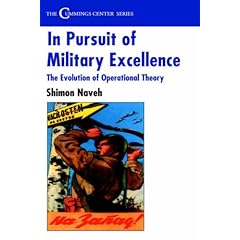
Dr. Naveh’s book is In Pursuit of Military Excellence: The Evolution of Operational Theory (Cummings Center Series)

Joint Force Quarterly (via Findarticle) -“Operational art

Jerusalem Post – “Column One: Halutz’s Stalinist moment

Excerpts from Threats in the Age of Obama – Part I.

Wednesday, February 11th, 2009

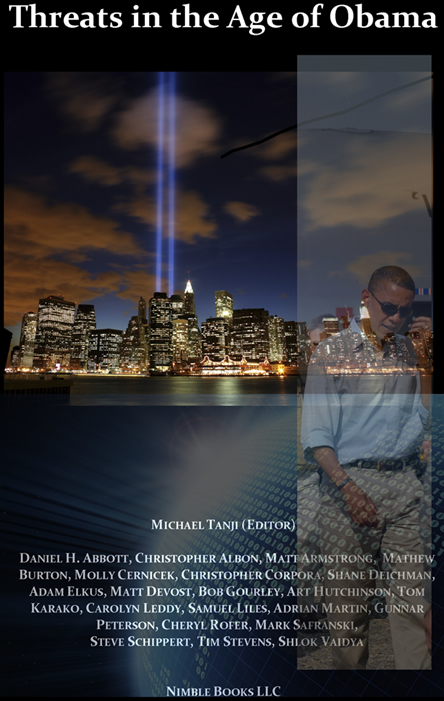
tttaob_cover_cropped.jpg

I thought I might give readers a taste of what is inside Threats in the Age of Obama in a series of excerpts from the featured authors. Here is Part I. :
Matt Armstrong

“Arming for a Second War of Ideas”:

….Today, the U.S. must expand its horizon and realize there are more adversaries than “violent extremists,” “Islamists”, or other derivative labels for Al-Qaeda, Taliban, and associated movements from the Middle East to South Asia. Narrowly defining America’s adversaries is myopic and dangerous.

We need an effective and flexible arsenal of persuasion in the global information environment and global economic environment that goes beyond ideological support for terrorism and insurgency and into protecting broader interests, from the economy to global health to reconstruction and stabilization efforts. The new arsenalof persuasion must be adept against all adversaries in the entire global information environment.

Dr. Christopher Corpora 

“The Tangled Relationship Between Organized Crime,Terrorism and Proliferation”:

….The present threats to global security and stability increasingly come from non-state actors who are motivated to resist and undermine international conventions and sovereign rule to pursue bounded interests. Is it accurate or useful to analyze and assess these threats framed around the dominant resistant expressions-terrorists, traffickers, pirates and smugglers-or is there another way to understand and explain the activities associated with resistant non-state actors? What is the cost of continuing to assess these actors and activities in analytic “silos” of old security paradigms? How does this impact strategies and policies to addressthese nontraditional and often nonconventional threats? How would a multi-disciplinary set of theories and analytics assist in building a fuller understanding of these activities?

Art Hutchinson

“Preparing the Mind to See”:

….The goal of a metacognitive, mental model modification effort might be limited in scope. (“How should I change my newsgathering habits to generate higher returns for my retirement portfolio next quarter?”) Or it might be sweepingly complex. (“How can we get decision-makers across multiple organizations to develop a shared, richly-nuanced framework for dynamically assessing how non-Western worldviews may challenge our physical security, economic resilience and liberal, democratic values over the next 50 years?”)

Bob Gourley

“The Future of Cyberspace Security: The Law of the Rodeo“:

Predictions of the future of technology are increasingly starting to sound like science fiction, with powerful computing grids giving incredible computational power to users and with autonomous robots becoming closer and closer to being in our daily lives vice just in computer science departments. Infotech, nanotech and biotech are fueling each other and each of those three dominate fields are generating more and more benefits that impact the other, propelling us even faster into a new world. Depending on your point of view the increasing pace of science and technology can be good or bad. As for me, I’m an optimist, and I know we humans will find a way to ensure technology serves our best interests

More to come as I shine a spotlight on the other authors in Threats in the Age of Obama, published by Nimble Books.

New Book – Threats in the Age of Obama

Tuesday, January 27th, 2009

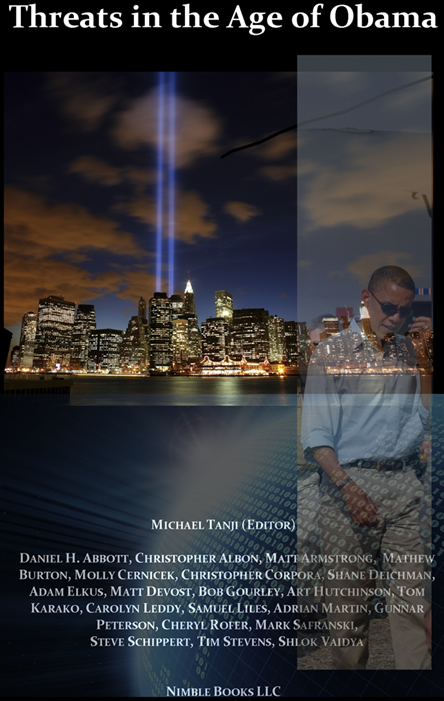
tttaob_cover_cropped.jpg

I am both excited and very pleased to announce the release of Threats in the Age of Obama by Nimble Books

Edited by my friend Michael Tanji, a former senior member of the intelligence community, the volume is a 224 page  A-Z anthology on the cutting edge security challenges faced by the United States in the 21st century and the strategic thinking required to deal with them. Tanji recruited an impressive stable of experts, many with high level USG and private sector experience, in intelligence, cyberwarfare, terrorism, pandemics, nuclear proliferation, human terrain, information operations, public diplomacy, foreign policy and national security. It was a high honor for me to be included among the authors, who are:

Dan tdaxp, Christopher Albon, Matt Armstrong, Matthew Burton, Molly Cernicek, Christopher Corpora, Shane Deichman, Adam Elkus, Matt Devost, Bob Gourley, Art Hutchinson, Tom Karako, Carolyn Leddy, Samuel Liles, Adrian Martin, Gunnar Peterson, Cheryl Rofer, Mark Safranski, Steve Schippert, Tim Stevens, and Shlok Vaidya. And last, but really first, editor, contributor and chief cat-herder, Michael Tanji.

“….If you are on a mission to change the way government works, particularly in the national security arena, this is one a place where some independent and intellectually diverse thinking is to be found. In these essays, we offer our view of some of the more pressing threats the Obama administration will have to deal with in these early days of the 21st century.”

If support the idea that the national security establishment needs to embrace change, then this is the book for you.

New Book on Hugo Chavez

Monday, January 19th, 2009

slide1.JPG

The Threat Closer to Home: Hugo Chavez and the War Against America by Douglas E. Schoen and Michael Rowan

I just received a review copy of The Threat Closer to Home courtesy of FSB Associates ( hat tip to Julie H. ) and the two authors have done some spadework on the “Bolivarian” regime of crypto-Communist, plebiscitary strongman, President Hugo Chavez. Dr. Schoen is a biographer and a longtime political and communication consultant to the Democratic Party as well as a former adviser to President Bill Clinton and is a member of the Board of Trustees for the International Crisis Group. Mr. Rowan is a a regular columnist for El Universal and Veneconomia of Venezuela and is also a political consultant for the Democratic Party and an array of overseas clients ranging from politicians to economic development programs. This is Rowan’s second book on Hugo Chavez and he is currently researching political economy issues in Latin America.

I have not read the book yet but thumbing through the pages I see numerous topics of interest, including Chavez support for FARC, alliance building with rogue states, ties to Hezbollah and known terrorists on the Treasury Department’s list of figures banned from conducting business within the United States. The authors have keyed into Chavez’s autarkic strategy of state managed commodity exports (oil) to both fund his regime and leverage foreign policy advantages – a historic  economic policy for aggressive, authoritarian, regimes. The book jacket carries blurbs by heavyweights in the foreign policy establishment including Congressmen Connie Mack ( R- Florida) and Ike Skelton (D-Missouri) as well as Richard Holbrooke and CFR’s Leslie Gelb.

I’m going to give this a close read and then perhaps try to schedule a short interview with Rowan and Schoen for Pajamas Media or another platform.


Switch to our mobile site

