ON WAR, COMPREHENSION AND PERSUASION

One end of the continuum: Ruth Benedict’s classic The Chrysanthemum and the Sword was a groundbreaking effort by the USG at attempting to understand the mass psychology of an enemy in wartime.
There must be something in the water lately as I have been getting an upsurge of inquiries and public comments regarding information operations, public diplomacy, “soft power” agents of influence, 5GW and similar matters. There are other blogs I can recommend as being better on this score – Beacon, MountainRunner, Kent’s Imperative, Swedish Meatballs Confidential and Whirledview to name but a few. Also, I would suggest that interested readers search the archives of Studies in Intelligence, PARAMETERS, The Strategic Studies Institute, Combined Arms Research Library and the threads at The Small Wars Council. Genuine expertise may be found there and for discussions of theory and emerging trends, I recommend Dreaming 5GW.
That being said, I will offer my two cents anyway.
One point of agreement across the political spectrum and that of informed opinion is that the USG has not done a particularly good job of managing “the war of ideas” in the conflict with Islamist terrorism. Or against state adversaries. Or with persuading neutrals and even our own allies to our point of view. When you are having difficulty drawing even in a global popularity contest with a crowd of bearded fanatics who put beheading videos on the internet, it’s time to admit there’s a problem.
Our difficulty did not start with the Bush administration, they simply ramped up a negative dynamic that began in the 1990’s with the budgetary dismantling of USG public diplomacy, information agencies and CIA clandestine operations, in order to “reinvent government” or to save “Peace Dividend” pennies for pork barrel expenditures. Official America’s withdrawal from the information playing field also happened to coincide with the rise of baby boom, New Left, ’68 er’s as the managing editors, producers and shapers of opinion in European media, as well is in places like South Korea, that had it’s own veteran cadres of dissenters against the ROK’s old military regimes.
Harboring relatively critical and anti-American views from the outset, this generational class interpreted clumsy, abrasive and at times deliberately antagonistic rhetoric from the second Bush administration through their own negative political lens. It was a particularly unfortunate combination as far as American interests in foreign policy were concerned. Nor has there been much interest or competence applied subsequently by Bush administration officials in order to make their ongoing global communication more effective.
Ironically, strategic communication was once a field in which Americans in the private and public sectors excelled. The First World War brought the management of news and propaganda through the Committee on Public Information under journalist George Creel, who had the help of two brilliant men who became giants in the field of influencing public opinion, Walter Lippmann and Edward Bernays. After WWI, Lippmann had a long career as an adviser to presidents and consensus-builder for the Eastern Establishment ( playing the role of America’s ur-Pundit) while Bernays virtually created the field of public relations, applying principles of mass and Freudian psychology to commercial advertising.
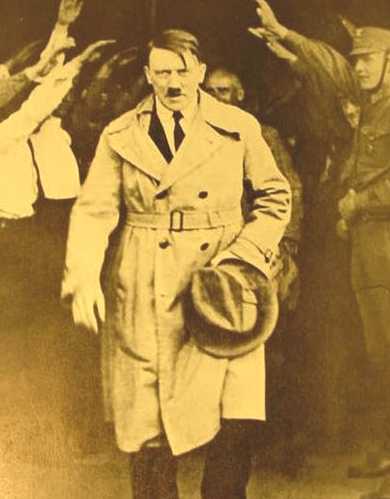
Psychoanalyst Walter C. Langer’s psychological profile of Nazi dictator Adolf Hitler, written for the OSS during WWII, represented a second major analytical departure for the USG.
Lippmann’s focus upon the elite and Bernays manipulation of the crowd represent two poles of communication with and comprehension of, an audience. In their case, the audience was primarily a domestic one while the exigencies of WWII and the Cold War forced American policymakers to look overseas and try to grasp the perspective of foreign worldviews boasting complex and alien ideologies of a militant character. Again, the dichotomy of examining elite leaders and the mass-society were followed in the respective landmark studies by Ruth Benedict and Walter C. Langer.
Benedict, a disciple of Franz Boas, carried out a cultural anthropological analysis of the Meiji-Taisho-Showa era Japanese mind, culminating in her book The Chrysanthemum and the Sword. Benedict characterized the Japanese people as “debtors to the ages” and explained the apparently suicidal fanaticism of the Imperial Army soldier as a psychological legacy of the “On-Giri” honor and debt social traditions of Japanese society. This technique of cultural analysis, which is also visible in Raphael’s Patai’s The Arab Mind, elevates deep-set cultural behavior patterns ( though it can also lead to distorting exaggerations and a misplaced attempt to apply aggregate stereotypes to explain individual behavior).
Langer and his team of psychoanalysts, likewise made their study from a distance and began the field of pychological profiling with their study of Adolf Hitler and other top Nazi leaders. While Benedict’s effort was explanatory, Langer’s was also intended to be predictive. In both instances, their work was available to high level policy makers for the making of strategy, propaganda and operations that were termed for the first time, “psychological warfare“. The integration of social science expertise into official and “black” USG communications and diplomacy would continue to evolve during the Cold War until the Vietnam War brought a serious break between the academic community and the CIA and Pentagon, that continues, for the most part, until this day.
While our political appointees, diplomats, CIA officers, military IO and PSYOPS specialists are getting a beating (often deserved) in the MSM and the blogosphere for the poor state of affairs in which they labor, fairness requires the observation that their task today is immeasurably more complex than that of their forerunners. This is a point that cannot at present time be overstressed. Set aside the deficit of trained linguists in “hard” languages, the paucity of firsthand HUMINT with which to work, the normal interagency obstructionism and bureaucratic warfare and the frustrations of out-of-touch management. Those are tactical and organizational difficulties which could be remediated.
Here are the daunting structural and strategic challenges faced in crafting a unified and persuasive “American message” in the war of ideas:
The cultural multiplicity of the global audience, which is/are:
– Tiered from real-time postmodern transnational elites down to pre-modern tribal villagers still relying upon an oral tradition who receive their information flow hours, days, weeks or later.
– Viewing events from worldviews based upon five or more major civilizational traditions and many times that number of major subnational or subcultural traditions .
– Often times the audience is locked into a feedback loop with relatively sophisticated and influential (or impoverished and alienated) expatriate communities in the West and United States.
A multiplicity of information platforms which are:
– Spreading access to information with increasing rates of economic efficiency in a way that leapfrogs people over Gutenberg and directly into the World Wide Web.
– Are evolving technologically both in terms of processing power and parameters of expression that defy linear trend predictions (there are really more usable app ideas than ever get fully developed for reasons of return on investment and IP issues).
– Are evolving at a speed beyond which bureaucratic acquisition and budgetary schedules can adjust in order to keep USG employees in line with the tech capabilities of the private sector.
A multiplicity of information messages in a net volume that:
– Creates sheer “Attention scarcity” problems in target audiences -usually elite – which have begun to operate psychologically under the dictates of the “attention economy“.
– Creates a deafening “White Noise” through which critical messages to the target audience can neither be seen nor heard nor reinforced with reliability or be perceived in the proportion or perspective desired.
– Ratchets up the Darwinian velocity of the marketplace of ideas to snuff out or mutate memes faster than IO planners can adjust while also trying to bring along the portion of the audience still processing at much slower rates of comprehension.
What is to be done? I fear that I have no silver bullet solution. Reader Dominic C. suggested yesterday in the comment section:
“On 4GW front, there is a constant debate about why “public diplomacy” and “information war” / propaganda is poor. Surely the basic reason is that there are very few top quality marketing professionals who understand psychology and the few who exist do not work for the govt/mil. To the extent they are involved in politics, they usually roll in for elections and roll out.
If I were in charge of a 4GW campaign, I wd integrate professionals like Cialdini in my comms structure. There is an abyss between (a) the subjects studied in traditional politics, history, military etc and (b) marketing, psychology, cog sci, evolutionary bio etc.
America plus allies needs a 21st Century version of Moltke’s Prussian General Staff that combines these two branches into a training system so that politicians and soldiers have inter-dsciplinary skills”
This seems quite sensible as a first step to gaining a strategic grasp over what is really an “information ecosystem as a battlespace”.



