zenpundit.com » history

Archive for the ‘history’ Category

Exum in Foreign Policy

Sunday, October 24th, 2010

Andrew Exum on negotiation in AfPakland in Foreign Policy:

Smoke and Mirrors in Kabul

….But Afghans are perfectly comfortable talking while still fighting. So too, at least in practice, are the United States and its allies: In insurgencies from Vietnam to Northern Ireland, we have negotiated with insurgents while combat operations were ongoing. In the American public’s mind, however, wars take place sequentially: First, you fight; second, you negotiate a settlement. The word “negotiations” conjures up hopes for an end to the conflict in the minds of Americans and other Westerners — when all that really might be occurring is another round of jockeying for position between Afghanistan’s warring political forces.

….All that, to make matters worse, assumes the insurgent groups are independent actors. The reality, though, is that negotiations between the insurgent groups and the government in Kabul will only go so far as the Pakistani security services allow. Some Western analysts took heart in Pakistan’s decision in February to arrest Taliban leader Mullah Abdul Ghani Baradar. At the time, however, the arrest of Mullah Baradar, who was in negotiations with the government in Kabul, was interpreted by the Taliban rank and file to be a stark warning to those who would negotiate without the permission of the Pakistani government, under whose patronage and protection the Taliban has operated east of the Durand Line since 2005. Today it is widely accepted that this was indeed the case and that Pakistan deliberately thwarted negotiations between the Quetta Shura Taliban and the government in Kabul to serve its own parochial interests. Since that event, there is no sign that Pakistan’s powerful military has taken a softer line on negotiations between the Taliban and the government in Kabul.

Exum wrote a good op-ed. Go read it.

That said, the above paragraph makes me want to ask Andrew why the United States is not negotiating directly with Pakistan/ISI instead of wasting valuable time kabuki-ing around with plausibly deniable and expendable members of proxy groups over which Pakistan holds a demonstrated veto?
 
What is particularly curious in this situation is that  Secretary of Defense Robert Gates, in his memoir From the Shadows, made laudatory remarks about George Schultz (with whom Gates bumped heads) as “the toughest secretary of State I knew” who was willing to negotiate with the Soviets in one part of the world while bleeding them in another ( paraphrasing here). A lesson from history that bears revisiting.

Pakistan is our real adversary in Afghanistan and the party with the power to actually make agreements that stick. Negotiations 101: bargaining should not take place with powerless intermediaries.

Moral Decay and Civilizational Rebirth

Wednesday, October 13th, 2010


John Robb at Global Guerrillas:

JOURNAL: Moral Decay?

Moral decay is often cited as a reason for why empires/civilizations collapse.  The slow failure of the US mortgage market, the largest debt market in the world and the shining jewel of the US economic/financial system, is  a good example of moral decay at work.  

Why is this market failing?  It’s being gutted — from wholesale fraud and ruthless profiteering at the bank/servicer level to strategic defaults at the homeowner level — because a relatively efficient and effective moral system is being replaced by a burdensome and ineffective one.  What shift?  Our previous moral system featured trust, loyalty, reputation, responsibility, belief, fairness, etc.   While these features were sometimes in short supply, on the whole it provided us with an underlying and nearly costless structure to our social and economic interactions.  

Our new moral system is that of the dominant global marketplace.  This new system emphasizes transactional, short-term interactions rather than long-term relationships.  All interactions are intensely legalistic, as in: nothing is assumed except what is spelled out in the contract.  Goodness is solely based on transactional success and therefore anything goes, as long as you don’t get punished for it.  

In this moral system, every social and economic interaction becomes increasingly costly due to a need to contractually defend yourself against cheating, fraud, and theft.  Worse, when legalistic punishment is absent/lax, rampant looting and fraud occurs.  

Given the costs and dangers of moral decay, it’s not hard to see why it can cause a complex empire/civilization to collapse.

John is drawing on an intellectual tradition goes back to Gibbon, Ibn Khaldun, Polybius, Confucius and Mencius  but is mashing it up with modern concepts of social complexity, such as is found in Joseph Tainter’s The Collapse of Complex Societies. This makes sense; when members of a ruling class start to behave in an unethical manner, there is a natural reaction by morally vigilant members of the ruling class to check future abuses of power by dividing administrative authority, increasing regulations, creating new watchdogs and erecting balancing countermeasures. This is an increase in complexity that decreases rather than improves efficiency. Society pays more for the same level of effective governance and the creep of corruption will soon require another “re-set” and yet another no-value added  increase in complexity as the elite multiplies and seeks their own aggrandizement.

When Robert Wright wrote of “ossifying” societies unable to stand the test of barbarians in the ancient and medieval worlds, in Nonzero:The Logic of Human Destiny, he was explicit that a moral critique often correlated with economic/darwinian fitness. Rome, for example, eschewed adaptive technological innovation due to it’s heavy reliance on inexpensive slave labor. Oligarchic societies fit the moral decay theory because oligarchies focus on the zero sum game of extracting existing wealth from the population instead of creating and accumulating it. The extraction process requires an expensive social architecture of control and this is subject to diminishing returns. At a certain point, any system reaches the tipping point on adding the next level of non-productive complexity and begins to unravel.

What if the historical ratchet could be reversed?

What if the excess complexity could be systemically pared back along with the opportunities for corruption and self-aggrandizement that required countermeasures?

Societies are occasionally capable of moral and political renovation, cases in point, the Glorious Revolution and the Meiji Restoration, both of which tied ancient ideals to new political forms while sweeping away a corrupt elite. The American Revolution period, through the adoption of the US Constitution would be another example of societal transformation. These successes, which involve constitutional reforms and a rejuvenated political economy are essentially of a social contractual nature and are rare. Failure is more common, as with Sulla’s bloody reforms that temporarily got rid of bad actors and rebooted the Roman Republic to an older, more virtuous model but failed to address the fact that the structural flaws of the Republic itself were the problem, not the ambition of Marius.

Things are not yet too far gone. There is much that is wrong with the United States but we have a more resilient and coherent foundation upon which to reconstruct than did the Romans of the 1st century BC. 

America has many Mariuses but a better Republic.

Book Bonanza

Sunday, October 10th, 2010

Courtesy review copies that arrived this week from authors and publishers. Sweet!


Magic and Mayhem: The Delusions of American Foreign Policy From Korea to Afghanistan by Derek Leebaert

Operation Dark Heart: Spycraft and Special Ops on the Frontlines of Afghanistan by Anthony Shaffer

Without Hesitation: The Odyssey of an American Warrior by Hugh Shelton

Soft Spots: A Marine’s Memoir of Combat and Post Traumatic Stress Disorder by Clint van Winkle

I really enjoyed Leebaert’s early Cold War history, The Fifty Year Wound and therefore, have high hopes for Magic and Mayhem.  By contrast, Operation Dark Heart has already been the subject of controversy when the Pentagon bought up the entire first edition in order to wheedle an idiosyncratic list of redactions from the publisher for the second edition.

A note to readers, General Shelton, the former Chairman of the Joint Chiefs of Staff, and LTC Anthony Shaffer are both associated with the new military affairs and history site, Command Posts.

In addition to review copies, I shelled out some hard-earned cash for a few other titles:


The Ruin of the Roman Empire: A New History  by James J. O’Donnell

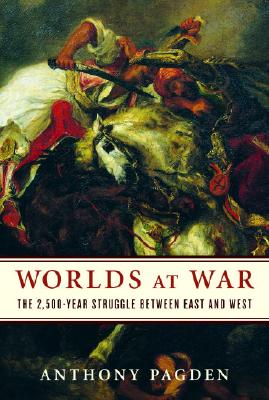
Worlds at War: The 2,500-Year Struggle Between East and West by Anthony Pagden

The House of Medici: Its Rise and Fall by Christopher Hibbert

What new books have you just picked up?

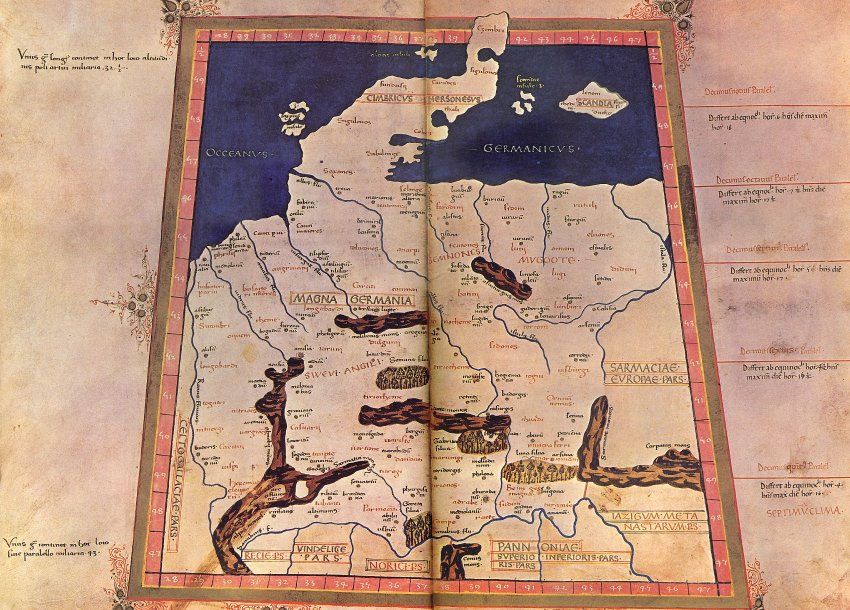
Germania Revealed

Sunday, October 3rd, 2010

germania.jpg

For historians of the ancient world – and Germans, I suppose – this is awesome.

Hat tip to Lexington Green.

Honor, Fear and Interest

Wednesday, September 22nd, 2010


The Landmark Thucydides: A Comprehensive Guide to the Peloponnesian War by Thucydides, Robert B. Strassler (ed.)

As noted earlier today by Crispin at Wings over Iraq, Dan Drezner has written one of his better posts:

“The Top Three Reasons You Should Read Thucydides

3) You will recognize some recurrent patterns in history. Thucydides will help one develop a better appreciation for life in 5th century BC, but it will really help one develop an appreciation for the aspects of human nature that are unchanged through time. 

For exhibit A, consider this recent Kindred Winecoff post with respect to American soldiers, war crimes, and nativism. The relevant section…

Agreed. Human nature has not changed much since 400 BC nor has politics become more nuanced than in the days of the polis. I am also dubious that America, or most nations, for that matter, have produced leaders recently who were of the caliber of Pericles or Lysander. On the other hand, Nicias, Alcibiades, HyperbolusCritias and various bumbling Spartan Navarchs, the world appears to enjoy in spades.

It is often said that history is philosophy from examples, but in Thucydides, history is also strategy from examples. I agree with Professor Drezner that Thucydides belongs on the shortlist of books military officers should read; I’d feel a lot better when the next international crisis erupted,  if our politicians read him too. If our elected officials could at least internalize “honor, fear and interest”, it would make our foreign policy debates markedly less stupid and public expectations of policy more realistic.


Switch to our mobile site