zenpundit.com » A.E.

Archive for the ‘A.E.’ Category

COIN and Counter-COIN

Tuesday, June 2nd, 2009

First, John Robb is en fuego today at Global Guerillas in a series of provocative “standing order”  tactical-strategic posts challenging COIN theory. I strongly advise you to check these out. I may comment on some of these later tonight.

John has been taking time away to work on unrelated business projects and this diversion seems to have sparked a burst of creative and innovative thinking in his field of expertise.  This is an excellent technique for improving productivity as the mental shifting of gears from tackling new subjects is neuropsychologically stimulating.

Secondly, there have been a couple of new responses to my earlier “Kilkullen Doctrine” post to which I want to draw your attention:

Rethinking Security –  COIN and Grand Strategy

Committee of Public SafetyHamilton Rolls Forward, Firing His Laser Eyes and Grand Strategy Through the Lens of Schizophrenia

I had linked to CoPS previously but I think my blog meltdown on Sunday obliterated that particular update.

UPDATE!

Stephen Pampinella – Critical Strategic Theory as Compliment to the Kilcullen Doctrine

The identity question may be the key to grand strategy and the meta-vision behind it – a la John Boyd’s “Theme of Vitality and Growth” as well as the reason why the USG, the bipartisan elite, the COINdinistas all shrink from it. Grand strategy is not merely about externalities, but shaping one’s own. Here America is deeply and bitterly divided.

A Better von Clausewitz

Wednesday, October 15th, 2008

 Recently, I’ve seen  Dr. Chris Bassford’s site, Clausewitz.com mentioned at the Small Wars Council and then one of my co-authors, A.E. of Rethinking Security, favorably cited a link to Clausewitz.com on a social networking platform. Intrigued, I wandered over and read for a while. I’m glad that I did.


On War was a book I read as an undergraduate for a class that focused on German intellectual history and was included by the prof more or less as an afterthought, along with works by Kant, Marx, Nietzsche and a few others. I recall that I was not terribly impressed at the time by On War; my real interest then was Cold War diplomatic history and I paid far greater attention to Marx. To me, Clausewitz was a turgid writer, another Germanic pedant, though an important one for his contribution to strategy. I never developed any particular dislike for him either, since military affairs wasn’t a priority and I stuck Clausewitz on my shelf and ceased to give him much consideration thereafter. Other philosophers and thinkers seemed to be more relevant.
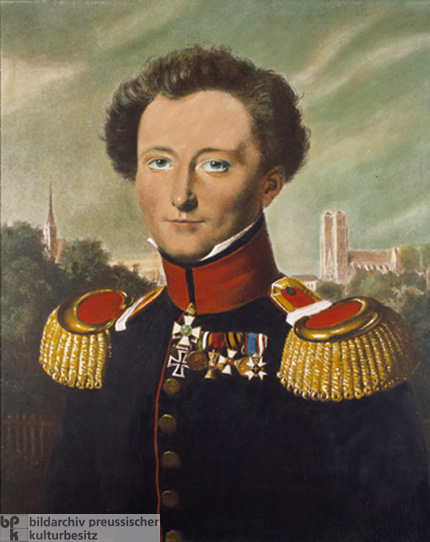
While reading at Clausewitz.com, I came across Bassford’s critique of various translations of On War and he panned one in particular:

7. Penguin Edition (1968). AVOID. The most widely available version of the Graham/Maude translation (see #4 above) is the weirdly edited and seriously misleading Penguin edition (still reprinted and sold today), put together by Anatol Rapoport in 1968. Rapoport was a biologist and musician-indeed, he was something of a renaissance man and later made some interesting contributions to game theory. However, he was extremely hostile to the state system and to the alleged “neo-Clausewitzian,” Henry Kissinger. He severely and misleadingly abridged Clausewitz’s own writings, partly, of course, for reasons of space in a small paperback. Nonetheless-for reasons that surpasseth understanding-he retained Maude’s extraneous introduction, commentary, and notes, then used Maude’s errors to condemn Clausewitzian theory. Between Graham’s awkward and obsolete translation, Maude’s sometimes bizarre intrusions, and Rapoport’s hostility (aimed more at the world in general, and at Kissinger in particular, than at Clausewitz personally), the Penguin edition is badly misleading as to Clausewitz’s own ideas. The influential modern military journalist/historian John Keegan apparently derives much of his otherwise unique misunderstanding of Clausewitz from Rapoport’s long, hostile introduction-necessarily so, since he has obviously never read Clausewitz’s own writings, not even the rest of the text of this strange edition. If you have any version of the Graham or Graham/Maude translation, but especially this twisted Penguin version, we advise you to get the modern Howard/Paret edition (discussed above).

Curious, I went over to a bookcase and pulled my copy of On War. Sure enough, it was the “twisted” Rapoprt version that I had read . I don’t know if the backstory Bassford gives about Rapoport and Henry Kissinger is true or not but it is certainly a plausible one. Kissinger, for all his intellectual abilities and charm was, in his heyday, a highly aggravating and insecure personality who made a legion of enemies with abrasive, dismissive and derogatory remarks and machiavellian conduct. I’ve seen scholars tilt at windmills for stranger reasons than that. My own mentor in diplomatic history had consuming hatreds for Alexander Hamilton and Arthur Schlesinger, Jr. to which I could never  relate.

As a result of reading Bassford’s comments, I picked up a Paret translation of On War yesterday and a cursory flipping through told me that he was correct in his assessment. I had read an edition that was both mediocre and weird in college. So I bought the copy and look forward to getting acquainted with a much more accurate presentation of Carl von Clausewitz’s ideas.

ADDENDUM:

As it happens, SWJ Blog has a related post-  Between Clausewitz and Mao.

Superempowered Individuals…After Dark

Wednesday, November 28th, 2007

Adam Elkus was kind enough to cite one of my old posts on superempowered individuals as a foil to develop the concept further in his DNI article “Night of the Lone Wolves“:

“Who is the “super-empowered individual?” He is talented, alienated from society, and willing to kill large numbers of people. The technological revolution has given him destructive tools unimaginable to the anarchists and terrorists of old. He is an innovator-he creates new doctrines, tactics, and operations. A “brittle” infrastructure that lacks redundancy and resiliency gives him a perfect target. Living off the grid, he is invisible to authorities. The unprecedented nature of his attack ensures that no counter-measures are in place to prevent it. And when he strikes, his attack will not only kill massive amounts of people, but also profoundly change the financial, political, and social systems that govern modern life.

This is a frighteningly plausible vision. As blogger and futurist Mark Safranski gloomily noted, “the world is but one self-sacrificing genetic microbiologist away from a super-empowered suicide bomber riding international air routes to a new black plague”. That being said, many scientists and security experts note the immense difficulty involved in acquiring, maintaining, and deploying weapons of mass destruction. One expert, Bruce Schneier, is especially vehement in deriding what he calls “movie-plot” threats.

Who is right? Both sides. For now, the probability that a super-empowered individual will trigger a extreme mass casualty event is extremely low. But the high odds against such a catastrophe occurring will ensure that when it happens we will be taken totally by surprise. If a mass-murdering microbiologist is indeed preparing to make engineered smallpox complimentary to the in-flight meal, there is little we can do to stop him. Confused? With apologies to The Matrix, it’s time to take the red pill. “

Read the whole thing here.

Elkus is correct, as he goes on to develop his thesis,  in assessing the mass psychology aspect of superempowerment as as aspect that will often be more significant than any kinetics in future SEI events. look at the societal shock delivered to the Netherlands by the murder of Dutch film maker, Theo van Gogh, a perturbation of Dutch society made possible not by the death of a single man but the reportage amplified through a modern mass media.  Often but not always. Aside from the microbiological example, the disruption or destruction of certain complex systems, such as financial markets, by an SEI, will have ripple effects of a significant magnitude.

Elkus closes with a positive prescription, one rooted in the strategic ideas of John Boyd, to which I can add my hearty assent:

“In any event, we have always lived with danger and always will. And the threat posed by murderous, alienated individuals, with or without weapons of mass destruction, will also always be with us. But the good news is that the key to overcoming these threats lies in two bedrock American values-hope and pragmatism: hope for a better world and the determination to create such a world; and the pragmatism that has helped us continuously innovate to overcome seemingly insurmountable challenges.

What is needed is leadership at the top level that encourages and channels those values within the American people, instead of leadership that burdens them with fear. True leadership will recognize that strategy is not just wanton destruction-it is also, as John Boyd stated, “a pattern for vitality and growth“. If we recognize this, we can all be “super-empowered individuals” instead of victims huddling in fear of the sound of anything beyond the campfire.”

Can You Feel the Beat ?

Wednesday, November 28th, 2007

One of the numerous interesting people I met at the Boyd 2007 conference seminar was Gustave Reininger, a producer of movies and television crime dramas, with whom I shared a few drinks at the Quantico Officer’s Club and exchanged colorful stories about Chicago history. It was, as I recall, a very enjoyable conversation.  At the time Gustave had mentioned a number of film projects that he was working on; now one of them has moved closer to fruition.

Corso: The Last Beat, which is due out in 2008, comes on the heels of the 50th anniversary of the publication of Jack Kerouac’s totemic bestseller, On the Road and like Kerouac’s Sal Paradise, the lead figure, the Beat poet Gregory Corso ,is on an existential quest:

“The “Beats” are back.  Ever “cool”, ever “hip”, this poignant, humorous film will introduce today’s youth market to the inner circle of the American Icons of “the Beat Generation” – Kerouac, Ginsberg, Burroughs and Gregory Corso. “The Last Beat” follows Corso, the most colorful of them. After the death of Allen Ginsberg, his best friend, Corso goes “On the Road” to rediscover himself as the “Last Beat.”

Many of my students have been Generation Y/NetGen/Echo Boomers. While more cheerfully self-confident than the Silent Generation and less megalomaniacal than the Boomers, whom they match in demographic size, they share with these postwar-coming-of-age generations a collective yearning for identity, for a meaning larger than themselves.

This film may strike a cultural chord.

(Hat tip to A.E.)


Switch to our mobile site

