zenpundit.com » Clausewitzian

Archive for the ‘Clausewitzian’ Category

The Strategic Dilemma of Bitter-Enders

Sunday, April 8th, 2012

Berlin 1945

I have been reading The End by Ian Kershaw and it struck me that the story therein of Hitler’s Reich going down to total destruction is really a recurrent phenomena.

It is interesting that Kershaw, who began his earlier 2 volume biography of Adolf Hitler with the hypothesis that the Fuhrer was more the opportunistic vehicle of grand historical forces, in this study of the Nazi Gotterdammerung has accepted that the pull of Hitler’s inexorable authority over  Nazi and traditional German elites was charismatic, personalized and beyond challenge, even when Hitler was encircled by Soviet forces in his subterranean bunker and hours from suicide. Kershaw details how Hitler and his die-hard Gauleiter apparatchiks repeatedly demanded not only the militarily impossible, but the nonsensically insane, from the Wehrmacht, the Waffen-SS and the German people themselves. Virtually everyone struggled to comply.

This story is far from unique.

The Imperial Japanese, it must be said, surpassed even their Nazi allies in stubborn refusal to accept empirical reality and determination to fight to uttermost ruin. After the destruction of their Navy, loss of 100,000 men in Okinawa (their entire army there, minus a handful, fought to the death), the ruin of their cities, approaching famine, exhaustion of aviation fuel and gasoline stocks, the declaration of war on Japan by the Soviet Union and the atomic bombing of Hiroshima – Imperial Japan’s war cabinet deadlocked on a vote to surrender. The Kamikaze enthusiasts among the flag officers proposed a battle plan for their home islands to the war cabinet picturesquely titled “Honorable Death of 100 Million”, with gruesome implications for Japan’s civilian population.

Emperor Hirohito inspects Hiroshima after the atomic bombing

Many years later, Prime Minister Nakasone, who had been conscripted as a mere boy to meet invading American soldiers and Marines on the beach with a sharpened bamboo stake, credited the two atomic bombs with having saved his life. Without them, Japan’s warlords, with the tacit approval of their Emperor, would have coerced the Japanese nation into a gloriously genocidal defeat. A policy that while irrational,  faithfully followed the cultural spirit of Bushido and Japan’s mythic 47 Ronin.

Then there was the ancient example of Masada, the defiance of Titus by the Jewish Sicarii in 73 AD, as described by Josephus:

…. Miserable men indeed were they, whose distress forced them to slay their own wives and children with their own hands, as the lightest of those evils that were before them.  So they being not able to bear the grief they were under for what they had done any longer, and esteeming it an injury to those they had slain to live even the shortest space of time after them,-they presently laid all they had in a heap, and set fire to it.  They then chose ten men by lot out of them, to slay all the rest; every one of whom laid himself down by his wife and children on the ground, and threw his arms about them, and they offered their necks to the stroke of those who by lot executed that melancholy office;  and when these ten had, without fear, slain them all, they made the same rule for casting lots for themselves, that he whose lot it was should first kill the other nine, and after all, should kill himself. Accordingly, all these had courage sufficient to be no way behind one another in doing or suffering;  so, for a conclusion, the nine offered their necks to the executioner, and he who was the last of all took a view of all the other bodies, lest perchance some or other among so many that were slain should want his assistance to be quite dispatched; and when he perceived that they were all slain, he set fire to the palace, and with the great force of his hands ran his sword entirely through himself, and fell down dead near to his own relations. So these people died with this intention, that they would leave not so much as one soul among them all alive to be subject to the Romans.

….Now for the Romans, they expected that they should be fought in the morning, when accordingly they put on their armor, and laid bridges of planks upon their ladders from their banks, to make an assault upon the fortress, which they did,  but saw nobody as an enemy, but a terrible solitude on every side, with a fire within the place as well as a perfect silence So they were at a loss to guess at what had happened. At length they made a shout, as if it had been at a blow given by the battering-ram, to try whether they could bring anyone out that was within;  the women heard this noise, and came out of their underground cavern, and informed the Romans what had been done, as it was done, and the second of them clearly described all both what was said and what was done, and the manner of it:  yet they did not easily give their attention to such a desperate undertaking, and did not believe it could be as they said; they also attempted to put the fire out, and quickly cutting themselves a way through it, they came within the palace,  and so met with the multitude of the slain, but could take no pleasure in the fact, though it were done to their enemies. Nor could they do other than wonder at the courage of their resolution and the immovable contempt of death, which so great a number of them had shown, when they went through with such an action as that was.

What does the phenomenon of bitter-end political leadership mean in terms of strategy?

To the extent that war is a contest of wills or a form of bargaining between two political communities, the fanaticism of bitter-enders simplifies strategy while often complicating the warfare necessary to execute it.  Strategy is simplified because, to borrow a term from labor relations, the “last, best offer” has been refused. No bargaining is taking place – one or more sides refuses peace at any price short of total victory (“unconditional surrender”) or complete defeat. This represents movement away from a limited war for limited ends closer toward Clausewitz ‘s theoretical “Absolute War” by becoming, for the losing party, an existential conflict. The implicit threat to fight to the bitter end in any war – assuming the resources and will to make good on the threat exist – is really a primitive form of psychological deterrence; most states seeking limited objectives will avoid getting trapped in this dynamic.

This means the strategic calculus is altered by such a stance. The war itself and the driving need to wage it to it’s ultimate conclusion may have come to outweigh the value of the original “End” over which the conflict began; perhaps a policy concession or bit of territory or admission by a state’s rulers of a subordinate place in the diplomatic pecking order. While adopting a “bitter-end” position logically seems disadvantageous to the weaker party, it presents the enemy with a new set of problems. The “Means” or costs required to wage a war of conquest and lengthy occupation may be economically or attritionally prohibitive, or even physically impossible. Israel has a fine military and nuclear weapons but the Jewish state is too small to subdue and rule over the Arab states; Imperial Japan, for all it’s martial ferocity and cruelty, could not swallow the vastness of China, divided by civil war and fighting without allies, even before Pearl Harbor. Reach can exceed grasp.

Likewise, the moral burden and diplomatic friction of waging war not only against the opposing army, but the enemy population as well – of bombing or blockading into starvation women, children and the elderly – may be more than a political community or it’s leadership are able to bear and remain unified. As callous and narcissistic leaders of great countries usually are, few of them (fortunately) aspire to follow in the footsteps of Hitler, Stalin or Mao and openly spill an ocean of blood.  The impressive firepower of the bombing campaigns of Lyndon Johnson and Richard Nixon did not break Hanoi’s will to fight the Vietnam War, they broke the Eastern Establishment’s will to pursue anticommunist Containment by force in Vietnam or elsewhere. The brutal counterinsurgency tactics of the French Army in the Algerian War destroyed the Algerian rebels militarily, but it shattered the Fourth Republic politically.

Insurgency, the “war of the weak”, is powerful because it inherently contains elements of bitter-endism. To rise up against one’s own society usually is an act of politically burning your boats and wearing, so far as the state is concerned, the mantle of treason and all that it entails. A desperate act by desperate men and conversely,  many of the leaders of states, being tyrants, are in no better position. Tyrants are widely despised; the Gaddafis or Mussolinis know that their power is their only guarantee of safety and their fate, if they fall into the hands of their people, would be terrible, so any rebellion must be crushed immediately, lest it gain traction. The Shah by contrast, was a congenital coward but a realist. He knew what might happen if he and his family fell into the hands of his political opponents, so the Pahlavi dynasty preemptively fled at the first sign of trouble (twice).

Finally, a word must be said about the position of a people under the leadership of  bitter-ender rulers in a war. Caught between a rock and a hard place, they essentially have three choices, none of them attractive:

1. Make a supreme effort to win the war.

2. Make a supreme effort to overthrow the government and sue for peace.

3.  Desert the cause as quietly as they can on an individual basis and hope for the best.

The best almost never happens. Kershaw’s history of the fate of the Germans in 1945 would have been well understood by Thucydides, even if the Melians were as blameless as the Germans were deserving of their fate:

….About the same time the Melians again took another part of the Athenian lines which were but feebly garrisoned. Reinforcements afterwards arriving from Athens in consequence, under the command of Philocrates, son of Demeas, the siege was now pressed vigorously; and some treachery taking place inside, the Melians surrendered at discretion to the Athenians, who put to death all the grown men whom they took, and sold the women and children for slaves, and subsequently sent out five hundred colonists and inhabited the place themselves.

If you want the bitter end, be prepared to drink the last drop.

Iran is a classic wicked problem

Saturday, March 10th, 2012

[ by Charles Cameron — Iran, unknown unknowns, Madhyamika philosophy and a blessed unknowing ]
.


.
image from Jackson Pollock / AustinKids
an artist’s representation of a wicked problem to be untangled?

1.

Dr. TX Hammes, who will need no introduction to most ZP readers, wrote a few days back in On Bombing Iran, A False Choice:

While there has been some discussion of Iran closing the Straits of Hormuz, there has been no consideration of other Iranian actions – mining harbors overseas (using merchant ships), major attacks on oil production chokepoints globally or major terror attacks using the nuclear equivalent explosive power inherent in many industrial practices. In short, bombing proponents assume Iran will be an essentially supine enemy and not attempt to expand the conflict geographically or chronographically.

Iran is a classic wicked problem. Any “solution” brings a new set of problems. Lacking a solution, the strategist’s job is to think through how to manage such a problem.

My train of thought now departing the National Defense University on Dr Hammes’ platform will make its way with stops at Hans Morgenthau, Jeff Conklin and Richard Feynman to a final destination deep in the heartland of Buddhist Madhyamika philosophy with Elizabeth Mattis-Namgyel.

2.

Drs. Francis J. Gavin and James B. Steinberg‘s recent Foreign Policy piece The Unknown Unknowns carried the subtitle:

If the past half-century of American political history has taught us anything, it’s that we can’t possibly know the consequences of bombing — or not bombing — Iran

and opined:

Based on our experiences — one of us a former senior policymaker, the other a historian of U.S. foreign policy — we are convinced that the “right” answer, but the one you will never read on blogs or hear on any cable news network, is that we simply cannot know ahead of time, with any degree of certainty, what the optimal policy will turn out to be. Why? Even if forecasters could provide probabilities about the likelihood of a narrow, specific event, it is simply beyond the capacity of human foresight to make confident predictions about the short- and long-term global consequences of a military strike against Iran.

3.

It appears that this sense of unknowing has application beyond the specific question of whether or not to bomb Iran. Blog-friend Peter J Munson just the other day quoted Hans Morgenthau in a short SWJ piece titled Gentile: Realities of a Syrian Intervention — using a Morgenthau quote that he also features as an epigraph to his book, Iraq in Transition: The Legacy of Dictatorship and the Prospects for Democracy.

So that’s Iran, Iraq and Syria — but the Morgenthau quote itself, from his Politics among Nations, is even more general in application:

The first lesson the student of international politics must learn and never forget is that the complexities of international affairs make simple solutions and trustworthy prophecies impossible.

Okay?

4.

And it goes further. Love that quote from Laurence J Peters that Jeff Conklin uses as the epigraph to his seminal paper on Wicked Problems:

Some problems are so complex that you have to be highly intelligent and well informed just to be undecided about them

Next up, here’s the Nobel physicist Richard Feynman speaking in The Pleasure of Finding Things Out, a Horizon / Nova interview, illustrating the approach Morgenthau takes to international relations as applicable to the grand issues of philosophy, religion and science:

I can live with doubt and uncertainty and not knowing. I think it’s much more interesting to live not knowing than to have answers which might be wrong. I have approximate answers and possible beliefs and different degrees of certainty about different things, but I’m not absolutely sure of anything and there are many things I don’t know anything about, such as whether it means anything to ask why we’re here, and what the question might mean.

5.

And how far is that from Elizabeth Mattis-Namgyel, student and wife of the lama Dzigar Kongtrul Rinpoche, writing in her book on Madhyamika, The Power of an Open Question (p. 58):

Maybe experiencing complexity brings us closer to reality than does thinking we’ve actually figured things out. False certainty doesn’t finalize anything. Things keep moving and changing. They are influenced by countless variables, twists and turns … never for a moment settling into thingness. So maybe we should question the accuracy or limitations of this kind of false certainty. Conflicting information confuses us only when we’re trying to reach a definite conclusion. But if we’re not trying to reach a conclusion in the first place — if we just observe and pay attention — we may actually have a fuller, more accurate reading of whatever we encounter.

6.

Zen, too, welcomes this “open ended” approach in its working with koans, those mysterious and / or paradoxical riddles and / or poetic statements and / or legal cases for which such teachers as Dogen Zenji had such affection. In the words of Shozan Jack Haubner:

The searching, open-ended nature of koan work yields the kind of answer, however, that frustrates easy analysis, not to mention that most exquisite of all human pleasures: being “right.” For, ultimately, koan practice teaches that as long as a question is alive in the world around us, it should not — indeed, cannot — be settled once and for all within us. Koan practice does not put life’s deepest issues “to bed.” It wakes these issues up within us, waking us up in the process.

or consider this, from Lin Jensen, An Ear to the Ground: Uncovering the living source of Zen ethics:

Judgments on right and wrong are a nearly irresistible enticement to pick sides. And that’s exactly why the old Zen masters warned against becoming a person of right and wrong. It isn’t that the masters were indifferent to questions of ethics, but for them ethical conduct went beyond simply taking the prescribed right side. For these masters, the source of ethical conduct is found in the way things are, circumstance itself: unfiltered immediate reality reveals what is needed.

Policy-makers, of course, can’t suspend judgment indefinitely — but maybe a contemplative approach in general would make them better prepared for snap judgments and sound intuitions when such are called for. Clausewitz [grinning, with an h/t to Zen here]:

When all is said and done, it really is the commander’s coup d’œil, his ability to see things simply, to identify the whole business of war completely with himself, that is the essence of good generalship. Only if the mind works in this comprehensive fashion can it achieve the freedom it needs to dominate events and not be dominated by them.

7.

And let’s go the distance…

Here’s Elizabeth Mattis-Namgyel again, from an online retreat she gave last year for subscribers to Tricycle magazine:

We need to ask, what is love or beauty or pain before we objectify it? what happens when we can abide without conclusions? you know, these are questions for the practitioner, practitioners questions… and I wanted to use one word in Tibetan that I’ve found very useful for myself… and this is the word zöpa.. this translates usually as patience or endurance or tolerance, but there’s this very subtle translation of zöpa, which is the ability to tolerate emptiness basically, which is another ways of saying the ability to tolerate that things don’t exist in one way, that things are so full and infinite and leave you so speechless, and so undefinably grand – and these are just descriptive words, but you have to use some words to communicate, I guess — the ability to bear that, that fullness, like we’ve been talking about, not turning away, not turning away.

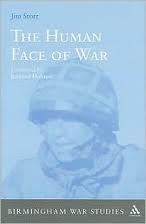
The Human Face of War, by Jim Storr, in paperback

Tuesday, February 14th, 2012

[by J. Scott Shipman]

The Human Face of War, by Jim Storr

This extraordinary book is now available in paperback for considerably less than the original $100 price tag.

This book has been reviewed twice at zenpundit:

Zen wrote the first review here.

I followed up with a dust-off of a long review written just after reading, find that here.

This is a very important book and strongly recommended.

ADDENDUM:

Zen here – I am intruding on Scott’s post to add my strong endorsement. If you are serious about strategy, particularly if you are a member of the armed forces with responsibility for operational planning or unit leadership,  The Human Face of War by Colonel Storr is on the short list of must-read books. It no longer costs a zillion dollars, so go buy it.

The Human Face of War, a second review

Wednesday, November 16th, 2011

[by J. Scott Shipman]

images-1.jpeg

The Human Face of War by Jim Storr 

[Zen reviewed this book earlier here. I had forgotten that I wrote a rather long review at Amazon after finishing in January 2010. Perhaps Storr will gain a wider audience as a result.]

Mr. Storr’s The Human Face of War will be I predict, a book studied by military professionals (and smart policy makers) for years to come. Using straightforward prose, Mr. Storr seeks to provide a philosophical approach to war—as he says, “In practice we are concerned so much with war as with waging it.” Storr goes on to differentiate between war and warfare; where war is an “issue” with history and warfare dedicated to methods/methodology. Storr rejects notion that war is art or science, and prefers instead to embrace pragmatism and limited empiricism. He points out correctly: “Pragmatism has obvious application to warfare. A significant aspect of warfare is `a process of trial and error; seeing what wins and exploiting it.” Storr continues that “empiricism is not just trial and error: it is a logical process based on structuring observed facts.” What “works” will suggest a way ahead. 

Storr uses broad themes of what has worked and what has not worked in military history by explaining the nature of combat and tools and models available to the practitioner. He uses Clausewitz’s “dialectic of aims and means” in conjunction with Systems Theory to describe the holistic nature of military units; where effective/efficient output is dependent on input—where a good outcome is “winning” (as Storr repeatedly observes throughout the book, armies aren’t paid to come in second). Hence, organization of military units is fundamental; efficient/effective organizations are more likely to succeed. He observes: “Cohesion and collective performance indicate the whole is greater than the sum of the parts. There is a systemic effect, and we should see armed forces as systems.” 

Storr is a proponent of forcing decision making to the folks on the ground using brief and succinct communications. His chapter on Commanding the Battle is excellent. Storr advocates lean command staff’s and dispersed decision making. “We should employ the best brains in small groups, rather than try to assemble a collective brain.” He points out that “when staff numbers are reduced, the effectiveness of HQ improves.” “Reducing staff numbers would increase speed with which they could get things done.” [Amazingly, Storr quotes a work from 1998 that reports a typical Western division commander has 600 people supporting!—and that number has, I’m sure increased in 10 years.] He concludes this excellent chapter making a distinction between technology and the human factor: “…the future is not digital: it’s human. What is needed is things that bind talents together as a team, not more bandwidth…given time, resources, open minds and not much money we could revolutionize land tactical command. The key problems are human, cultural and institutional.” 

Storr asserts that successful modern commanders are most likely intuitive thinkers and possess the ability to learn from experience. He suggests further the “tendency to learn is more critical. It implies a tendency to reflect on experience and to learn from it, to maximize the benefit of the experience.” This tendency is key to the development of “skills”. He encourages a “permissive man-management regime that allows those who can learn rapidly from their experience to do so.” At the opposite end, Storr makes clear the unsuitability of many leaders who use bullying tactics and fear to motivate. 

Storr concludes by observing that “institutional conservatism” inhibits armed forces from improving significantly during times of peace; that “the current size and shape of Western armies reflect issues that are not primarily related to warfighting effectiveness.” He insists that doctrine should be explicit, relevant,(descriptive and where appropriate, prescriptive), coherent, and practical. The short tours common in western armies harm team integrity—which is “huge”. Innovation is vital, and in many cases military members aren’t with a unit long enough to have the experience necessary to truly innovate. Storr advocates “experience is the best way to achieve practical coordination and overcome the fog of war, as long as the experience gained is positive.” He discourages the common use of lieutenant-colonels in jobs where a captain or major could function/thrive/learn; as these junior officers will have less experience when they are promoted and will have probably developed the habit of “referring decisions upwards, and hence develop little initiative.” 

According the Storr, the “human” aspect of war should take prevalence over technology. He acknowledges the utility of technology, but asks the reader to “…pause and look for a moment at the Vietnam War, which suggests that superior technology is not always the deciding factor.” [9-11 is illustrative of this point on the “terror” side; determination and box cutters wreaked havoc.] 

My review does not do justice to the wealth of information, insight, and counsel in Storr’s book and I quote him frequently because his style is better than a summary. This book was aimed at a narrow audience, hence the high price. When I began, I was concerned about Storr’ opinions concerning John Boyd’s OODA loop; but in late 2009 I rejected Boyd’s deterministic underpinnings of OODA—Storr’s pragmatic and partial empiricism makes more sense. OODA remains, in my humble opinion, a valuable and versatile methodology in both the military/law enforcement and business arenas. 

This book is highly recommended; particularly for junior officers and NCO’s—the price is high, but what you will gain will be worth the cost.

UPDATE 11.17.2011: Jim Storr contacted me and confirmed the issue of a paperback for about $40.

On War as an Unfinished Symphony

Thursday, November 3rd, 2011

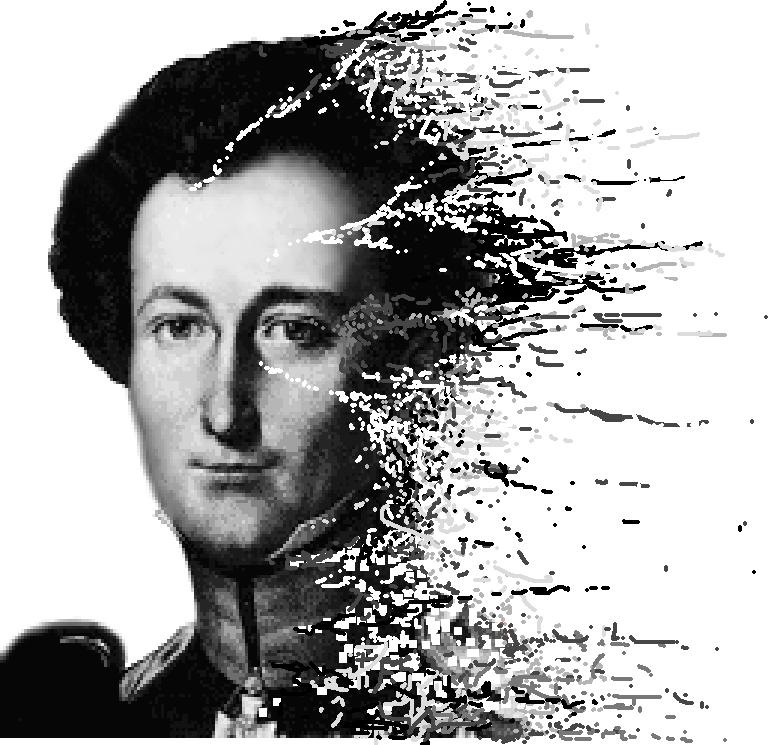
cvcforming.jpg

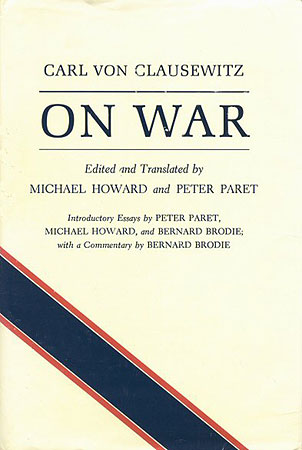
On War by Carl von Clausewitz has been the most influential book on strategy and war of all time.

We can say this because On War is the standard by which all other works of strategy are measured and only a few compared – notably Sun Tzu’s Art of War and The Peloponnesian War by Thucydides. The odd thing is that we can say this despite the fact that On War is more frequently shelved, cited or understood secondhand rather than read, even by military professionals. And furthermore, within the narrow demographic that reads Clausewitz seriously and critically, there can be heated dispute over what he meant, due to the difficulty of the text. Then there are the secondary effects, historical and military, of Clausewitz having been misunderstood, forgotten, ignored or at times, his strategic philosphy consciously rejected.

The shadow cast by On War is all the more remarkable given it’s circumstances of publication. Clausewitz died in 1831, at fifty-one, of cholera, having finally risen to a military post his talents merited. He had been writing On War since 1816 and it was far from completed or refined to his satisfaction and it is highly unlikely, in my view, that Clausewitz would have consented to it’s publication in the condition in which he left it. His determined and intellectually formidible widow, Marie von Clausewitz, further shaped the manuscript of On War, guided by her intimate knowledge of her husband’s ideas and was likely the best editor Clausewitz could have posthumously had.


Nevertheless, to my mind On War remains a magnificent unfinished symphony.

What would On War have looked like if Clausewitz had lived another twenty-five or thirty some years? Assuming continued good health, Clausewitz would have seen, perhaps commanded in, the First Schleswig War and at least studied the Crimean War from afar. He would have had another quarter-century of reading and mature reflection on his subject. Clausewitz, who had a keen understanding of history, would have also witnessed the grand European upheaval of liberal revolution in 1848 that rocked the Hohenzollern monarchy to it’s core. What new insights might Clausewitz have gleaned or expanded upon? Would his later chapters On War have evolved to equal the first?

Having outlived Marie (who died in 1836), would Clausewitz have become a deeply changed man?

What I find it difficult to believe is that Clausewitz, with his creatively driven and philosophically exacting mind,  would have been content to let the manuscript of On War rest where it stood in 1831. Or that we read today what Carl von Clausewitz ultimately intended.


Switch to our mobile site