zenpundit.com » poetry

Archive for the ‘poetry’ Category

Should trees, parks, rivers, whales, corporations have standing?

Thursday, July 14th, 2016

[ by Charles Cameron — and what about straw men & sovereign citizens? ]
.
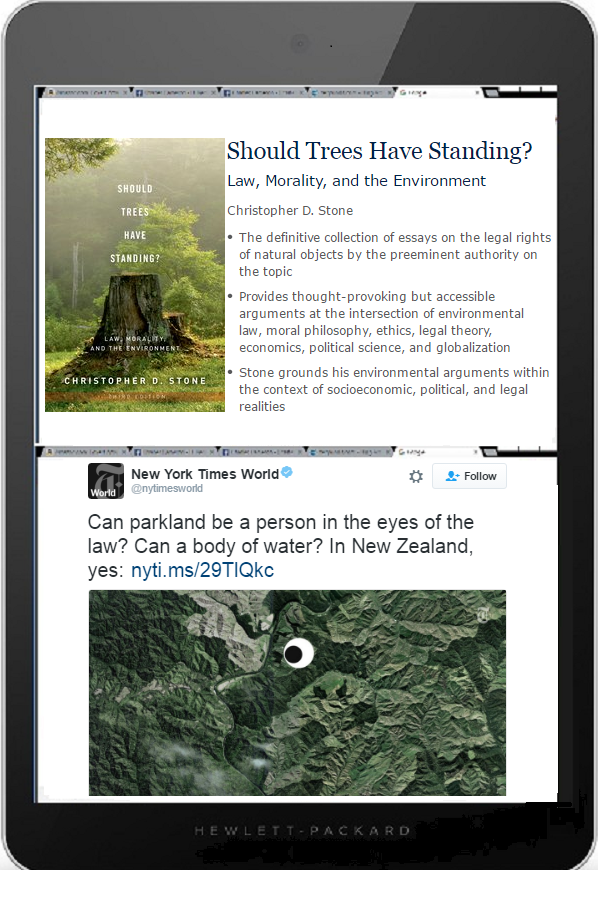
Tablet DQ Trees standing

**

I have long appreciated Mr Justice Douglas‘ dissent in Sierra Club v. Morton, 405 U.S. 727 (1972), and Christopher Stone‘s comment on the same, Should Trees Have Standing? — presented along with other essays in Stone’s book of the same name [upper panel, above].

That takes care of the trees in my title. Parks and rivers are covered by the New York Times piece today, In New Zealand, Lands and Rivers Can Be People (Legally Speaking).

Whales and apes get added to our list, as you can see, in Brighter Green‘s Nature’s Rights: Rivers, Trees, Whales, and Apes — which mentions that under Ecuador’s constitution enshrining the legal rights of nature as a whole::

Ecuador stepped to the forefront of the nature’s rights movement when it became the first country to include the rights of Mother Earth (Pachamama) in its constitution, which was ratified in 2008. The document states, “Nature or Pachamama, where life is reproduced and exists, has the right to exist, persist, maintain, and regenerate its vital cycles, structure, functions, and its processes in evolution.” Nature is a “rights-bearing entity that should be treated with parity under the law.” Citizens are given the power to sue on behalf of nature, now a legal entity

**

And corporations?

The irony here, of course, is that those who would like to see Nature get a word in edgewise in the courts as a legal Person, tend to be unhappy with corporations having the same rights as chimpanzees. Eric Posner in Slate, Stop Fussing Over Personhood, catches the irony nicely:

From a legal standpoint, there is nothing remarkable about a chimpanzee claiming to be a person. Indeed, there are a number of cases that have been brought by animals—including a palila, a marbled murrelet, and a spotted owl. All of these animals sought to enforce their rights under the Endangered Species Act, under a provision that gives “persons” the right to bring suit.

In none of these cases was a judge fooled into thinking that an animal possesses all the rights of human beings. The lawyers bringing them were simply ensuring that a judicial remedy was available to address the harm that Congress sought to fix. If the spotted owl had also asked for the right to vote, the request would have been denied. A judge wouldn’t give a hoot that an earlier court had deemed the owl a “person” under the Endangered Species Act. A person for one legal purpose is not necessarily a person for another.

The law also treats various nonhuman, nonsentient entities as “persons” for certain legal purposes. Corporations, estates, trusts, partnerships, and government entities are often defined this way. Walmart, Illinois, and the California Pension Fund can sue, for example, without anyone asking if they have a right to abortion.

The classic case here is the famous and infamous Citizens United v. Federal Election Commission, No. 08-205, 558 U.S. 310 (2010).

**

I’d be remiss if I didn’t mention here also the curious notions of personhood invoked by members of the Sovereign Citizens movement. From JM Berger‘s recent report, Without Prejudice: What Sovereign Citizens Believe:

Fictitious Person

Because the UCC provides an interstate standard for things such as driver’s licenses, property ownership, and bank accounts, many sovereigns believe that these documents (and associated laws and financial obligations) do not apply to them, but instead to a fictitious person created by the illegitimate law, sometimes referred to as a “straw man.” Some believe a fictitious person is denoted in legal documents by listing his or her name in all capital letters. The fictitious person is a legal entity akin to a company with the same name as the citizen, sovereigns believe.

Some sovereigns create their own driver’s licenses and license plates because they believe the state-issued documents are inauthentic, as they refer to the fictitious person, and that using or signing these documents exposes them to vulnerabilities under the illegitimate and tyrannical commercial laws, including debt collection, arrest, and prosecution.

The correct use of certain phrases or legal citations can reduce or eliminate these vulnerabilities, however. For instance, some believe that documents used by the illegitimate system, such as contracts or court documents, can be signed safely if the citizen appends the phrase “Without Prejudice UCC 1-308” to the signature, which they believe preserves the sovereign citizen’s common law rights and privileges.

**

Let’s return to sanity.

The final word in Sierra Club vs Morton is given to Mr Justice Douglas: in a footnote, he cites John Donne, poet — and thus according to Shelley, one of the “unacknowledged legislators of the world”:

“No man is an Iland, intire of itselfe; every man is a peece of the Continent, a part of the maine; if a Clod bee washed away by the Sea, Europe is the lesse, as well as if a Promontorie were, as well as if a Mannor of thy friends or of thine owne were; any man’s death diminishes me, because I am involved in Mankinde; And therefore never send to know for whom the bell tolls; it tolls for thee.”

Devotions XVII.

And by way of comparison, here’s a Maori expression of the same sense of extended personhood, in context from the NYT article I cited above:

A former national park has been granted personhood, and a river system is expected to receive the same soon.

The unusual designations, something like the legal status that corporations possess, came out of agreements between New Zealand’s government and Maori groups. The two sides have argued for years over guardianship of the country’s natural features.

Chris Finlayson, New Zealand’s attorney general, said the issue was resolved by taking the Maori mind-set into account. “In their worldview, ‘I am the river and the river is me,’” he said. “Their geographic region is part and parcel of who they are.”
Recommended Reading—Summer 2016

Monday, July 11th, 2016

[by J. Scott Shipman]

Storm of Creativity2017

wright-brothers-biographyserendipities

Paradisejssundertow

white horsewashington


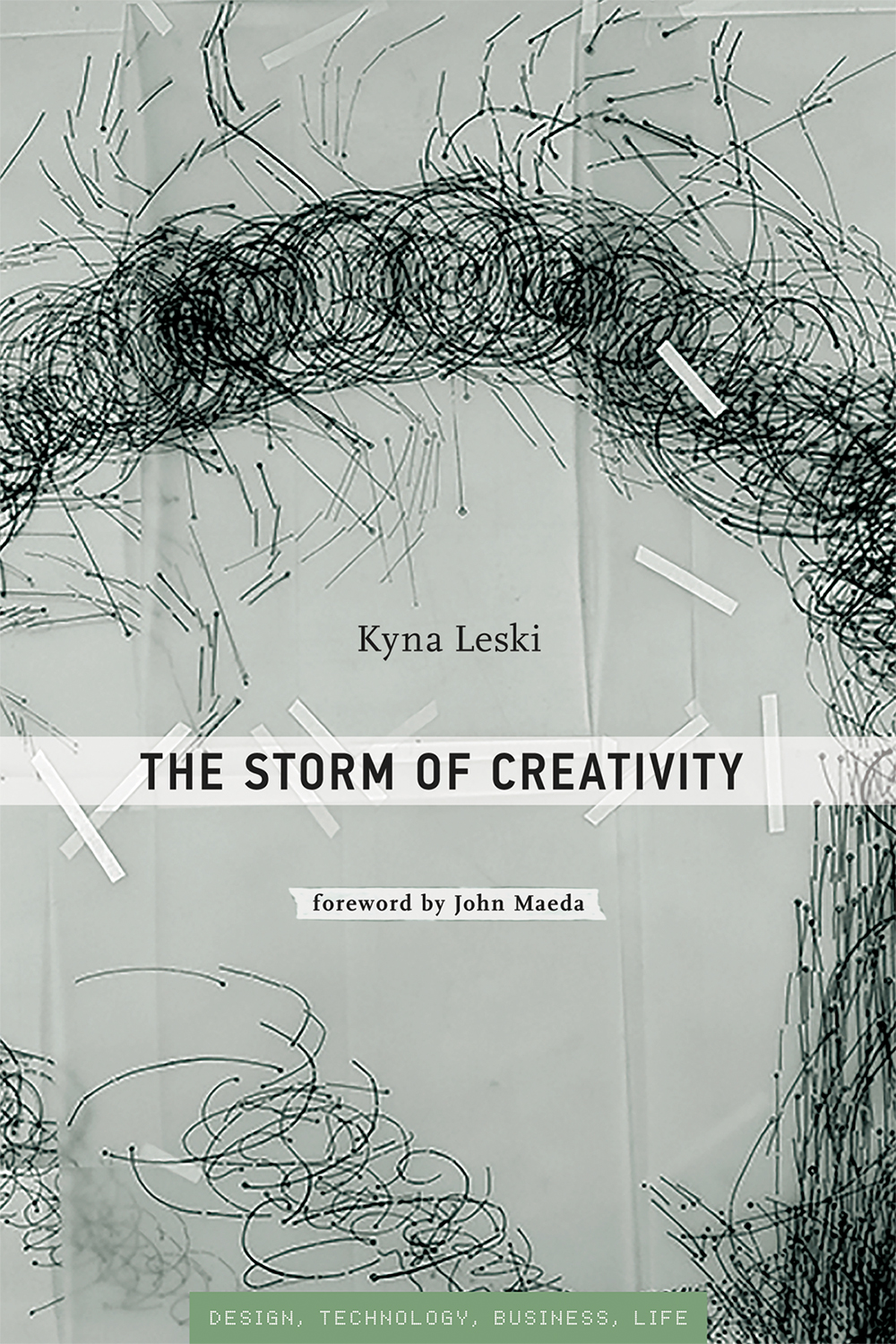
The Storm of Creativity, by Kyna Leski

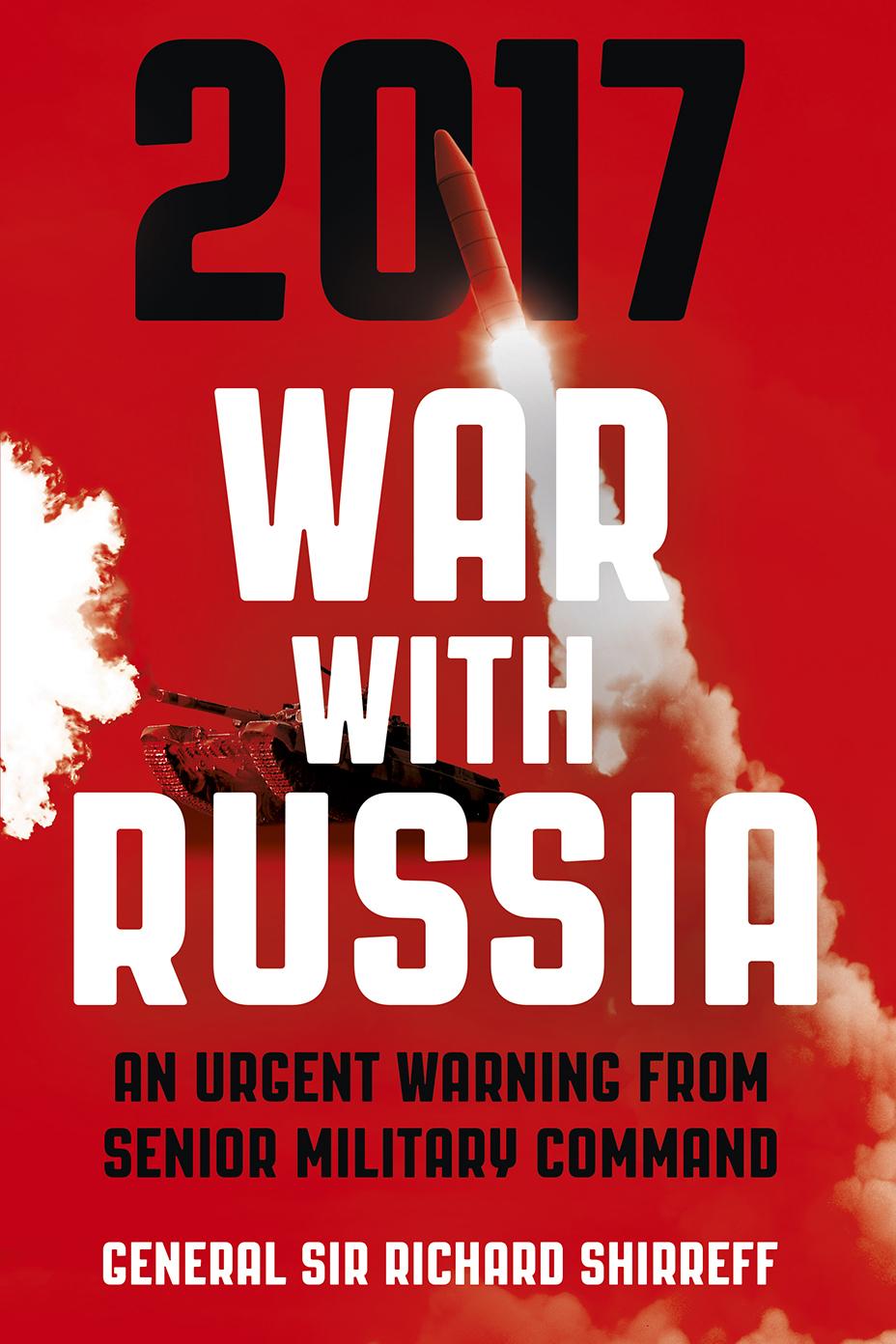
2017 War With Russia, by General Sir Richard Shirreff

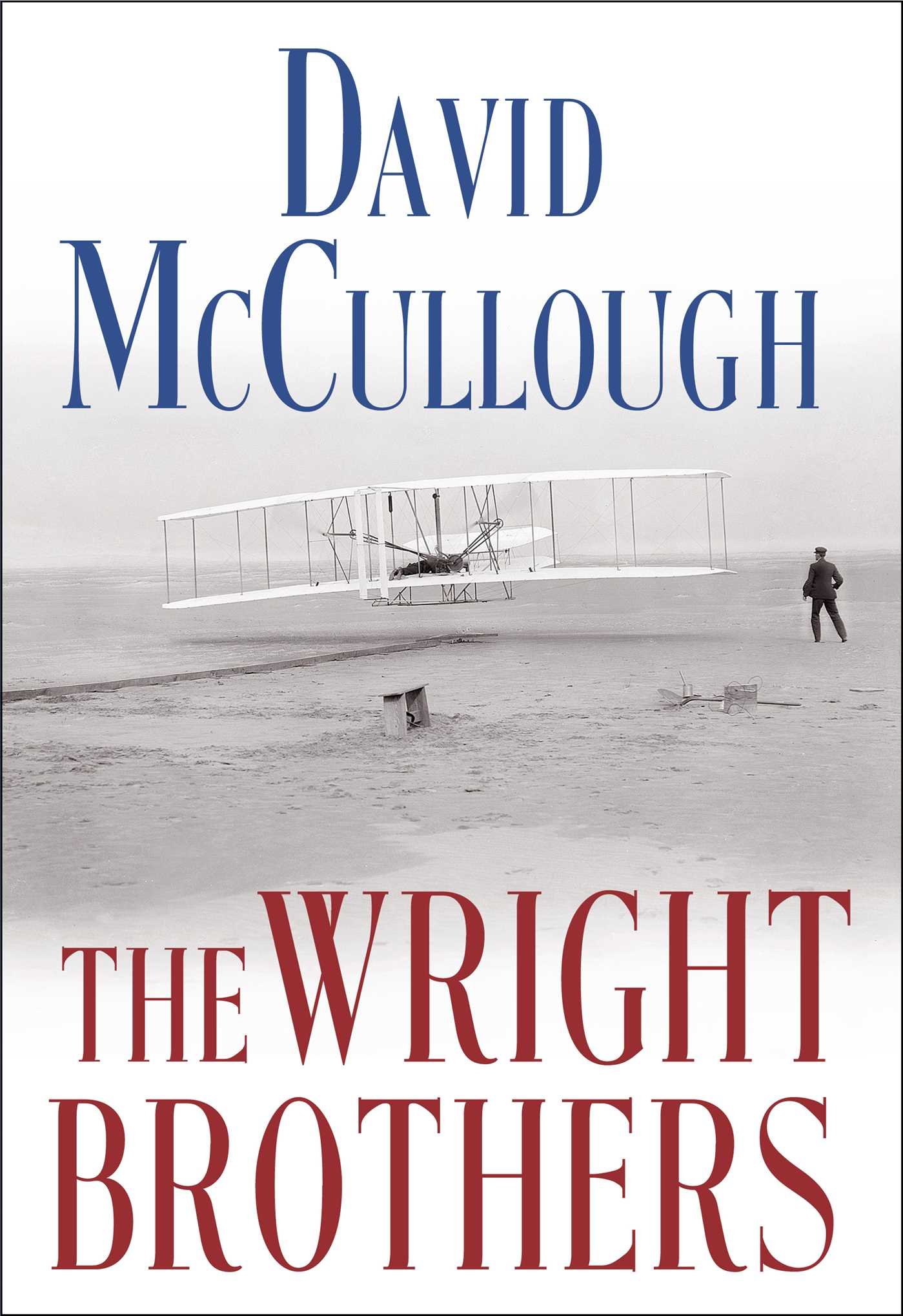
The Wright Brothers, by David McCullough

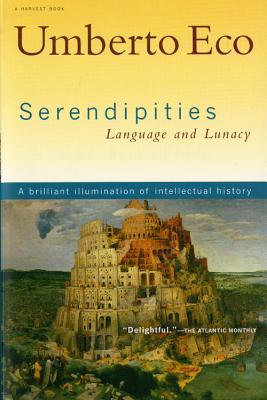
Serendipities, Language and Lunacy, by Umberto Eco

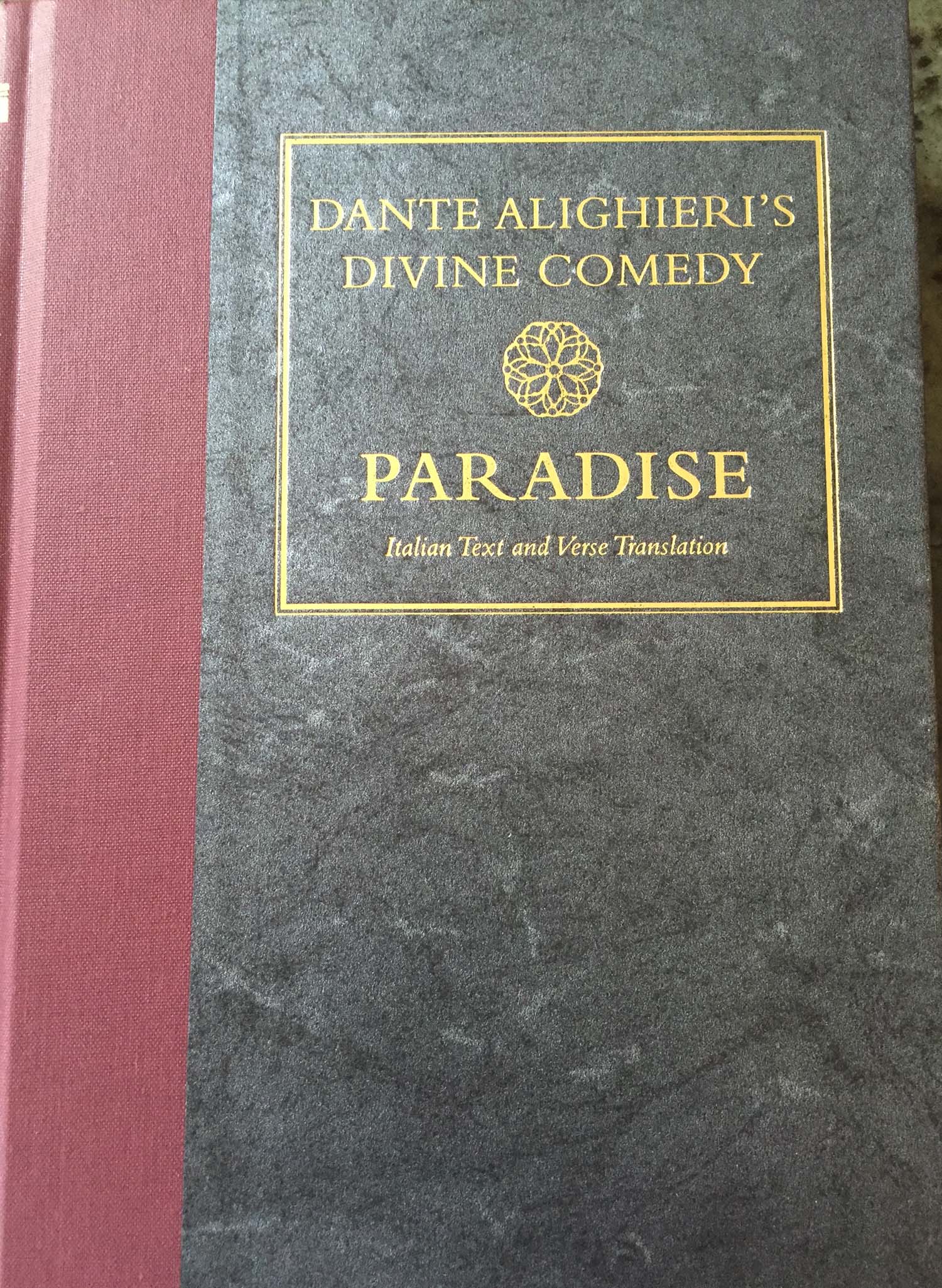
Paradise, Dante Alighieri, translated by Mark Musa

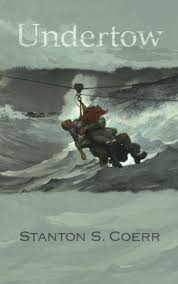
Undertow, by Stanton S. Coerr

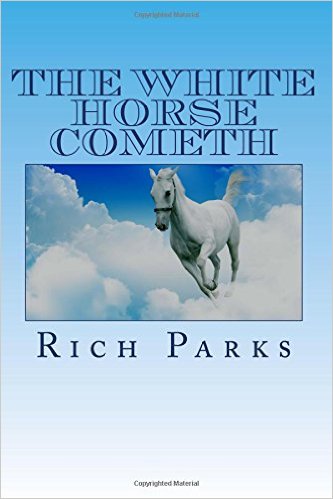
The White Horse Cometh, by Rich Parks

Washington The Indispensable Man, by John Thomas Flexner

This list starts the first week of May, so perhaps the title should be Spring/Summer. Most of these books are quick reads and all are recommended.

I picked up Ms. Leski’s book at an MIT bookshop on a business trip in early May and read on the train ride home. Books on creativity are ubiquitous, but Ms. Leski takes an interesting approach by describing the creative process using the metaphor of a storm. Several ZP readers will find of interest.

2017 was recommended by a friend. The author was the Deputy Supreme Allied Commander Europe and the book focuses on a Europe/NATO response to a Russian invasion of the Baltics. Written in a Tom Clancy-like style, the plot is fast-paced even though the good general provides sometimes provides detailed insights into the inner workings of NATA and the North Atlantic Council (this is one of the values of the book—bureaucracy writ-large).

David McCullough’s Wright Brothers delivers an approachable and human accounting of the first men of powered flight. Some reviews on Amazon complain McCullough lifts and uses too many quotes to tell the story. At times the quotes were distracting, but not enough to prevent the enjoyment of the story of two brothers who changed the world. This book was a gift otherwise I probably would not have read.

Serendipities is a short book, but was a long read for me. Eco explains how language and the pursuit of the perfect language has confounded thinkers since time immemorial. He refers to Marco Polo’s unicorn (also used in his Kant and the Platypus which is excellent) explaining how language is often twisted to meet a preconceived notion or idea. The first couple of chapters were quite good, chapters three and four did not hold my interest or were over my head. The closing chapter was good enough to convince me I’ll need to read this little book again. (My Eco anti-library has been growing of late.)

Eco’s book led me to reread Musa’s excellent translation of Paradise. My son gave me the deluxe edition with parallel Italian and English, plus commentary. Eco referenced Canto 26 and 27, and I enjoyed the break so much I read the whole thing!

Undertow is my good friend Stan Coerr’s second book of poetry.  His first book Rubicon was a moving collection of poetry of men at war. Undertow deals more with the heart and is quite good, too. You won’t be disappointed.

White Horse is also a book by an old friend, Rich Parks (we’ve known each other since the mid-80’s). White Horse is self-published and in places it shows, but the overall story is quite good for a first book (I’ve already told him his book would make an excellent screenplay.). The plot is quick and entertaining even if a bit unbelievable, but the story is fiction. Rich is following up with a sequel in August in 2016 and I’ll be reading it, too.

Mr. Flexner’s Washington was a gift, too. In this quick biography Washington is made approachable and human. And when I say “quick,” I mean quick…Trenton and Princeton took one chapter compared to David Hackett Fischer’s Washington’s Crossing which took up a standalone book. If someone were looking for a first Washington biography, this would be a good place to start.

This isn’t the conclusion of my summer reading, but a pretty good start.What are  you reading this summer?

About those angels hiding in the wings & winds

Saturday, July 9th, 2016

[ by Charles Cameron — John Donne, Kepler, and the transition from natural philosophy to science — & beyond ]
.

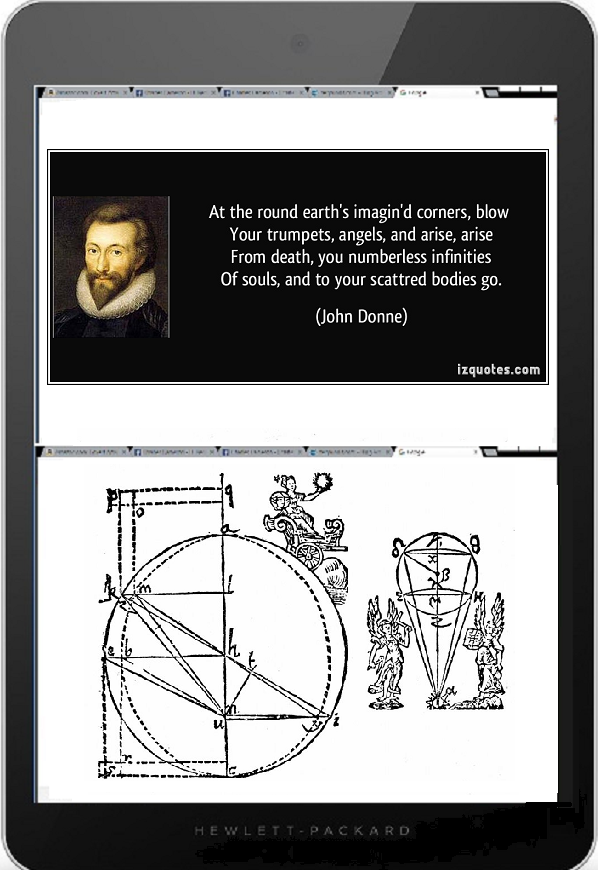
Here’s a DoubleQuote for you:

Donne Keppler DQ

This isn’t futuristic strategy, but it is futures thinking.

There was an extraordinary transition that took place when natural philosophy morphed into science, and while I’ve quoted John Donne’s four amazing words “round earth’s imagin’d corners” [upper panel, above] often enough as illustrating both worldviews as though seen through a conceptual equivalent of binocular vision, it was only recently via 3QD that I came across Kepler’s illustration of the elliptical orbit of Mars with its remarkable combination of angels and geometrical precision.

I would argue that we are at the beginning of another such trasformation, in which the “horizontal” imaginative (imaginal, image-making, magical), intuitive (irrational), creative (leaping, analogical, cross-disciplinary) mode of perception will again be integrated in some new and transformative manner with the “vertical” linear, numeric-verbal, logical (rational) mode that at present so fascinates our culture — the conscious mode of thinking through with the unconscious mode of revelatory insight.

If it is indeed the case — as suggested by the failure of Aristotelian either-or logic to support the niceties of the world seen from a quantum mechanical perspective — that we are entering a transition to a stereoscopic worldview that finally harmonizes the sciences with the arts and humanities, then a clear understanding of the earlier transition represented above in the two panels, one from Donne’s poems, one from Kepler’s treatise, will be an invaluable guide to what lies ahead.

**

Sources:

  • John Donne, At the round earth’s imagin’d corners
  • James Blachowicz, There Is No Scientific Method
  • **

    Edited to add:

    For an in-depth account of salient aspects of that first transformation, see Ioan Couliano‘s great book Eros and Magic in the Renaissance.

    Sunday surprise the third & last — BlakeQuake

    Monday, July 4th, 2016

    [ by Charles Cameron — Blake, Britain, and Blake again — among the angels ]
    .

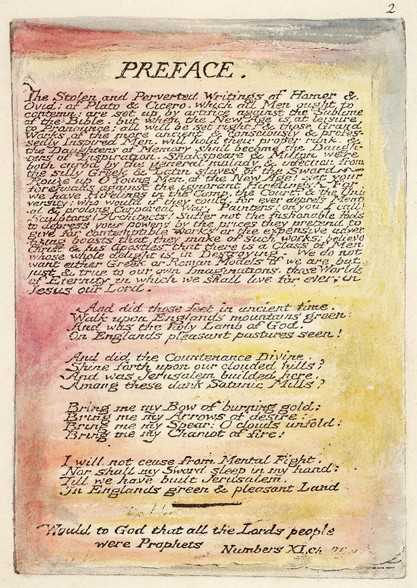
    The irrepressible William Blake can’t keep himself from coloring outside the words:

    Milton a Poem Huntington Library

    **

    Okay, here’s the poem as poem — a very curious poem celebrating “arrows of desire” to have made its way into the hymnary of England, its royalty, and the Proms:

    And did those feet in ancient time.
    Walk upon Englands mountains green:
    And was the holy Lamb of God,
    On Englands pleasant pastures seen!

    And did the Countenance Divine,
    Shine forth upon our clouded hills?
    And was Jerusalem builded here,
    Among these dark Satanic Mills?

    Bring me my Bow of burning gold;
    Bring me my Arrows of desire:
    Bring me my Spear: O clouds unfold!
    Bring me my Chariot of fire!

    I will not cease from Mental Fight,
    Nor shall my Sword sleep in my hand:
    Till we have built Jerusalem,
    In Englands green & pleasant Land

    **

    I posted the patriotic hymn-version of Blake’s Jerusalem earlier today in It’s not one pole of polarization that’s the problem, as part of a comment on Brexit, very very British.

    Happily the United States — whose birthday is tomorrow — didn’t exactly lose ye olde English tradition, as is readily apparent in this rendition — this one by the West Point Cadet Glee Club:

    **

    Oops, but England, my England — see what has become of it!

    Like every generation since Ahab begat Behab right in the beginning, I fear for our young, even those now middle-aged, I fear for their young.. I fear for the future so fast spiraling out of our past.

    **

    Blake himself had a high esteem of his work and purpose. He wrote:

    I am more famed in Heaven for my works than I could well conceive. In my Brain are studies & Chambers filled with books & pictures of old, which I wrote & painted in ages of Eternity before my mortal life; & those works are the delight & Study of Archangels.

    And he could paint the archangels’ likenesses by memory, too, with angelic felicity:

    **

    A tip-of-the-hat here to David Auerbach.

    And a shout-out to Michael Horovitz, who published my first poems in book form in his richly Blake-influenced 1969 Penguin anthology, Children of Albion.

    Sunday surprise the second — the Laws of Nature and Nature’s God

    Sunday, July 3rd, 2016

    [ by Charles Cameron — wishing you all blessings on the Fourth ]
    .

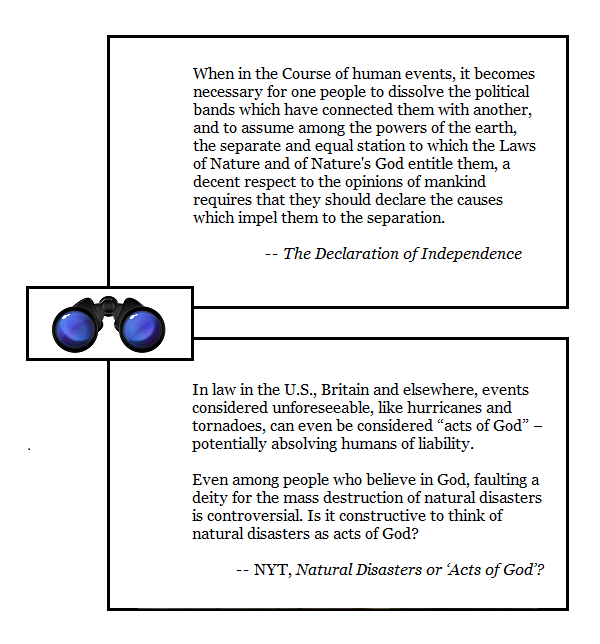
    My eye was caught today by yet another disaster — which in turn reminded me of tomorrow, the Fourth of July. It’s just one example among many:

    — but it brings up again the question of whether we think in terms of “acts of God” or “laws of Nature” or — somehow — both. And that’s where thw roding of the Constitution comes in, with the phrase “the Laws of Nature and of Nature’s God”:

    Nature and Nature's God DQ

    **

    If I used that phrasing — “the Laws of Nature and of Nature’s God” — today, I might well be attempting to please or at least placate readers who variously:

  • believe in a God separate from and superior to Nature, and author of Nature’s laws
  • believe in a God essentially indistinguishable from Nature, wholly immanent, &
  • disbelieve in any kind of God, but recognize Nature as a catchall term for the Whole System.
  • I don’t suppose that would necessarily be the case in 1776, though, and wonder whether the phrase should be read as:

    the Laws — of Nature and of Nature’s God

    or:

    the Laws of Nature — and of Nature’s God

    and if the second, whether the and marks a distinction between Nature and nature’s God, or also covers the possibility of their being one and the same.

    And once we’ve cleared that up, and bearing in mind that John Donne could write “At the round earth’s imagin’d corners” — thus conflating the old, imaginative, square earth with the new, scientific, spherical one — how feasible do you think it is to hold simultaneously the idea that a given earthquake, hurricane, tsunami or volcanic eruption is an act of God and a natural disaster?

    A worldview paradox?

    **
    Sources:

  • July 4, 1776, The unanimous Declaration of the thirteen united States of America
  • November 18, 2013, Room for Debate: Natural Disasters or ‘Acts of God’?

  • Switch to our mobile site