zenpundit.com » Islam

Archive for the ‘Islam’ Category

The issue of women as sex-slaves in current news

Thursday, August 4th, 2016

[ by Charles Cameron — why grokking is an important quality in analysts and diplomats, policy-makers and journos ]
.

Update on the long-running diplomatic snafu between S Korea and Japan:

Welsh imam explains why sex slavery is okay:

**

And here we are in 2016 CE.

I keep, keep, keep saying this: whether we’re dealing with Japan in WWII or ISIS today, we need to understand that worldviews differ, that the differences matter — and that knowing that intellectually is not enough, we need to be able to know it in the holistic, visceral-to-intellectual way Heinlein’s character Valentine Michael Smith in Stranger in a Strange Land called “grokking“.

Dabiq issue 15, specific notes part 1, Crucifixion

Wednesday, August 3rd, 2016

[ by Charles Cameron — first of two parts of an essay on Dabiq‘s attack on Christian doctrines ]
.

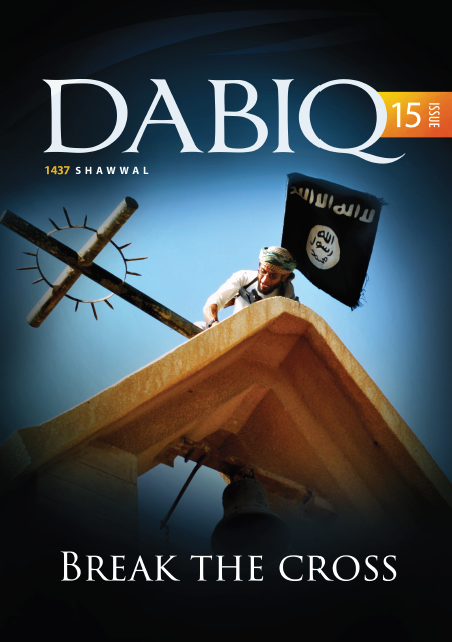
dabiq 15 cover

**

I have written a two part essay examining the latest issue of ISIS’ Dabiq magazine, which is essentially an attack on Christianity and invitation ot Islam.

The first part, dealing mostly with the Crucifixion, is now out at LapidoMedia under the title ‘Breaking the cross’: Pathetic ISIS ‘theologians’ get wires crossed. Here’s the opening:

Misapprehension of Christian doctrine once again provides the excuse for Islamic State war-mongering.

The latest issue of its propaganda magazine Dabiq focuses on the crucifixion of Jesus and the Trinity, although Judaism, secularism, atheism, and feminism also get a drubbing.

The issue invites Christians in particular, and other non-Muslims in general, to abandon their beliefs and adopt Islam – an invitation accompanied by violent threats against those who refuse.

The introduction exults in recent attacks in Orlando, Nice, Germany and Normandy, adding: ‘[W]e take this occasion of multiple massacres inflicted upon their citizens and interests to call them once again to the religion of pure monotheism, truth, mercy, justice, and the sword. ‘

As in previous issues of Dabiq, the magazine opens with the declaration of the group’s founder, Abu Mus’ab az-Zarqawi, that the jihad will not end ‘until it burns the Crusader armies in Dabiq’ – a reference to the site of the great end-times battle in an otherwise obscure apocalyptic hadith [alleged saying of Muhammad].

The back cover of the magazine closes with another hadith. ‘By the One in whose Hand is my soul, very soon shall the Son of Maryam descend in your midst, being an equitable judge. He shall break the cross, kill the swine, and put aside the jizyah.’

Please click through to read the rest on the LapidoMedia site.

The second part of my essay will be posted at Lapido shortly — likely on Friday — and mainly deals with the ISIS magazine’s attack on the Christian doctrine of the Trinity viewed as a denial of God’s unity (Tawhid).

I’ll post an announcement here when it comes out.

**

Also of note, from Tim Furnish:

Tim Furnish is quoted discussing Dabiq 15 in a WND piece, ISIS: Christians are pagan ‘cross worshippers’. If he writes anything on MahdiWatch or elsewhere on the topic, Ill let you know.

Meanwhile, Tim’s tweet gives the short version:

Happiness in the proximity of faith and death

Monday, August 1st, 2016

[ by Charles Cameron — the emotional impact of faith, from a nun present at the Normandy attack to a failed suicide bomber in Syria ]
.

According to this IB Times article, Tragic last words of Catholic priest killed by Isis terrorists revealed, Sister Helene Decaux, one of the nuns who was present at the killing of Fr Jacques Hamel, reported his last words thus:

Jacques shouted at them, ‘Stop! What are you doing?’ It was then that one of them struck the first blow to his throat.

What caught my attention more forcefully, however, was the following:

Fearing for her life, she added: “Thinking I was going to die, I offered my life to God.” The nun then described how Petitjean and Kermiche had at first been aggressive, but quietened down after they had cut Jacques’ throat. Showing remarkable calm, Helene asked the two terrorists if she could sit down. “I asked for my cane, he gave it to me,” she said. One of the attackers asked: “Are you afraid to die?” To which the nun replied no. “I believe in God, and I know I will be happy,” Helene said. Sister Huguette Peron, who was also in the church, told Catholic newspaper La Vie: “I got a smile from the second (man). Not a smile of triumph, but a soft smile, that of someone who is happy.”

Not only is Sister Helene happy in the face of death because she believes in death, but Sister Huguette reports that one of the attackers gave her a smile, “Not a smile of triumph, but a soft smile, that of someone who is happy.”

**

Compare those two descriptions of people who are happy with this, from Murtaza Hussain‘s Intercept piece, New Documentary Pierces the Psychology of Modern Suicide Bombers:

In a scene from Norwegian journalist Paul Refsdal’s new documentary Dugma: The Button, Abu Qaswara, a would-be suicide bomber, describes the sense of exhilaration he felt during an aborted suicide attack against a Syrian army checkpoint. “These were the happiest [moments] I’ve had in 32 years. If anyone had felt exactly what I felt at that moment, Muslims would want to go through the same feeling and non-Muslims would convert just to experience it,” he enthuses to the camera, visibly elated by his attempted self-immolation.

Abu Qaswara’s attack failed after his vehicle was blocked by obstacles on the road placed by the Syrian military. But speaking shortly after he returned from his mission, it was clear that his brush with death had filled him with euphoria. “It was a feeling more than you can imagine,” he says. “Something I cannot describe, it cannot be described.”

My primary purpose in recording these instances of happiness is to emphasize how strongly religious faith exerts what to the modern secular mind must be an unexpected and perhaps even unimaginable emotional impact on those who possess it. And even if the Normandy attacker’s ‘soft smile” had more to do with a blood lust slaked, the same cannot be said either for Sister Helene or for Abu Qaswara.

If we are to understand the motivations of suicide bombers and other jihadists, comprehending not just intellectually but viscerally the emotions involved will be a task of some importance — and one for which many of our analysts will not be prepared.

**

There’s a second point to be made, however. Hussain goes on to write:

Only the few Syrians who appear in the film speak at length about their grievances over the crimes of the Syrian government. In contrast, the foreign volunteers appear largely driven by personal motivations. Liberating the local people from oppression appears at best a secondary concern. Perishing in the conflict and reaping the existential rewards of such an end takes precedence. Both Abu Qaswara and Abu Basir gave up comfortable lives to come to Syria, knowing that certain death would be the outcome of that decision. But rather than deterring them, the prospect of a rewarding death was a primary factor motivating their decision to fight.

That para sets the scene for the following one, in which Mustafa Hamid, as reported in his book with Leah Farrall, notes how contrary this motivation is to the practical pursuit of victory:

This impulse toward self-destruction is actually seen as selfish by some fellow insurgents. In his co-authored 2014 memoir The Arabs at War in Afghanistan, Mustafa Hamid, a former high-ranking Egyptian volunteer with the Afghan mujahideen in the 1980s, described his own frustration with many of the later waves of volunteers arriving to that conflict. “One of the negatives that emerged from the jihad, and which continues to have severe consequences today, was the tendency for the youth to focus not on success and achieving victory and liberating Afghanistan, but on their desire for martyrdom and to enter paradise,” Hamid wrote. This overriding preoccupation with becoming a martyr meant that participation in the conflict, “became individual instead of for the benefit of the group or the country where the fight for liberation is taking place.”

That’s one of the more striking of Hamid’s observations in The Arabs at War in Afghanistan — itself an astonishing book, product of the collaboration between Hamid (aka Abu Walid al-Masri) the man who brought bin Laden‘s oath of allegiance to Mullah Omar, and Farrall, a respected scholar-analyst who was the Australian Federal Police al-Qaida subject matter specialist at the time of the Bali bombings.

It is an extraordinary book, and one I cannot recommend too highly.
A trumpet voice above Trump’s

Monday, July 25th, 2016

[ by Charles Cameron — for those wishing for discourse above the political fray ]
.

Yesterday, Sunday, I was going to post a “Sunday surprise” about a voice that transcends that of Donald Trump — the voice of Alison Balsom, trumpeter extraordinaire. But my thread linking Balsom and Trump was a slender one — Trump and trumpet — and I thought better of it, and deleted my reliminary notes for that post.

Today, though, I read Humera Afridi‘s Dance of Ecstasy: Bridging the Secular, Sacred, and Profane, and found therein:

Amjad Sabri, an eminent Pakistani qawwal -— a Sufi devotional musician in the tradition of world-renowned Nusrat Fateh Ali Khan, and son of the famous singer Ghulam Fareed Sabri of the Sabri Brothers — had been shot dead in his car in Karachi ten days earlier by the Pakistani Taliban. He’d been praising the Prophet Muhammad (pbuh) and his noble family a little too much for the Taliban’s liking. And so they had their way with him. In a nation inured to violence, Sabri’s death, nevertheless, struck at the communal soul of Pakistan. ..

Thousands of Pakistanis came out on the streets, united in grief, to protest Sabri’s death. Sabri was a child of Pakistan’s own soil. He belonged to a venerable, centuries-old musical dynasty. His spiritual attunement and the muscular faculty of his voice transported people to ecstasy, raising mere mortals above the denseness of an earthly, mired existence, above differences of class and wealth into a celebration of the Divine. Sabri’s music was a glorification. And it belonged to a distinct tradition of South Asian music, a legacy irrefutably inherent in the DNA of Pakistan, twinned to the devotional practice of Islam and its syncretic cultural roots in the region. Invoking a transcendent joy, Sabri’s qawwali created a milieu of harmony—completely antithetical to the Taliban’s backward, beclouded ideology of hate which thrives on sowing seeds of discord.

**

It’s that second paragraph I’m interested in, because it says so exactly what I was trying to get at in my deleted post about Alison Balsom: that “mere mortals” can be lifted, lofted “above the denseness of an earthly, mired existence, above differences of class and wealth into a celebration of the Divine”.

Here’s a taste of Amjad Sabri, for those who appreciate the Sufi tradition and the haunting ecstasies of the Qawwals:

**

And here’s Balsom, whose trumpet voice likewise lifts us, for those with ears more attuned to the western classical tradition:

*

— and best of all, though I’ve posted it here before:

JJ MacNab on the Baton Rouge shooter

Tuesday, July 19th, 2016

[ by Charles Cameron — plus further readings on sovereign citizens & the Moorish Science Temple ]
.

JJ MacNab, author of The Seditionists: Inside the Explosive World of Anti-Government Extremism in America — note date of publication — has the basics on the quasi-religious sovereign citizen and Baton Rouge cop shooter, Gavin Long:

Here’s the text of MacNab’s Tweet-storm, collapsed for easier reading:

Yesterday, Louisiana law enforcement revealed that the Baton Rouge shooter, Gavin Long, had a Washitaw Nation card on him when he was killed. Judy Thomas of the Kansas City Star looked beyond the social media clues to find a Washitaw-related legal filing: Kansas City man identified as suspect in killings of three Baton Rouge police officers

A sovereign citizen is someone who mixes fabricated history, out of context laws, and miscellaneous quotes to prove he’s above all laws. Those who have been watching the #BundyRanch standoff and the #oregonstandoff have seen this “magical thinking” in action.

25+ years ago, this movement fell into the white supremacist / right-wing extremist categories. 20 years ago, the white supremacist side of the movement splintered off, leaving behind a right-wing extremist group. 15 years ago, a handful of left-wing extremist / black supremacist groups adopted many of the legal theories as their own.

Today, the sovereign movement falls into 3 general categories: the right wing patriots, the left wing Moors, and the left wing anarchists. Since the left-wing anarchist sovereigns aren’t a significant threat at this point, I’ll leave them out of the rest of this thread.

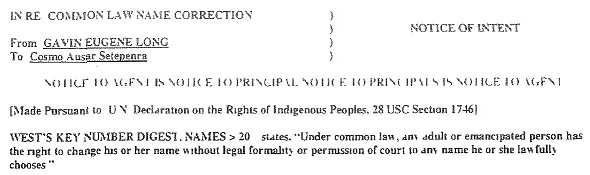
In 2015 Gavin Eugene Long aka Cosmo Setepenra filed a curious document with the Jackson County, Missouri recorder.

2

In this document, he corrected his “common law name” from Long to Setepenra.

3

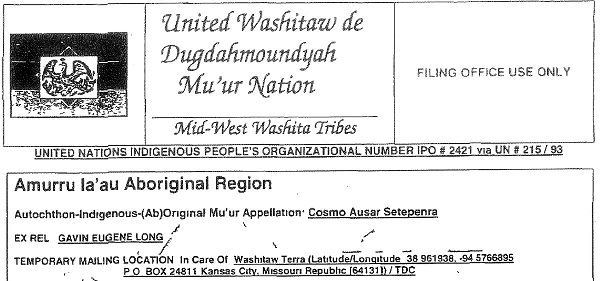
Note that his given name GAVIN EUGENE LONG is in all capital letters while his “corrected” name Cosmo Ausar Setepenra, is mixed case. In sovereign-speak, he is attempting to separate his flesh-and-blood self (Cosmo) from his corporate fiction self (GAVIN.) In the document, Long claims to be a member of a fictional Native American tribe: the Washitaw Nation.

4

This group has a theory that, when the North American continent separated from the African Continent, humans were split between them. They consider the slave ship stories of the early colonies to be a myth. Therefore, he is descended from an indigenous people who were in the U.S. before it became a country and is not subject to any our laws.

When gov agencies (police, IRS, courts) fail to recognize their faux indigenous status, they believe their inherent rights are violated. They simply lifted legal theories from the right-wing sovereigns – UCC codes, “reclamation,” admiralty law theories, “truth language.” The personalized those theories w/ a complex layer: Egyptian mythology and symbols, numerology, new age imagery, holistic healing, etc.

To see some of these beliefs, poke around this website a bit: http://www.stewartsynopsis.com/washitaw.htm 

Long left clues beyond filing his sovereign “reclamation” legal document and carrying a Washitaw Nation card (probably his ID card.) The number 7, for example, is sacred.

5

Gavin Long’s email address was TheCosmoWay7@gmail.com. The family name he chose for himself was Setepenra or Setep-en-ra (Chosen by Ra.) The shooter said that he used to be part of Nation of Islam. That is not inconsistent as there is some overlapping between movements.

When you start looking into this movement, you will find hundreds of website, hundreds of Youtube videos, and thousands of online comments. It’s a complex sub-culture so no tidy category boxes. Moorish sovereign beliefs can be found in everything fr popular music 2 self-help vids. As w/ their “patriot” sover’n cousins, there’s a lot of grifting, property theft & domestic violence (females relatives & kids are property) And like the “patriots,” they resent authority figs who don’t respect their belief that they are above the law. This can be deadly to cops.

The following is violence/plots list. As you scroll down (it’s 8 pages,) look for the “Moorish Sovereign” subset. http://www.seditionists.com/antigovviolence.pdf

**

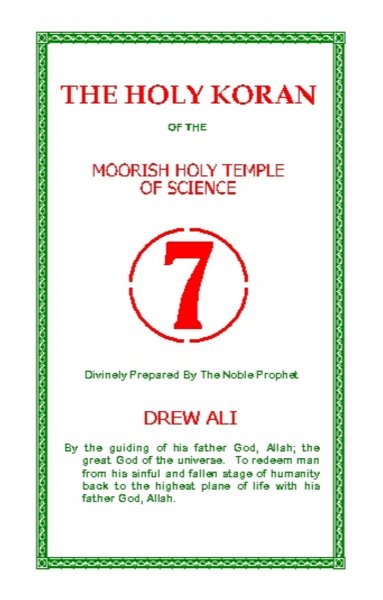
I first became aware of the Moorish Temple via the brilliant and eccentric Peter Lamborn Wilson‘s Sacred Drift: Essays on the Margins of Islam. Herbert Berg‘s Mythmaking in the African American Muslim Context: The Moorish Science Temple, the Nation of Islam, and the American Society of Muslims looks to be a serious paper on the topic, and you can find more at the Moorish page at the Hermetic Library — note that Hakim Bey is the pseudonym of Peter Lamborn Wilson. See also the Holy Koran of the Moorish Science Temple of America.


Switch to our mobile site