Zenpundit has…Great Powers!
Wednesday, October 15th, 2008
Received my uncorrected proof, limited edition, advance copy of Great Powers: America and the World After Bush
Much thanks Tom!
Received my uncorrected proof, limited edition, advance copy of Great Powers: America and the World After Bush
Much thanks Tom!
Recently, I’ve seen Dr. Chris Bassford’s site, Clausewitz.com mentioned at the Small Wars Council and then one of my co-authors, A.E. of Rethinking Security, favorably cited a link to Clausewitz.com on a social networking platform. Intrigued, I wandered over and read for a while. I’m glad that I did.
On War was a book I read as an undergraduate for a class that focused on German intellectual history and was included by the prof more or less as an afterthought, along with works by Kant, Marx, Nietzsche and a few others. I recall that I was not terribly 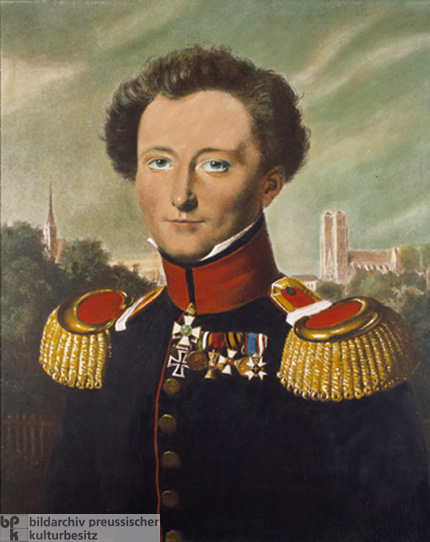 impressed at the time by On War; my real interest then was Cold War diplomatic history and I paid far greater attention to Marx. To me, Clausewitz was a turgid writer, another Germanic pedant, though an important one for his contribution to strategy. I never developed any particular dislike for him either, since military affairs wasn’t a priority and I stuck Clausewitz on my shelf and ceased to give him much consideration thereafter. Other philosophers and thinkers seemed to be more relevant.
While reading at Clausewitz.com, I came across Bassford’s critique of various translations of On War and he panned one in particular:
7. Penguin Edition (1968). AVOID. The most widely available version of the Graham/Maude translation (see #4 above) is the weirdly edited and seriously misleading Penguin edition (still reprinted and sold today), put together by Anatol Rapoport in 1968. Rapoport was a biologist and musician-indeed, he was something of a renaissance man and later made some interesting contributions to game theory. However, he was extremely hostile to the state system and to the alleged “neo-Clausewitzian,” Henry Kissinger. He severely and misleadingly abridged Clausewitz’s own writings, partly, of course, for reasons of space in a small paperback. Nonetheless-for reasons that surpasseth understanding-he retained Maude’s extraneous introduction, commentary, and notes, then used Maude’s errors to condemn Clausewitzian theory. Between Graham’s awkward and obsolete translation, Maude’s sometimes bizarre intrusions, and Rapoport’s hostility (aimed more at the world in general, and at Kissinger in particular, than at Clausewitz personally), the Penguin edition is badly misleading as to Clausewitz’s own ideas. The influential modern military journalist/historian John Keegan apparently derives much of his otherwise unique misunderstanding of Clausewitz from Rapoport’s long, hostile introduction-necessarily so, since he has obviously never read Clausewitz’s own writings, not even the rest of the text of this strange edition. If you have any version of the Graham or Graham/Maude translation, but especially this twisted Penguin version, we advise you to get the modern Howard/Paret edition (discussed above).
Curious, I went over to a bookcase and pulled my copy of On War. Sure enough, it was the “twisted” Rapoprt version that I had read . I don’t know if the backstory Bassford gives about Rapoport and Henry Kissinger is true or not but it is certainly a plausible one. Kissinger, for all his intellectual abilities and charm was, in his heyday, a highly aggravating and insecure personality who made a legion of enemies with abrasive, dismissive and derogatory remarks and machiavellian conduct. I’ve seen scholars tilt at windmills for stranger reasons than that. My own mentor in diplomatic history had consuming hatreds for Alexander Hamilton and Arthur Schlesinger, Jr. to which I could never relate.
As a result of reading Bassford’s comments, I picked up a Paret translation of On War yesterday and a cursory flipping through told me that he was correct in his assessment. I had read an edition that was both mediocre and weird in college. So I bought the copy and look forward to getting acquainted with a much more accurate presentation of Carl von Clausewitz’s ideas.
ADDENDUM:
As it happens, SWJ Blog has a related post- Between Clausewitz and Mao.
If you post a comment that has more than two links in it then your comment is held for moderation. This is due to spammers deluging me when the filtering setting is lowered.
In a loose, conversational, style:
Top Billing! Coming Anarchy – VOTE NIXON! He’s got my vote.
Gunnar has a good piece on Charlie Rose interviewing Warren Buffett
Sam Liles opines on Taleb’s The Black Swan: The Impact of the Highly Improbable
Nice post by Dave about Issues 2008: Reforming Government featuring typical Illinois style corruption, where the state is simply a fleecing machine for suckers.
Matt Armstrong recommends this post on propaganda by Lines and Colors.
The SWJ Blog and WaPO think that the next president should keep Robert Gates as SECDEF. So do I – though I’m not holding my breath.
The Kings of War have preliminary impressions of Martin van Creveld’s new book, The Culture of War
Criticizing Senator Obama’s political relationship over a period of years with ex-Weatherman terrorist and still Leftist radical Bill Ayers -and the Obama campaign’s attempt to spin it away as “some guy in my neighborhood” – will get you tarred as a “segregationist“. I’m getting the vibe that the Obamaniacs, who already see “political opposition= racism”, will, if victorious, be all too willing to use the hand of government to pressure critics into silence.
Does anyone besides me find it somewhat ironic to hear praises for Stoicism being sung from these quarters?
The scale of the economic crisis has begin to sink in to the point where leaders of the G-8/G-20 have begin to realize that everyone dwelling on the welfare of parochial, politically favored, financial interests ( Goldman Sachs in the case of the U.S.) is not going to get the world out of this crisis. Coordination of macroeconomic levers will be the key. Some good posts that I strongly encourage you to read, before I comment:
Status report on the financial crisis: we’re at a critical point in time by Fabius Maximus
Encouraging signs – coordination appearing by Robert Paterson
Notes to Self: What Are We Doing? by Brad DeLong
The world is at severe risk of a global systemic financial meltdown and a severe global depression by Nouriel Roubini
Equities, Pay Caps, Liquidity: Structuring a Bailout–Posner & Government Equity in Private Companies: A Bad Idea-Becker by Becker and Posner Blog
Geopolitical Consequences of the Credit Crunch by Niall Ferguson
How to view this system perturbation by Thomas P.M. Barnett
Wolfgang Munchau: Policy Errors Risk Turning Credit Crunch Into Depression and Are Hedge Fund Margin Calls Leading to Stock Rout? by Naked Capitalism ( HT to John Robb)
National Orientation by Chet Richards
JOURNAL: Cascading Bubbles by John Robb
What is to be done ?
Aside from shortsightedness that comes from playing primarily to domestic political inside interests, there is another reason that G-7 leaders in particular are moving slowly in coming to terms with reality of this crisis: the interconnectedness wrought by globalization implies that the long term solution involves a considerable erosion of sovereignty to a global entity that can coordinate and shape macroeconomic policies of the central banks of the world’s largest economies. And to an extent, fiscal and regulatory policy as well. If the G-7 leaders are bold, they will approximate such meta-policy activity this weekend to get us over this crisis but we will be back to square one for the next crisis in two or five or ten years down the road.
I am uncomfortable, make that opposed, to any Brussels style global authority. Given the predisposition of much of the world politically, representatives of such an authority will prefer to misuse their authority to micromanage to achieve social and political engineering rather than stick to a narrow mission of tending to macroeconomic trends. Yet the fact that the sum of the global capitalist system now exceeds the ability of any part, even the U.S., to control it, requires a mechanism be put into place to transnationally leverage macroeconomic policies for maximum systemic benefit during hard times.
Better to set up a simple WTO like structure today for a “coordination council” that rules natonal monetary policies in or out of international consensus against a clear rule-set yardstick, than to wait until some emergency creates a crisis large enough where we wake up some day with vast portions of our sovereignty ceded to unaccountable international bureaucrats. Sort of a “Concert of Economies” that preserves the flexibility and freedom of of capitalism and national sovereignty instead of instituting a global GOSPLAN.
The crisis points to creating a level playing field in terms of financial rule-sets with agreed upon “circuit-breakers” are put into place now. This requires various states yield on all sorts of national comparative advantages for the benefit of the system as a whole. Something that goes against every career instinct of a politician.

Zenpundit is a blog dedicated to exploring the intersections of foreign policy, history, military theory, national security,strategic thinking, futurism, cognition and a number of other esoteric pursuits.
Customized Web Site & Blog Design


