zenpundit.com » 2009

Archive for 2009

Qualitative vs. Quantitative

Saturday, May 23rd, 2009

              

Drew Conway of Zero Intelligence Agents asks a great question of all social science and humanities folk in the readership: 

Nye and Drezner on Quantitative Scholarship

As a student in a department that covets rational choice and high-tech quantitative methods, I can assure you none of my training was dedicated to learning the classics of political science philosophy. On the other hand, what is stressed here-and in many other “quant departments”-is the importance of research design. This training requires a deep appreciation of qualitative work. If we are producing relevant work, we must ask ourselves: “How does this model/analysis apply to reality? What is the story I am telling with this model/analysis?”

Whether you are a producer, consumer or tourist of political science research you probably have an opinion on this debate, and I’d like to hear it.

Drew asks an important question. “Research Design” is inherently an act of qualitative and normative judgments. If the researcher is lacking a consciously constructed and identifiable intellectual framework or lens, they will still have one by default, except it is likely to be composed of contradictory hodgepodge of unconsciously acquired biases, hiding under a presumption of objectivity. That’s not an optimum perspective from which to select objects to measure and yardsticks with which to measure them.

The comment I left at Drew’s site was:

Quantitative analysis is sharpening the focus of the telescope or microscope. Qualitative analysis is knowing what’s worth looking at.

Being trained as a historian, I’m a qual dude but quant tools can tell me when I’m on target or by how much I may be off. Or if I am full of crap. On the other hand, quant scholars can be like drunks looking for their car keys under a streetlamp because that is where the light is. Quants need data and not every significant variable is the one that is easiest to isolate and measure. Or measure beyond mere correlation. Or at all.

Quant-Qual can never be either/or any more than we should try walking on one leg.

We need more consilience and less compartmentalization in intellectual life.

On Friendfeed Requests

Friday, May 22nd, 2009


Some of you – ok, a whole lot of you – have made Friendfeed subscription requests of me in the last few weeks to which I have not responded (Friendfeed is an app that manages your social networking conversations). This is intentional but not personal toward anyone.

I tried Friendfeed as a result of being on Twitter back when Robert Scoble was tweeting and blogging about Friendfeed nonstop, which piqued my curiousity. I found the format then to be annoying ( the interface may have changed in the interim) and no one I knew was using the service at the time so, after a few days, I let the account go dormant. No offense, Friendfeed may be the new 2.0 sliced bread, but I don’t have the time right now to go straighten out my account and use yet another social media platform. Maybe during the summer when I have some downtime I’ll give Friendfeed a second chance – at the moment it isn’t even on the radar.

Now Using the POINT of the Spear….

Thursday, May 21st, 2009

My esteemed colleague, Michael Tanji, goes knuckles over Think Tank 2.0.

Tanji has my 100 % endorsement.

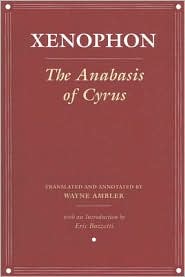
The Anabasis of Cyrus

Thursday, May 21st, 2009

The Anabasis of Cyrus (Agora) by Xenophon. Translator,  Wayne Ambler

Arrived a few days ago. Now I am set for Lexington Green’s Xenophon Roundtable in September 2009.

….They decided, then, to pack up what they had, arm themselves, and proceed forward until they should meet with Cyrus. When they were about to set out, as the sun was rising, there arrived Procles, the ruler of Teuthrania, born of Demaratus the Laconian, and Glus, the son of Tamos. They said “Cyrus is dead” and said that Ariaeus had fled with the other barbarians….”

Pushtunistan Rising?

Tuesday, May 19th, 2009


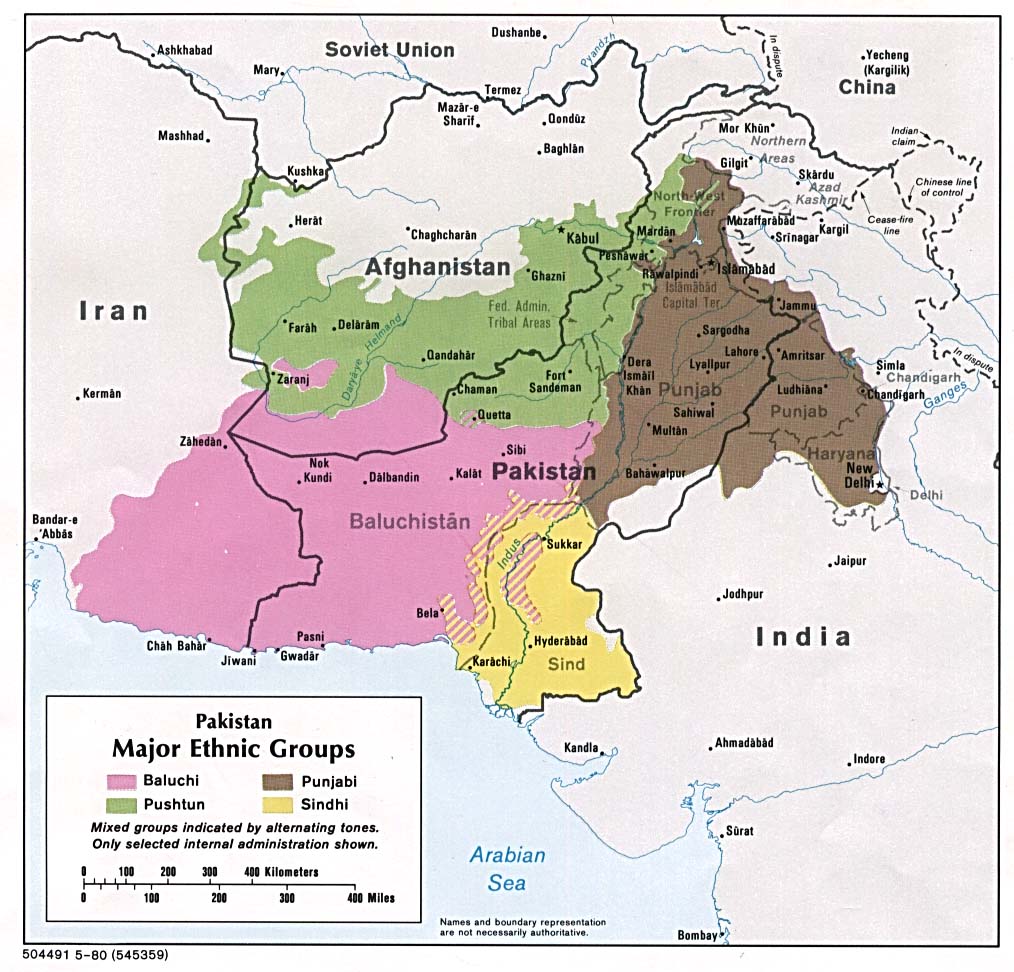
Steve Hynd at Newshoggers made the intriguing suggestion of an independent Pushtun state as a solution to the strategic problems of the Afghanistan-Pakistan region. The Pushtuns, like the Kurds are one of the world’s largest ethnic groups without a state:

The Punjabi and Sindh populations have always regarded the Pashtun as mountain wild men, bandits and reivers. The Pashtun have always regarded their neighbours as prey for their raids. It’s been that way since before the British arrived and shows no sign of abating anytime soon. The Pashtun were only forced at gunpoint into accepting the splitting of their traditional tribal ranges by the Durand Line in 1893. The situation is entirely analogous to the old border reiver clans of the English/Scottish border – another bunch of inter-related hill country wildmen who raided their neighbours irrespective of nationality for over 300 years before finally calming down and accepting imposed nationality. That territorial stramash was only solved by exiling the worst offenders to the American colonies.

….More, with the Pashtun in their own homeland free from outside overlords their reason for supporting the Taliban politically would disappear and the incompatibility between the Taliban’s extreme form of Islam and the Pashtun’s own traditional religious forms would put the two at odds more often than not.

Rather than insisting on fighting the Pashtun, the amswer in Af/Pak may lie in giving them back the independence they once had.

Read the rest here

Sort of like Ralph Peters famous re-drawing of the Mideast map a few years ago, Steve’s suggestion is provocative.The Kurds took decades to get beyond the Talabani-Barzani rivalry and seize the de facto independence that the U.S. invasion of Iraq made possible and “frontier agents”, whether British or from the ISI , have always succeeded in playing off one Pushtun group against another with only the Soviet invasion of Afghanistan in 1979 creating even semi-unity among Pushtuns – and then temporarily. This is the stuff of Pakistani nightmares but a latent sense of Pushtun nationalism lurks in the shadows, with Afghanistan being thought of as a “Greater Pushtunistan”.


Switch to our mobile site