Germania Revealed
Sunday, October 3rd, 2010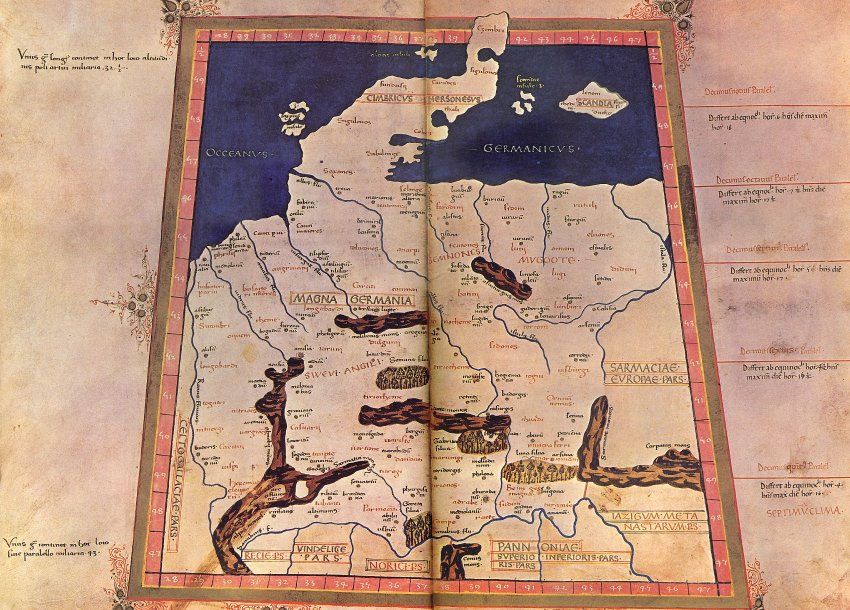
For historians of the ancient world – and Germans, I suppose – this is awesome.
Hat tip to Lexington Green.
For historians of the ancient world – and Germans, I suppose – this is awesome.
Hat tip to Lexington Green.
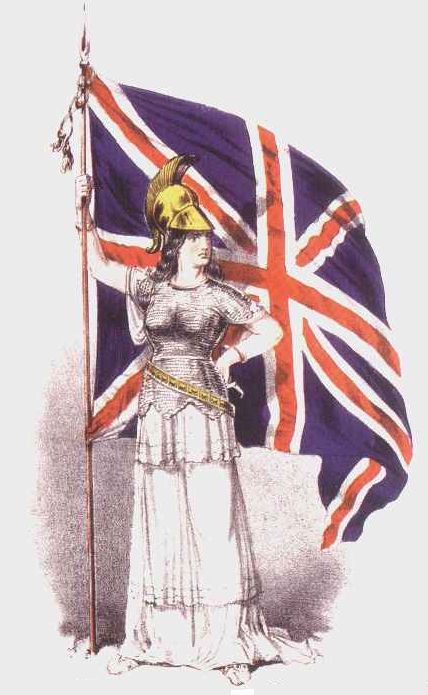
The United States is not the only Western power suffering from strategic uncertainty. James Frayne, a British political consultant who is a friend of this blog and an avid student of strategy, drew my attention to his post at The Campaign War Room:
The House of Commons Public Accounts Committee – under the leadership of Bernard Jenkin – has been running a very worthwhile investigation into “Who Does UK Grand Strategy?” The uncorrected evidence has begun to be put online and it’s worth taking a look at. Peter Hennessy, Julian Lindley-French, and Hew Strachan gave evidence on 9 September, which you can read here. Foreign Secretary William Hague and National Security Adviser Sir Peter Ricketts gave evidence on 14 September, available here. Various figures from the MoD gave evidence on 16 September, available here.We have no meaningful national conversation in the UK on national strategy, so we owe Bernard Jenkin one for pushing this investigation forward. I haven’t had a chance to go through all the evidence yet and will post something longer on it further down the line.
Seems straightforward enough, but the quality of the links are really good; senior British officials in frank discussion of grand strategy. Here’s an example:
Q54 Robert Halfon: Would you make the distinction between a Grand Strategy and a National Security Strategy and do you agree that if there is that difference, a long term strategy needs to look forward 20 years plus?
William Hague : I think a National Security Strategy is an important component of it. I do not think a National Security Strategy is the entire strategy of the country, because there needs to be a strategy not only for maintaining our security, but for advancing our prosperity. These things are closely linked; it is only on strong economic foundations that it is possible to build an effective foreign or defence policy. But it cannot just be a defensive strategy. Was it not a Napoleonic maxim: “The side that stays within its fortifications is beaten”? I think one has to have a strong sense of how the country is going to extend its influence and reach out into the rest of the world, using whatever, to use the jargon, using soft power as well as hard power. So there is something more to the strategy of the country than the National Security Strategy.
Q55 Robert Halfon: Once you have devised that strategy, how does it withstand political pressures and a change of government?
William Hague : If it is good, of course, it will withstand a change of government not by seeking prior agreement across political parties but by being something that has been clearly demonstrated as something the country should pursue. I think that is really how consensus and cross party agreement works in this country. Of course, we are in a period now where it works in a different way between the two coalition parties, because since we are in government together, we have to formally agree things together. But I think if an approach to the future of the nation is shown and understood to be working, it will be something that is continued by other governments in the future.
Some thoughts:
First, there’s a substantial difference between the committee hearing in the House of Commons and what would transpire over here in the US House of Representatives or especially in the Senate. The seriousness of the exchange in this inquiry is evident, conversational it may come across at times, the MPs led by Bernard Jenkin appear genuinely interested in the opinion of the witnesses and the Commons seems to be exercising oversight in a meaningful sense of the word. The Brits also use adult vocabularies, unlike most American politicians. It would be hard to imagine Congressmen saying “otiose” in a hearing. Or, in a few instances, knowing what it meant ( too self-referential, I suppose).
At a Congressional hearing on grand strategy, the witnesses would submit prepared statements that would be read only by junior staff and the MoC would use the opportunity for grandstanding speeches on C-Span and prosecutorial questions aimed at scoring polemical debating points. Winesses in America might not be forthcoming and could possibly bring their own lawyers due to the risk of being boxed in by questions that could later be construed as perjury. Real oversight by Congress or interest in the granular subject matter of national security is limited to a small number of MoC, basically the leadership (majority and minority) of each house, and a few distinguished members like Rep. Ike Skelton, Sen. Richard Lugar and so on.
Secondly, I have to wince at the perception senior British officials have of American governmental capacity for strategic thinking or the effectiveness of institutions like the National Security Council, which the British govenment seeks to imitate. To be brutally frank, the NSC has been a dysfunctional apparatus for most of it’s existence and operated at peak performance ( in the sense of assuring the president’s control over foreign, defense and intel policies and bureaucracies) only under Eisenhower and Nixon with relatively decent performance as “honest broker/enforcer” under Ford and Bush I. and select years here and there of other administrations. The apex of strategic thinking in the USG, interestingly enough, was during the presidencies of FDR, Truman, Nixon and Reagan; the NSC did not exist under the first, was a work in progress under the second and a roman circus during the tenure of the last until Carlucci and Powell became successive NSC advisers.
If the US seems to have given greater thought to strategy of late, it was because the downward spiral of Iraq beat the living hell out of the Bush administration politically into opening the policy door to outside voices like General Jack Keane, Kalev Sepp, the Kagans, David Kilcullen, John Nagl, General Petraeus, General Mattis etc. Even then American COIN is an operational activity of the US military, not a whole of government strategy, that serves to kick the ball of grand strategy down field (which politicians like because grand strategy can raise controversial questions of values and political economy).
Third, With some amusement, unless I missed it in my quick read, senior British leaders appear to be unaware that Britain’s postwar choice under Clement Attlee to build a robust welfare state was a seminal act of grand strategy. British voters in 1945 made a strategic choice of butter over guns – or empire, or high levels of capital investment. As strategy is essentially a matter of ways, means and ends, devoting very high levels of GDP to public consumption puts narrow parameters on what a country will be able to do in the world. Or for that matter, at home in the future. American politicians clearly do not realize this either. Socialism in Europe has brought not the withering away of the state, but instead a withering away of the state’s military power.
Fourth, In reference to the second doc, Q215 Chair: Grand strategy is far more important to small or medium states than to a hegemon or an empire because their margin for error or waste is much smaller. The United States government can afford, relatively speaking, to gratuitously waste geopolitical opportunities (at least for a time) which it has been doing with gusto since 1991. Singapore, by contrast, cannot waste any of it’s chances if it wishes to remain prosperous and free. Britain needs a grand strategy if it’s leaders value and seek to pass on to posterity a British identity. The same can be said over here for America and some of the visceral anger inherent in the Tea Party arguably seems to come from their realization that American elites do not place too much importance on an American identity or sovereignty.
I sincerely hope the British can find not only a grand strategy, but the correct one. The world needs a strong and capable Britain and America does too.
ADDENDUM:
James Frayne delivers his verdict – Q: “Who Does UK Grand Strategy?”, A: “Nobody”:
There are three big things that stand out for me from the evidence. The first is that there was a strong consensus from the academics and the former defence officials that Britain has no real capability either for the creation of Grand Strategy specifically, or for competent strategic thinking more generally. They suggested that we do not have the institutional framework in place to create Grand Strategy and we do not have the functions within Government to train people – officials and politicians – in strategic thought.
Crucially, it was also suggested by the academics and former defence officials that we have actually got out of the habit of thinking strategically. In the past, when Britain had a more obvious formal global role, we were forced to think strategically. With relative decline and the consequent attachment of our foreign and security policy (to say nothing of our economic policy) to the US, NATO and the EU, we lost the capacity for independent thought. It was suggested by some of the former defence officials that Britain has something of an “anti-intellectual culture” which makes them sceptical about strategy-making; people prefer pragmatism.
Dr.Patrick Porter castigates the Tories:
Major war capability did not become obsolete with the end of the Cold War. The ‘north German plain’ symbol is the cliche and soundtrack of a dangerous complacency. Other states like China, India and Russia invest heavily in the kind of ‘kit’ that Osborne finds absurd. Russia recently fought a land war in Georgia, and puts its Blackjack bombers in British skies.
In fact, the dismissal of Russia as a has-been military power who went into history with the end of the Cold War is symptomatic of a complacency about power politics and major war, and we are still living with the consequences of our recent failure to take Russia seriously as a geopolitical heavyweight.
Another Chicago Boyz colleague, James Bennett, author of The Anglosphere Challenge, had a feature article in National Review, which is now available online:
Admirers and detractors of the United States agree on one point: This country is unusually resistant to the social consensus and set of structures broadly known as “social democracy” or “progressivism.” (Social democracy leans more toward state ownership, progressivism toward state regulation.) Various versions of such schemes have prevailed in Western Europe and Japan, and to a lesser degree in Britain, Canada, and Australia. The characteristics include a wider scope and role for the state, centralization of decision-making in a national bureaucracy, monopolization of power by a set of large institutions, including state-champion corporations and labor unions, and a wide variety of social entitlements for all citizens. This was the classic progressive economic program; since the 1960s, it has also included certain social characteristics, such as official multiculturalism.
Most of these measures were characteristic of some parts of Continental Western Europe from the late 19th century onward, and became generally prevalent there after the Second World War. The English-speaking countries lagged well behind; Britain began to adopt welfarist policies and admit labor unions to the domestic power system before the First World War, but moved to full entitlement systems and substantial state control of the economy only after 1945. Australia and New Zealand adopted entitlement systems early, using their agricultural and mineral export earnings as petro-states now use oil wealth, but remained socially conservative in many other ways. Canada was essentially similar to the U.S. in its domestic systems (despite some greater public ownership, mostly in transportation) until the 1960s. But by the end of the 1970s, America stood virtually alone in a world of seemingly universal consensus for a strong managerial state.
….America had gone some distance down this road by 1980, although not as far as Canada or Britain, and nowhere near as far as Germany or France, which had never been all that laissez-faire in the first place. But 1980 marked the point at which the nation reversed course. Thenceforth it would be headed in the opposite direction, toward a new vision of individualism and decentralism, driven by the computer rather than the plow….
Read the rest here.
Good friend and co-author Michael Lotus, a.k.a. “Lexington Green“ has a feature article as he debuts at The RIGHTNETWORK. Congrats Mike!
Mass political movements often begin with a single, striking event. The Insurgency began in the fall of 2008, when President Bush, Senator Obama, and Senator McCain appeared together to endorse the TARP bailout. At that moment the lights came on for many Americans. It was glaringly obvious that both political parties jointly operated the system, and the system existed to protect the well connected at the expense of everyone else. The public opposed the TARP bailouts; the banks got their money anyway. The Insurgency, long brewing, began.
The Insurgency is a movement of citizens directed against unsustainable government taxation and regulation, and spending, both of which benefit insiders rather than ordinary people. The target of the Insurgency is a leviathan in Washington, D.C. that will ruin us all if it is not dismantled.
The Insurgency is part of a long tradition of mass political movements in our history. It has the potential to make a fundamental change in American life-for the better.
….2. What is the Insurgency? Why now?
For now the Tea Party movement, ignited by Rick Santelli’s “Rant Heard Round the World,” is the dominant component of the Insurgency; Glenn Beck‘s gathering of hundreds of thousands of people in Washington, D.C. is another, overlapping one. The people who have gathered around Governor Sarah Palin form yet another part of the Insurgency, as do the libertarian-minded citizens who read blogs like Instapundit. Many of Rush Limbaugh‘s, Sean Hannity‘s, and Mark Levin‘s listeners are part of it. Various long-established conservative groups that have always opposed big government are now parts of the Insurgency.
There are appear to be three factors that have caused the rise of the Insurgency now, and the particular form it is taking: 1) technology, 2) a new, heightened awareness of the problem, and 3) the shock of the current crisis.
First, new technology allows massive, decentralized and horizontal organizations to form quickly. The Tea Party is the best current example: There is coordination, but no central direction. There is no one in charge, giving orders, but rather many people and groups cooperating. This is only possible due to current technology.
“[Technology] enabled the Insurgency,
but it did not cause it.”
Technology, however, cannot by itself explain the rise of the Insurgency. After all, the political Left actually pioneered in this area: MoveOn was a highly effective internet-based organization, for example. It does seem odd, in retrospect, that a tech-savvy Left would cast its lot with a top-down, government-centric political culture. And there may be some overarching affinity between libertarian-style thinking and the new technology. But that technology is ultimately neutral. It enabled the Insurgency, but it did not cause it.
Read the rest here.
UPDATED:
Michael has published the second part of his essay:
….Mass political movements have come along several times in American history. Some have transformed the country, and others have fizzled out.
The movement that elected Andrew Jackson, against the vicious opposition of the existing establishment, swept through all levels of American government, rewriting state constitutions and extending the franchise to all adult White males. Jacksonian democracy caused a permanent and irreversible change in American life.
The Populist movement looked like it would have a similar impact. Led by the charismatic outsider William Jennings Bryan, this movement held gigantic rallies and seemed like a revolution in the making. It provoked fear and a hostile response from the establishment of its day, in both political parties. Yet the Populists ultimately failed to make a significant impact on national policy, and were absorbed into the Democratic Party.
Today’s Insurgency could go either way. Success is not inevitable.
For reasons that are obscure to me, a staffer at CBS named Jen felt it was important that I share this embed of Lara Logan recounting the risks of reporting recently in Afghanistan. There’s also a camera guy named Ray who is a Vietnam veteran and a former Marine who is kind of an interesting character in his own right. Since a number of ZP readers are either there now, have been to or are going to Afghanistan soon or are Marines or are veterans of the war in Vietnam – this might possibly be of some interest to them.
And with that, here you go, Jen.
UPDATE:
Heh. This video is best viewed in iE and not Chrome or some other browser.

Zenpundit is a blog dedicated to exploring the intersections of foreign policy, history, military theory, national security,strategic thinking, futurism, cognition and a number of other esoteric pursuits.
Customized Web Site & Blog Design

