zenpundit.com » 2012

Archive for 2012

Boyd & Beyond 2012—-Draft Agenda Announcement

Friday, August 3rd, 2012
[by J. Scott Shipman]
Photo credit: Zenpundit

We’re a little over 60 days out.

This is the draft agenda for Boyd & Beyond 2012. If you are listed as a speaker and cannot, please let us know. If you wanted to speak/were promised a spot and didn’t make the agenda, let us know. We had more speakers than the two days would allow.

This is an all volunteer event. If anyone wants to volunteer to bring coffee and water, let us know. I’ve taken care of it for the last couple of years and we’ve gone through 10 gallons/day. Additionally, we’ve had someone bring bagels in the past.Lunch will be ordered out—last year it was pizza. If you see a problem, let us know. Many thanks!

Boyd and Beyond 2012 Friday 12 October

0730-0815 Stan Coerr intro

0815-0945 Present at the Creation

Chet Richards: Closing the OODA Loop: Boyd, the Conceptual Spiral, and the Meaning of Life (60 min)

Greg Wilcox: Boyd’s: People, Ideas, and Things, In That Order (30 min)

Dr. Terry Barnhart : Ten-Minute Teaching Modules throughout conference

Break

1000-1200 The Rise of the Marines

Brigadier General Stacy Clardy USMC: John Boyd, Quantico and Marine Corps Enlightenment (60 min)

Break

Captain Paul Tremblay USMC: Boyd and Bravo Company: Tempo in Ground Combat (60 min)

Terry for Ten

1230 Lunch brought in

Terry for Ten

1245-1345 Boyd and the Real World

Katya Drozdova: Afghanistan, Force and Tempo (30 min)
Marshall Wallace: NGO Team Decision Cycles in Crisis: Boyd in Action (30 min)

Terry for Ten

1345-ENDEX Holding the Grail

Mike Miller: The Boyd Archives: Lecture and Tour Round-Robin

To archives: small groups, 30 minutes each

Concurrent in classroom: Case Method Instructors (Bruce Gudmundsson/Damien O’Connell).

GI Wilson: How it Happened

Boyd and Beyond 2012 Saturday 13 October

Terry for Ten

0800-1030 Boyd and Bad Guys

Sid Heal: The Five-Dimensional Battlespace (60 min)

Break

Fred Leland: The Anatomy of Victory : Winning at Low Cost (60 min)
Adam Elkus: OODA and Robotic Weapons (30 min)

1030-1230 Boyd in Battle : Insurgency

Pete Turner: Human Terrain Systems and COIN (30 min)
Tom Hayden: Boyd and COIN (60 min)
Mike Grice: The Second O: The Effect of COIN on Orientation (30 min)

Terry for Ten

1100-1330 Boyd and Business

Jake Wood and William McNulty: Boyd and Bureaucracy: Starting Rubicon (90 min)

1230 Lunch brought in

David Diehl: Boyd in the Cyber Conflict Domain (30 min)
Mike Grice & Jonathan Brown: Boyd Cycle in High-Pressure Business (30 min)

Terry for Ten

1330-1500 Boyd and Your Brain

Chris Cox: Boyd and Politics (30 min)

Break

Michael Moore: WinBowl II (60 min)

Break

1515-1545 Boyd and Beyond IV Silicon Valley Spring 2013

Stan Coerr: Next Steps

Cross-posted at To Be or To Do

Writer’s Block

Friday, August 3rd, 2012

Lately, I have been struggling with a moderate case of writer’s block.

Some of the problem stems from a growing weariness of returning time and again to limited number of subjects.  I admire those who can drill a very narrow topical field day in a day out , but to me that feels like a rut and a rut soon leads to boredom.  Consequently, I now find myself staring at a computer screen rather more often than typing away at the keyboard and not enjoying it.

A second problem, I suspect, is too often trying to persevere in writing in an unsuitable, chaotic, environment full of distractions. As anyone who writes with seriousness knows, loved ones will ignore you for hours on end, but should you sit down to write anything you will suddenly become a magnet for children, the dog, your spouse, phone calls from old friends and neighbors at the door . Stringing words coherently becomes difficult because writing is an art, not a component of multitasking.

So today, I did something different.

Instead of sitting at my desk, I went outside and sat at the patio table in the sun and fresh air. The electronic devices were left inside, but I brought a long, yellow legal pad and a medium thickness blue sharpie ( I’d have preferred black). I lit a Cohiba and had an ice cold beer with me and a couple of books, in case I felt like reading ( The Makers of Strategy and Everitt’s bio of  Hadrian). It was unusually quiet.

And then I began to write. Bullet points, notes, phrases, diagrams interspersed with some sketching. Some notes were connected to others with arrows. Ideas were flowing (some were crossed out later) and the rough approximation of an argument took shape. It was’t a moment of epiphany – just a solid, uninterrupted, focused, productive hour of writing and deep reflection that filled a couple of pages on my legal pad. How uncommon that has become.

And after that, I felt much better.

Introducing Urb.Im

Tuesday, July 31st, 2012

[ by Charles Cameron — my new job, solutions-oriented thinking / writing about urban poverty in 6 cities ]
.

http://zenpundit.com/?attachment_id=12052

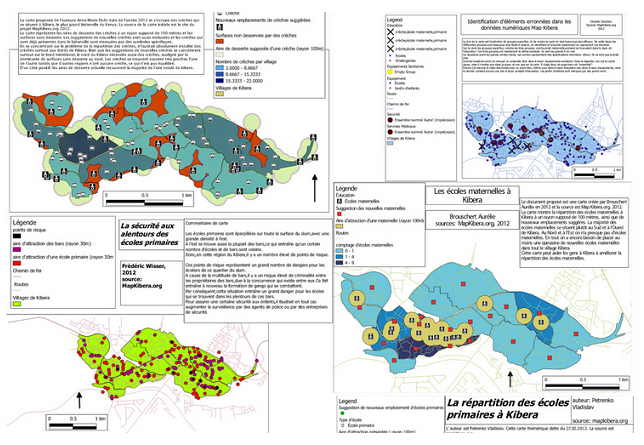
Mapping Kibera, Nairobi

.

Yesterday was my first day at work on my new job with Urb.Im:

The urb.im network is a global community working for just and inclusive cities. It connects practitioners in six cities and throughout the world to establish an international community of practice and learning, sharing ideas and experiences in order to innovate, replicate, and scale working solutions to the problem of urban poverty. urb.im is a project of Dallant Networks and the Ford Foundation.

The six cities we’re focusing on are Mumbai, Rio, Lagos, Mexico DF, Nairobi and Jakarta — and we are strongly solutions-oriented.

**

I imagine there will be considerable overlap between the diverse interests of those who follow Zenpundit and the specific cities and issues I’ll be working with at Urb.Im — so this is both a news bulletin about my new employment (suggesting I’ll now be focusing my attention on a new problem and solution set), and an invite to ZP readers to steer me towards relevant materials (eg via hipbonegamer on Twitter), and to join in the discussions at Urb.Im as appropriate.

One of my ambitions is to get some significant cross-website conversations going, so that the widest array of bright minds and good hearts gets together to spark new ideas and possibilities, and put existing resources on the map for all interested parties…

**

And speaking of mapping

The illustration above is of a map of schools in Kibera, Nairobi, one of the largest informal settlements in the world — mapping both problem areas and available solutions is a key element in the kind of work we’ll be doing. For more details on mapping Kibera, see this Urb.Im page, and to download and enlarge the Kibera education-map image, go here.

Wikistrat Blog

Tuesday, July 31st, 2012

Wikistrat, where I am a senior analyst for their North America desk, has started a blog featuring their analysts and experts. We’ll see how the Wikistrat Blog evolves, but for now here are a few sample posts:

Ask Wikistrat’s Chief Analyst Dr. Thomas P.M. Barnett 

Q: Timothy Kelly-  Dr. Barnett, how do you think nuclear proliferation will play out in the Middle East?

A: I think the Obama Administration’s oil-focused sanctions will put immense pressure on the Iranian regime to cave in on the nuke question, possibly to the point of striking out in some manner that Israel – and perhaps the U.S. – can use as a pretext for launching substantial strikes against Iran’s nuclear facilities.  But if I had to bet, I would lay money on Israel striking first for its own reasons versus Tehran providing the excuse.  Iran has always struck me as incredibly aware of which line-crossing activities will elicit direct military responses, and, much in the vein of WS’s recent simulation on this subject, I think Tehran knows well that it needs to avoid any genuine threat to global oil markets – lest it trigger an “all-in” military response from the United States.

So I think Iran’s really stuck, as it were, and will likely have to suffer a beat-down from Israel sometime in the next 24 months.  I think it can take that “licking” and keep on “ticking” in terms of its nuclear weaponization goals, which I think are real and – in structural terms – completely justified by the region’s current correlation of forces.  So I’m still betting on Iran having the Bomb before Obama leaves office in 2017 (yes, I see him winning again in November), and when that happens, I do expect the Saudis to cash in their long-held promise from Pakistan to supply them with their own devices…. 

The 3 C’S Around The Pakistan Question (Abhijnan Rej) 

In the Spring 2012 issue of The Washington Quarterly, Ambassador Zalmay Khalilzad proposed a strategy for dealing with Pakistan by imaging it to be in a class of countries that are both adversaries and allies at the same time – with some vectors of interests of the elites pointing towards the United States and some others that don’t.  Ambassador Khalilzad’s analysis is macroscopic, to a large extent based on the evolution of the Pakistani nation-state at large. By way of a compliment to his analysis, I want to provide here a microscopic typology of Pakistan as a state sponsor of terrorism in terms of a complete union of three different groups with respect to interests in jihadi extremism. Each group is distinct and yet has a significant overlap with the other and all of them originate inside the Pakistani army.

The first group, which I will term complicit, is largely backed by former and serving Inter-Services Intelligence officers, conjecturally from its Directorate S, and with ties to jihadi groups going back to the 1980s. This group wants Pakistan as a model state for the entire ummah; it will not hesitate to harbor top al Qaeda and Taliban leadership, or for that matter directly engage American forces as it did in 2007 – not because it shares Salafist ideologies (it often doesn’t) but because of a deep sense of Muslim nationalism and therefore, per their logic, anti-Americanism.  A simple fact of life in Pakistan is that even though the ISI was created as coordinating intelligence agency for the various armed services, it remains distinct from the army and to a very large extent autonomous from it.  This could be one of the reasons why there was no contradiction when Admiral Michael Mullen had “given an A” to the Pakistani army during its fight with Taliban elements in the Federally Administered Tribal Areas (FATA) in 2009-2010 and the very next year, right before his retirement, described the Haqqani network as a “veritable arm of the ISI” to the Senate Armed Services Committee….. 

Collection Item Of The Week: “Pentagon Report Finds Iran’s Ballistic Missiles Improving” (Lauren Mellinger, Caitlin Barthold, Steven Aiello, Zachary Keck and Zoya Sameen) 

Summary

A Pentagon study that was submitted to Congress late last month finds that Iran has improved the accuracy and lethality of its short- and long-range missiles and is in the process of developing an anti-ship ballistic missile system.

According to the Pentagon’s report, Iran’s improved missile defense affords greater survivability against United States and Gulf Cooperation Council systems deployed in the region. Additionally, Iranian forces are becoming ever more competent in using these systems because of Tehran’s regular ballistic missile training, which “continues throughout the country.”

The report further notes that Iran is developing short-range missile systems with “seekers” — allowing missiles to identify and reposition themselves in flight to hit moving targets. Trackers noted the addition of “new ships and submarines,” while indicating that Iranian short-range ballistic missiles are in the process of evolving toward an operational ability to target maritime targets and vessels….

….Analysis

The Pentagon report signifies that any attack on Iranian soil will carry heavy risk and significant repercussions.

The Department of Defense’s earlier reports seem to have underestimated some of Iran’s military capabilities, particularly the accuracy and effectiveness of its ballistic missiles.  This latest study more accurately highlights the threat that Iran could pose, if attacked. It cites the 2012 war simulations done by the Iranian armed forces, which illustrated their skills in offensive and defensive maneuvers….

….On the other hand, Greg Thielmann, a senior fellow at the Arms Control Association who previously worked on intelligence matters for the Senate and the State Department, has noted that the report’s language implies that the Pentagon now believes that it is less likely that Iran will be capable of testing an ICBM by 2015, compared to an assessment made two years prior. Specifically, whereas the 2010 report on Iran’s military capabilities read, “With sufficient foreign assistance, Iran could probably develop and test an [ICBM] capable of reaching the United States by 2015,” the 2012 report states, “With sufficient foreign assistance, Iran may be technically capable of flight-testing an intercontinental ballistic missile by 2015.” …..

Read more here.


The Olympic Truce

Sunday, July 29th, 2012

[ by Charles Cameron — the Truce, great gospel music, and athletes in ads in slomo — a personal view ]
.


.

If there are two things about the Olympics I like, they would be the Olympic Truce, and athletes in slow motion.

Here’s what the IOC’s site has to say about the Truce:

The tradition of the “Truce” or “Ekecheiria” was established in ancient Greece in the 9th century BC by the signature of a treaty between three kings. During the Truce period, the athletes, artists and their families, as well as ordinary pilgrims, could travel in total safety to participate in or attend the Olympic Games and return afterwards to their respective countries

and it’s relevance today:

Taking into account the global context in which sport and the Olympic Games exist, the International Olympic Committee (IOC) decided to revive the ancient concept of the Olympic Truce with the view to protecting, as far as possible, the interests of the athletes and sport in general, and to encourage searching for peaceful and diplomatic solutions to the conflicts around the world.

Through this global and symbolic concept, the IOC aims to :

  • mobilise youth for the promotion of the Olympic ideals;
  • use sport to establish contacts between communities in conflict; and
  • offer humanitarian support in countries at war ; and more generally :
  • to create a window of opportunities for dialogue and reconciliation.

**

To be honest, I don’t care in the least what human runs fastest or jumps highest, and if I did I wouldn’t have a huge investment in what territory he or she comes from or lives in.

The Games are the Games though, they affect people’s lives, and are affected by them. I have, here in my room, a copy of the official book of the 1936 Games which I picked up in a swap meet for a dollar or two:

American Olympic Committee Report, 1936, Games of the XIth Olympiad, Berlin

Somewhere, also, I have the official English playbook for the 1934 Oberammergau Passion Play — two stark reminders of how we are sometimes suborned from the better angels of our nature by the worse…

If I have a minute of silence, then, it is for the Israeli athletes killed at the 1972 Munich Games.

**

breath,
breath

**

Again, corporate sponsorships, banking industries and advertising are not generally among my favored interests, but slow motion is — and while I care little for the athletic record-setting and patriotic rivalrous sides of the Olympics, great athletes are often beautiful, something the Greek sculptors understood, and slomo can capture that beauty for us.

Besides, I have always been a fan of Morgan Freeman, ever since I heard him play the role of the Preacher opposite Clarence Fountain in Gospel at Colonus — undoubtedly the most joyous theatrical experience of my life…

Here to give you a taste is Freeman’s opening sermon:

and perhaps the most audacious musical moment of all, the great battle of the bands as Oedipus attempts to enter Colonus:

**

breath,
breath

**

Here, then, are three VISA ads for the Games this year, accompanied by that unmistakable Freeman voice, and offered here for the beauty, sheer joy and creative excellence they present.

First, the audience speaking to the heart of the athlete — itself a remarkable insight:

Second, the way running itself runs like a thread through the life of Lopez Lomong:

And third, the difference a hundredth of a second makes — and again, the roar of the crowd:

That last clip has Morgan Freeman saying:

A hundredth of a second – it’s faster than the blink of an eye, faster than a flash of lightning – and it was the difference between Michael Phelps winning eight gold medals instead of seven – a hundredth of a second – just think of the cheers if lightning strikes twice!

I know — that’s the speed thing, not the beauty thing. And I’m an ideas man — an aesthetic man, not an athletic man.

So I take my long jumps sideways, in the mind…

**

Wikipedia tells us:

US National Park Ranger Roy Sullivan has the record for being struck by lightning the most times. Sullivan was struck seven times during his 35-year career. He lost the nail on one of his big toes, and suffered multiple injuries to the rest of his body

Again I think of the poet Randall Jarrell, whom I quoted here not so long ago as saying:

A good poet is someone who manages, in a lifetime of standing out in thunderstorms, to be struck by lightning five or six times; a dozen or two dozen times and he is great.

Only the Muse knows what damage that does to the poet’s mind.

**

breath,
breath

**

To sum up:

If I were God — and friends, that’s not in nay way a risk we need to concern ourselves about, flat out impossible — I would be watching the Olympics in slomo from a dozen angles simultaneously, without commentators.

And I’d be praying everyone world-wide would take the Truce as seriously as the Games.


Switch to our mobile site