zenpundit.com » 2012

Archive for 2012

Myanmar: the Rohingya and the Buddhists

Tuesday, July 24th, 2012

[ by Charles Cameron — one person’s shrine is another person’s ex-shrine ]
.

I was struck by this sentence in a blog post on Myanmar today:

As for the Muslims, they have been force-converted, their places of worship, as in the case of mosques, transformed into Buddhist temples, and they have been attacked during their religious festivities.

Buddhists? Just like the rest of us? Okay…

**


.

You know how some Muslims must feel when they see a Christian cathedral sprouting right out of the heart of their beautiful Mezquita mosque in Cordoba (above)? Or some Christians, when they see the huge Islamic decals hanging in what was once the great cathedral of Istanbul, Hagia Sophia (below) — now a museum?

.

**

I believe we’re all pretty happy that Aung San Suu Kyi is no longer under house arrest, but even she hasn’t felt at easy commenting on the Rohingya / Muslims in her native Myanmar:

The issue of the Rohingya is so delicate that even Myanmar’s leading defender of human rights and democracy, Daw Aung San Suu Kyi, has been oblique and evasive about the situation. Asked at a news conference on Thursday whether the estimated 800,000 Rohingyas in Myanmar should be given citizenship, Ms. Aung San Suu Kyi was equivocal. “We have to be very clear about what the laws of citizenship are and who are entitled to them,” she said in Geneva, which she was visiting as part of a European tour. “All those who are entitled to citizenship should be treated as full citizens deserving all the rights that must be given to them.”

Since I doubt I could ever be as brave as she has been already, I can’t complain… but maybe, all the same, wish?

**

To backtrack a little, here’s the full paragraph from which that first quote was taken. It’s a two-fisted paragraph, a mind-blower:

To provide another case of discrimination and persecution of minorities and non-Buddhists, probably even less known than the Rohingya, I can mention the Christians amongst the Karen, Karenni, Chin and Kachin ethnic groups. As for the Muslims, they have been force-converted, their places of worship, as in the case of mosques, transformed into Buddhist temples, and they have been attacked during their religious festivities.

Unless, of course, your mind is already blown. Which, given the complexities of the world around us, it probably should be by now.

A question re Hasan and Awlaki

Tuesday, July 24th, 2012

[ by Charles Cameron — revisiting the question of Maj. Nidal Hasan ]
.

... above: Daveed's tweet today, Awlaki's email from Intelwire

.

I was struck by one curious aspect to the question of what Maj. Nidal Hasan was up to at what point in his trajectory: the fact that as a psychiatrist, he was dealing with soldier patients returning from the wars in Iraq or Afghanistan who had doubts as to the religious legitimacy of killing fellow-Muslims in those wars.

On the face of it, that’s a topic a psychiatrist who didn’t feel himself expert in his religion (“am a novice at this and would like reassurance“) might wish to consult with clergy about, and the fact that “clergy” in this case was al-Awlaki shouldn’t be read back into the situation as confirming jihadist intent on Hasan’s part – Awlaki had been the imam of a Falls Church mosque where, according to one AP report:

Opinions varied on what kind of preacher al-Awlaki was when he served in Virginia. Most said they did not find him to be overtly political or radical.

As another report mentioned:

“Because the content of the communications was explainable by his research and nothing else derogatory was found, the [investigators] concluded that Major Hasan was not involved in terrorist activities or terrorist planning,” the FBI said in a statement issued days after the Ft. Hood shooting.

**

I mentioned this issue of Hasan’s (potentially) legitimate professional concern for his patients in my commentary on Hasan’s slide show in Small Wars Journal, but I haven’t been following news reports closely and have no access in any case to what’s known in restricted intel circles — so my issue may already have been addressed with clarity somewhere “open source”, in which case I’d welcome a pointer or pointers, and closure.

In the meantime, I do feel a little like someone going for a rollercoaster ride on a Moebius strip: as I read it, the same evidence that reads prospectively as suggesting a concern to be able to counsel patients in distress reads retrospectively as suggesting the conflict is in Hasan’s own mind – and that he has in effect already resolved it and is turning to Awlaki as someone he is sure will confirm his intent.

I understand that many of Hasan’s colleagues were dismayed at the time of his slide-point lecture and discussed their concerns that he was an extremist – but then there are not a few who imagine Huma Abedin is a closet Sayyid Qutb on far more slender grounds. Hasan was clearly discussing a potential clash between Islamic and military duties, and his final slide was undoubtedly phrased to be provocative – but I still don’t know what his comments on it were, and how much different members of his audience may have read into it.

It still seems plausible to me that the way Hasan’s mind turned involved three separable “colorations” of a developing line of thought, the first of them benign, the last fatal – from a concern with his patients, via a concern regarding his own position as a Muslim and a soldier, to his identification with Awlaki’s position and decision to take action resulting in the Ft Hood massacre.

And as you know, mapping, gaming or simulating mental processes at the level of thoughts, persuasions and decisions is a matter of keen interest to me.

**

My question — for Daveed Gartenstein-Ross, JM Berger and others who have a better sense of the timeline and documentation that I – is whether this remains a plausible understanding, or whether it has long been conclusively disproven by more recently available evidence.

SWJ: Manea interviews Fernando Lujan

Tuesday, July 24th, 2012

The latest in the series of COIN interviews by Octavian Manea:

COIN and Other Four-Letter Words: Interview with AfPak Hand Major Fernando Lujan 

OM:  In early 2009, I made a tour of a few DC think tanks.  At the time everybody was talking about COIN. Why did COIN become a dirty word, today? Why do you still believe in COIN doctrine?

FL:  Well, frankly I get a bit nervous whenever I hear the words “believe” and “doctrine” in the same sentence… the same way I get nervous when I hear people refer to the current counterinsurgency manual, FM 3-24, as “the good book.”  The counterinsurgency manual should never be dogma, never be seen as some sort of universal solution.  The manual was an attempt to change the culture of the Army at a time when we desperately needed it.  It was written by a group of very smart people who tried to include some lessons from Cold War-era insurgencies, but let’s not fool ourselves–it was written in extremis, for forces struggling through their rotations in Iraq from 2006-2010.  It did a pretty good job helping those units.. and it serves as a decent framework for one type of counterinsurgency effort–the resource intensive, ‘boots heavy’ sort that we saw in Iraq and Afghanistan.

 But we should not lose sight of the fact that this type of massive COIN effort is only one extreme of a long continuum of policy options, undertaken when the situation in both countries had already deteriorated so much that major reinforcement became the ‘least bad’ choice in the minds of our civilian leaders.  If we want to keep COIN from becoming a ‘dirty word,’ as you say, we need to make this distinction clear, and leave room for alternate, smaller footprint models.  The next version of the doctrine should not just pull lessons from Iraq and Afghanistan–but also from Colombia, the Philippines, El Salvador, the Sahel, and the myriad of other places we’ve been involved in over the past decades.  To the credit of the Army and Marines, Ft. Leavenworth is in the midst of rewriting the manual as we speak–but it remains to be seen what kind of message the final product will send.  Will we have a cookie cutter model with the five standard lines of effort, built around heavy resources and a 5,000-man brigade combat team or will we have a manual that offers a broad toolkit of different approaches–some civilian-led or embassy ‘country team’ based, some more heavily reliant on targeting and offshore training or 3rd party actors, et cetera.  Knowing what we know about land wars in Asia, I’d personally much rather see the latter…..

Read the rest here.

Warlords Revisited

Monday, July 23rd, 2012

“The horror! The horror!

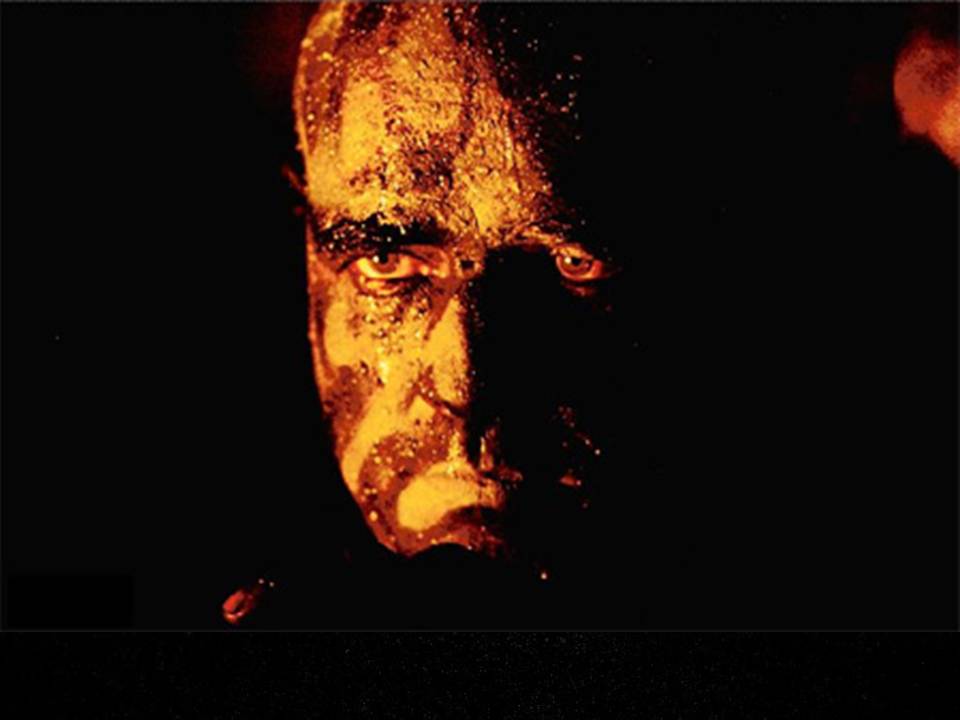
Charles Cameron sparked a discussion with his doublequotes post on two colonels, the late strategist John Boyd and the fictional monster,  Walter Kurtz from Francis Ford Coppola’s classic Vietnam War film homage to Joseph Conrad Apocalypse Now.  Kurtz is a disturbing figure, one who is recurrent in literature and history going back to Homer’s Iliad. A superlative warrior who excels above all others who nonetheless sheds all trace of civilization in his descent into barbarism. While the fall of a heroic individual can take many narrative forms, Kurtz is of a particular and dreaded kind of fallen man, the warlord.

Warlords are fascinating and repellent figures who seem to thrive best when the normal order of a society is breaking down, permitting the strong and ruthless to carve out their reputations in blood and infamy. As I have written previously:

Kent’s Imperative had a post up that would have been worthy of Coming Anarchy:

Enigmatic biographies of the damned 

“….Via the Economist this week, we learn of the death of an adversary whose kind has nearly been forgotten. Khun Sa was a warlord who amassed a private army and smuggling operation which dominated Asian heroin trafficking from remotest Burma over the course of nearly two decades. In the end, despite indictment in US courts, the politics of a failed state permitted him to retire as an investor and business figure, and to die peacefully in his own bed.

The stories of men such as these however shaped more than a region. They are the defining features of the flow of events in a world of dark globalization. Yet these are not the biographies that are taught in international relations academia, nor even in their counterpart intelligence studies classrooms. The psychology of such men, and the personal and organizational decision-making processes of the non-state groups which amassed power to rival a princeling of Renaissance Europe, are equally as worthy of study both for historical reasons as well as for the lessons they teach about the nature of empowered individuals.

….There are no shortage of warlords for such a study. Among the living we have Walid Jumblatt, the crafty chief of the Druze during the 1980’s civil war in Lebanon, the egomaniacal and democidal Charles Taylor of Liberia, Gulbuddin Hekmatyar the Islamist mujahedin commander and a large assortment of Somali, Colombian, Indonesian and El Salvadoran militiamen and paramilitaries. The history of the twentieth century alone offers up such colorful characters as “The Dogmeat General“, the ghoulishly brutal Ta Mok of the Khmer Rouge, “The Mad Baron” Ungern von SternbergCaptain Hermann Ehrhardt and Pancho Villa among many others.

What would such a historical/cross-cultural/psychological “warlord study” reveal ? Primarily the type of man that the German journalist Konrad Heiden termed “armed bohemians”. Men who are ill-suited to achieving success in an orderly society but are acutely sensitive to minute shifts that they can exploit during times of uncertainty, coupled with an amoral sociopathology to do so ruthlessly. Paranoid and vindictive, they also frequently possess a recklessness akin to bravery and a dramatic sentimentality that charms followers and naive observers alike. Some warlords can manifest a manic energy or regularly display great administrative talents while a minority are little better than half-mad gangsters getting by, for a time, on easy violence, low cunning and lady luck.

Every society, no matter how civilized or polite on the surface, harbors many such men within it. They are like ancient seeds waiting for the drought-breaking rains.

There are occasionally positive portrayals of warlords. Ahmed Shah Massoud, “the Lion of Panjshir” who fought tenaciously first against the Soviets, then later against the murderous Gulbuddin Hekmatyar’s army of thugs and the Taliban’s fanatics, providing a modicum of civilized governance to ordinary Afghans wherever his power ran, until his assassination by al Qaida. The cagey and mercurial Walid Jumblatt, made the transition from Druze warlord in the 1980’s to Lebanese politician and something of an elder statesman.

In literature, Xenophon was the de facto strategos of the retreating Greek mercenaries in The Anabasis of Cyrus, cut a noble example, but like Massoud, this is a rarity. In recent fiction, Stephen Pressfield created as an antagonist in The Profession, General James Salter, a totemic and caesarian figure who takes on the great powers with his PMC forces with impressive ruthlessness. In the popular fantasy series of George R.R. Martin that began with The Game of Thrones, the notable warlord is the outlandish, cruel and somewhat demented Vargo Hoat, who leads a freebooting company of misfit brigands “The Brave Companions“, whose nonstop atrocities and ludicrous pretensions lead all the other characters to call them “the Bloody Mummers“.

Given the world’s recent experiences with the Lord’s Resistance Army, General Butt Naked and the uprisings in Syria and Libya, I think Martin and Coppola have captured warlordism in it’s most frequent incarnation.

The Twilight War—a review

Monday, July 23rd, 2012

[by J. Scott Shipman]

The Twilight War, The Secret History of America’s Thirty-year Conflict with Iran, by David Crist

When President Obama made a heartfelt opening, a smug Iranian leadership viewed it as a ruse or the gesture of a weak leader. Iran spurned him. Obama fell back on sanctions and CENTCOM; Iran fell back into its comfortable bed of terrorism and warmongering. Soon it may no longer be twilight; the light is dimming, and night may well be approaching at long last. [emphasis added]

Thus concludes senior government historian David Crist’s The Twilight War, and be assured Crist’s language is not hyperbole. Crist masterfully details the tumult of U.S.-Iranian relations from the Carter administration to present day. Using recently released and unclassified archived data from principals directly involved in shaping and making American foreign policy, Crist provides the reader an up-front view of “how the sausage is made;” and, as with sausage, the view often isn’t pretty for either side. Crist’s access wasn’t limited to U.S. policy makers, as he conducted interviews with principles on the other side as well, for instance, he had secret meetings/interviews with pro-Iranian Lebanese officials in south Beirut. In all, Crist estimated he interviewed over “four hundred individuals in the United States and overseas.”

Crist begins his story with the Shah of Iran in the last days of his leadership, as popular sentiment was turning against both his regime, as well as his American enablers. He reveals the Carter administration’s fleeting notion of military intervention following the fall of the Shah, and includes details how the clerics reigned in professional Iranian military members, purging the “unreconstructed royalists.” From the start, the U.S. learned how difficult, if indeed impossible, relations were going to be with the new Iranian leadership. One State Department report summed up the situation:

It is clear that we are dealing with an outlook that differs fundamentally from our own, and a chaotic internal situation. Our character, our society are based on optimism—a long history of strength and success, the possibility of equality, the protection of institutions, enshrined in a constitution, the belief in our ability to control our own destiny. Iran, on the other hand has a long and painful history of foreign invasions, occupations, and domination. Their outlook is a function of this history and the solace most Iranians have found in Shi’a Islam. They place a premium on survival. They are manipulative, fatalistic, suspicious, and xenophobic.

While I am certain the writer of this report was not intending to be prophetic, as it turns out this paragraph captures the essence of our conflict. Each American president has thought himself equal to the challenge and each has thus far failed.

The Twilight War includes the birth of Hezbollah, accounts of the Marine barracks bombing in 1983 (from the men who were there), and the details of the Kuwaiti request for American protection of their tanker fleet from the Iranians. From this decision, the U.S. committed military force to protect Middle East oil—a difficult and at times, contentious decision. This decision resulted in continued sporadic confrontations between the U.S. and Iranian forces in the Persian Gulf.

Crist’s book is an illustration writ-large of a book previously reviewed here at Zenpundit.com; Derek Leebaert’s Magic and Mayhem, The Delusions of American Foreign Policy—as both “magic” and “mayhem” figure large in our on-going relationship with Iran. Most U.S. administrations when dealing with Iran came to rely on the “magic, ” and often divorced, or worse, ignored the realities.

At 572 pages, the fast paced narrative is a must read for anyone wanting insight into the origins and issues that remain in the ongoing U.S.-Iran conflict. The Twilight War is exhaustively sourced.  Crist says in the Notes his book was twenty-years in the making and it shows. Further, this book comes with excellent maps, so keeping up with the geography is made easier.

Tom Ricks said, “this is the foreign policy book of the year, perhaps many years,” and Ricks may be right. The Twilight War is an important and timely book on a vital topic, and comes with my strongest recommendation.

Postscript:

A copy of The Twilight War was provided to this reviewer by the publisher.


Switch to our mobile site

