zenpundit.com » 2012 » September

Archive for September, 2012

Kelly Vlahos Spoons John Nagl Over COIN

Monday, September 3rd, 2012

There is quite a buzz going in mil and defense blogger circles over the recent op-ed savaging in The American Conservative by Kelley Vlahos regarding Dr. John Nagl and COIN. Unfortunately for Vlahos, little of it that I have seen online or privately is favorable – including from some people who I know are less than well-disposed toward COIN or the COINdinistas.

Speaking as someone who was one of the earlier voices to remark that the political moment of pop-centric COIN had passed, I found Vlahos’ post to largely be ill-tempered, context-distorting, schadenfreude.

But hey, judge for yourself. My comments will be in normal text:

Learning to Eat Soup with a Spoon 

….Then Tom Ricks, Washington Post correspondent-court scribe, conducted a full-blown high school popularity contest, literally ranking the “brains behind counterinsurgency’s rise from forgotten doctrine to the centerpiece of the world’s most powerful military.” In this cringe-worthy “top ten” published in Foreign Policy in December 2009, Ricks places “King David” Petraeus at Number 1, and then Nagl, whose Oxford dissertation-turned-Barnes-and-Noble-bestseller Learning to Eat Soup with a Knife made him a counterinsurgency “scholar,” among other bright lights of the time. Nagl, Ricks predicted, would be “in a top Pentagon slot within a year or two.”

That was just three years ago. Today, there is no better symbol for the dramatic failure of COIN, the fading of the COINdinistas and the loss that is U.S war policy in Afghanistan than this week’s news that Nagl is leaving Washington to be the headmaster of The Haverford School, a rich preparatory school (grades k-12) for boys on Philadelphia’s Main Line.

Hmmmm. I guess General Petraeus as CIA Director and General Mattis as Combatant Commander of CENTCOM are therefore examples of a rare form of career failure.

And really, only a subpar military officer would involve himself in educating young people. Shame on you, John Nagl, for joining such a shady group of misfits.

….That’s right — Nagl, once called the Johnny Appleseed of COIN, who reveled in his role as face man, tutoring reporters with practiced bookish charm on the “the new way of war,”  and burnishing his personal story to convince everyone that he was a counter-insurgent before his time — a modern T.E. Lawrence — is packing up for good. Turns out that despite all the high hopes, the COINdinistas hit the brass ceiling with a smack, especially once it became clear that the magic they sold was a bag of beans….

Again, most of the COINdinistas, so-called, have not hit some kind of brass ceiling  nor are they secretly running the Army or the administration. Most are  in perfectly respectable but unremarkable ranks, institutional positions or jobs in the private sector. HR McMaster is now a brigadier major general, Con Crane is a director at the US Army Military History Institute, Kalev Sepp is a lecturer at the Naval Postgraduate School, Montgomery McFate holds the Minerva Chair at NWC,  General Jack Keane sits on several corporate boards, Fred Kagan is still at AEI,  Andrew Exum is at CNAS, David Kilcullen is the  CEO at Caerus Associates and so on.

By Washington standards, this is a relatively modest level of policy influence or promotion (Petraeus and Mattis excepted). If you want to look at rapid advancement through political connections, consider Al Haig rising like a rocket from LTC to full general and NATO Supreme Commander due to his proximity to Richard Nixon and Henry Kissinger. Or the unusually gilded career path of Colin Powell.

That said, there are many grounds, theoretical and practical, to find fault with pop-centric COIN theory and FM 3-24, from an anti-empirical legacy assumption of a Maoist model of insurgency, to a fundamental confusion of tactics and operational art with strategy to the hardening of COIN from a fairly flexible emergent doctrine in Iraq into a rigid, micromanaging, ROE dogma in Afghanistan. COIN is ripe for revision, not excision and substantive, informed, critiques of the wars of the past decade are sorely needed by scholars, military officers and defense intellectuals. Irregular conflict is never going away any more than war will go away.

Unfortunately, Vlahos was too busy with gossipy smears on Nagl’s character to make any substantive points of that nature which would have made her column something more than ad hominem rubbish.

Gloria Mundi Rapid Transit

Sunday, September 2nd, 2012

[ by Charles Cameron — that’s the thing: only what’s deep survives ]
.


.

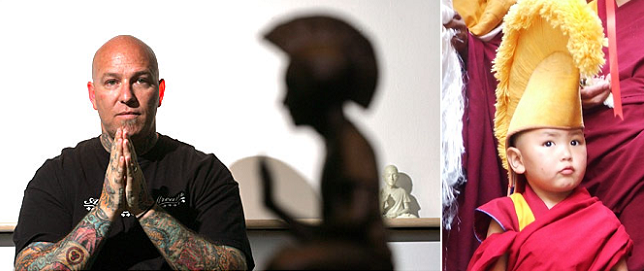
I don’t think the shadow on the wall behind and to the right of Noah Levine (above, left) is wearing a mohawk — I think it’s the shadow of a Tibetan monk wearing the kind of headdress you’ll see on the young Tulku (above, right)… but even so, the picture does remind me of this one, which I posted a few days ago, titled “choir punk”:
.


.

The similarities are more than visual, however — and they’re instructive.

**

As you may recall, the lower of the two images is one that I used to illustrate my opening post on the topic of Pussy Riot, and it illustrates the theme that punk and Orthodoxy have something important in common. The upper image (left) shows another punk who got religion — in this case, Buddhism. His name is Stephen Levine, and he’s the guy who set the Dharma Punx wheel rolling, coming out of a life of prison, punk and crack addiction into the stillness of meditation in much the same way that the punk monks featured in that earlier piece came out of their own nihilism, punk and despair into the stillness of contemplation…

From nihilism to peace.

I’ve never been into punk music myself, I’m a Bach and Gregorian Chant man — but what’s striking me here is the sense that punk knows the first thing there is to know: that the things we do to try to keep ourselves happy necessarily ring hollow after some time. Possessions, status — these things may appease us for a while, but they don’t truly satisfy.

The punk knows this, and the monk knows this — whether the monk in question is Buddhist or Christian or whatever. Only the monk makes the discovery that leads out of contemptus mundi into the alternative strategy.

**

And somehow, you need to reach full tilt boogie to get there, howsoever full tilt boogie may be defined in your own case, and whatever form the contemplative, relaxed, inward life may take.

Here are two versions of what it takes:

Samuel Johnson, I’d say, is seeing something very close to either one of these when he says:

Depend upon it, Sir, when a man knows he is to be hanged in a fortnight, it concentrates his mind wonderfully.

**

A close brush with death — or sure knowledge of one’s mortality. A red-hot iron ball stuck in your throat. Rock bottom…

All of these things can concentrate the mind wonderfully, and the concentrated mind can do things, can allow things that the bothered mind would get insanely bothered by.

You may wear rose-tinted glasses for a while, and get away with it. You can try out the dark glasses of ironic superiority. Both ways of looking involve a measure of self-delusion, however, for they catch surfaces and miss the depths.

At times — when you or someone you love gets an unexpected and advanced cancer diagnosis, say, or you lose your house to the bank — the illusions get stripped away, and you simply see. And what you see will either be enough to make you cry and rage, or enough to make you dance and sing.

Because when the illusions get stripped away, only what’s deep survives.

**

I’d like to take this just a step further.

The old Lakota medicine man Archie Fire Lame Deer told his biographer, Richard Erdoes:

I am no wino or pishko, but I am no saint either. A medicine man shouldn’t be a saint. He should experience and feel all the ups and downs, the despair and joy, the magic and the reality, the courage and the fear, of his people. He should be able to sink as low as a bug, or soar as high as an eagle. Unless he can experience both, he is no good as a medicine man.

I don’t suppose anything I say in words can get this exactly right anyway, but I’ll try.

If you try to give advice to someone who is suffering more than you have ever suffered, your advice is liable to come across as uncomprehending and shallow. You have to have known your own blues to sing the blues. And you have to be in peace to convey peace…

And that, it seems to me, is what allows monks to hear and understand and talk, peer to peer, with punks — and that’s what allows punks to become monks.

**

Noah Levin’s book, Dharma Punx, is available on Amazon, as is the DVD of Meditate and Destroy, the 2007 documentary about him.

**

Punk may still not be my kind of music — but I’m beginning to see the punk mohawk as a kind of instinctive tonsure…

Going five rounds and then some with those Egyptian Crucifixions…

Sunday, September 2nd, 2012

[ by Charles Cameron — news, debate, credibility, Muslim brotherhood, Egypt, Ansar al-Shariah, Yemen, capital punishment, scriptures, USA, progress? ]
.

There’s plenty of food for thought here — quite a Smörgåsbord in fact — with rumor outstripping fact, images and facts too grisly for the squeamish, biases and bias-confirmation, subtlety in the details, scriptural sanctions and shifts in emphasis, capital punishment… and human progress, to paraphrase William Gibson, more or less evenly distributed.

Round One:

.
On the 17th of August, Michael Carl wrote a piece, Arab Spring run amok: ‘Brotherhood’ starts Crucifixions in WorldNetDaily:

The Arab Spring takeover of Egypt by the Muslim Brotherhood has run amok, with reports from several different media agencies that the radical Muslims have begun crucifying opponents of newly installed President Mohammed Morsi.

Middle East media confirm that during a recent rampage, Muslim Brotherhood operatives “crucified those opposing Egyptian President Muhammad Morsi naked on trees in front of the presidential palace while abusing others.”

The run amok is stated as fact, the crucifixions are described in terms of reports.

Also worth noting:

Carl quoted in his support Raymond Ibrahim — a Fellow with the Middle East Forum and the Investigative Project on Terrorism — in support. It is worth noting that Ibrahim, who authored The Al Qaeda Reader — a book I admire for its pointed insistance of the religious current in AQ documents — is himself an American of Egyptian Coptic Christian parentage, whose views of the Brotherhood can be gleaned from a recent post of his titled Egypt: Islamists vs. Copts — An Animosity That Seeks Any Excuse to Attack

Round Two:

.
On the 22nd, Jonathan Kay responded to Carl’s piece in the [Candadian] National Post, Egypt’s “crucifixion” hoax becomes an instant Internet myth:

Have you heard the one about how Christians are being nailed up on crucifixes and left to die in front of the Egyptian presidential place?

It’s a story worth dissecting — not because it’s true (it isn’t), but because it is a textbook example of how the Internet, once thought to be the perfect medium of truth-seeking, has been co-opted by culture warriors as a weapon to fire up the naïve masses with lies and urban legends.

Kay then offered his somewhat nuanced critique:

It is, of course, theoretically possible that Muslim radicals truly have “crucified” someone, somewhere, sometime, in Egypt. Islamist mobs have staged countless murderous attacks on Copt “infidels” in recent years — and a crucifixion would hardly be a more barbarous tactic than truck bombs and beheadings.

But the story doesn’t just allege that a crucifixion has taken place somewhere in Egypt: It alleges that multiple crucifixions have taken place in front of the presidential palace. That would be the equivalent of, say, mass lynchings taking place in front of the White House, or a giant gang rape taking place in front of Ottawa’s Centennial Flame fountain.

Kay then goes into some detail about his attempts to find a single photograph — or an eyewitness account — of a crucifixion outside Egypt’s Presidential Palace, and his inability to find either one, coupled with his research into the murky origins of the story…

His overall sense of things?

Why do so many people believe this made up story? For the same reason that people believe all urban legends — because they play to some deeply held narrative that resides in our deepest fears. In this case, the narrative is that the Arab Spring is part of an orchestrated Islamist plot to destroy Western civilization (beginning with Israel).

Round Three:

.
Carl quickly responded with Video Report confirms Egyptian Crucificions.

The problem here: Kay had written “That’s because there is no Sky report on the subject” — he had, he write that, and Carl quoted him, pointing out that Sky had in fact carried a report, as if that dismissed Kay’s point. What Carl didn’t quote was the following paragraphs, in which Kay said:

Yesterday I contacted the management of Sky News Arabic, and asked them about the crucifixions. According to Fares Ghneim, a Sky communications official, the crucifixion claim “began on social media. It started getting pick-up from there and eventually reached us.”

“Our reporters came across reports of the alleged crucifixions and a story very briefly appeared on the Sky News Arabia website,” he added. “The story — which was taken down within minutes — was based on third-party reports and I am not aware that any of our reporters said or confirmed anything along the lines of what is quoted…

So: Kay somewhat foolishly overstated his case with his summary “there is no Sky report” but made it immediately clear that there was in fact a report, “taken down within minutes”. Carl then quotes the inaccurate summary and shows it to be inaccurate, while ignoring the more detailed (and accurate) version.

Round Four:

.
Jonathan Kay came back on the 24th with More on the debunked Egyptian ‘crucifixion’ hoax (and its 2009 precedent). He made the point I’ve just made above, and then mentioned a Carnegie Endowment report describing “an internet rumor circulated in late 2008 to the effect that Hamas was ‘celebrating’ Christmas by crucifying Gaza’s non-Muslims”:

And amazingly, it wasn’t just the conspiracy theorists at WND who got sucked into this one. According to Brown, it was featured in blogs connected to such respectable publications as The New Republic, National Review and Commentary. Even the Simon Wiesenthal Center was pushing the story.

Voices that agree with you are easier to hear (and believe) than voices that don’t.

Round Five:

.
Carl came back again with Shocking video evidence of Islamic Crucifixion on the 29th:

WND recently confirmed a Sky News Arabia report of the crucifixion of dissidents in Egypt.

According to a report by Lebanon Today translated into English, the Yemeni jihadist group Ansar al-Shariah took control of the Azzan area of Yemen and imposed Islamic law, or Shariah.

In the process, the group crucified three men, accusing them of being agents for the U.S. The executions reportedly took place several months ago.

See that?

We’ve been discussing crucifixions allegedly taking place right outside the Presidential Palace in Egypt, and although the headline here doesn’t specify Egypt, the Egypt story is again mentioned — at which point we switch from Egypt to Yemen, and from the Muslim Brotherhood to the AQAO-related Ansar al Shariah!

Funny thing, that.

And then some:

.
The Carnegie report:

Here’s another quick quote from the Carnegie Endowment’s piece to which Kay referred, Pointers for the Obama Administration in the Middle East: Avoiding Myths and Vain Hopes from January 2009:

Myth 4: Hamas decided to celebrate Christmas by crucifying people.

Didn’t hear this one?

It is an odd story and one that is not central to diplomatic efforts. But it can illustrate the treacheries of finding one’s way in the conflict.

Different versions of this story has spread around the world—propounded most recently by a member of the Australian Senate.

If you have not read about it, that is because of what you choose to read. If you rely on the New York Times, the story would be news to you. If you choose the Washington Post, you may remember it popping up in Charles Krauthammer’s column. It turned up at least twice in the Washington Times. In the UK, it was asserted by a columnist for the Times but by none in the Guardian. Aficionados of English-language Israeli press would have read it a couple times in the Jerusalem Post but never in Ha‘aretz. It was featured in blogs connected to the New Republic, the National Review, and Commentary, but not the Nation or Mother Jones. It was pushed by the Simon Wiesenthal Center but not pursued by other mainstream Jewish organizations.

Oh, and by the way — it’s not true.

So the credibility of various media is at issue here, eh?
.

WND:

As Kay observed in his first piece, WorldNetDaily does have a history of making dubious conspiracist claims, such as:

most of the medical (not socio-spiritual) blame for today’s rise in homosexuality must fall upon the rise in soy formula and other soy products

Medical authorities with a wide range of approaches have refuted this claim, from Dr Andrew Weil (“the premier resource for timely, trustworthy information on natural health and wellness“):

When you consider that millions of men in China, Japan and other Asian countries have had soy foods in their daily diets from earliest childhood, you can appreciate that the plant estrogens they contain have no discernible effect on male sexual development, and no feminizing effects at all.

to the National Center for Biotechnology Information at the National Institutes for Health, which hosts the Fertility and Sterility (2010 May 1; 93(7): 2095-104) article Soybean isoflavone exposure does not have feminizing effects on men: a critical examination of the clinical evidence.
.

Meanwhile in Yemen…

I usually like to have an intriguing graphic at the head of my posts, but the appropriate graphic for this one is striking enough that I thought it better to present it here, well into the body of the post. It comes from MEMRI TV:

It depicts that crucifixion in Yemen. And I’d say it represents a man who has been hung on a cross to die in the excruciating heat, rather than someone crucified in the Roman manner. Either way, the death would be a horrible one — and such things happen.

It appears there was indeed a crucifixion — indeed, there may have been three — in Yemen.
.

Nota Bene:

But note well: this is not the Muslim Brotherhood, this is not Egypt, this is not anything happening directly in front of Morsi’s Presidential Palace. This is Yemen, and this is allegedly the work of Ansar al-Shariah.

Gregory Johnsen described the relationship between Al Qaeda in the Arabian Peninsula (AQAP) and Ansar al-Shariah a few months ago in this Frontline piece:

We know that Nasir al-Wuhayshi heads both AQAP and Ansar al-Sharia. We know that the different emirs for Ansar al-Sharia accept the bay‘a or oath of allegiance on behalf of Wuhayshi. And we know that members claimed by Ansar al-Sharia are also claimed by AQAP. … What we don’t know is whether everyone who self-identifies as Ansar al-Sharia would also identify as a member of AQAP.

Okay, the exact, appropriate use of the term Al-Qaeda and the relations of AQAP and Ansar are topic of discussion among scholars. But whether you think, Brotherhood, Al-Qaeda, they’re all the same, or Brotherhood, Al-Qaeda, so very different, likely depends on how much you know about the respective organizations and their history.

Here’s a fairly nuanced assessment from CFR:

Since 9/11, prominent members of the Brotherhood have renounced violence publicly and tried to distance themselves from al-Qaeda’s violent practices. The Brotherhood’s foray into electoral politics has also widened the schism between them and groups like al-Qaeda. Zawahiri had been openly critical of the Brotherhood’s participation in the 2005 parliamentary elections.

But like other mass social movements, Egypt’s Muslim Brotherhood is hardly a monolith; it comprises hardliners, reformers, and centrists, notes terrorism expert Lydia Khalil. And some hardline leaders have voiced support for al-Qaeda or use of violent jihad…

By way of religious context:

The Qur’an endorses crucifixion as a penalty at 5.33-4:T

Those who wage war against God and His Messenger and strive to spread corruption in the land should be punished by death, crucifixion, the amputation of an alternate hand and foot or banishment from the land: a disgrace for them in this world, and then a terrible punishment in the Hereafter, unless they repent before you overpower them: in that case bear in mind that God is forgiving and merciful.

Similarly, the Torah in Deuteronomy 21.18-21 endorses death by stoning for disobedient sons:

If a man have a stubborn and rebellious son, which will not obey the voice of his father, or the voice of his mother, and that, when they have chastened him, will not hearken unto them: Then shall his father and his mother lay hold on him, and bring him out unto the elders of his city, and unto the gate of his place; And they shall say unto the elders of his city, This our son is stubborn and rebellious, he will not obey our voice; he is a glutton, and a drunkard. And all the men of his city shall stone him with stones, that he die: so shalt thou put evil away from among you; and all Israel shall hear, and fear.

Jesus in the Gospel of John 8.7 comments on the punishment by stoning of an adulteress with a clever rabbinic shift of emphasis — not denying earlier scripture (Deuteronomy 17.7) which called for the first stone to be cast by a witness, but rendering the punishment itself effectively impossible to carry out:

He that is without sin among you, let him first cast a stone at her.

Finally:

From stoning, crucifixion and beheading, we the human race have by and large progressed in our use of capital punishment to such more recent devices as the guillotine, gas chamber, electric chair, and lethal injection.

Someone named Starling Carlton was executed in South Carolina in 1859 for aiding a runaway slave.

According to the Innocence Project:

Seventeen people have been proven innocent and exonerated by DNA testing in the United States after serving time on death row.

And so the wheel turns.

Apocalyptic Trivia

Sunday, September 2nd, 2012

[ by Charles Cameron — the true Beast revealed, in fiction and non-fiction ].
.

I thought this, which I came across on the web, was my apocalyptic find for the day:

Halfway through SEAL training, Cadet Jack Walker, still green but showing incredible promise, is whisked away to join four SEALs—and their dog—for a special ops mission. Walker soon finds himself in a whirlwind of otherworldly creatures and events as he finds out the true nature of this “special ops” team: SEAL Team 666. Battling demons, possessed humans, mass-murdering cults, and evil in its most dark and ancient form, SEAL Team 666 has their work cut out for them. And it’s not long before they realize that the threat isn’t just directed against the U.S.—an ancient and deadly cult has bigger plans, and Walker is at the center of a supernatural conflict with the entire world at stake.

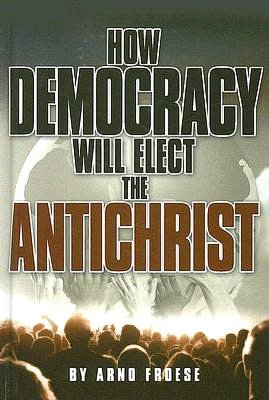
Until, that is, I went to the thrift store, and found this:

It is ironic that democracy, the system we so love, cherish, and defend, is the only system that seems to match the endtime political scenario whereby the entire world will be united. Strangely enough, it is not through the force of communism, or some dictatorship, but the peaceful means of election “by the people, for the people,” that the prophesied one world system is being established in our day!

**

SEAL Team 666 will be available in December.

Three dreams: the Saudi King’s, Dr. King’s and Rodney King’s

Saturday, September 1st, 2012

[ by Charles Cameron — a pub in Wiltshire, Abu Aardvark, monarchical survival in the Middle East, Kanye West, C Peter Wagner, spiritual warfare, diabolic possession, Amaterasu ]

.

Three Crowns, Brinkworth
image hommage: The endless British pub crawl

.

It looks to me as though Abu Aardvark aka Marc Lynch — associate professor of political science and international affairs at George Washington University and one of the prime go-to blogger on matters Middle Eastern — first mentioned monarchy on his FP blog in December of last year, writing:

Finally, there’s a widespread sense that the Gulf monarchies have proven more resilient than their non-monarchical Arab counterparts. The wealthy Gulf states seem relatively immune to the popular mobilizations which have challenged most of the other regimes in the region. Advocates of the Gulf exceptionalism stance point to small citizen populations, huge government employment and patronage opportunities, and monarchical legitimacy as buffers against popular outrage.

In June of this year, he picked up the thread, saying:

Explaining this variation in regime survival and which strategies and structures proved more effective in the face of popular challenge will likely be a major preoccupation of the field in the coming years.

One common answer has been particularly contentious among academics: monarchy. Is there a monarchical exception, or some reason to believe that monarchies are more resilient in the face of popular grievances? For some, the answer is obvious: none of the fallen regimes were monarchies, while non-monarchies have struggled or fallen at historic rates. As Michael Herb argues,“the regimes most seriously affected by the Arab Spring were not monarchies, with the exception of Bahrain.” But others are far more skeptical that monarchy makes the difference. After all, Gulf monarchies such as Bahrain, Kuwait, and Oman all experienced significant mobilization, as did non-oil monarchies such as Jordan and Morocco, which gives lie to any sense of their greater innate legitimacy. Other factors such as oil wealth, ethnic polarization or external support may be more important than monarchy as such. The significance of monarchy in regime stability should be a vibrant debate in academic journals in the coming years.

And then yesterday his entire post was titled Does Arab monarchy matter?, in which he says:

The advantages of monarchy have taken on the feel of “common sense” among the public and in academic debates. But I remain highly skeptical about the more ambitious arguments for a monarchical exception. Access to vast wealth and useful international allies seems a more plausible explanation for the resilience of most of the Arab monarchies.

and throws in for good measure a delightful reworking of a line from (apparently) Kanye West:

To paraphrase one of our great living philosopher kings, the Arab monarchies may be forced to choose among three dreams: the Saudi King’s, Dr. King’s and Rodney King’s.

**

I do want to suggest to Abu Aardvark that ideas like the divine right of kings [link is to James I] never quite fade away, that there is a deep thirst for the mandate of heaven [Shu Jing], that there may in short be a quasi-sacramental force to the issue.

I don’t think that this guarantees the continuation of monarchical lineages, in the Middle East, the UK, China or elsewhere — but it may favor them, other things being equal.

**

But okay. I said some months back that I hoped to tackle the issue of monarchism in a post at some point, and I’m still eager to disagree with the Christian evangelist C Peter Wagner, who can be seen on YouTube saying:

There is a spirit called a Harlot, a principality, who dominates nations, who dominates territories, who dominates people groups very, very clearly to such an extent that she has fornication with kings. And I can give you an example of how she does this: Japan, as a nation, is one of the nation’s of the world which has consciously, openly invited national demonization.

The Sun Goddess visits him in person and has sexual intercourse with the Emperor. It’s a very, very powerful thing. So the Emperor becomes one flesh with the Sun Goddess and that’s an invitation for the Sun Goddess to continue to demonize the whole nation.

Since the night that the present emperor slept with the Sun Goddess, the stock market in Japan has gone down. It’s never come up since.

I’m serious about this. I’ve been out and bought myself a copy of DC Holtom‘s The Japanese Enthronement Ceremonies — Sophia ed, 1972, what a gorgeous book! — and downloaded a number of learned papers on the topic by Felicia Bock, Carmen Blacker, and Adrian Mayer. Japanese court ceremonial is not exactly an easy study — but time permitting, I should be able to bring you something a little more subtle than Wagner’s demponically-challenged interpretation one of these days.


Switch to our mobile site