zenpundit.com » 2013

Archive for 2013

In Praise of Charles Cameron

Thursday, October 10th, 2013

[by Mark Safranski, a.k.a. “zen“]

I am not sure how many of the readers ever make it to the “About” page, but there are blurbs for all of the bloggers here, done in my usual ad hoc style. This is what it reads for Charles Cameron:

Charles Cameron,  has also posted at Small Wars Journal, All Things Counterterrorism, for the Chicago Boyz Afghanistan 2050 roundtable and elsewhere.  Charles read Theology at Christ Church, Oxford, under AE Harvey, and was at one time a Principal Researcher with Boston University’s Center for Millennial Studies and the Senior Analyst with the Arlington Institute

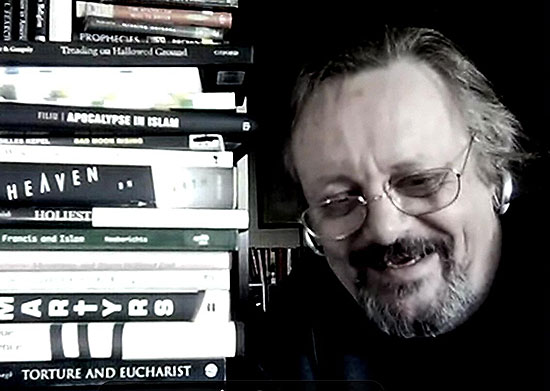
All well and good, though that does not begin to scratch the surface of Charles who has a most interesting biography as a poet, bohemian adventurer and independent scholar. There’s a bit more available at his Sembl project page. If you ever have the chance to sit and talk with Charles F2F over coffee or a beer, you are in for a treat, if wide-ranging intellect and deep learning delivered with gentlemanly grace is your thing.

The reason for this post is that there is a new addition to Charles’ bio – he is now the Managing Editor of zenpundit.com.

Charles’s contributions here in terms of writing are invaluable, but he has also been an increasing factor behind the scenes. His ideas for potential round table projects, soliciting guest posts, recruiting new bloggers and raising the profile of ZP have been all to the good. I have come to realize that my own limitations in terms of schedule to execute some of these ideas Charles has brought may be preventing good things from happening that the readership would enjoy. It is time for me to step back a bit and give Charles the freedom to grow the blog and move zenpundit.com  forward.  I can’t think of anyone better suited for the role than Charles Cameron.

Yes, I will still be here, as will Scott Shipman and Lynn Rees, but it’s time for a new hand at the wheel.

“Truth is lived, not taught”

 – Herman Hesse

Two Manea COIN Interviews at SWJ

Thursday, October 10th, 2013

[by Mark Safranski AKA “zen”]

Octavian Manea has two excellent interviews up at SWJ; for those interested in COIN theory and history, these are must-reads:

Learning From Today’s Crisis of Counterinsurgency

SWJ: What is the relevance of post-9/11 counterinsurgency campaigns for future Western expeditionary operations? What are the challenges you expect to see repeated in future campaigns? Is the past a prologue to the future?

Robert Egnell: In a simplified version, General David Petraeus already answered this question: “the counterinsurgency era is not over [because] the insurgency era is not over.” So long as the operating environment looks as it does today, so long as the character of conflict looks as it does today, the lessons at the tactical level of the last ten years remain highly relevant. Even if we can debate the concept of counterinsurgency and its application today and tomorrow, the lessons of operating in urban environments, foreign languages and foreign cultures will be relevant also in the future. Expeditionary powers cannot escape these challenges. It is not going to get easier: how to engage with a civilian population, how to establish and maintain civil order, how to collect and process human intelligence, how to operate in a foreign environment, how to provide basic services. These are challenges that are here to stay with us as we move forward.

David Ucko: Beyond these common operational challenges, one of the most pressing lessons from the cases discussed in the book is the need for greater strategic thinking. This sounds like a cliché these days, and becomes a catchall explanation with little substance. But despite great talk about the need for strategy, I don’t think the term or the art is widely understood. Looking at what happened in the last ten to fifteen years – whether we call it counterinsurgency, war, contingency operations, it doesn’t really matter – the ability to craft and implement a viable strategy is absolute, for any power involved in any kind of expeditionary operations. This is the relevance of the post-9/11 expeditionary operations and our book seems to place counterinsurgency within this strategic context. There are great lessons from these campaigns and we would be absolutely foolish to dismiss them as aberrations just because we don’t like the word “counterinsurgency.”

and

Gangs, Slums, Megacities and the Utility of Population-Centric COIN

SWJ: Are these trends here to stay with us? Are we heading towards a world that provides more opportunity for these dark networks to proliferate, to incubate? On one side, we see concentrated urbanization in coastal, hyper-connected areas that will need to accommodate more and more waves of rural immigrants. Presumably this will put pressure on an already overstretched city infrastructure. On the other side, we see what Moises Naim is talking in his latest book the decline/decay of power, the decoupling of power from size, the decoupling of the capacity to use power effectively from the control of a large Weberian bureaucracy.

VF-B: They will definitely stay and perhaps will intensify, partially for the reason that urbanization is taking place in a way and magnitude with which many governments struggle to cope. Much of Mexico City, a megacity of 20 millions people, for example, is really disconnected from the central government and the central business areas. Another example is Karachi: yes, the blood bath that we see there is partially instigated by state actors, but it is also a phenomenon of a very tenuous and limited control of the state in many areas of the city. I am intrigued by the Moises Naím’s suggestion of the decoupling of the effective exercising of power from the Weberian bureaucracy. I would say that the Weberian construct of power has never been as widespread as we imagine. Many areas in the world, Africa being the prime example, have had a different notion of the state, one much closer to the medieval conceptualization where the purpose of the state and the purpose of power competition for controlling the state apparatus is to make money for oneself as opposed to the public service state whose main raison d’etre is to deliver public goods to citizens in exchange for legitimacy and sustainability. In the end the social contract emerged because the self-interested elites understood that they need to offer something to the population. The notion that the state is weakening and collapsing might not be really appropriate for many parts of the world where the state has always been defined as a mafia bazaar. You take over the state so you can issue exceptions from law enforcement to your friends, so that you and your friends can make money.

In other parts of the world, the state might have also not been quite conceptualized in terms of social contract and Weber like notions.  For example, in parts of Latin America, the state lies somewhere in between the European/Western model and some of the Asian or African states. In Latin America, the state is often captured by and serves a very narrow elite. Many countries in Latin America are still highly exclusionary. Even in places like Colombia with all of its progress over the past decade, there is still a fundamental unequal society. Yes, the middle class is increasingly able to participate in state making, along with the political and economic elites, and being able to demand accountability. But still vast segments of population are really not experiencing the state in any positive manner or not experiencing the state at all. Much of Central America faces massive challenges: tax collection might be as low as 10%, and the political and economic power is enormously concentrated in the hands of narrow  elites.

All that said, the future, if troubling trends are not mitigated now, might bring some fundamental challenges. Imagine if in the long term, there is substantial global warming, major sea level rise, and large parts of Bangladesh, for example, are submerged. This will generate huge waves of immigrants, but also radically empower the non-state actors who are able to provide some sort of protection and public goods to the population.

Read the rest here.

Strategy, Winston Churchill, and the power of positive thinking

Monday, October 7th, 2013

[by Lynn C. Rees]

Winston Churchill had terrible parents.

Randolph Churchill was a Tory meteor who shot brightly across British politics only to die of syphilitic inanity by age 45. The elder Churchill’s attitude towards his firstborn was cold and dismissive: while he may never have said anything as chilly as Arthur Wellesley’s mother (“my ugly boy Arthur was food for powder and nothing more”), Randolph Churchill agreed with Ann Wesley’s sentiments enough to pack young Winston off to Sandhurst to become cannon fodder.

Randolph Churchill

Randolph Churchill

Jennie Jerome was an American heiress who spent most of her time pursuing (and being pursued by) high London society. Winning Mum of the Year was item 113 on her 100 item todo list. When his mother finally allowed him to develop a personal relationship with her deep into his twenties, Churchill described their relationship as more brother-sister than mother-son.

Jennie Jerome Churchill

Jennie Jerome Churchill

Churchill reacted to his parental deep freeze by idealizing mum and dad. If the beacon of maternal love in Churchill’s memoirs will never be mistaken for the real Jennie Jerome Churchill, Churchill ignored the incongruity. If the romanticized father he worshipped bore only a slight resemblance to the real Randolph Churchill, Churchill’s desire for the approval of this shade conjured by his own vast imagination was enough to spur him to great deeds. Asked later in life what his greatest regret was, Churchill surprised one interviewer by wistfully wishing that Randolph Churchill had lived to see his son’s career success. Churchill even had a dream starring Randolph Churchill in 1947, 50 years after his father’s died. His father’s ghost appeared and interrogated Churchill about happenings in the world since his death. Churchill got to most of early 20th century history but, tellingly, he didn’t have enough time to tell his father of his key own role in those events before the dream ended.

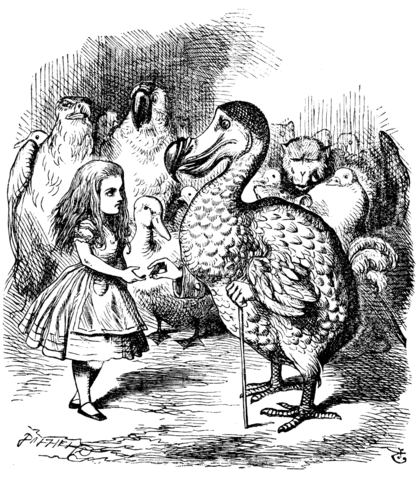
Churchill’s eager over-imaginings not only gave him wonderful parents but other equally sustaining fictions. Churchill believed in (and almost willed into existence) a United Kingdom of Great Britain and Ireland that was as strong and vital in the early 20th century as it was under Pitt or Temple. In reality, the Britain of Churchill’s time was a run-down and dispirited shadow of glory, more fixated on bread and butter at home than dash and destiny abroad. In Churchill’s imagination, the Britain of 1940 was a Tyrannosaur among sheep. In reality, it was a dodo among eagles and bears.

United Kingdom of Great Britain and Ireland

The United Kingdom of Great Britain and Ireland

Lawrence Freedman has argued that Churchill’s strategy in 1940-1941 is vastly different from the strategy contemporary strategic studies holds up as an ideal. His strategy was the triumph of hope over experience, one of the great fantasy spectaculars of the 20th century. His soldiers were tired, his people were dispirited, his aircraft carriers carried biplanes, his generals were mulish, and his empire was restive. The only anchors in reality for Churchill’s strategy were the inability of Nazis to march over or part the English Channel and American reluctance to see faltering Britain replaced by revanchist Germany. All else was theater.

Mule

Mule

Churchill won the Nobel Prize for literature in 1953. This is revealing: Churchill was a better writer than orthodox strategist. His delusions were as larger than life as his correct notions were. But Churchill’s resort to grand narrative was far more successful than strategic orthodoxy can capture or comprehend. More often than not, the strength of conviction behind a strategy’s more tenuous elements wins more in war than its tenuous connection to reality warrants.

Churchill’s strategy in childhood consisted of holding on to a series of deluded and contradictory beliefs about his parents in the hope that something good would turn up. Churchill’s strategy in World War II consisted of holding on to a series of deluded and contradictory beliefs about the British Empire in the hope that something would turn up. Self-appointed strategic professionals often diagnose a possible strategic outcome as impossible only to be confounded when someone clings to impossibility until the possible turns up. Mere clinging has a long and distinguished record of unmasking the impossible as only the improbable under the wrong circumstances and the all too probable under the right circumstances.

Serpent logics: KarlreMarks and LizzyPearson

Monday, October 7th, 2013

[ by Charles Cameron — yet another quick dip into the dizzying world of patterns enfolded in tweets ]
.

My collection of “Serpent logics” or “patterns of thinking” in the miniature format provided by the Twitter-stream got a noble boost today — you can blame my insomnia for my noticing this — from Karl Sharro and Elizabeth Pearson:

Sbarro unwittingly triggered things off by tweeting:

Pearson picked upon the “nested” quality of this tweet, and tweeted back:

and to clarify:

**

That was neat enough indeed, what with three instances in a row of self-referential tweets, each of which enfolds a previous tweet within it — the pattern I’m always on the look out for, and call “Matrioshka” after those nested Russian dolls — but there was more to come. I turned back — how could I help it — to the first tweet from Sharro:

and searched for the tweet embedded therein:

A little deeper into the conversation, I came across this rejoinder, which sent me off on a further journey:

and lo, the embedded link here led me to a page that contained not one but dozens of tweets, all based on the formula of the three characters went into a bar joke, many of the examples turning Sharro’s mind to matters of philosophy and the Middle East…

**

They’re all examples of the kind of “collision thinking” that Arthur Koestler specifies as the source of creative insight (aha!), comedy (ha!) and tragedy (aiyyeee!) — but I’ve selected three which represent three of the different patterns I’m intrigued by:

That’s a serpent biting its tail joke, if ever I saw one, a conspiracist take on conspiracism.

Now that, I aver, is a extaordinary example of enantiodromia, or direct reversal.

And for the pattern I call nominal, one can hardly better this play between the word minimalist and its context…

**

It’s time for me to get minimal, too. I have a quite a long line of “Serpent logics” more or less lined up and ready to go, but putting too many of them in one post gets tedious for the readership, so I’ve cut these examples out of the herd to give you a taste, and will follow up with two mmore selections in a day or two.

The Myhrvold Report and Understanding Strategic Threats

Monday, October 7th, 2013

[by Mark Safranski, a.k.a. “zen“]

Several weeks ago, Cheryl Rofer wrote an important post analyzing the report “Strategic Terrorism: A Call to Action” by Microsoft billionaire, venture capitalist, theoretical mathematician and cookbook author, Dr. Nathan Myhrvold. I found Cheryl’s argument quite persuasive and would like to add a few points of my own; because while some of the concerns raised by Myhrvold are valid and his intent is no doubt well-meaning, the approach he suggests is, at times, problematic.

If in the past ten years you have been a serious student of terrorism studies, insurgency and COIN, national security, counter-terrorism policy, counter-proliferation policy,  intelligence community affairs and military theory, there is little that will be new for you in the first part of the report. Many of these problems had previously been raised (at least in part) by figures as disparate as Michael Scheuer, John Robb, Martin van Creveld, Thomas P.M. Barnett, William Lind,  Robert Bunker and dozens if not hundreds, of thinkers, practitioners and scholars. In addition, this ground was also covered by government agencies like the National Intelligence Council in its periodic Global Trends reports, and in classified analysis by the Office of Net Assessment and various three letter agencies. The blogosphere also had a lively discussion of catastrophic WMD terrorism, superempowered individuals, 4GW/5GW, apocalyptic Mahdism and related subjects throughout the mid to late 2000’s.  Diffusion of society-shifting power into the hands of small groups and individuals was a theme of Alvin and Heidi Toffler back in the 70’s and 80’s, so this is an old rather than new problem.

Dr. Myhrvold is a polymathic character, but his original area of specialization was mathematical research so it is not surprising that his approach to things “strategic” is dominated by scalar considerations. Namely, a threat taxonomy based upon potential magnitude of  disaster events up to the extinction of the human race (High M 10).  Wondering here, as the bibliographic references of this report are extremely scanty, if Myhrvold was influenced by Herman Kahns ideas on escalation or game theory based literature on deterrence or something else. Regardless, while there’s some merit to this definition – obviously if your civilization is destroyed or everyone is dead you have suffered the ultimate in strategic defeat – there are weaknesses too as the linear progression of destruction implies an apolitical environment and inevitable process. That’s not how things work with strategy in the real world, neither today nor back in the era of Cold War superpower nuclear brinksmanship. Even John Foster Dulles and Vyacheslav Molotov were more politically nuanced than that.

This is an important point. Myhrvold is focused on capacity alone rather than in conjunction with political purpose in defining strategic threats.  Capacity in bad hands is worth worrying about and Myhrvold is right when he criticizes the government for their obstinate refusal to develop a robust threat detection system for shipping to US ports of entry ( that’s boring, hard work with little payoff from a political perspective, but the NSA building a system for surveilling all Americans is fun and gives government bureaucrats great potential power to ruin anyone they wish); that said, outside of comic books and James Bond movies, people do not historically initiate violence on an epochal scale out of a Joker-like admiration of nihilism, not even terrorists. Instead, they have a political end in mind for which violence is a tool. This variable appears to be absent from Myhrvold’s thinking.

More troubling, Myhrvold’s solution to the potential threat of bioweapon terrorism would appear to be, as I infer it, even greater centralization of power in the hands of a national security surveillance state. As I expect Dr. Myhrvold is a great respecter of data-driven, probabilistic logic, he might want to consider that nearly every man-made, high magnitude, lethal event in the past century and a quarter years has been initiated by governments for reasons of policy, up to and including the auto-genocide of tens of millions of their own citizens. Most people on this planet are in far greater danger of harm at the hands of the state than they are as a result of terrorism or foreign attack and it would seem foolish, in light of such statistics, to increase our risk by delegating greater grants of power to the entity most likely to cause us harm. In the words of the late defense and security expert Dr. Fred Ikle, we would be risking Annihilation from Within.

Ikle anticipated years ago much of what Myhrvold wrestled with in his report and, in my view, prescribed better answers.

Switch to our mobile site