zenpundit.com » geopolitics

Archive for the ‘geopolitics’ Category

None Dare Call it a Rogue State

Wednesday, December 9th, 2009
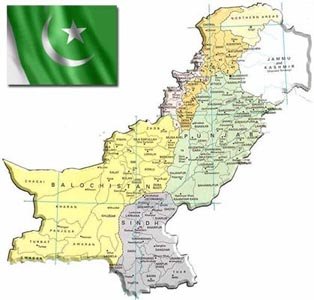
 

Reader Isaac, points to an excellent analytical overview of Pakistan’s national nervous breakdown at Dawn.com, by Nadeem F. Paracha. It is a lengthy but stupendous post with some 200 + comments:

Little monsters

There is nothing new anymore about the suggestion that over a span of about 30 odd years, the Pakistani military and its establishmentarian allies in the intelligence agencies, the politicised clergy, conservative political parties and the media have, in the name of Islam and patriotism, given birth to a number of unrestrained demons which have now become full-fledged monsters threatening the very core of the state and society in Pakistan.

A widespread consensus across various academic and intellectual circles (both within and outside Pakistan), now states that violent entities such as the Taliban and assorted Islamist organisations involved in scores of anti-state, sectarian and related violence in the country are the pitfalls of policies and propaganda undertaken by the Pakistani state and its various intelligence agencies to supposedly safeguard Pakistan’s ‘strategic interests’ in the region and more superficially, Pakistan’s own ideological interest.

….The 1980s and the so-called anti-Soviet Afghan jihad is colored with deep nostalgic strokes by the Islamists and the military in Pakistan. Forgetting that the Afghans would have remained being nothing more than a defeated group of rag-tag militants without the millions of dollars worth of aid and weapons that the Americans provided, and Zia could not have survived even the first MRD movement in 1981 had it not been due to the unflinching support that he received from America and Saudi Arabia, Pakistani intelligence agencies and its Afghan and Arab militant allies were convinced that it was them alone who toppled the Soviet Union.

The above belief began looking more and more like a grave delusion by the time the Afghan mujahideen factions went to war against one another in the early 1990s and Pakistan was engulfed with serious sectarian and ethnic strife. But the post-1971 narrative that had now started to seep into the press and in many people’s minds, desperately attempted to drown out conflicting points of views about the Afghan war by once again blaming the usual suspects: democracy, secularism and India.

Many years and follies later, and in the midst of unprecedented violence being perpetrated in the name of Islam, Pakistanis today stand more confused and flabbergasted than ever before.

The seeds of the ideological schizophrenia that the 1956 proclamation of Pakistan being an ‘Islamic Republic’ sowed, have now grown into a chaotic and bloody tree that only bares delusions and denials as fruit.

Read the rest here.

There has been an ocean of ink spilled about the Obama administration’s Hamlet-like deliberation over a war strategy for Afghanistan and on the implications of agreeing to 30,000 rather than the 40,000 new troops for the “Afghan Surge”, as Gen. McChrystal had originally requested. The 10,000 difference in boots is not the salient strategic point, though it is the one that excites political partisans on the Right, Left and anti-war Far Left. It also distracts us from debating our fundamental strategic challenge.

The horns of our dilemma is that our long time “ally” whom we have hitched ourselves to in a grand war effort against revolutionary Islamist terrorism is not our ally at all, but a co-belligerent with our enemy. By every policy measure that matters that causes the United States – justifiably in my view – to take a tough stance against North Korea and Iran, applies in spades to Islamabad. Yet none dare call Pakistan a rogue state.

It is the elephant in our strategy room – if the elephant was a rabid and schizophrenic trained mastodon, still willing to perform simple tricks for a neverending stream of treats, even as it eyes its trainer and audience with a murderous kind of hatred. That Pakistan’s deeply corrupt elite can be “rented” to defer their ambitions, or to work at cross-purposes with Pakistan’s perceived  “interests”, is not a game-changing event. Instead, it sustains and ramps up the dysfunctional dynamic we find ourselves swimming against.

We play a bizarre game, our leaders being more concerned about Pakistan’s “stability” than Pakistan’s own generals and politicians who egg on, fund and train the very militant Islamist groups spreading death and chaos inside Pakistan and beyond its borders. Why can we not find Osama bin Laden or Mullah Omar ? Because they are high value clients of the ISI which is no more likely to give them up than the KGB was to hand over Kim Philby.  

Until America’s bipartisan foreign policy elite grapple with the fact – and it is an easily verifiable, empirical, fact – that Pakistan’s government is in chronic pursuit of policies that destabilize Central Asia, menace all of Pakistan’s neighbors, generate legions of terrorists and risk nuclear war with India, no solutions will present themselves.

A strategy will only have a chance of success when it is grounded in reality.

Strategy, Dilemmas and Choices

Monday, November 2nd, 2009

Futurist Jamais Cascio on strategic forecasting:

Futures Thinking: Asking the Question

….”Asking the Question” is the first step in a formal futures thinking project. At first glance, it should be easy–after all, you should know what you’re trying to figure out. Unfortunately, while it may be simple to ask a question, asking the right question is much more challenging It’s easy to ask questions that are too vague, too narrow, or assume the answer; it’s much more difficult to ask a question that can elicit both surprises and useful results.

….It’s a subtle point, but I tend to find it useful to talk about strategic questions in terms of dilemmas, not problems. Problem implies solution–a fix that resolves the question. Dilemmas are more difficult, typically situations where there are no clearly preferable outcomes (or where each likely outcome carries with it some difficult contingent elements). Futures thinking is less useful when trying to come up with a clear single answer to a particular problem, but can be extremely helpful when trying to determine the best response to a dilemma. The difference is that the “best response” may vary depending upon still-unresolved circumstances; futures thinking helps to illuminate possible trigger points for making a decision.

Cascio’s framing of dilemmas is reminiscient of a discussion I had here a while back with Dave Schuler regarding “wicked problems” though dilemmas appear to be more generic a class of difficulties ( all dilemmas are not wicked problems but all wicked problems represent a dilemma). There is a lot of merit to the frame that Cascio is using and it points to the dysfunctionality present in top tier national security decision making.

Pakistan, for example, represents a serious dilemma for the United States.We need to begin, as Cascio suggests, by framing the right questions. A better question than “Is Pakistan an ally?” would be “Is Pakistan our enemy?”

Islamabad is a major state sponsor of terrorist groups, perhaps the largest on earth in that regard. It has a poor record – again one of the world’s worst – on nuclear nonproliferation and nuclear security issues. Pakistan’s civilian elite is amazingly corrupt and it’s thoroughly undemocratic senior officer corps of the Army only moderately less so. Pakistani public opinion borders on delusional with any issue tangentially connected to India and in the main, informed Pakistanis deeply resent it when their own policies of sponsoring terrorism cause other countries to become angry with Pakistan and take any kind of retaliatory action. It’s political system is polarized and unstable.

Yet while Pakistan is deeply hostile to America and cannot “be bought”, their deep corruption means that they can be “rented”. Pakistan is the major and irreplaceable conduit for supplies to US and NATO forces in Afghanistan and the Pakistani military will grudgingly cooperate in providing intelligence for drone attackson the militant terror groups that the ISI aids, directs and trains. Pakistan is ready to sacrifice many pawns but not any chesspiece of significance.

The American elite tend to speak of Pakistan as an “ally”, when the reality is that Pakistan is a sullen and coerced client, and to profess great concern about Pakistan’s “stability. This falsehood permits the illusion of “partnership” with Pakistan and makes it politically easier for the administration of the day to secure appropriations from the Congress for Afghanistan and Pakistan. Unfortunately, this facade creates a mental fog of unwarranted reassurance when clarity is most needed to assess our strategic choices and make any of them with decisiveness. A permanent preference for “muddling through” and crisis management has taken root.

Pakistan’s elite by contrast, tell visiting Secretaries of State how much they hate America and continue to endorse aiding the very violent Islamist groups that are eating away at the authority and legitmacy of the Pakistani state like a horde of termites. The elite regularly exercises its far smaller degree of national power with infinitely greater ruthlessness than its American counterparts, not appearing to care all that much about “stability”. The Pakistanis are willing to play hardball yet the USG shrinks from doing so.

Something does not compute here and that something is us.

ADDENDUM:

Tom Barnett views Karzai as an even worse strategic bet than dealing with Pakistan ( but also thinks our diplomatic play is hamfisted and obtuse), saying the Obama administration should “take advantage of this fiasco“.

The Incredible Shrinking State Department must Evolve or Die

Thursday, October 15th, 2009

A quick ‘think” post.

It is generally a bad sign for a SECSTATE so early in an administration to have to come out and deny that they have been marginalized by the White House, as Secretary Clinton felt compelld to do the other day. The denial itself serves as confirmation of the fact.

It is tempting to write this off as another example of traditional, politically-motivated, battles between White House staffers, determined to protect the authority of the POTUS over foreign policy and the bureaucracy at State.  We have seen this struggle in the past with Al Haig, Cyrus Vance, William Rogers, Cordell Hull, Robert Lansing and other SECSTATEs who sooner or later found themselves sidelined and excluded from key foreign policy decisions by the president. However, this is not just a case of Obama insiders distrusting and attempting to “box in” the Clintons as political rivals, by using other high profile players ( though that has been done to Clinton).
Nor is it just that State is grossly underfunded relative to its responsibilities by the U.S. Congress, which it most certainly is. I’m pretty critical of State but to do everything they *should* be doing, and to do the job right, requires a sizable budget increase, perhaps upwards of 50 %. This cut off the nose to spite our foreign policy face niggardliness by the legislature is not new. Go back and read the memoirs of diplomats of a century ago. They wrestled with the same budgetary penury as State has to deal with today; even during WWII when you’d have thought money would be no object, Congress stiffed diplomats in hazardous, war-zone, postings on their food allowances. The foreign service was long the preserve of wealthy, well-connected, white men because back in the day, only they could afford to live on a State Department salary.

No, the hidden problem for the State Department is that in an age of failing, failed and fake states, diplomacy means less than it once did and accomplishes less in a greater number of places. You could replace Hillary Clinton with Talleyrand as SECSTATE and give him $ 100 billion to play with and he’d still be stuck with a collection of chaotic Gap states without effective internal governance, eroding sovereignty and multiplying non-state actors freebooting across international borders. The problem for State is the global evironment and their disinclination to adapt effectively to it as an institution. It’s foreign interlocutors frequently cannot deliver on any deals, even if they wanted to do so. When that is the reality, what role does diplomacy have in policy or strategy?

State needs to overhaul its personnel system and FSO culture to embrace the reality that interagency teamwork at the inception of policy planning is the only way the USG will be able to effectively advance its interests and nurture stability. The age of ambassadors or even mano-a-mano superpower summitry is over, even among great powers because State cannot execute policy across the DIME bureaucratic spectrum much less bring in the private sector on its own. It has neither the imagination nor the power to go it alone. For that matter, State is having enough  trouble just managing its core functions plus public diplomacy and development aid ( the last two so poorly they should be hived off immediately).

SECSTATE Clinton would like to be the Mario Andretti of Obama ‘s foreign policy but what she’s driving amounts to an Edsel. State needs an engineer to re-design it, and an advocate who can pull in the funding, not an operator or manager of the status quo. If State does not change its culture and its structures in the next decade, it is just marking time until some catastrophe results in it being retired to the historical graveyard and replaced with a new agency better suited to the conditions of the 21st century.

New Article up at SWJ: Theory, Policy, and Strategy

Friday, September 18th, 2009

I teamed up with Adam Elkus in an article running at SWJ/ SWJ Blog this morning. The focus is the intersection of policy and strategy at the level of senior military leader and civilian policymaker.

Theory, Policy, and Strategy: A Conceptual Muddle

It is impossible not to notice that elements of the current acrimonious debates over theory, operations, and practice are proxies for larger political differences over the use of force and its relationship to American national interests. So why are these fundamental policy disagreements being expressed through debate over technical points of military doctrine?

The answer lies in the uncertain, even negligent, muddle that has substituted for a clear paradigm to guide US grand strategy. Because policymakers have failed to define clear US interests, goals, and objectives, attempts have been made to derive grand strategic principles from theoretical debates or operational concerns. While these debates have been intellectually stimulating and often very useful to developing US national security and military doctrine, they cannot sustain US grand strategy. While strategic drift might be inevitable in country where much of strategy is determined by the cleavages of domestic politics, the cost of meandering can be measured in lost opportunities, treasure squandered, and lives lost. Policymakers must make a stand for a strong strategic paradigm to guide US operational methodologies.

Theory, Policy, and Strategy: A Conceptual Muddle (Full PDF Article)

Many thanks to Adam for pushing this project and to Dave Dilegge for publishing it.

Pipes on Russia, Barnett on Pipes

Tuesday, September 8th, 2009

Professor Richard Pipes, the Harvard University political scientist, is a seminal figure among sovietologists, historians and scholars of Soviet Studies. I highly recommend his trilogy, Russia under the Old Regime, The Russian Revolution and Russia Under the Bolshevik Regime ( I would pair the first with W.Bruce Lincoln’s The Romanovs Autocrats of All the Russias to see the differences between the way eminent historians and political scientists handle the same topic). Dr. Pipes has written an op-ed for WSJ.com and it was reviewed by his former student, Dr. Thomas P.M. Barnett.

First the Pipes op-ed, then Tom’s assessment and then my comments:

Pride and Power: Russia is caught between continents and haunted by its past,”

One unfortunate consequence of the obsession with “great power” status is that it leads Russians to neglect the internal conditions in their country. And here there is much to be done. To begin with: the economy. The Russian aggression against Georgia has cost it dearly in terms of capital flight. Due to the decline in the global prices of energy, which constitute around 70% of Russian exports, exports in the first half of 2009 have fallen by 47%. The stock market, which suffered a disastrous decline in 2008, has recovered, and the ruble has held steady, but the hard currency reserves are melting and the future does not look promising: The latest statistics indicate that Russia’s GDP this year will fall by 7%. It is this that has prompted President Dmitry Medvedev recently to demand that Russia carry out a major restructuring of her economy and end her heavy reliance on energy exports. “Russia needs to move forward,” he told a gathering of parliamentary party leaders, “and this movement so far does not exist. We are marking time and this was clearly demonstrated by the crisis… as soon as the crisis occurred, we collapsed. And we collapsed more than many other countries.”

….Today’s Russians are disoriented: they do not quite know who they are and where they belong. They are not European: This is attested to by Russian citizens who, when asked. “Do you feel European?” by a majority of 56% to 12% respond “practically never.” Since they are clearly not Asian either, they find themselves in a psychological limbo, isolated from the rest of the world and uncertain what model to adopt for themselves. They try to make up for this confusion with tough talk and tough actions. For this reason, it is incumbent on the Western powers patiently to convince Russians that they belong to the West and should adopt Western institutions and values: democracy, multi-party system, rule of law, freedom of speech and press, respect for private property. This will be a painful process, especially if the Russian government refuses to cooperate. But, in the long run, it is the only way to curb Russia’s aggressiveness and integrate her into the global community.

Read the rest here.

Now, Tom on Pipes:

Pipes the Elder on Biden comments: so impolite because they are so true

The biggest issue, like with China, is official corruption. The second is the pervasive depoliticization of the populace: they’ve never really had any experience picking their own leaders over the past 1,000 years. That fend-for-yourself mentality pervades the political system and its foreign policy. All citizens want from the state is order, and what they miss most about the Soviet past was that it preserved Russia’s contiguous empire beyond that of any in Europe or Asia.


Russians have no idea who they are today: they don’t feel either European or Asian. Eventually, they’ll come to some conclusion about what sitting between those civilizations means in terms of identity.

So patience and care is required.

Very nice piece by Pipes.

Read the rest here.

Russia has had repeated bouts of historical, “geographic schizophrenia”: the long Tatar Yoke, the age-old conflict between Petrine westernization and Orthodox slavophilism, the iron Soviet dictatorship, especially Stalin’s democidal rule. Russia has neither joined the West nor considered itself to be fully Asiatic. Instead, the Russians inherited a “Third Rome” complex from Byzantium that has helped keep them isolated from their own best opportunities as a great power. Fringe groups of ideologues promoting nutty “neo-Eurasianism” in Russia play upon this historical legacy.

To the extent that the cold-blooded Vladimir Putin and the Siloviki clan have made their nation into “Russia, Inc.” – a gas and energy monopoly in the tattered rags of a nation- state, the long term trend will be accepting globalization and integration, regardless of any deep cultural angst and Ivan Q. Public Great Russian nationalist-chauvinism along the way.

ADDENDUM:

The Western View of Russia” by George Friedman

I have a mixed opinion on STRATFOR’s analytical products but Friedman is playing to his strengths here in a piece that is measured and thoughtful. Hat tip to Lexington Green.

Forget Me Not. Obama’s Russian “Reset” Risks Alienating Eastern European Allies by Mike Wussow

Adds some regional context to Friedman’s post .


Switch to our mobile site