zenpundit.com » insurgency

Archive for the ‘insurgency’ Category

COIN in the Land of Light

Monday, August 3rd, 2009

Nuristan, “The land of Light” (formerly Kafirstan), was the last pagan region of Afghanistan to accept Islam, only in 1895 after a long struggle with “the Iron Emir” Abdur Rahman Khan. It was also one of the first provinces to rebel against the Soviet invasion. The Taliban fared no better there than did the Russians. More or less, Nuristan and the Korengal valley in Kunar province are “Afghanistan’s Afghanistan”.

The Institute for the Study of War has a recent PDF on American COIN operations in this difficult region. They pick up on Frank Hoffman’shybrid war” concept:

Kunar and Nuristan Report: Rethinking U.S. Counterinsurgency Operations (PDF) by Michael Moore and Maj. James Fussell

Excerpted findngs:

In the Korengal, the presence of U.S. forces exacerbates tensions resulting in hostility and facilitates violence in the region, negating the U.S. efforts to bring stability and security.

A type of hybrid warfare should be implemented in Kunar and Nuristan; a combination of counterinsurgency warfare, with its focus on the populations, and mountain warfare, whereby the U.S. forces seize and hold the high ground.

Additional emphasis must be placed on U.S. forces demonstrating the immediate and tangible benefits of their presence in the region. Short term humanitarian assistance such as medical and dental aid, radios, and blankets must be paired with long term economic development projects.

  • Although counterinsurgency doctrine was successfully implemented in urban Iraq, it has proved more difficult to apply in the sparsely-populated mountains of Kunar and Nuristan.
  • U.S. forces are disproportionately committed to defending marginally significant areas in these remote provinces.
  • U.S missions in eastern Afghanistan, specifically places like the Korengal and Pech River Valley, must be re-examined and forces must be re-deployed to areas where they will have greater effect.
  • The Korengal Valley in Kunar province is the deadliest place in Afghanistan. The population is historically hostile to any outside influence, including any Afghans from outside the valley.
    • The Korengalis have successfully fought off every attempt to subdue their valley, including the Soviets in the 80s, the Taliban rule in the 90s, and currently, the U.S. military. 
  • The presence of U.S. forces in the Korengal generates violence and undermines U.S. efforts to bring stability and security.   
    • The current U.S. force disposition in the inhospitable valleys, like the Korengal, relies too heavily on isolated outposts that require massive amounts of artillery and airpower to defend
    • U.S. forces are not denying the enemy the high ground, allowing insurgents to attack and terrorize the population.  
    • Artillery and airpower are counterproductive in dealing with the insurgency in this part of the country because their use alienates the very population the U.S. is trying to secure.
    • Committing additional forces in order to hold this remote terrain would be tactically and operationally imprudent. The resistance in this area is confined to locals in the valley.  It does not accelerate the insurgency beyond the valley.
  • Counterinsurgency in Afghanistan requires less interdiction on the borders and greater security in the population centers.  Resources must flow to areas that are strategic priorities in order to allow force densities high enough to practice counterinsurgency effectively.      
    • Rather than maintaining positions in the Korengal and many of the small, ineffective posts that dot the Pech river valley, U.S. forces should conduct active patrols in the populated areas of the lower Kunar River Valley.
    • U.S. forces must protect the specific populations that oppose the enemy and support the government, rather than fighting populations that historically resist the government.  U.S. forces in Kunar should concentrate efforts in places like Mara Wara, Sarkani and Khas Konar Districts where the population actually desires U.S. support and presence, unlike the Korengalis. 
  • Counterinsurgency requires short-term economic support, as well as a dense and mobile force presence.  U.S. forces must pair long-term development projects, such as building roads, with short-term, immediate humanitarian assistance and quick-impact projects.

Book Review: The Bloody White Baron

Wednesday, July 29th, 2009

The Bloody White Baron: The Extraordinary Story of the Russian Nobleman Who Became the Last Khan of Mongolia by James Palmer

The 20th Century was remarkable for its voluminous bloodshed and civilizational upheaval yet for inhuman cruelty and sheer weirdness, Baron Roman Nikolai Maximilian Ungern von Sternberg manages to stand out in a historical field crowded with dictators, terrorists, guerillas, revolutionaries, fascists and warlords of the worst description. Biographer James Palmer has brought to life in The Bloody White Baron an enigmatic, elusive, monster of the Russian Civil War who is more easily compared to great villains of fiction than real life war criminals. Palmer’s bloodthirsty Mad Baron comes across like a militaristic version of Judge Holden from Cormac McCarthy’s Blood Meridian or perhaps more like Hannibal Lecter with a Mongol Horde.

Ill-tempered, impulsively violent, insubordinate and socially isolated even among fellow aristocratic officers, Baron Ungern was, as Palmer admits, without much wit or charm, a complete failure in Tsarist society and the Imperial Army until the coming of the Great War. As with many “warlord personalities“, the chaos and ruin of the battlefield was the Baron’s natural element and for the first time in his life, he experienced great success, his maniacal bravery under fire winning Ungern promotions and the highly coveted St. George’s Cross. This is an eerie parallel with the life of Adolf Hitler, and numerous times in the text, Palmer alludes to similarities between the Baron’s apocalyptic views on Communists and Jews, and that of Baltic-German refugees like Alfred Rosenberg and Max Scheubner-Richter who contributed eliminationist anti-semitism and theories about “Jewish- Bolshevism” to Nazi ideology.

A fanatical monarchist and philo-Buddhist fascinated with far-off Mongolia and Tibet, the Baron regarded the Russian Revolution as the greatest of calamities and joined the Whites under the leadership of the gangster-like Ataman Semenov to rape, loot, torture and murder with a hodgepodge Cossack horde across the Transbaikal region of Siberia. The Baron’s fiefdom under Semenov was a macabre, bone-littered, execution ground ruled by reactionary mysticism and ghoulish exercises in medieval torture visited upon the Baron’s own soldiers scarcely less often than on hapless peasants or captive Reds.

Dismayed by Semenov’s corruption and dependence on the Japanese and the collapsing fortunes of Russia’s White armies, Palmer recounts how the Baron fled with a ragtag band of followers to Chinese occupied Mongolia, where, in a series of bizarre circumstances, the Baron managed to destroy a sizable Chinese army (charging on horseback straight into enemy machine gun fire and emerging unscathed), seized the fortified capital, restored the “living Buddha” the Bogd Khan to the throne and become celebrated the eyes of the Mongolians, variously as the reincarnation of Ghengis Khan and/or the prophesied coming of the “God of War”. Naturally, to further his dream of building a pan-Asian Buddhist Empire, Baron Ungern unleashed a nightmarish reign of terror in Mongolia, taking especial and personal delight in the executions of Jews and captured commissars.

Ungern’s final foray in battle, before his capture, trial and execution at the hands of the Bolsheviks, is like something out of the Dark Ages:

With this final defeat, Ungern shed any trace of civilization. He rode silently with bowed head in front of the column. he had lost his hat and most of his clothes. On his naked chest numerous Mongolian talismans and charms hung on a bright yellow cord. He looked like a prehistoric ape-man. People were afraid to look at him.

Despite the best efforts of the Bolshevik prosecutor to focus upon political motives, even the Soviet revolutionary tribunal that condemned him to death on Lenin’s orders, considered the Baron to be a dangerous madman.

James Palmer has shed a great deal of light on one of the darkest corners of the Russian Civil War, Baron Ungern von Sternberg, a subject that largely eluded prominent historians like W. Bruce Lincoln, Orlando Figes and Richard Pipes. The Bloody White Baron is a fascinating read and a window into the life of the 20th century’s strangest warlord.

COINdinista Andrew Exum on Charlie Rose

Tuesday, July 28th, 2009

Abu Muqawama on the small screen discussing Afghanistan last night.

(Tried to embed but shockwave was problematic)

“This is For the Mara Salvatrucha”

Wednesday, June 24th, 2009

Samuel Logan, security specialist, author and sometime ZP commenter has a new book that will be released in early July, This Is for the Mara Salvatrucha: Inside the MS-13, America’s Most Violent Gang.

Sam sent me an advance copy and I have read the first few chapters, which begins at the most granular level of an outlier cell or street crew of MS-13 and a crime committed that ultimately allows law enforcement to penetrate what had been a highly secretive, as well as extremely violent, transnational street gang rooted in Central American immigrant communities.

The book is tightly written with an edge for gritty reality and will be of great interest to readers interested in criminal networks and insurgency; I will be looking to see how, from Logan’s depiction, MS-13 meshes with John Sullivan and Robert J. Bunker’s concept of 3rd Generation gangs.

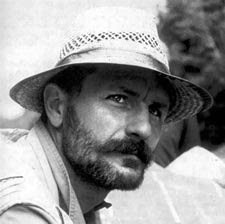
Robert Young Pelton

Tuesday, June 23rd, 2009

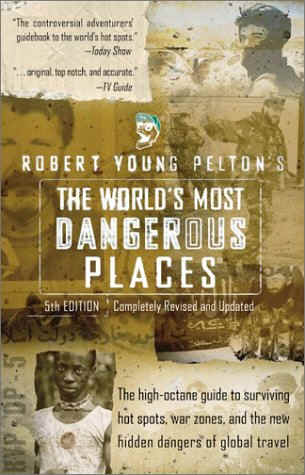
The author of  The World’s Most Dangerous Places: 5th Edition  and Licensed to Kill: Hired Guns in the War on Terror was nice enough to drop by in the comment section and discuss his firsthand view of special operators in Afghanistan. During the course of the discussion, in response to a question from Lexington Geen, RYP offered up a couple of links that I think readers will find worthwhile. Here is a quote from one of them:

….The next morning, about 60 Afghan cavalry came thundering into the compound. Ten minutes later, another 40 riders galloped up. General Abdul Rashid Dostum had arrived.

“Our mission was simple,” another soldier says. “Support Dostum. They told us, ‘If Dostum wants to go to Kabul, you are going with him. If he wants to take over the whole country, do it. If he goes off the deep end and starts whacking people, advise higher up and maybe pull out.’ This was the most incredibly open mission we have ever done.”

“Dostum” is the mercurial, ex-Communist, Uzbek Afghan warlord,  General Abdul Rashid Dostum.

Here are the links:

The Legend of Heavy D and the Boys: In the Field With an Afghan Warlord

Inside the Afghan War Machine

Incidentally, I read The World’s Most Dangerous Places in an earlier edition, back when Pelton’s uber-violence list was topped by Algeria, Colombia and several, broken down, West African nations. It’s a great book and a fun read that I have lent out to many of my students who had an all too idealistic and  parochial view of the world. It cured a few of them.


Switch to our mobile site