zenpundit.com » iraq

Archive for the ‘iraq’ Category

Of quantity and intensity: the case of the Sufiyan

Sunday, October 28th, 2012

[ by Charles Cameron — catching the apocalyptic mention in a broad sectarian overview ]
.


.

I’d like to discuss the last four paragraphs of a recent NYT piece on the influx of Iraqi Shiites to Syria:

Iraqi Shiites did not initially take sides in Syria. Many Shiites here despise Mr. Assad for his affiliation with the Baath Party, the party of Saddam Hussein, and the support he gave foreign Sunni fighters during the Iraq war.

But as the uprising became an armed rebellion that began to attract Sunni extremists, many Shiites came to see the war in existential terms. Devout Shiites in Iraq often describe the Syrian conflict as the beginning of the fulfillment of a Shiite prophecy that presages the end of time by predicting that an army, headed by a devil-like figure named Sufyani, will rise in Syria and then conquer Iraq’s Shiites.

It was the bombing of an important shrine in Samarra in 2006 that escalated Iraq’s sectarian civil war, and many Iraqis see the events in Syria as replicating their own recent bloody history, but with even greater potential consequences.

Hassan al-Rubaie, a Shiite cleric from Baquba, the capital of Diyala Province, said, “The destruction of the shrine of Sayyida Zeinab in Syria will mean the start of sectarian civil war in Iraq, Syria, Lebanon, Bahrain and Saudi Arabia.”

**

There’s a lot going on there, and I just want to point you to the little diagram I posted above, which features what I consider one very significant point that jumped out at me on this occasion from the “larger picture”.

It’s my impression that the name Sufiyan will be far less familiar to most readers than the names Iraq, Syria, Lebanon, Bahrain and Saudi Arabia. Furthermore, Iraq, Syria and so on are nations — real geopolitical entities with territories, wealth, militaries, populations, factions, fighting and so forth. The Sufyani, by contrast, is a single person, perhaps a figure of legend.

For the contemporary western mind, therefore, it is easy to read those last four paragraphs and be struck by the breadth, the sheer physical extent of the potential conflict described there – and after noting the basic concept of sectarian rivalry between Sunnis and Shiites, that may in fact be the major “takeaway” from the article: this thing could be huge.

I want to suggest there’s a more significant, and less studied takeaway – that Sufyani is the key word here, because Sufyani is a figure in a specifically end-times narrative, a precursor to and noted adversary of the Mahdi.

**

That’s my bottom line here – that this individual the Sufyan may be less known and less impressive-sounding than a swathe of nations between the Mediterranean, the Red Sea and the Persian Gulf – but he represents the power of end-times belief, and the intensity that inevitably accompanies the final showdown between good and evil, with heaven and hell the only possible outcomes of one’s chance and choice to participate.

**

There is not a whole lot of documentation in English regarding the Sufyani, especially as viewed in Shiite eschatology, but this quick excerpt archived from an Iranian state media site will give us a basic overview:

According to narrations Sofyani, a descendant of the Prophet’s archenemy Abu Sofyan will seize Syria and attack Iraq and the Hejaz with the ferocity of a beast. The Sofyani will commit great crimes against humanity in Iraq slaughtering people bearing the names of the infallible Imams, and his army will lay siege to the city of Kufa and to Holy Najaf. Of course, many incidents take place in this line and finally Imam Mahdi sends troops who kill the Sofyani in Beit ol-Moqaddas, the Islamic holy city in Palestine that is currently under occupation of the Zionists. Soon a pious person from the progeny of Imam Hasan Mojtaba (AS) meets with the Imam. He is a venerable God-fearing individual from Iran. Before the Imam’s appearance he fights oppression and corruption and enters Iraq to lift the siege of Kufa and holy Najaf and to defeat the forces of Sofyani in Iraq. He then pledges allegiance to Imam Mahdi.

The Rice University scholar David Cook gives a worthwhile account of the Sufiyani in Shiite perspective, in his Hudson Institute paper Messianism in the Shiite Crescent [CC note: this paragraph added about an hour after first posting]:

First among the major omens connected with the belief in the Mahdi’s imminent return is the appearance of his apocalyptic opponent, the Sufyani. Mainstream tradition tells that the Sufyani will be a tyrannical Arab Muslim ruler who will hail from the region of Syria and who will brutally oppress the Shiite peoples. Before the 2003 collapse of the Saddam Hussein regime in Iraq, many messianic writers in both the Sunni and Shiite traditions identified Saddam Hussein as the Sufyani. Since 2004, however, there has been a tendency to gloss over the classical belief in the Sufyani’s Syrian-Muslim identity and to identify him instead with the United States (as many Iraqis hold the U.S. responsible for the slaughters in their country.) Another recent trend within Shiite messianism has been to identify the Sufyani with prominent Sunni radicals such as Abu Musab al-Zarqawi (killed June 2006), who was virulently anti-Shiite. From the perspective of the classical sources, Zarqawi would have indeed been an excellent candidate, because his hometown in Jordan is extremely close to where the Sufyani is supposed to come from.

It’s worth noting, perhaps, that the Sufyani also features in the (Sunni AQ strategist) Abu Musab al-Suri‘s work, the Call to Global Islamic Resistance. As Jean-Paul Filiu reports:

Abu Musab al-Suri looks with favor upon a hadith that speaks of the restoration of Islam by an armed force “coming from the east.” This will be the vanguard of the Mahdi, known by its black banners and led by Shuaib ibn Saleh, whom every believer will join “even [if it means] marching in the snow.” The Sufyani, whose face is scarred by smallpox, will rise up against it in Damascus and ravage Palestine, Egypt, and Hijaz, proceeding as far as Mecca, where he will kill the “Pure Soul.” Yet it is also at Mecca that the Mahdi will appear, and he will reconquer Damascus after eighteen years…

Meanwhile, out there on the wild profusion of the net, there’s naturally controversy as to who the Sufyani might be – suggestions I’ve seen include Bashar al-Assad of Syria and Abdullah II of Jordan – in much the same way that the identity of the Antichrist is debated in Christian eschatological circles, with candidates ranging from the Emperor Nero to Ronald Reagan and more recently Oprah Winfrey [link is to an amazing video clip which also features President Obama and Louis Farrakhan].

**

So?

So. Rather than – or in addition to – considering the sheer extent of geopolitical space referenced in the NYT piece, I’d suggest we should pay attention to the intensity factor signaled by the mention of the Sufyani. Following that tack, after all, we will also be considering a wide swathe of territory —

in Abu Musab al Suri’s terms, from Syria via Palestine, Egypt, and the Hijaz, to Mecca – but with the added intensity that apocalyptic war brings with it.

Lang, Francona et socii on an Israeli strike

Sunday, September 23rd, 2012

[ by Charles Cameron — a quick recap of Col. Lang & Lt. Col. Francona on the realities of an Israeli strike on Iranian facilities, 2006-2012 — and the recent WaPo trilogy ]
.

Nuclear and missile sites, 2008, credit: Stratfor

.
I posted here a while ago about what happens when “religious leaders talk of wiping nations off the map” — quoting the Iranian Ayatollah Khamenei and the Shas Rabbi Ovaida Yosef — and unobtrusively included the question:

Do the logistics back the rhetoric up?

Or so I thought.

**

Srikanth R of the Takshashila Cyber Strategy Studies team picked up on that supposedly unobtrusive question, though, so maybe it wasn’t so unobtrusive.

The thing is, it’s a solid, material, practical, down to earth realist’s question… and behind it, behind my dropping it into that post, is a memory of Col. Pat Lang, the blogger at Sic Semper Tyrannis, pointing his readers to that question quite a while back, in the form of a post by his one-time DIA deputy, Rick Francona back in 2006. Any “intelligence” in my question is strictly theirs.

I thought then, and I think now, that logistical considerations are as important as potential messianic-mahdist echo-chambers or statements by Israeli intelligence figures or American Chairman of the Joint Chiefs to bear in mind when considering the potential for an Israeli attack on Iran.

This is not an area that I consider myself informed about, so I thought I’d check back and see what Lang and Francona have had to say on the issue over the intervening years…

**

Rick Francona: flight routes, 2006

**

Here are a bunch of other places where Lang, Francona et socii discuss such matters, in what I believe is a sequence by date:

http://francona.blogspot.com/2006/03/iran-israels-air-strike-options.html
http://francona.blogspot.com/2008/06/iran-israels-air-strike-options-update.html
http://turcopolier.typepad.com/sic_semper_tyrannis/2008/06/overflight-clea.html
http://turcopolier.typepad.com/sic_semper_tyrannis/2008/09/ask-the-iraqi-g.html
http://turcopolier.typepad.com/sic_semper_tyrannis/2009/05/sounds-like-a-plan-iranisrael.html
http://turcopolier.typepad.com/sic_semper_tyrannis/2009/05/haaretz-article-on-iranian-realities.html
http://turcopolier.typepad.com/sic_semper_tyrannis/2010/11/israeli-planning-considerations-harper.html
http://turcopolier.typepad.com/sic_semper_tyrannis/2012/02/can_israel_stri.html
http://turcopolier.typepad.com/sic_semper_tyrannis/2012/04/an-israeli-iran-war-what-would-it-look-like-by-richard-sale.html
http://turcopolier.typepad.com/sic_semper_tyrannis/2012/08/yaalon.html

**

From that last URL, here’s the most recent map in the series:

**

And is that all?

Over the last few days the Washington Post has published a three-part “essay” on an Israeli strike on Iranian nuclear facilities. I’ve already quoted from David Ignatius‘ contribution in a comment on ZP, but that was about a different aspect of the thing. Here are links to the three parts:

Azadeh Moaveni, What if Israel bombed Iran? The view from Tehran
Anat Berko, If Israel bombed Iran, what would life in Tel Aviv be like?
David Ignatius, Lessons from an Iranian war game

**

Again, let me emphasize that I don’t know about logistics, but that I suspect Col. Lang does. You might think three points of view was enough to get a decent overview of the situation. You might believe that a war game conducted by a cluster of intelligent specialists would be enough…

Just for the record, Col. Lang obviously still thinks we’re missing the point. This is from his Sic Semper Tyrannis blog, today:

A general defect of the thing is the complete ignorance reflected of the actual limitations of distances, weapons, numbers of aircraft and missiles, Iranian air defenses, the lack of any recovery air fields between Israeli bases and the targets or SAR capability for the attacking Israeli force. Basic military knowledge of the situation is ignored in the manner common in politico-military strategic war games. In these “games” any reference to actual limitations are airily waved off as not germane. In this essay it is suggested that one option is for the US to “shoot down’ the attacking Israeli force before it passes beyond Iraq. The Joe Biden character angrily says that this is not an option. He is correct but not for the reason implied. In fact, since the completion of the US withdrawal from Iraq the US has no ability to do such a thing and neither do the Iraqis. The nearest USAF assets are in the Gulf or Turkey and the nearest US Navy assets are where the carriers may be. Look at the distances.

**

Comments?

New Book: Mission Revolution by Jennifer Morrison Taw

Sunday, September 16th, 2012

Mission Revolution: The US Military and Stability Operations by Jennifer Morrison Taw

Columbia University Press just sent me a review copy of Mission Revolution: The US Military and Stability Operations by Jennifer Morrison Taw, an assistant professor of IR/Security Studies at Claremont McKenna College.  Taw has written a very timely book given the looming threat of sequestration – she has investigated and analyzed the institutional and strategic impact of the US having elevated MOOTW (military operations other than war) in 2005 to a DoD mission on par with war-fighting, terming the change a “Revolution”.

[ Parenthetical aside: I recall well Thomas Barnett loudly and persistently calling for the Pentagon to deal with MOOTW by enacting an institutional division of labor between a heavy-duty Leviathan force to handle winning wars and a constabulary System Administration force to win the peace, manage stability, defend the connectivity. Instead, in Iraq and Afghanistan we had one Leviathan force trying to shoehorn in both missions with a shortage of boots, a river of money and a new COIN doctrine. Soon, if budget cuts and force reduction are handled badly we could have one very expensive, poorly structured, force unable to do either mission.]

Thumbing through Mission Revolution, it is critical and well focused take on the spectrum of problems the US has faced in the past ten years trying to make a “whole of government” approach an effective reality in stability operations and counterinsurgency. Taw covers doctrine, training, bureaucratic politics, procurement, policy, grand strategy, mission creep, counterterrorism and foreign policy visions of the civilian leadership, all with generous footnoting.

I am looking forward to reading Mission Revolution and giving it a detailed, in-depth, review in the near future.

Biblical prophecy and foreign policy: a caution

Thursday, September 6th, 2012

[ by Charles Cameron — on prophetic stances towards Israel: both blessings and rebukes ]
.

It seems to be fairly common in some Christian circles to view the Israeli Prime Minister’s position on war with Iran as somehow sacrosanct.

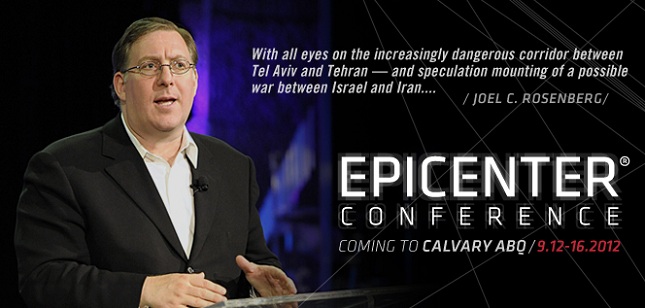
Thus the end times fiction and non-fiction author Joel Rosenberg, for instance, recently blogged a “sermon” in two posts [Rediscovering the power and purpose of Bible Prophecy: 1 and 2] about the importance of prophecy to an understanding of Middle Eastern affairs, noting:

Israel is the epicenter of God’s plan and purpose in the last days. Other countries mentioned in Bible prophecy are Russia, Iran, Syria, Lebanon, Turkey, Libya, Sudan, the revived Roman empire, and several others. The United States, however, is never mentioned directly or specifically in the Bible. In my recent book, Implosion, I go into this in greater detail. But the bottom line is that even though America is the wealthiest and most powerful nation on the face of the earth in the history of mankind, the Bible does not describe a specific role for us in the last days. Something, therefore, apparently happens to neutralize us or paralyze from played a key role in the events that lead to the return of Christ.

Despite this lack of emphasis on the Unites States, he followed these two posts up with a post titled Troubling development: rift between White House & Israel growing as threat of war rises:

In recent days, anyone watching U.S.-Israel relations has seen a very troubling development: the already serious rift between the current White House and Israel is growing. The relationship between President Obama and Prime Minister Netanyahu has been strained for nearly four years. But as the threat of war between Israel and Iran this fall continues to rise, the Obama administration seems to be intentionally signaling a growing distance from the Netanyahu government.

He doesn’t draw a direct link to prophecy in this particular post, but he does close with this prayer:

Please pray for the Lord to change the heart of President Obama and his advisors, and that they would change course and truly and publicly stand firmly with Israel, our most faithful ally in all of the epicenter. As we read in Genesis 12:1-3, God promises to bless those who bless Israel, and curse those who curse Israel. With America facing a growing risk of economic and moral implosion, now is certainly not the time to turn our backs on Israel.

**

As usual, my interest is in nuance — so I’d just like to say that from a purely Biblical point of view, it is by no means out of the question for believers to disagree with the kings and rulers of Israel. Indeed, Rav Moshe Taragin, writing in the Virtual Beit Midrash of Yeshivat Har Etzion, hardly a bastion of anti-Israeli sentiment, goes so far as to say:

In general, the function of the prophet is to rebuke the nation, to expose its negative traits and to help the people improve their behavior. As the Rambam teaches (Hilkhot Teshuva 4:2): “Thus, all the prophets rebuked Israel so that they would repent.”

Just because someone rebukes Israel doesn’t mean they don’t bless her…

**

I addressed a question to my Christian friends on Twitter the other day, using the Iraq war as my example — but it applies to the current face-off between Israel and Iran, too:

If you and I disagree on, say, the Iraq war now, will one of us have to change his or her mind in heaven?

I added that my question was not about the Iraq war as such, but about our certainties when so many of our certainties differ.

My friend Mike Sellers responded with this admirable quote — which as he pointed out is often attributed to St Augustine (for more on its origins, try Wikipedia):

In things necessary, unity, in things doubtful, liberty, in all things, charity.

On wearing blinders

Thursday, September 6th, 2012

[ by Charles Cameron — that neither excited hope nor fear nor fixed opinion is a workable basis for sound judgment ]
.

For some reason, this two-year-old tale popped up in my twitter-stream today.

Here’s what Leon Panetta said in response to the CIA report on how the Jordanian AQ operative Dr. Humam al-Balawi managed to get himself invited into the Camp Chapman base in Khost, Afghanistan — despite warning from Jordanian intelligence — where he blew himself up, claiming the lives of seven CIA agents:


.

Isn’t that a bit like saying “The chocolate cake itself may have clouded some of the judgments made here”? You mean, their emotions clouded their judgment, don’t you, Mr Panetta?

On this occasion, the chocolate cake was al-Balawi’s indication that he could lead the CIA to Ayman al-Zawahiri

Links:

Officer Failed to Warn C.I.A. Before Attack
Intelligence: Where Everyone Gets a Trophy

**

And now here’s a companion piece, from today’s publication of a Classified CIA Mea Culpa on Iraq:

Analysts tended to focus on what was most important to us — the hunt for WMD — and less on what would be most important for a paranoid dictatorship to protect. Viewed through an Iraqi prism, their reputation, their security, their overall technological capabilities, and their status needed to be preserved. Deceptions were perpetrated and detected, but the reasons for those deceptions were misread.

**

Intelligence is least intelligent when it’s blindsided by hopes, fears, and unquestioning assumptions.

What are our current blinders?


Switch to our mobile site