[ by Charles Cameron — Sun Tzu meets Willie Pep ]
.
**
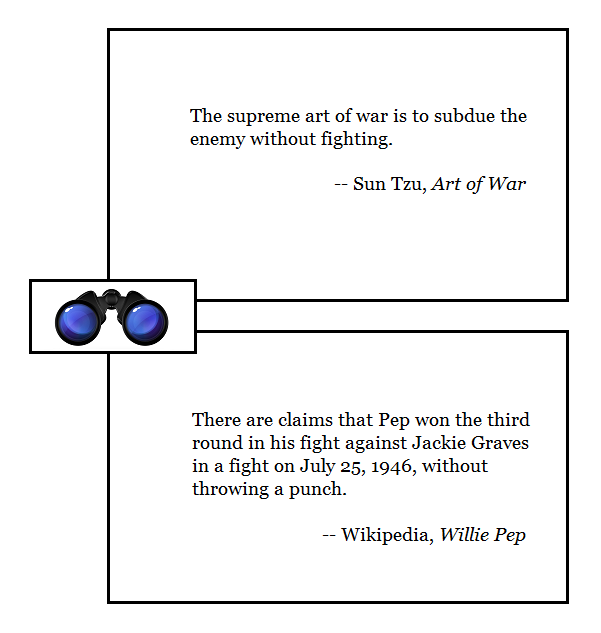
Sun Tzu‘s fightless victory is like the Platonic pearl, ideal, perfectly spherical. Pep‘s blowless round is like a cut diamond, multifaceted — some claim the tale is true, some that he fabricated the tale years later, some that it was a boast he made before the fight — one version suggests Pep told St. Paul sports writer Don Riley, who was covering the fight for Minnesota radio station WMIN:
Pick a round, I’ll throw punches, but I’ll never hit him. Check the scorecards after, and see if the judges fall for it.
Who knows? A good tale frays into a thousand fugal strands in the Ocean of Story.
**
The curiosity:
The more facets a diamond built to approximate a sphere has, the closer it comes to the Platonic sphere.. Quite what the analogy with narrative variants would be, currently escapes me.
One stanza of ‘The Road Not Taken’ was written while I was sitting on a sofa in the middle of England: Was found three or four years later, and I couldn’t bear not to finish it. I wasn’t thinking about myself there, but about a friend who had gone off to war, a person who, whichever road he went, would be sorry he didn’t go the other. He was hard on himself that way.
As that page shows, I’m certainly not the first to note the overlap between Robert Frost and Yogi Berra — but it caught my attention today as I was reading a comment on Scott Aikin and Robert Talisse‘s On Some Yogisms:
And “When you come to a fork in the road, take it,” was his joking way of giving directions to his NJ home. You could get there by going either way once you reached the fork he was referring to; both roads led to his house eventually.
That gives a literal context to Berra’s flight of fancy — and yeah, some roads are looped, it’s true — but without the wit, there’s be no wisdom.
**
Witty Wittgenstein, as apparently quoted by Ray Monk and in the Aikin and Talisse piece:
A serious and good philosophical work could be written consisting entirely of jokes.
[ by Charles Cameron — 4th & last in a bizarre series [1, 2, 3] — I must confess I prefer the NASA stars to the game world, but Wm. Blake’s world to all the rest ]
.
My curiosity today leads me to compare two “represented” universes, each of them pretty much guaranteed — not that I place great credence in guarantees these days — to blow my mind or at least my socks off, and / or to quake my universe!
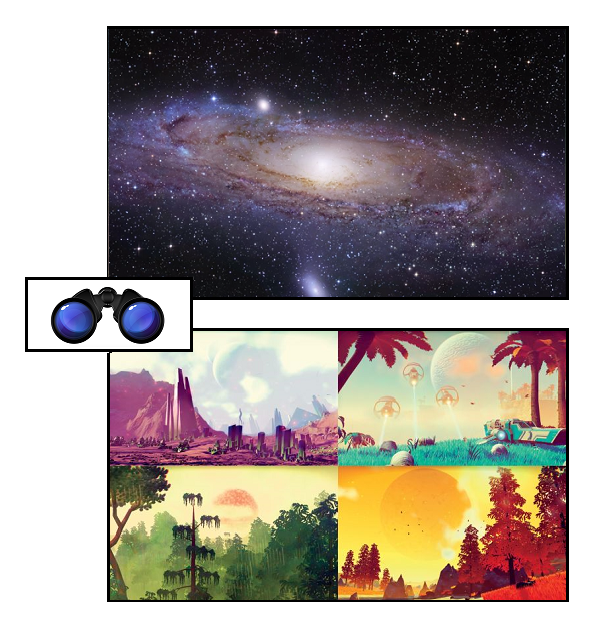
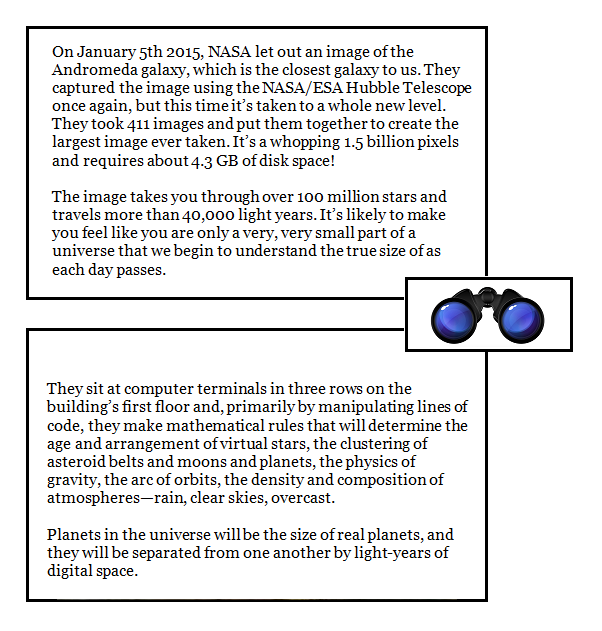
Here, to assist you in making your own comparison, are two text descriptions of the space photo (upper panel) and the game designs (lower):
My own feeling is that both are less awesome than their respective write-ups suggest: the NASA photo because it’s “awesomeness claim” is purely quantitative, whereas the universe is qualitative first and quantitative second; and the game images because they’re pale pastel imitations of our own world — fantastic, yes, but far from imaginative, to use the terminology Coleridge proposed.
To give us a sense of proportion — one that includes both qualitative and quantitative elements — here are some other images which, along with the ones from NASA and the game, give you a somewhat wider “range of universes” to consider — all of them in fact contained in the one we blog and read in:
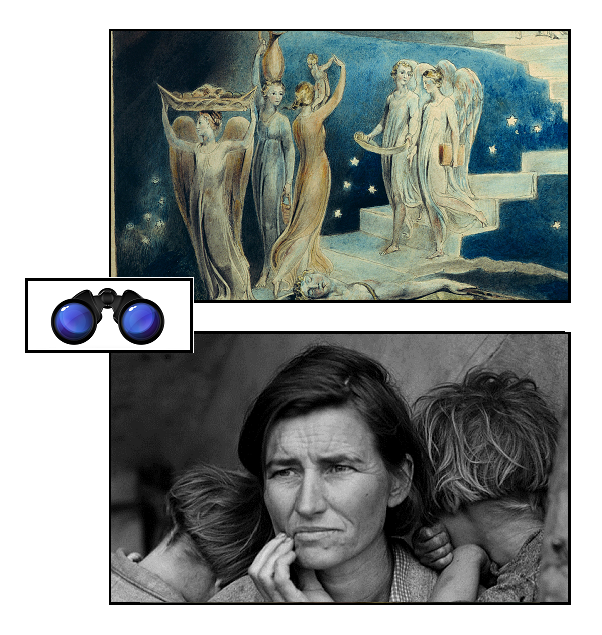
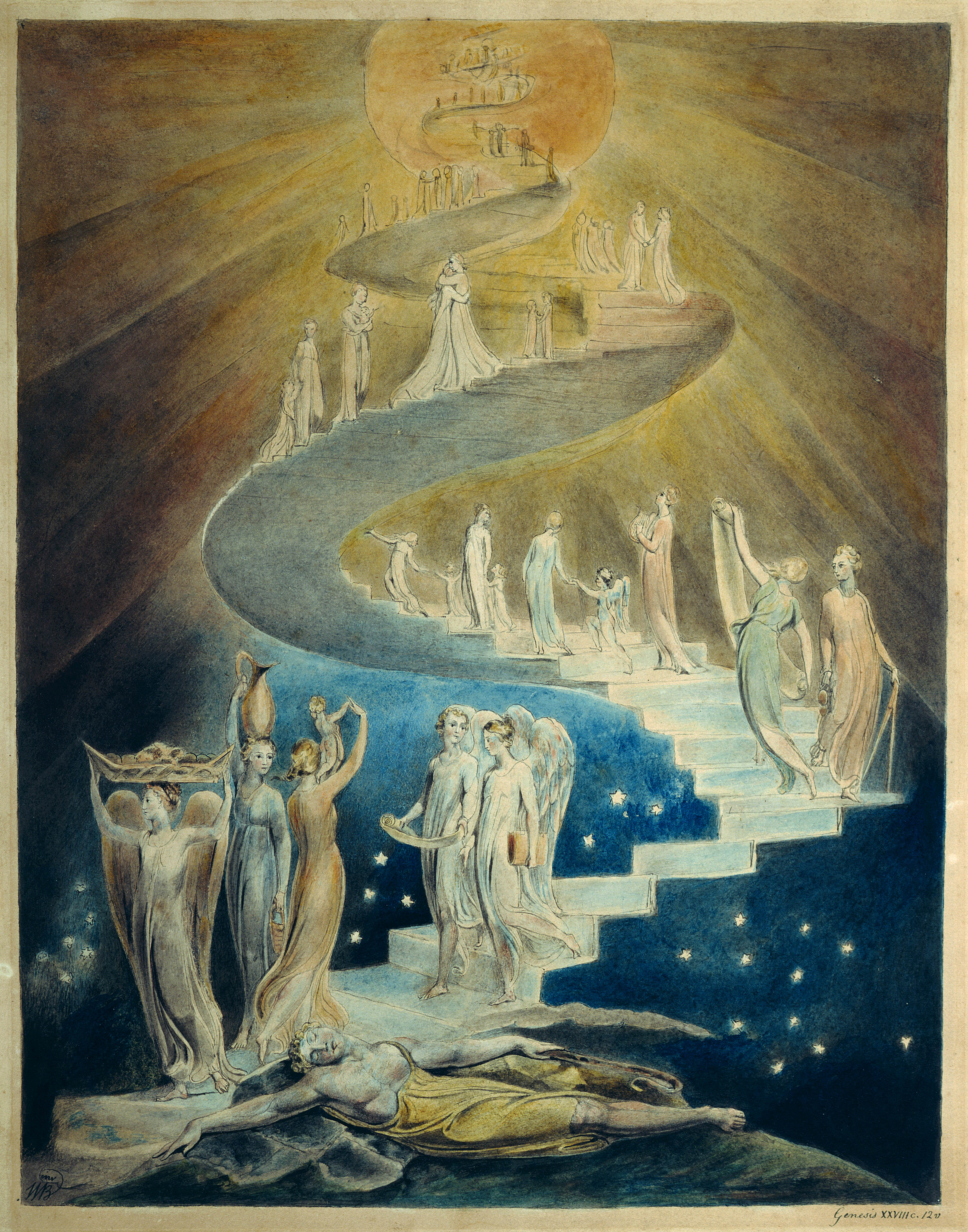
The first pair shows two humanly-generated images, one by the visionary artist and poet William Blake, the other by the documentary photographer Dorothea Lange. Realism, meet mythic imagination.
The second pair — aha! — shows two desert sports: one almost archaic in its brutality, the other something akin to post-modern. In the upper panel we glimpse the Afghan national sport of Bukashi, in which the headless carcass of a goat is captured and carried to the goal by terrifying horsemen; in the lower, one of the robot jockeys who have replaced child-jockeys in the camel-racing of Dubai.
But let’s be fair to the two first screenshots at the top of the page. Here are the respective videos of the NASA Andromeda megapicture and the Hello Games’ No Man’s Sky for you to consider on their merits —
— remember: there’s no accounting for tastes.. not even mine own.
Zenpundit is a blog dedicated to exploring the intersections of foreign policy, history, military theory, national security,strategic thinking, futurism, cognition and a number of other esoteric pursuits.