zenpundit.com » Musings

Archive for the ‘Musings’ Category

Octavian Manea interviews MIT’s Roger D. Peterson

Friday, April 19th, 2013

Another installment of Octavian Manea’s excellent COIN interview series at SWJ. This one focuses on social science and varieties of insurgency:

Breaking Down “Hearts and Minds”: The Power of Individual Causal Mechanisms in an Insurgency 

….OM: In your research you pointed out to a spectrum of conceivable individual roles in an insurgency. What is the methodology behind this typology?

RDP: This methodology comes from my 2001 book (Resistance and Rebellion: Lessons from Eastern Europe) which focused on Lithuanian resistance to Soviets in the 1940’s. Insurgency is a complex phenomenon, especially in how violent organization and networks are created and sustained, and the methodology of that book involved breaking down this complexity into component parts and then building back up into a coherent whole. At the base of this process is the way individuals position themselves relative to the dramatic and violent events of insurgency. Most people may wish to remain neutral and just take care of their families but events push significant numbers of individuals into roles of unarmed support of insurgents, or local armed position of a militia, membership in a mobile non-local organization, or equivalent positions in support of the government.  Furthermore, individuals may move back and forth along this spectrum of roles. If one is skeptical of broad and vague theories at a high level of aggregation, as I am, then you need to get down and observe dynamics at a basic level. Observing movement along this spectrum of roles is one way to do that. 

…..Is it FM 3-24 and the whole contemporary Western COIN discourse too narrow, too much focused on rational, cost/benefit models of decision-making? Is it too restrictive when making this inventory of driving motivations or causal mechanisms?

RDP: I think there is a tendency in the Western academic analysis to focus on rational theories. Those theories are straightforward.  But they also might be too straightforward, too simple.  In Iraq, the coalition did not plan on the emotion of resentment stemming from a status reversal affecting Sunni calculations in the beginning stages of the conflict. We did not understand the revenge norms that exist in some of the places. We did not fully understand the social norms that helped to produce the tribal militias in Anbar province.  We did not understand the psychological mechanisms underlying the Sunni view of the new world they were living in. 

The last part is a curious lacuna.

The incompetence of the planning for the occupation of Iraq has been amply recorded – the high level disdain of General Tommy Franks and Secretary Rumsfeld for what befell the day after victory, the keeping of professional Arabists at arms length in preference for Beltway contractors and college kids with AEI connections, the haplessness of Jay Garner and the political obtuseness of Paul Bremer ad so on. This is not what I mean about lacuna.

I mean something more fundamental, in terms of understanding human nature as the root of political behavior and therefore political violence. We are all familiar with the Clausewitzian trinity (or should be) but less attention is paid to the motivational factors that make men decide to stand, fight and die or stand aside. Thucydides also had a trinity that did not attempt to capture the nature of war but rather explain why wars happened and it seems to me to be of particular use for evaluating the decision in small wars to pick up a gun or not, to side with the government or join the rebellion:

“Surely, Lacedaemonians, neither by the patriotism that we displayed at that crisis, nor by the wisdom of our counsels, do we merit our extreme unpopularity with the Hellenes, not at least unpopularity for our empire. That empire we acquired by no violent means, but because you were unwilling to prosecute to its conclusion the war against the barbarian, and because the allies attached themselves to us and spontaneously asked us to assume the command. And the nature of the case first compelled us to advance our empire to its present height; fear being our principal motive, though honour and interest afterwards came in. And at last, when almost all hated us, when some had already revolted and had been subdued, when you had ceased to be the friends that you once were, and had become objects of suspicion and dislike, it appeared no longer safe to give up our empire; especially as all who left us would fall to you. And no one can quarrel with a people for making, in matters of tremendous risk, the best provision that it can for its interest. 

Fear, honor and interest are ever present in “calculation” both by men and by the political communities they compose and the factions that threaten to tear them apart. All the more so in a defeated and broken country divided by ethnicity and sect where all parties were uneasily eyeing the conqueror. No special knowledge of Arab culture should have been required to anticipate that Iraqi men, if made desperate by uncertainty and circumstance, might have at least seen it in their interest to achieve some measure of security with the gun and to enact policies of carrots and sticks a priori to discourage that, before the insurgency gained critical mass.

Awareness of the universality of the Thucydidean trinity would not have in itself guaranteed success in Iraq but knowing it is a rudimentary minimum of political competence upon which you can at least build.

Mindlessness and Mindfulness

Tuesday, January 22nd, 2013

In the midst of writing a lengthy post, it may eventually become my longest, about Socrates.

There’s no assurance that volume will equate with importance – most likely, the opposite. The post began as a book review and then grew to two books, then I reversed course and started over; it has been unusually slow going because the subject matter has forced me to stop periodically and uncomfortably rethink my assumptions – and then pick up new books. In one sense, there’s no hurry. After all, Socrates will still be just as relevant or not when I finish blogging about him than when I began. On the other hand, the spirit of our times calls out for Socrates’ techne logon, his “craftsmanship of reason”, so I keep plugging away at it.

The flip side to this intense focus has been an increasing desire for a little mindless entertainment. So, I started watching Sons of Anarchy of my iPad, Season One. So far, It’s fun:

The theme and setting is interesting and the characters and plot are generally more credulity-stretching than even The Soprano’s in their twilight seasons, but Sons of Anarchy fills the bill in terms of entertainment.Boardwalk Empire, is also supposed to be very good, even better, but one at a time.

What do you use as a diversion?

The Hobbit: Narrative Validation or Vandalism?

Sunday, December 30th, 2012

The Hobbit: An Unexpected Journey a film by Peter Jackson

The Hobbit:Or There and Back Again by J.R.R. Tolkien 

Last night, I took the kids and my nephew to see The Hobbit. In essence, it was less the classic tale woven by J.R.R. Tolkien than a sequel to The Avengers with a cast of Dwarves.

Peter Jackson has made, as he did with The Lord of the Rings movie trilogy, a visually stunning film with The Hobbit. Jackson once again excelled at translating many physical settings of Tolkien’s Middle-Earth into screen reality. Erebor looks the way you would expect an age-old Dwarven kingdom should. Dol Guldor (alluded to ever so briefly in the book) appears to be the place of dread that would attract a great malevolent spirit like Sauron, This extends to some of the characters; the Great Goblin’s semi-comic personage manages to capture some of the original charm of The Hobbit as a children’s story before it later became part of the narrative for Tolkien’s larger and darker romantic epic, The Lord of the Rings.

Unfortunately, the tendency that Jackson demonstrated as the films of The Lord of the Rings progressed,to take ever greater artistic liberties with Tolkien’s story, have, with his swollen ego, run riot in The Hobbit. The primary antagonist in the film, Azog the Orc chieftain is lifted from other Tolkien material, given mutant powers, a scary metal hand and an albino warg by Jackson and is brutally imposed on the story. The wizard Radagast the Brown, whose head for some reason is encrusted with bird crap, gets much screen time as he  zips around Middle-Earth like Mario Andretti on a sleigh pulled by magical bunnies when he is not getting high on ‘shrooms.

What began as a necessary fleshing out of narrative allusions and foreshadowing to effectively translate literature into a movie ended up as Jackson’s sheer invention and gratuitous abuse of the characters, all of whom sword fight more often than Conan the Barbarian and more bloodily than Leonidas. If Thorin had shouted in the midst of battle with the Goblins, “Dwarves! Tonight we dine in Mordor!” no one in the audience would have been the least bit surprised.  Zorro and the Three Musketeers had less skill with a blade in hand-to-hand combat than do these Dwarves, Gandalf or at times, Bilbo Baggins.

The only scenes where Jackson manages genuine fidelity to the story are the ones with Gollum, Bilbo and their Riddle-Game – perhaps out of fear of trivializing his previous movies, Tolkien’s actual dialogue and plot  enters the script before vanishing again into a Jacksonian cinematic homage to every American action movie ever made. No wonder Christopher Tolkien looks on with weary despair.

There’s a name for this kind of genre….

Fan fiction.

Reforming Intelligence vs.Intelligent Reforms

Wednesday, December 5th, 2012

The intense behind the scenes lobbying on behalf of prospective candidates to replace General David Petraeus as Director of the CIA and the ongoing furor over Ambassador Rice’s “talking points” on Benghazi, have spilled over into op-eds quietly urging that the vacancy be used as an opportunity for reforms of the IC and CIA. This is not unexpected – the churn of ” IC reform” tends to be cyclical, free of institutional or historical memory and useful for distracting the media from genuine problems – but it is also true that the situation could bear improvement.

One of the smarter observations was by former star analyst Nada Bakos in Foreign Policy:

…..In light of this, what should the DNI’s role be in the intelligence community, if not disseminating a coordinated intelligence product? The CEO of a company is typically the one planning strategy, interfacing with board members, stockholders, and consumers. A CEO doesn’t typically write the chief financial officer’s year-end summary or the marketing director’s strategy — instead, he views both products from 25,000 feet to ensure the company is on steady footing. The DNI should have a similar role: rather than replicating work, it should focus on reviewing the source material from the various agencies and collaborating to ensure all of the information has been reviewed. In the case of the Benghazi talking points, the intelligence community all had a role in editing the talking points once passed from the CIA. Other points of view make sense, but in the immediate aftermath of something like Benghazi, the arrival of new (and possibly conflicting information) is likely to confuse, not improve, the product. It is best to leave the dissemination, in the immediate aftermath, in the hands of the agency that owns the source of the information and is in the business of disseminating intel products — in this case the CIA.

As with the recent and somewhat ironic leaking that the Pentagon is going to overrun the Earth with hordes of DIA covert agents [i.e. 90% of new money and personnel will probably feed the CONUS based DIA bureaucracy as a budget protection strategy] when an agency or entity can get political authorities to grant them incursions into another bureaucracy’s turf, it is because that bureaucracy has ceased doing it’s job so long ago everyone has just accepted that it will never change.

The Bakos piece contrasts well with the politicized bullshittery being offered in The New York Times. Here are some of my favorite bits of harmful nonsense:

….The United States has over 280 diplomatic posts worldwide. They are working on drug interdiction, arms control negotiations, border security, counterterrorism, access to energy and trade, implementing sanctions, fair trade and the like. Intelligence helps diplomats recognize everything from cheating on agreements to social unrest and surprise attack. And it helps them make decisions that lower the risks and consequences of war.

The new director should rededicate the C.I.A. to supporting these diplomatic operations.

Right. Each ambassador should get to play amateur Station Chief and fritter away extremely scarce intel resources on pet projects because, you know, the State Department has done such an awesome job on it’s own core missions the past decade or so, and….uh…wait….

….The best way to ensure the intelligence process can both produce the best analysis possible, free from political and policy influence, and that covert operations are smart and legal is to ensure the director is an independent actor not subject to political pressure. Making the job a 10-year appointment, which will cross the lines of elections, offers a way to reduce the risk of politicization.

Shorter Bruce Reidel: The DCIA should be able to delay or refuse the President’s order to do covert ops so the US will do far fewer of them and in maximum risk-averse fashion.

No.

You de-politicize the DCIA by not having new presidents fire old DCIAs because they were appointed by an administration from the other party, a practice begun not by Ronald Reagan as Bruce Reidel mistakenly believes, but by his predecessor, Jimmy Carter. The idea that the DCIA who is expected to oversee the most sensitive covert missions (i.e. those intended to have strategic or political effects) should be “independent” of the President is some form of really poor Constitutional theorizing. What happens when an “independent” DCIA launches covert ops *against* the wishes of a President?

Here are a few ideas that would be useful to keep in mind, if “reform” of the IC and CIA is actually desired and isn’t merely a stalking horse for smuggling in a different set of  foreign policy preferences unsupported by the wider American public (which I suspect much of the recent noise is):

It isn’t a choice between a “Militarized” CIA and a CIA that does HUMINT collection:

The CIA is supposed to do both covert action and intel collection and always did. Period. The true anomaly is the comatose period after the Church-Pike Hearings bloodied the CIA on Capitol Hill and created a deeply risk-averse generation of CIA managers, who, it must be said, did not exactly bend over backwards in the 1990’s to unleash a legion of deep cover operatives and agents of influence. The “militarized CIA” meme is utter B.S. from folks who dislike armed drones and kinetic tactics and lost that policy argument two years ago.

Drones and nefarious celebrity generals are not what prevents the CIA from more robust intel collection effort – only CIA management prevents better HUMINT collection by not prioritizing it and increasing the number of CIA personnel in overseas postings.

The Director of the CIA, alone or in combination with the DNI, is not the solution:

What is required is an engaged and active Chief Executive willing to spend time and political capital making the IC work for his administration the way it should and the way he needs. This may mean firing the recalcitrant, the resistant and the risk-averse and taking heat from The Washington Post and The New York Times when their favorite “senior official” sources start screaming bloody murder on background to undermine their DCIA and DNI.

Top talent in the DCIA chair, one with real gravitas on the Hill if possible, will be important but that person will still need the full backing of the President and key members of Congress or nothing will change.

“Clandestinity” and Strategic intel are more important than “Reportage”:

Senior officials in any administration like to get IC  briefs that edge out the media on breaking events and bring them details they can’t find in their own, usually very extensive, personal networks or from the bureaucracies and agency experts they themselves oversee.  The CIA in particular has catered to this demand as, it must be said, they are obligated to do.

The problem is that in economic terms, the marginal value of “secret” information over what information is available in the open media in an emerging crisis is not going to be very great unless the CIA has made substantial investments in clandestine networks in the crisis area over a period of years or decades to acquire “strategic” intel, or at least a formidable position to uncover some.

Pouring ever greater resources into near real time “reportage” and being a slightly spooky version of CNN makes such long-term, clandestine investments by the CIA less likely, less deep and less influential in shaping emerging events. Much like having a .357 magnum when someone is crawling through your bedroom window at 3 am, when a crisis erupts overseas, America either has a robust clandestine network on location or it does not.

Congress has a key role and usually abdicates it in favor of grandstanding or rearranging deck chairs:

The IC will work better with consistently active oversight done with a minimum of partisan rancor and an avoidance of any new legislation that features a new (and usually more complex) org chart. It’s important -sometimes delicate operations and lives depend on our politicians behaving and speaking with discretion. If there are important objectives for national security for the IC to accomplish, nothing sends that message better than the administration and key members of the intelligence committees acting in concert to make a policy succeed.

I’m not holding my breath on that last one.

The Antilibrary of the Living Dead

Friday, November 30th, 2012

From time to time we talk here about “the pile” of books waiting to be read, or the larger “Antilibrary” which briefly also became a blog, now defunct:

….The writer Umberto Eco belongs to that small class of scholars who are encyclopedic, insightful, and nondull. he is the owner of a large personal library ( containing thirty thousand books), and separates vistors into two categories: those who react with ‘Wow! Signore professore dottore Eco, what a library you have! How many of these books have you read?’ and others – a very small minority- who get the point that a private library is not an ego boosting appendage but a research tool. Read books are far less valuable than unread ones. The library should contain as much of what you do not know as your financial means, mortgage rates, and the currently tight real estate market allow you to put there. You wil accumulate more knowledge and more books as you grow older, and the growing number of unread books on the shelves will look at you menacingly. Indeed, the more you know, the larger the rows of unread books. Let us call the collection of unread books an antilibrary.

–    Nassim Nicholas Taleb 

It occurred to me the other day, that the Antilibrary contains some unread books that, while bought we the best of intentions, perhaps even an air of anticipation, yet were never read – and at the current rate of new book purchases, never will be. To get “living dead” status a book needs to have been sitting on a shelf for a minimum of five years (the archives of book collectors don’t count since they are buying to own or invest and not always to read) and ten is even better. Here are a few of mine:

Tecumseh: A Lifeby John Sugden

My only explanation is that this one was a gift by a well-meaning friend who knew in a vague sort of way that I am “into history”. I really don’t care very much about Tecumseh and still less about his brother the Prophet ( maybe if he had a better handle on the prophecy thing their confederation would have won).

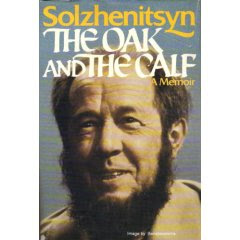
The Oak and the Calf by Aleksandr Solzhenitsyn

This has been sitting on my shelf for 20+ years. This is odd, because I’ve read The Gulag Archipelago twice, along with Cancer Ward,  The First Circle and August 1914.  Not sure if I burned out on Russian-Soviet studies at the time or if the collapse of Communism made it less relevant but it has never been cracked open.

Conquest by Hugh Thomas

Sweeping, magisterial, impressively detailed…..and decidedly unread for at least 15 years.

Nietzsche by Rudiger Safranski

As my Great-great Grandfather hailed from Germany, I now suspect the author may be a distant relation. That hasn’t helped me get started reading it.

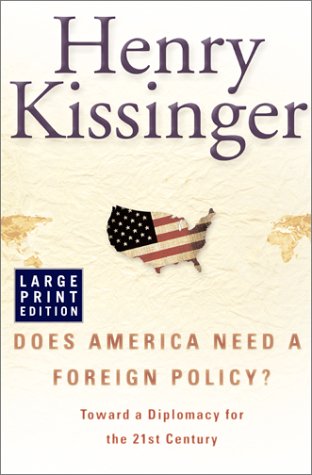
Does America Need a Foreign Policy by Henry Kissinger

One of the more ironically-timed books ever written, coming out a mere six months before 9/11, I have had this one for 10 years + and I think I bought it in hardcover for $4 (you can it used on Amazon for one cent. Ouch!). I have read a fair amount of Kissinger, including his acromegalic, multi-volume memoirs, but I can’t muster the energy to read this one.

What are you not reading and why?


Switch to our mobile site