zenpundit.com » CIA

Archive for the ‘CIA’ Category

Stereocognition, intelligence and the movies

Wednesday, February 20th, 2013

[ by Charles Cameron — Zero Dark Thirty & Manhunt, fact and fiction, that old saw about who it is that gets to write history, thence onwards to theology & the arts, von Balthasar & Tolkien, winding up watching UK & US versions of House of Cards with son David ]
.

How’s this for stereoscopy?

**

You may know I’m preoccupied with the notion of extending the stereo concept — using twin sources to add a depth dimension to one’s perception — from stereophonic audition and stereoscopic vision to stereocognition more generally.

Nada Bakos‘ image above shows a cinema in which documentary and fictional versions of the story of the hunt for bin Laden are playing simultaneously. The fiction, Kathryn Bigelow‘s Zero Dark Thirty, I saw a couple of days ago, and neither I nor son Emlyn, 17, were terribly enthused: the Camp Chapman scene was the one that touched me most deeply.

I’ll no doubt want to see both films, but it’s Greg Barker’s documentary, Manhunter, that will interest me the most, the more factual of the two. And yet that’s curious in and of itself, because as a poet I’m usually interested in the mythic and imaginative as much as or more than the “merely” factual, and I tend to think of the movies as providing a mythology for our times.

Okay, let me give you the two quotes that get to the heart of my sensibilities about fact and fiction at the movies.

What, after all, happens in a movie theater after the lights dim and the curtain rises? F Scott Fitzgerald tells us what happens in the mogul’s screening room, but it’s the same with us peons, isn’t it?

Dreams hung in fragments at the far end of the room, suffered analysis, passed — to be dreamed in crowds or else discarded.

And I’m also with the poet Kathleen Raine, who said:

Myth, when a real event may be the enactment of a myth, is the truth of the fact and not the other way around…

So where does that leave me?

Right now, it leaves me feeling that in the case of these two filmic treatments of the same “true story” — and no doubt many others — history will likely be “written” by the entertainment makers, not the documentarists. Paradoxically, a sad thought.

But let’s go beyond that.

**

I said I’m preoccupied with the notion of using twin sources to add a depth dimension to perception — from stereophonic audition and stereoscopic vision to stereocognition more generally. Another way to say that is that I’m interested in figuring out how to think contrapuntally, and how to score contrapuntal thought — thought which holds two or more potentially conflicting concepts in mind simultaneously, so as to arrive at a deeper understanding than one perspective alone can provide…

I’ve talked about these modes of stereoscopic / contrapuntal cognition before, in posts such as Form is insight: a musical experiment and Silent reading, silent thinking, bifocal glasses, and I’m always delighted when I run across a new very bright thinker (Glenn Gould, Edward Said [Power, Politics, and Culture p. 447}, Wm Blake) playing with these ideas — today it’s the late theologian Hans Urs von Balthasar in his book Truth Is Symphonic: Aspects of Christian Pluralism, who speaks of “the entire polyphony of revelation”, suggests that:

In his revelation, God performs a symphony, and it is impossible to say which is richer: the seamless genius of his composition or the polyphonous orchestra of Creation that he has prepared to play it

and states that “Even eternal Truth itself is symphonic.” The only stronger statement I know of concerning the contrapuntal nature of the world from within the Catholic tradition is JRR Tolkien‘s extraordinary short masterpiece of a creation myth, The Music of the Ainur [scroll down at link], with which he begins the Silmarillion.

So the contrapuntal idea is present in theology, as well as the arts…

**

Stereoscopy, counterpoint.

I’ve been watching the TV series, House of Cards, with my fourteen-year old, David — we’ve now seen the whole first series of the UK version together, and the beginning of the US version, and it’s fascinating to notice the differences.

Frank Underwood (Kevin Spacey):

Francis Urquhart (Ian Richardson):

See both shows, form your own conclusions…

And their source?

Now I shall have to watch Richard III with David, too.

The White Paper and its Critics

Monday, February 11th, 2013

Someone for reasons unknown last week leaked the classified Department of JusticeWhite Paper” on targeting with drone attacks the numerically tiny number of US citizens overseas who have joined al Qaida or affiliated groups. The leak set off an outburst of public debate, much of it ill-informed by people who did not bother to read the white paper and some of it intentionally misleading by those who had and, frankly, know better.

Generally, I’m a harsh critic of the Holder DOJ, but their white paper, though not without some minor flaws of reasoning and one point of policy, is – unlike some of the critics – solidly in compliance with the laws of war, broader questions of international law and the major SCOTUS decisions on war powers. It was a political error to classify this document in the first place rather than properly share it with the relevant Congressional committees conducting oversight

Here it is and I encourage you to read it for yourself:

Lawfulness of Lethal Operation Directed Against a US Citizen Who is a Senior Operational Leader of al-Qa’ida

Much of this white paper debate has been over a legitimate policy dispute (“Is it a good idea if we use drones to kill AQ terrorists, including American ones?”) intentionally being mischaracterized by opponents of the policy (or the war) as a legal or constitutional question. It is not. The law is fairly settled as is the question if the conflict with AQ rises to a state of armed conflict, which SCOTUS dealt with as recently as Hamdi and for which there are ample precedents from previous wars and prior SCOTUS decisions to build upon. At best, framed as a legal dispute, the opponents of the drone policy would have a very long uphill climb with the Supreme Court. So why do it?

The reason, as I discern it, is substituting a legalistic argument and judicial process (“FISA court to decide drone killings”) to conceal what is really a debate over American war policy   and the President’s war powers in order to accrue domestic political advantage or at least avoid paying the costs of advocating a potentially unpopular position. Otherwise, opponents have to argue on the merits that the US should not as a matter of policy kill al Qaida terrorists sheltered by Pakistan or beyond the reach of government control in Yemen. Or that we are not “really” at war or that Federal judges are better suited for picking bombing targets than Air Force and CIA analysts and that “due process” should apply to enemy combatants on the battlefield. Many of these arguments are valid ones to raise and debate but are unlikely to be persuasive to the public or Congress; if they were, they would have prevailed in 2010 (drones) or 2001 (“are we at war?).

A straightforward legal analysis begins and stops with ascertaining whether or not we are in a state of armed conflict with al Qaida. The white paper used a “kitchen sink” approach to try and cover all legal bases, perhaps to create a basis for a later freewheeling peacetime use of armed drones – which incidentally, I am not in favor of – but it is not required here and actually distracts from the strongest legal argument – the administration is lawfully fighting an enemy in an armed conflict declared by Congress.
.
If we are in an armed conflict under international law with al Qaida – and the evidence appears here in fact, legislative action, context, historical and legal precedent to be overwhelming – renders most of the other justifications cited in the white paper for the policy regarding due process as well as nearly all of the criticisms of it moot, at least in terms of legality. Wartime enemy combatants are in a qualitatively different legal status vis-a-vis the United States government acting as a belligerent than are non-combatants or are civilians in peacetime (even civilians who commit criminal acts). No American citizen has a right to pick up arms and join an enemy army or armed group during a war, period. Or a subsequent right to be treated as anything but a combatant if they do. Combatant status is not determined by nationality under international law but by behavior and adherence to a belligerent party’s military forces and their physical disposition ( hors d’ combat, in the act of surrender etc.).
.
American citizens fought in enemy armies, notably the Wehrmacht and Waffen-SS, against the United States in WWII and a handful defected to the enemy in the Korean and Vietnam Wars. While some of these men were tried for treason after these wars ended, others were treated as enemy POWs or simply allowed to come home at a later date, but none were accorded judicial due process *during* the conflict as potential targets of an American military attack. Only after capture, as with the saboteurs in the Ex Parte Quirin case, did judicial review and due process come in to play.. We see a similar phenomena with the Civil War where, even under the Lincolnian theory that the Confederacy merely represented “Combinations too powerful to be suppressed” (i.e. a private insurrectionist conspiracy and not the states themselves as corporate, legal, sovereign entities in rebellion), we do not see SCOTUS insisting on normal, civilian, judicial due process in Ex Parte Milligan except where “civil courts are in operation” (i.e. away from the battlefield). This was to prevent the application of martial law in civilian areas in the North, not to stop martial law in theater or occupational zones.
.
Had this issue of due process for active enemy combatants been raised during WWII or even Vietnam, it would have been likely (and properly) regarded by US officials as ludicrous; if true, the logic would imply that enemy units could immunize themselves from attack (or substantially delay them)  by recruiting American citizens into their ranks. It would also beg the question why the US could lawfully bomb enemy targets and risk killing American POWs via collateral damage, but not directly target enemy fighters who happened to be American citizens. It would further beg the question why it would be lawful to indirectly target an American citizen in a group of enemy fighters with, say, artillery or gravity bombs from 52,000 feet but be an unlawful violation of due process to aim at him directly with a drone missile or a sniper rifle. Is a Marine rifleman who happens upon Adam Gadahn in Afghanistan and kills him therefore an “assassin” (to use Glenn Greenwald’s description of targeted killings) to be charged with murder?
.
Even as a matter of “due process” (!) – never mind fighting a war – how could this legal argument possibly make any sense? What precedent under military law or international law from prior conflicts supports it?
.
How would inserting judicial review – even SCOTUS – over operational planning and target selection as a step in the President’s exercise of his Constitutional authority as Commander-in-Chief likely to affect the Separation of Powers? This is not a trivial question – in military terms it is analogous to the judiciary usurping the position of the Rules Committee in the House of Representatives over legislative matters. How would this innovation impact our ability to fight our next war or wars?
.
Much like the white paper’s lengthy, but entirely irrelevant discourse into the nature of threat “imminence” and “breadth”, this argument is sheer invention if a state of armed conflict with al Qaida exists. Most criticisms and not a few of the white paper’s own legal justifications consist of novel restraints alien to the historical practice of states prosecuting an armed conflict that we would be extremely unwise to adopt and sanctify as precedents for waging future wars.
.
Let us take one of the more intellectually serious and responsible expert critics as an example, Steve Vladeck of American University. Not everything he has to say in his lengthy post is wrong and I even agree with some of his points, but things like this strike me as specious, or at least a very weak reed upon which to rest an argument that alters the constitutional balance:
.

….First, many of us who argue for at least some judicial review in this context specifically don’t argue for ex ante review for the precise reasons the white paper suggests. Instead, we argue for ex postreview–in the form of damages actions after the fact, in which liability would only attach if the government both (1) exceeded its authority; and (2) did so in a way that violated clearly established law. Whatever else might be said about such damages suits, they simply don’t raise the interference concerns articulated in the white paper, and so one would have expected some distinct explanation for why that kind of judicial review shouldn’t be available in this context. All the white paper offers, though, is its more general allusion to the political question doctrine. Which brings me to…

.

Second, and in any event, the suggestion that lawsuits arising out of targeted killing operations against U.S. citizens raise a nonjusticiable political question is almost laughable–and is the one part of this white paper that really does hearken back to the good ole’ days of the Bush Administration (I’m less sold on any analogy based upon the rest of the paper). Even before last Term’s Zivotofsky decision, in which the Supreme Court went out of its way to remind everyone (especially the D.C. Circuit) of just how limited the political question doctrine really should be, it should’ve followed that uses of military force against U.S. citizens neither “turn on standards that defy the judicial application,” nor “involve the exercise of a discretion demonstrably committed to the executive or legislature.” Indeed, in the context of the Guantánamo habeas litigation, courts routinely inquire into the very questions that might well arise in such a damages suit, e.g., whether there is sufficient evidence to support the government’s conclusion that the target is/was a senior operational leader of al Qaeda or one of its affiliates…

My first criticism would be that Vladeck’s premise that the question of a targeting decision of an American citizen who is a senior leader of al Qaida during a state of armed conflict who is active outside the territory of the United States is a matter for adjudication by US courts is incorrect. He is essentially arguing that the political question doctrine does not cover the exercise of the Constitutionally specified war-making powers of the executive and legislative branches during a war. I am highly skeptical this is an argument any Supreme Court would entertain lightly, much less the Roberts Court.
.
My second criticism is more practical – that Vladeck in seeking judicial review of the decision process by which an American citizen is determined to be senior or not senior leader in al Qaida leadership is a distinction without a difference from a court having a priori judicial review of the larger military operation in wartime but with the added detriment of exposing the intelligence process, to discovery. Targeting decisions involve assessment of intel about the target from a variety of perspectives – confidence, effect, probability of success/costs and the “fusion” of (usually) USAF and IC in a targeteering shop. Why  judicial scrutiny should apply only to drone strikes targeting a specific US citizen among other al Qaida operatives in wartime vice simply bombing an al Qaida safe house in which a US citizen might be employs a legal reasoning that is obscure to me. If a US citizen being a potential casualty is the critical constitutional variable here, then not also judicial review of a bayonet charge?
.
The proposal for judicial review of potential attacks during an armed conflict (not peacetime) is rife with a host of counterproductive second and third order constitutional and military effects. It represents a sweeping change in our political order by a technical legal fiat. It would also be an exceedingly dumb way to run a war. It might test our powers of imagination, but somehow, we faced down Hitler and the Imperial Japanese without Federal judges running our strategic bombing campaigns.
.
This preference for legalistic arguments is partly a product of over representation of lawyers among the American political elite. Highly competent attorneys are very skilled at framing arguments on behalf of clients so that they begin litigation not only from a favorable explicitly stated position but, where possible, with several layers of one-sided implicit premises built in that you accept uncritically only at your peril. When a lawyer comes into a public policy debate saying that a political question is a legal question, he is making a political argument to remove a political dispute in a democratic polity to the courts where the matter will be decided under very different procedures and will remain as a legal question thereafter.
.
Sometimes, this is the constitutionally correct thing to do; more often, it is simply an expedient thing to do that diminishes democratic accountability while rendering policy and process needlessly more complex and adversarial than even open public debate. It is also a self-aggrandizing feedback loop for lawyers as a class – when all political questions are legal questions, then should we not all defer to their superior expertise and training? It is the road to technocracy and the rule of law becoming “rule by lawyers”.
.
Does that mean the critics have no point whatsoever regarding the use of drones in “targeted killings”? No. The idea that targeting American citizens is bad *policy* because it might, for example, be poorly employed against innocent people by mistake or, in slippery slope fashion, lead to a normalization and extension of the practice of targeted killing outside of an officially recognized armed conflict is a completely valid *political* argument. It is even, in my view, a very wise caution. It just does not hold water as a legal argument on behalf American citizens who go overseas and pick up arms and wage war against the US by joining al Qaida.
.
More importantly, there are better, simpler remedies to a “slippery slope” with drone attacks that can be employed legislatively and through vigorous oversight that can be enacted that will strengthen rather than undermine and confuse our constitutional system of governance. First, the Obama administration, for it’s part, should allay critics fears by removing “targeted killings” from the arbitrary hands of unnamed “senior officials” (code for the President? The National Security Adviser? A random White House lawyer?) and either return to a more traditional Pentagon target assessment procedure or use the NSC process with a PDD/NSDD and a properly and timely “finding” being presented to Congress.
.
Secondly, the proper body to review the judgement of the administration in tactics, operations, and strategy is not the judicial branch, but the legislative, which has done so in prior conflicts and holds the power of the purse to control the extent of campaigns and the raising of armies. The Joint Committee on the Conduct of the War was the oversight mechanism the Congress employed during the Civil War to review and influence the actions of the Lincoln administration. I would argue that the US Congress is more than sufficient to do the same task today with a far less existential conflict, if it chose to do so. Congress could, if it wished, forbid these operations or cease funding them. Quite pointedly, they have done neither.
.
If Congress does not engage in rigorous oversight, it does not follow that a Federal Court is the appropriate constitutional substitute for Congress abdicating it’s wartime responsibilities. Targeted killings of enemy combatants during a declared armed conflict is a question of war policy, not due process, and is the purview of the political branches, not the judiciary
.
Thirdly, the “slippery slope” danger is genuine and should be interdicted with legislation prohibiting or severely restricting the use of armed drones at home or forbidding their use against civilians resident in the territory of the United States entirely. A definition from Congress of under which circumstances that terrorism is a matter for law enforcement or military action is something that is likewise years overdue.
.
Congress should be taking up it’s weighty responsibilities in war policy and not punting them to the executive or the judiciary, so that the actions of the US government in a matter of extreme gravity like a war are constitutionally clothed in democratic consent.


Thomas Hegghammer on Morten Storm

Tuesday, January 15th, 2013

[ by Charles Cameron — in case you missed TH’s tweets on Storm today ]
.


.

Here’s a quick overview of Morton Storm, the complex figure who is reported to have brought Anwar al-Awlaqi a bride from Europe — and thus betrayed Awlaqi’s whereabouts to the Agency:

After converting to Islam, a former member of a Danish motorcycle gang travels to Yemen to study the Quran and soon comes in contact with radical preachers waging holy war against the West.

On the verge of becoming a jihadist, he abruptly abandons his faith and embarks on a dangerous undercover mission to help Western intelligence agencies capture or kill terrorists.

Morten Storm, 37, claims he worked for six years as an informant for the CIA, Britain’s MI5 and MI6 and Denmark’s security service, PET. All declined to comment for this article.

“Could they just say `he never worked for us’? Sometimes silence is also information,” Storm told AP in Copenhagen. “I know this is true, I know what I have done.”

Storm’s unlikely story, told in a new book and an interview with The Associated Press, has the drama and intrigue of a “Homeland” episode. But the burly, red-bearded Dane insists his tale isn’t fiction.

Storm said he decided to reveal his secret-agent life to the media – he first spoke to a Danish newspaper in October – because he felt betrayed by his agent runners.

In particular, he was upset that he wasn’t given credit for the airstrike that killed Anwar al-Awlaki, a senior al-Qaida figure, in Yemen in 2011.

**

Thomas Hegghammer, author of the two books depicted above, and a highly respected academic specialist in terrorism and poliical violence, tweeted:

Enjoying new book on Danish ex-jihadi Morten Storm. Some highlights:

1) Regents pk mosque da’i sends Storm to Muqbil in Yemen in 97

2) Storm travels from Sanaa to Dammaj with “Rashid”, aging Afro-American Korea vet. They join 3000 Salafists in “gigantic boy scout camp”

3) in 98, after 8 months wMuqbil, Storm goes to Sana’a to find wife. Connects with jihad vets from Bosnia, Afgh. Weds, divorces Djbouti girl

4) Back to UK, Denmark; marries in Morocco; to Yemen again in 2001; almost goes to pre 9/11 Afgh; preaches jihad in Ta’iz (2001-2) instead.

5) Returns to DK in 2002 with wife and son Osama. Joins radicals in Vollsmose. “Jihad training” (obstacle course and paintball) in Odense

6) Moves to Luton in 2003; meets Omar Bakri, Taymour Abdelwahhab; demonstrates and jihad trains (in Barton Hills) with al-Muhajiroun

7) Thought 7/7 bombings were “cool”; found Bakri and Choudhry too soft; went to Yemen again in Jan 2006 but found no jihadis to join

8) Prepared to fight in Somalia in late 2006, but trip called off. Annoyed, he starts to doubt; turns completely after 2 weeks of googling

9) becomes PET informant in Jan 2007; sent to Tripoli, Lebanon in April to report on Raed Hlayhel, Omar Bakri, Fath al-Islam.

10) Meets w/MI6 and CIA (Jennifer Matthews) in spring of 2007; sent to UK for spy training; then travels between DK, UK, Kenya and Yemen.

11) Storm had taken classes with Awlaqi in 2006; Awlaqi helped Storm find a wife. Storm back in Sana in Aug 2008, they reconnect.

12) Aug: 2008: Awlaqi visits Storm’s flat; Awlaqi impressed by Dane’s Shabaab contacts. Awlaqi and Warsame speak on Storm’s mobile

13) next meeting in Sep 2009 in al-Hawta (Shabwa); Awlaqi mentions plots in West; wants fridge to store explosives, and help finding wife

14) Late 2009: Storm helps US-led operation against Saleh Nabhan in Somalia. Storm stays in touch w Awlaqi by email in 2009-2010

15) late Nov 2009: random female Awlaqi fan from Croatia contacts Storm via FB fanpage. Storm vets her and puts her in touch wAA.

16) Storm meets “Aminah” in Vienna in March 2010; shows her video from AA and records one of her for AA; gives her CIA-bugged suitcase.

17) On 2 June 2010 Aminah flies to Yemen. On arrival, cautious AA aides discard her suitcase. Storm still gets $250k cash from CIA.

18) New plan in spring 2011: go to Yemen, send AA a tracked USB. In Sanaa, Storm connects wAA, shops ladies items for Aminah on his request.

19) early Sep 2011: AA courier picks up tracked USB from Storm. AA killed on 30 Sep. Storm, back in DK, expects recognition as key agent

20) Storm, outraged at lack of recognition and reward, plots revenge. He secretly records next CIA meeting, then contacts press. THE END

Then:

PS: E-book version of the Morten Storm biography (Danish only) available here: http://tiny.cc/2wfxqw Sorry for overposting – I’ll shut up now

**

I’d asked Hegghammer’s impression of the book’s (and Storm’s) credibility, while Aaron Zelin had commented on TH’s #7 above:

Right before the jailbreak in Feb ’06.

To which Hegghammer responded:

Exactly. It’s details like this (plus pics, receipts, recording etc) that makes it very credible

Will McCants has the last word…

also, his last name gives him superhero status

**

The brief account of Morton Storm at the top of this post is from Huffington Post. Name links are to twitter feeds, all are recommended. Hegghammer’s books are available on Amazon.

Reforming Intelligence vs.Intelligent Reforms

Wednesday, December 5th, 2012

The intense behind the scenes lobbying on behalf of prospective candidates to replace General David Petraeus as Director of the CIA and the ongoing furor over Ambassador Rice’s “talking points” on Benghazi, have spilled over into op-eds quietly urging that the vacancy be used as an opportunity for reforms of the IC and CIA. This is not unexpected – the churn of ” IC reform” tends to be cyclical, free of institutional or historical memory and useful for distracting the media from genuine problems – but it is also true that the situation could bear improvement.

One of the smarter observations was by former star analyst Nada Bakos in Foreign Policy:

…..In light of this, what should the DNI’s role be in the intelligence community, if not disseminating a coordinated intelligence product? The CEO of a company is typically the one planning strategy, interfacing with board members, stockholders, and consumers. A CEO doesn’t typically write the chief financial officer’s year-end summary or the marketing director’s strategy — instead, he views both products from 25,000 feet to ensure the company is on steady footing. The DNI should have a similar role: rather than replicating work, it should focus on reviewing the source material from the various agencies and collaborating to ensure all of the information has been reviewed. In the case of the Benghazi talking points, the intelligence community all had a role in editing the talking points once passed from the CIA. Other points of view make sense, but in the immediate aftermath of something like Benghazi, the arrival of new (and possibly conflicting information) is likely to confuse, not improve, the product. It is best to leave the dissemination, in the immediate aftermath, in the hands of the agency that owns the source of the information and is in the business of disseminating intel products — in this case the CIA.

As with the recent and somewhat ironic leaking that the Pentagon is going to overrun the Earth with hordes of DIA covert agents [i.e. 90% of new money and personnel will probably feed the CONUS based DIA bureaucracy as a budget protection strategy] when an agency or entity can get political authorities to grant them incursions into another bureaucracy’s turf, it is because that bureaucracy has ceased doing it’s job so long ago everyone has just accepted that it will never change.

The Bakos piece contrasts well with the politicized bullshittery being offered in The New York Times. Here are some of my favorite bits of harmful nonsense:

….The United States has over 280 diplomatic posts worldwide. They are working on drug interdiction, arms control negotiations, border security, counterterrorism, access to energy and trade, implementing sanctions, fair trade and the like. Intelligence helps diplomats recognize everything from cheating on agreements to social unrest and surprise attack. And it helps them make decisions that lower the risks and consequences of war.

The new director should rededicate the C.I.A. to supporting these diplomatic operations.

Right. Each ambassador should get to play amateur Station Chief and fritter away extremely scarce intel resources on pet projects because, you know, the State Department has done such an awesome job on it’s own core missions the past decade or so, and….uh…wait….

….The best way to ensure the intelligence process can both produce the best analysis possible, free from political and policy influence, and that covert operations are smart and legal is to ensure the director is an independent actor not subject to political pressure. Making the job a 10-year appointment, which will cross the lines of elections, offers a way to reduce the risk of politicization.

Shorter Bruce Reidel: The DCIA should be able to delay or refuse the President’s order to do covert ops so the US will do far fewer of them and in maximum risk-averse fashion.

No.

You de-politicize the DCIA by not having new presidents fire old DCIAs because they were appointed by an administration from the other party, a practice begun not by Ronald Reagan as Bruce Reidel mistakenly believes, but by his predecessor, Jimmy Carter. The idea that the DCIA who is expected to oversee the most sensitive covert missions (i.e. those intended to have strategic or political effects) should be “independent” of the President is some form of really poor Constitutional theorizing. What happens when an “independent” DCIA launches covert ops *against* the wishes of a President?

Here are a few ideas that would be useful to keep in mind, if “reform” of the IC and CIA is actually desired and isn’t merely a stalking horse for smuggling in a different set of  foreign policy preferences unsupported by the wider American public (which I suspect much of the recent noise is):

It isn’t a choice between a “Militarized” CIA and a CIA that does HUMINT collection:

The CIA is supposed to do both covert action and intel collection and always did. Period. The true anomaly is the comatose period after the Church-Pike Hearings bloodied the CIA on Capitol Hill and created a deeply risk-averse generation of CIA managers, who, it must be said, did not exactly bend over backwards in the 1990’s to unleash a legion of deep cover operatives and agents of influence. The “militarized CIA” meme is utter B.S. from folks who dislike armed drones and kinetic tactics and lost that policy argument two years ago.

Drones and nefarious celebrity generals are not what prevents the CIA from more robust intel collection effort – only CIA management prevents better HUMINT collection by not prioritizing it and increasing the number of CIA personnel in overseas postings.

The Director of the CIA, alone or in combination with the DNI, is not the solution:

What is required is an engaged and active Chief Executive willing to spend time and political capital making the IC work for his administration the way it should and the way he needs. This may mean firing the recalcitrant, the resistant and the risk-averse and taking heat from The Washington Post and The New York Times when their favorite “senior official” sources start screaming bloody murder on background to undermine their DCIA and DNI.

Top talent in the DCIA chair, one with real gravitas on the Hill if possible, will be important but that person will still need the full backing of the President and key members of Congress or nothing will change.

“Clandestinity” and Strategic intel are more important than “Reportage”:

Senior officials in any administration like to get IC  briefs that edge out the media on breaking events and bring them details they can’t find in their own, usually very extensive, personal networks or from the bureaucracies and agency experts they themselves oversee.  The CIA in particular has catered to this demand as, it must be said, they are obligated to do.

The problem is that in economic terms, the marginal value of “secret” information over what information is available in the open media in an emerging crisis is not going to be very great unless the CIA has made substantial investments in clandestine networks in the crisis area over a period of years or decades to acquire “strategic” intel, or at least a formidable position to uncover some.

Pouring ever greater resources into near real time “reportage” and being a slightly spooky version of CNN makes such long-term, clandestine investments by the CIA less likely, less deep and less influential in shaping emerging events. Much like having a .357 magnum when someone is crawling through your bedroom window at 3 am, when a crisis erupts overseas, America either has a robust clandestine network on location or it does not.

Congress has a key role and usually abdicates it in favor of grandstanding or rearranging deck chairs:

The IC will work better with consistently active oversight done with a minimum of partisan rancor and an avoidance of any new legislation that features a new (and usually more complex) org chart. It’s important -sometimes delicate operations and lives depend on our politicians behaving and speaking with discretion. If there are important objectives for national security for the IC to accomplish, nothing sends that message better than the administration and key members of the intelligence committees acting in concert to make a policy succeed.

I’m not holding my breath on that last one.

A Tale of Two Victories and Two Falls

Sunday, November 11th, 2012

My co-blogger Charles Cameron is fond of his “DoubleQuotes” postings that feature frequently uncomfortable juxtapositions designed to prod thinking. Here’s a wordier one from me:

….Planning for a second term has been under way for months, with Lew and Pete Rouse, the counselor to the president and Obama’s internal management guru, preparing lists of possible promotions and nominations. The staff process has been gossiped about by the staff, but details have been kept secret, even from insiders.

“They haven’t even made calls. People haven’t been asked,” said a Democrat familiar with the situation. “They’re more targets than they are potential nominees.”

Now, officials will start to cement their departure dates, and aides will sound out colleagues about possible new roles. Among the top current officials expected to go: Treasury Secretary Timothy Geithner, Secretary of State Hillary Clinton, Defense Secretary Leon Panetta, Energy Secretary Steven Chu, Interior Secretary Ken Salazar and Lisa Jackson, administrator of the Environmental Protection Agency.

Attorney General Eric Holder and Transportation Secretary Ray LaHood might not be far behind — or may even beat them out the door.

There’s also a growing list of people the administration is looking to find spots for: Massachusetts Gov. Deval Patrick most of all, as well as former Michigan Gov. Jennifer Granholm and outgoing North Dakota Sen. Kent Conrad.

Obama has overseen one of the most stable cabinets in history — the only departures have been Defense Secretary Robert Gates, and Gary Locke and John Bryson from Commerce. But what’s about to happen amounts to an almost full-scale second transition: 


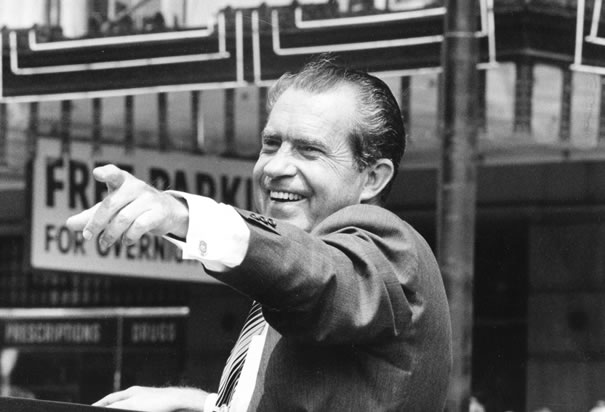
….At eleven o’clock in the morning, Nixon met with his staff in the Roosevelt Room. To many in the room he seemed oddly cool and quietly angry as he thanked them all for their loyalty and said something few of them understood. He said that he had been reading Robert Blake’s Disraeli and was struck by his description a century ago of William Gladstone’s ministers as “exhausted volcanoes” – and then mumbled something about embers that once shot sparks into the sky.

“I believe men exhaust themselves in government without realizing it” the president said “You are my first team, but today we start fresh for the next four years. We need new blood, fresh ideas. Change is important…..Bob, you take over.”

Nixon left then, turning the meeting over to Haldeman. The men and women of the White House stood to applaud his exit, then sat down. The chief explained what Nixon’s words meant: a reorganization of the administration. He told them that they were expected to deliver letters of resignation before the end of the day, then passed out photocopied forms requiring them to list all official documents in their possession. “These must be in by November 10,” he said. “This should accompany your pro forma letter of resignation to be effective at the pleasure of the President”. They were stunned. Speechless. Were they being fired? Haldeman said they would know within a month whether or not they could remain. At noon, the same drama was played out with the entire Cabinet, with Haldeman again passing out the forms.

Ironically, one of the many Cabinet secretaries Nixon ignominiously fired in his bid to centralize power in his White House staff was his former 1968 primary rival, HUD Secretary George Romney, father of 2012 Republican nominee, Governor Mitt Romney.  A blow from which George Romney’s political career never recovered. Nixon’s relationship with Romney had been an acrimonious one, formally polite on the surface with public shows of confidence by Nixon and machiavellian intrigues behind the scenes to undermine Romney and reverse the policies he had been advancing in Nixon’s name.

This latest Cabinet reshuffle to build a “Team without Rivals”, comes in the context of an explosive story, the abrupt resignation Friday of CIA Director General David Petraeus, citing an extramarital affair and accepting responsibility for “extremely poor judgment” and “unacceptable conduct”. The affair, allegedly conducted with his official biographer, came to light during a still not fully explained FBI investigation into unauthorized accessing of Petraeus’ private email account. The resignation of the highly regarded General Petraeus comes just before he was expected to testify before Congress regarding discrepancies and questions in the administrations handling of the terrorist attack in Benghazi that killed Ambassador Chris Stevens and other Americans. It also coincides with the Secretary of State Hillary Clinton, declining to testify.

It is difficult to say if General Petraeus public career will survive this scandal that he has brought upon himself, an action which stands in jarring contrast to his sterling, some might say superhuman, record of service to America, or if he will, like George Romney, fade away. Certainly, the CIA badly needed to stop the revolving door on the Director’s office and have a strong, visionary, hands-on leader who could reform and invigorate the Agency not merely in terms of covert action but in terms of rebuilding of capacity in deep cover clandestinity and the acquisition of strategic intel. I do not often find myself in agreement with Senator Feinstein but she is correct, this resignation hurts because it is also a significant institutional opportunity cost for the IC. I too wish it had not been accepted  – at one time it wouldn’t have been – but that is the President’s prerogative.

What however are the real issues? What should we be looking for?

Two things: As with Richard Nixon’s second term machinations, with such sweeping changes personnel changes in the offing for the Obama administration, ask yourself as events unfold: “Where is power flowing? And Why?”

If you do you will be in a better position to game out the direction of the next four years, especially in foreign policy and national security.

The White House has attempted to sell a story that the FBI doing a low-level harassment investigation  stumbled upon a security breach and – on their own authority, mind you – tapped the email account of the Director of the CIA and kept him under surveillance and investigated his mistress and, oh, yeah, the President was only informed of this business after the election on Thursday. Wait! And the DNI ( a three star general whose career was primarily intel administration) on his own initiative called the CIA Director ( a four star general and former theater and combatant commander) in on the carpet and fired him told him to resign. Right.

No, what most likely happened was that the minute the special agents realized who was involved in their investigation and the magnitude of the implications, they stopped and informed their superiors and the matter went up the chain to the FBI Director’s desk. The FBI Director, a former prosecutor with a political antennae circumspect enough to be appointed by George W. Bush and have his term be extended by Barack Obama, would have duly informed the Attorney-General of the United States before proceeding further and – I expect – the National Security Adviser, White House Chief of Staff and the DNI. Worst case scenario thinking in terms of national security would have been one driver. Another would be the fear of an all too juicy story leaking and the media catching an unbriefed POTUS unaware on the campaign trail with a blockbuster scandal before the election. How would that have gone over?

I would further expect that we will in the next few days and weeks hear the most salacious contents of the emails between Petraeus and his biographer, leaked by anonymous officials, timed to coincide with difficult days of testimony regarding Benghazi or new appointments to the administration that could, on a slow media day, prove controversial.

Instead of being distracted by prurient nonsense unrelated to the stewardship of the Republic, time would be better spent scrutinizing the host of nominations to come, not as individuals but as “teams” for particular areas of national security and foreign affairs cutting across bureaucracies – ex. arms control, Russian relations, Mideast etc. What commonalities or congruencies emerge?

I suggest this because back when the Obama administration decided on their “pivot” to Asia, the people they selected for second to third tier workday management related to the Asia-Pacific region were all accomplished, decent, honorable public servants, but their greatest common characteristic was a lack of any professional expertise with China. We saw the same personnel gambit with the Bush administration in the run-up to the war with Iraq where the greatest disqualifier for a job with the CPA was familiarity with the Arab world, Islam or Iraq. When you want careful stratagems, you solicit the advice of experts; when you want grand and revolutionary gestures, the wheels of policy are better greased with bold ignorance. There’s a reason Nixon appointed William Rogers Secretary of State – he knew the State Department bureaucracy would largely oppose his foreign policy initiatives and he wanted someone ill-suited and uninformed in charge there who he could more easily manipulate and keep in the dark.

The sixties radicals used to assert “the personal is the political”; in the eighties, Ronald Reagan in staffing his first administration understood that “the personnel are the political” and picked people culled from Heritage and Cato. My intuition is that in the second decade of the 21st century, the inside circle of the Obama administration have discovered that ” the political are the patterns”.

The story unfolding is no longer the “smoking gun” or the compromising jigsaw piece but the entirety of the puzzle.


Switch to our mobile site