zenpundit.com » dystopia

Archive for the ‘dystopia’ Category

Shlok Vaidya’s Singularity of Warfare

Thursday, October 8th, 2009

Nice.

Shlok posts up on the future of war in response to Lexington’s Green’s prospective speaking engagement:

The History and Future of Warfare

…..The history of warfare looks something like this cycle that repeats itself within the governance market – between an insurgent governance platform and the dominant platform of the time. Victory is gauged by market-share of each platform.

  1. Tribe vs. Tribe
  2. Tribe vs. State
  3. State vs State
    1. Marked by the invention of the nuke.
  4. Network vs State
    1. Where we are now. Networks are essentially information empowered tribes.
  5. Network vs. Network
    1. When the nation-state collapses into its component resilient communities and combats the networks that won.
    2. Insurgencies and private military corporations act as governance platforms.
  6. Small-Scale Networks vs Network
    1. Advanced information flows decreases mass requirements and increases decentralization.
    2. Trend continues until post-human age.
  7. Small-Scale Network vs Small-Scale Network
  8. Individual vs. Small-Scale Network
  9. Individual vs. Individual
  10. Post-human vs. Individual
    1. When the difference between man and machine is negligible.
  11. ? vs Post-Human

*Acceleration really takes off when the network barrier is broken.

I like the flow in the outline. Potential countervailing trends to Shlok’s model? Here’s a couple:

  • Aggressive migration/refugees-in-arms – think Hutu militiamen fleeing to the Congo from Tutsi rebels, but scaled up for a failing great or regional power.
  • Rogue nuclear events will cause a countervailing, centralizing, “circling the wagons” effect that will temporarily strengthen states and allow them to “take off the gloves” against networked opponents.

American Public Schools and History

Friday, September 4th, 2009

My amigo and blogging colleague Lexington Green had an excellent post this week on the anniversary of the invasion of Poland by Nazi Germany, abetted by Joseph Stalin’s Soviet Union, which set off WWII in Europe. Lex laments the state of historical knowlege in public schools and asks readers for their recommendations for books on the Second world War. As of this writing, there are already 47 comments:

September 1, 1939

World War II started (in Europe) 70 years ago today.

There are two sorts of people in the USA today. A tiny minority who are very interested in military history and know a lot about World War II, and a vast majority who can barely even tell you who was in it (“was that the one with Hitler?”), when it occurred (“the Seventies?”), or what it was about, or even who won (“Japan?”). American children whom I talk to are apparently taught two things and two things only about our participation in World War II: (1) The Japanese Americans were imprisoned, and that was racist and wrong, and (2) we dropped atomic bombs on Japan, and that was racist and wrong. Some know about the Holocaust. College age youth are taught that the war was an exercise in American imperialism, meant to spread expoitative capitalism across the world, and that it is a myth that the GIs went to Europe to liberate the conquered countries or to bring democracy and freedom. Even depictions that are not entirely negative, such as Saving Private Ryan, depict the war solely as a personal tragedy and pointless death and destruction, and not about anything, and certainly not about anything good or admirable. Fed exclusively on this diet for over a generation, we now have a population that sees the war in this way.

This is precisely what Pres. Reagan warned us about:

We’ve got to do a better job of getting across that America is freedom-freedom of speech, freedom of religion, freedom of enterprise. And freedom is special and rare. It’s fragile; it needs [protection]. So, we’ve got to teach history based not on what’s in fashion but what’s important-why the Pilgrims came here, who Jimmy Doolittle was, and what those 30 seconds over Tokyo meant. You know, 4 years ago on the 40th anniversary of D-Day, I read a letter from a young woman writing to her late father, who’d fought on Omaha Beach. Her name was Lisa Zanatta Henn, and she said, “We will always remember, we will never forget what the boys of Normandy did.” Well, let’s help her keep her word. If we forget what we did, we won’t know who we are. I’m warning of an eradication of the American memory that could result, ultimately, in an erosion of the American spirit.

Reagan was right. I have gone beyond being distressed about all this to being fatalistically resigned. With historical memory either non-existent or actively corrupted, those of us who care about these things will have to preserve the record as best we can.

At The Corner (updated here) they are asking people to list their favorite books on World War II. This is a good idea, and I solicit your suggestions in the comments. The Boyz readership always suggests something I have not heard of already. Please list two or three favorites, in the comments. I could spend all day doing this, but I will abide by my own rule, and limit myself to three.

Read the rest here:

You should read the rest, as well as the comments, many of which are informative and a few of which qualify as entertaining. While I am very tempted to discuss books and historiography, I will instead address the teaching of history in our public schools.

The ideological Marxoid craziness of which Lex writes does indeed exist, though it is far more common in university courses than in secondary school classrooms ( Oak Park, though, is a pretty liberal UMC burg) and more common in urban school districts on the coasts than in the Midwest or South. In particular, I have seen firsthand at national conferences, teacher-zealots from California who appear to have been kicked out of Trotskyite Collectives for excessive radicalism and who are more like the mentally unsound homeless than someone entrusted with the education of children. They are largely scary exceptions though. The main problem with the teaching of history in our public schools is that as far as subjects go, history is a tertiary concern of government officials, administrators and school boards; as a result, most of history instructors are hard working and well-meaning people who are by education, totally unqualified for the positions they hold.

This is not to say that these history teachers do not have college degrees, They do, usually they are education or English lit majors with a scattering of PE and business majors whose main career concern is becoming varsity football or basketball coach. A few were punitively reassigned to history departments out of fields they are highly qualified to teach because they are good teachers and administrators saw them as capable of filling a gap in the master schedule, credentials be damned.

Nor would I say that these teachers do not care about children or shirk their responsibilities. By and large they are professionals who are dedicated to and care about the welfare of their students. The problem is that they don’t know much history – and it is very difficult to teach something well that you yourself do not even know enough about to be aware of the parameters of your own ignorance.

In 1997, education scholar Diane Ravitch wrote:

…Of those teachers who describe themselves as social studies teachers, that is, those who teach social studies in middle school or secondary school, only 18.5% have either a major or a minor in history. That is, 81.5% of social studies teachers did not study history in college either as a major or as a minor. In case you thinkyou didn’t hear me correctly, let me say it again: 81.5% of social studies teachers did not study history in college either as a major or a minor. This figure helps to explain why history is no longer the center of the social studies, since so few social studies teachers have ever studied history

What? “Well that was twelve years ago!” you say? My friend, the vast majority of that 81 % of unqualified teachers are still teaching today. And most of that remainder are still as unqualified now as they were in 1997. Imagine the state of our buildings and bridges if 81% of the professors of engineering had majored in, say Art Criticism or Women’s Studies.

Aggravating matters, even if a prospective teacher did major in history in college, fewer of their professors were full-time history instructors than ever before, meaning that even the quality of the small minority of teachers who are history majors is going into decline! NCLB scorns history as a subject, so school districts across the nation will continue to starve it. Poorer districts will fire all the social studies teachers in coming years and parcel out the history sections to unwilling English teachers in order to save the jobs that will preserve reading scores (assuming those are making AYP in the first place). After that, the science teachers will start to get the axe.

Students know a few bare minimum things about WWII, what can be gleaned from dumbed-down, turgidly written, textbooks that are long on glossy pictures and short on engaging prose, plus what they might catch on the History Channel which is seldom short of Nazi-related documentaries. It is unsurprising that most high school students are ignorant of their own nation’s history – given the state state of the field, it would actually be surprising if they knew anything at all.

We are deliberately cultivating a level of societal ignorance that is a deadly longitudinal threat to the continuance of democratic governance and individual liberties in this country. Maybe that was always part of the plan.

1913 Redux

Wednesday, June 24th, 2009


My friend Cheryl Rofer of Whirledview, who has a professional background in nuclear weapons issues, is an advocate of strong diplomatic efforts for nuclear disarmament and, someday, of a world free of nuclear arms ( note to readers: Cheryl is NOT advocating immediate or unilateral nuclear disarmament). While I see room for responsble reductions in nuclear weapons systems, I disagree that this objective – very low or no “legal” nuclear weapons- is a good idea; in fact, I expect that doing so will make great power war possible again, a nightmare we have not seen since 1945.

Cheryl had a very interesting post recently, where she makes an argument that the old world, the one that launched the 20th century’s descent into epic carnage and ideological fury in August 1914, is long gone and that the subsequent changes in political order mitigate the dangers of a revival of great power rivalry and warfare. I am using a sizable excerpt here in order to show the core of Rofer’s argument:

Not 1913

My customary response to this (after batting away their ideas that we are talking about unilateral disarmament or that we might have zero nuclear weapons in the next month or so) has been that the negotiations and concessions necessary to move toward zero nuclear weapons will restructure the world in such a way that it will resemble no world we know or have known.

But Nicholas and Alexandra has given me a new argument: Europe is no longer ruled by a single dysfunctional family.

That’s an exaggeration of the Europe of 1913, which was the problem back then. But no such important grouping of countries is any longer ruled by a single family. And there’s more to it than that: the form of rule is important, and the world has pretty much given up on absolute monarchies. There are still autocracies of various kinds around the world, but they are few.

Many of the rulers of Europe before World War I were related to Queen Victoria. She provided the fateful hemophilia gene that the Tsarevich suffered from. Both Nicholas and Alexandra were related to the British royal family, Alexandra a granddaughter of Victoria. Kaiser Wilhelm was a cousin. King Alfonso of Spain was a cousin by marriage, and there were ties to Greece, Prussia, and Denmark. The members of the family were fabulously wealthy, and, as we have recently seen, the values and interests of the fabulously wealthy are not the same as those of the rest of us.

Nicholas regretted having to go to war against Cousin Willy, but his other duties required it. Russia’s national interest was part of it, but a big part of how he thought of national interest was a pride-duty-upholding-our-sacred-values kind of thing that is more like a family’s sense of who they are than today’s national interests of economic growth or security for citizens.

….Monarchy exacerbated the problems
Most of the countries of Europe were monarchies; now most are democracies. In a monarchy, the monarch is in charge of everything. There may be ministers, but they are advisors who have only as much power as the monarch grants. Britain had been moving away from this model for some time, but Nicholas and Alexandra were hardly alone in believing that only one person can rule. When World War I broke out, Nicholas commanded the troops directly. This left a bit of a vacuum in other spheres, which Alexandra tried to fill, with Rasputin’s help.

Power is that centralized in very few countries today. Heads of government have access to advice from experts in many fields: military, scientific, economic, societal, political. The ballot box and the media remind those heads that accepting advice can be a good idea. None of this implies that decisions will be perfect, but it does mean that big decisions, like going to war, will be thought out and justified in ways that a monarch does not need to.

As I said in the comment section at Whirledview, there are two distinct questions here with Cheryl’s argument:

a) The influence of monarchy in historical period of 1913 in precipitating the civilizational calamity of WWI ( or, if you like a broader view, the 1914-1991 “Long War” between liberal democracy and authoritarian-totalitarian regimes).

b) Emerging strategic parallels with 1913 that could be exacerbated by a nuclear free world.

I will deal with each question in turn.

Europe of 1913 was, I would agree, certainly a much more hierarchical and authoritarian place than it is today. Cheryl is implicitly invoking “Democratic Peace theory” here to explain the warlike tendencies of late imperial Europe that contrast so sharply with the conflict averse, liberal democratic, welfare states that make up the EU. However the historical picture I think is more complicated in that none of the monarchs, not even the nominal autocrat Tsar Nicolas II of Russia, were absolute monarchs in practice.

Nicholas II, on paper, was the most powerful ruler but even so, he was forced to accept the Duma and limits on his previously (theoretically) infinite powers in the Revolution of 1905. Kaiser Wilhelm II was technically the “German Emperor”, sort of a commander-in-chief and presiding officer of a federation of Lander that made up Imperial Germany, and not “Emperor of Germany”. The Kaiser had to deal with an unruly Reichstag filled with socialists, other German monarchs like the King of Bavaria, a Prussian and imperial civil service, a junkers class and a Grossgeneralstab, all of which had various institutional prerogatives that checked the authority of “the All-Highest”. The King of Great Britain retained enough real power to force a pre-war reform of the House of Lords against the will of a majority of parliament, but this was regarded as an extraordinary political event ( George III had regularly exercised powers not far removed from those of President Barack Obama). The government of Austria-Hungary is beyond my expertise, except to say that it’s government was riven by byzantine rules and duplicative bodies. The Young Turks had seized power from Abdul-Hamid II and the new Sultan was a figurehead. France was a republic.

While the monarchs exercised varying degrees of executive power before the Great War, they were a declining legacy component of a modern, evolving, state system, one increasingly animated by an aggressive spirit of brutal nationalism and militarism. The state, not the monarch, is what ran Europe in 1913 and in 1918 nearly all of these crowned rulers were swept away without a trace, like a predatory insect discarding an old shell as it grew larger and stronger. Those monarchs that remained became living flags and tourist attractions. Nationalism is far from dead in 2009 and while the state as a global institution has taken an impressive beating since the end of the Cold War, it retains in most countries impressive powers of coercion and an ability to inflict great harm, even where it cannot make itself be obeyed. Zimbabwe, Iran, Sudan, Burma, to name just a few, have governments that continue to rule barbarically and thumb their noses as the civilized world, despite being loathed by substantial parts of their population or even the vast majority of citizens

The strategic calculus regarding the value of nuclear weapons to a state does not remain unchanged with reductions in nuclear arsenals, the value actually increases in the sense that each nuclear weapon becomes more significant as there are fewer of them. Nuclear weapons become more prestigious and, once the US and Russia move to very low numbers of warheads, have greater military significance to the ayatollahs, military dictators, presidents for life, nationalist demagogues and terrorists who might like to have some. Nuclear weapons are useful as status symbols or as shields to deter intervention while pursuing regional ambitions against non-nuclear neighbors, or even nuclear ones in the case of India and Pakistan.  This strategic value does not disappear with paper agreements to the contrary, and even miserably poor nations like North Korea and Pakistan can build nuclear weapons, if they have the political will to endure the modest inconvenience of becoming a diplomatic outcast.

A world that formally abolishes nuclear weapons, or reduces them to the point where major war appears to be a “survivable” risk even if they are used, creates incentives for states to wage war where previously  the fear of nuclear escalation made statesmen pull back from the brink. Moreover, I do not think we will return to exactly the world of 1913 or 1944. History never repeats itself quite so neatly. No, I think we will see the dystopian worst of both worlds – increasing “bottom-up” chaos of 4GW insurgency ( which is driven by more factors than just the nuclear age) coexisting with a renewed interest of states in pursuing interstate warfare at the top.

Human nature does not change. I agree that democracies are far less inclined, on average to fight one another than are authoritarian states but this average could easily be a product of modern democracy being a rarefied commodity until the last twenty years. We still have many brutal tyrannies on planet Earth and democracies are not incapable of aggression, error or hubris. Athens embarked upon the expedition to Syracuse, Republican Rome was more ferociously expansionistic than its later Emperors and the U.S. went through a Manifest Destiny phase.

These things should give us pause before we become too eager to take nuclear weapons off of the table.

Robert Young Pelton

Tuesday, June 23rd, 2009

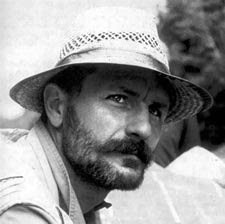
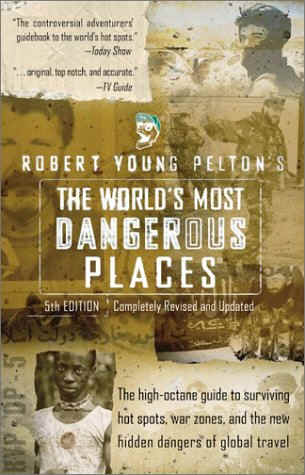
The author of  The World’s Most Dangerous Places: 5th Edition  and Licensed to Kill: Hired Guns in the War on Terror was nice enough to drop by in the comment section and discuss his firsthand view of special operators in Afghanistan. During the course of the discussion, in response to a question from Lexington Geen, RYP offered up a couple of links that I think readers will find worthwhile. Here is a quote from one of them:

….The next morning, about 60 Afghan cavalry came thundering into the compound. Ten minutes later, another 40 riders galloped up. General Abdul Rashid Dostum had arrived.

“Our mission was simple,” another soldier says. “Support Dostum. They told us, ‘If Dostum wants to go to Kabul, you are going with him. If he wants to take over the whole country, do it. If he goes off the deep end and starts whacking people, advise higher up and maybe pull out.’ This was the most incredibly open mission we have ever done.”

“Dostum” is the mercurial, ex-Communist, Uzbek Afghan warlord,  General Abdul Rashid Dostum.

Here are the links:

The Legend of Heavy D and the Boys: In the Field With an Afghan Warlord

Inside the Afghan War Machine

Incidentally, I read The World’s Most Dangerous Places in an earlier edition, back when Pelton’s uber-violence list was topped by Algeria, Colombia and several, broken down, West African nations. It’s a great book and a fun read that I have lent out to many of my students who had an all too idealistic and  parochial view of the world. It cured a few of them.

Now John Robb is in the House!

Thursday, April 2nd, 2009

John Robb is testified today before the House Armed Services Subcommittee on Terrorism, Unconventional Threats and Capability on Terrorism and the New Age of Irregular Warfare: Challenges and Opportunities. John put up a PDF of his testimony at Global Guerillas, here is a snippet but you should read John’s text in full:

MY TESTIMONY

….Against this dark picture, a combination of assault by a global economic system running amok and organic insurgency by superempowered small groups, there are few hard and fast recommendations I can provide. It’s complex. However, it is clear:

  • We will need to become more efficient. Force structure will shrink. Most of the major weapons systems we currently maintain will become too expensive to maintain, particularly given their limited utility against the emerging threat. Current efforts from the F-22 and the Future Combat System appear to be particularly out of step with the evolving environment. Smaller and more efficient systems such as unmanned aerial vehicles and coordination systems built on open platforms (as in a Intranet) that alloworganic growth in complexity make much more sense.


  • We should focus on the local. In almost all of these future conflicts, our ability to manage local conditions is paramount. Soldiers should be trained to operate in uncertain environments (the work of Don Vandergriff is important here) so they can deal with local chaos. Packages of technologies and methodologies should be developed to enable communities in distressed areas to become resilient – as in, they are able to produce the food, energy, defense, water, etc. they need to prosper without reference to a dysfunction regional or national situation. Finally, we need to get build systematic methods formanaging large numbers of militias that are nominally allied with us (like Anbar Awakening, Pakistan’s Frontier Corps, etc.). Even a simple conversion of a commercial “customer relationship management” system would provide better institutional memory and oversight than we currently have.
  • We need to get better at thinking about military theory. Military theory is rapidly evolving due to globalization. It’s amazing to me that the structures and organizations tasked with this role don’t provide this. We are likely in the same situation as we wereprior to WW2, where innovative thinking by JFC Fuller and Liddell Hart on armored warfare didn’t find a home in allied militaries, but was read feverishly by innovators in the German army like Guderian and Manstein. Unfortunately, in the current environment, most of the best thinking on military theory is now only tangentially associated with the DoD (worse, it’s done, as in my situation, on a part time basis).

A classy move on John’s part to take the time during his testimony highlight Don Vandergriff’s program of adaptive leadership ( another guy whom Congress should be hearing from)!

 Chairman Ike Skelton (D -Mo), judging by his impressive reading list in military affairs, is a Member of Congress who would seem to be keen to hear what John had to say. I’m very pleased to see Congress drawing upon the insights of strategic thinkers like John Robb and Tom Barnett, instead of the usual parade of niche specialists from the Beltway tanks.


Switch to our mobile site