zenpundit.com » book

Archive for the ‘book’ Category

32, let’s begin with Her Majesty’s hat

Sunday, March 31st, 2019

[ by Charles Cameron — hat and flag, insecurity clearances, quantum physics and what it tells us about truth and spin, paris, city of lovers, sex, scandal naturellement, and would you believe it, treason? ]
.

Brexit. Her Majesty’s hat draws a clear parallel, but is it a metaphor?
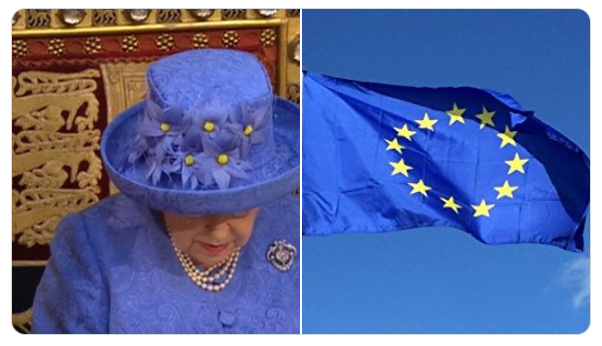
That was the hat HM wore for the 2017 Queen’s Speech to the joint Houses of Parliament — and we have no reason to suppose her opinion has changed since then. Visual DoubleQuote courtesy of Federica Cocco

And then…
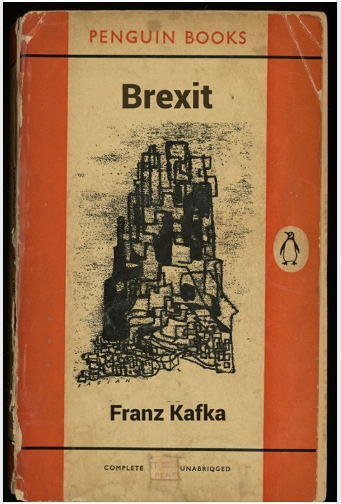
I mean, what a nightmare…

**

But then, you can’t always trust the facts:

I mean, news these daze:

Spin corresponds to fact, like the hands of a stopped clock, twice a day.. (thanks, Wolfram)

Here’s some detail from the Ars Technical piece:

You, however, are in a box and cannot report your measurements to me. Instead, I have to measure your state to discover the result of your measurement.

So what we have here, if I might say so, is a case of Matryoshka measurements..

That means you are in a superposition state of having measured a vertical or horizontal photon, even after you have made the measurement. I can measure your state, and we end up with two sensible outcomes: you measure horizontal, and I measure you to have measured horizontal; you measure vertical and I measure you to have measured vertical.

But there are two more possibilities: you measure horizontal, but I measure you to have measured vertical, and you measure vertical, but I measure you to have measured horizontal. If the second measurement is governed by quantum mechanics, those two are just as likely to occur as the sensible outcomes. So half the time, the measurement result you obtain contradicts my measurement of your measurement.

Got it?

If not read, the whole article, then read it again. Frown. You’ll get it.

There is nothing wrong with either measurement, and there is no calculation that we can perform to resolve the contradiction.**

**

Reading an account of the Al Franken affair, focused on the questions of piling on (scapegoating?)nand equal justice for accuser and accused — two sports metaphors:

Fellow Democratic senators quickly entered the scrum as they fought to be next in line to proclaim outrage and demand he should go.

One of the most disturbing aspects of #MeToo is that watching someone get destroyed in real time has become something of a sport.

In the course of reading in and around that article, I ran across this brilliant visual DoubleQuoting of the Christine Blasey Ford / Brett Kavanaugh matter:

On such balance we may project each our suppositions: but to have achieved such balance!

**
And so to my dialysis viewing:

Hardball, 3/29/2019:

Julia Ainsley:

He [Barr] doesn’t have blinders on, he knows the public criticism here..

David Corn:

It doesn’t look like he’s playing Even Stephen here..

Zerlina Maxwell [on Barr making decisions ahead of release of Mueller report]: I look at this situation almost like the track and field runner that’s running down the hoe stretch, and they put their arms over their head, and then they’re crossed at the finish line..

.. this feels like a premature victory lap

Chris M:Well, David, Zerlina caught me .. with that visual of the President of the United States, this particular one, running a hundred yard dash. I don’t think that would be his event. I think riding a golf cart would be his event.
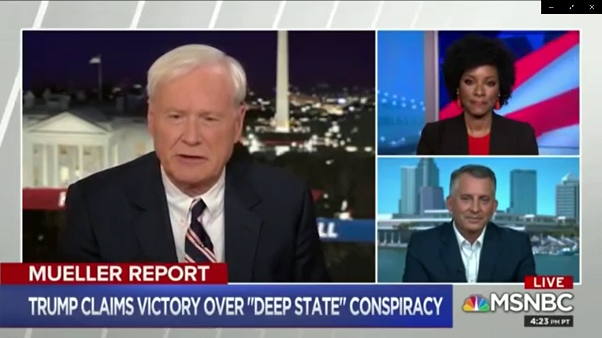
.. that must be the sound of a bus going over you ..


Chris M [ourob]:

How can a white person [ie Hillary Clinton] bea racist agfainst white people?

[ but cf “self-hating Jews”]

With anyb luck, I’ll get access to a complete Hardball video for 3/29/2019 and be able to find the chyrons “DeVos grilled’ (42); Trump “overriding” (43); and “Trump questioned” (50)

I have a note, “that’s the inverse of what’s true” which is a superb example of reverse (pos-neg) symmetry, cf the spy vs spy image in a recent post).. There was also a ref to David Ignatius, How the mysteries of Khashoggi’s murder have rocked the U.S.-Saudi partnership

**

Then there was the Green New Deal, with Chris Hayes:

Seb Gorka: They want to take away your hamburgers. This is what Stalin dreamed of and never achieved.

AOC: I expected a little more nuance..

It’s surreal ..

No more disposable people, no more disposable places ..

Ref:

A Green New Deal Is Technologically Possible. Its Political Prospects Are Another Question.

**

Rachel Maddow 3/29/3019:

Rachel re Barr:

It was kind of him free-styling, this was him showing off his dance moves ..

Now, tonight, it appears there’s a little bit of panic in the disco, because now William Barr has released yet another unexpected, taken it upon himself, ad lib, figuring it out as he goes along letter ..

**

Let’s close with this stunning image by Stephane De Sakutin / AFP / Getty:
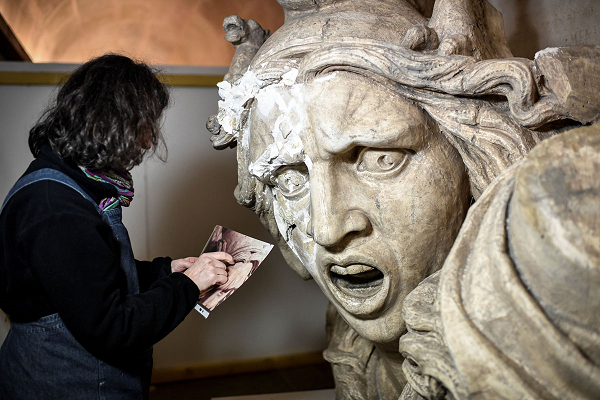
A mold of the Genie de la Patrie damaged during a “yellow vest” protest at the Arc de Triomphe in December is seen during its renovation by the French restorer Agnes Le Boudec in Paris on March 25, 2019.
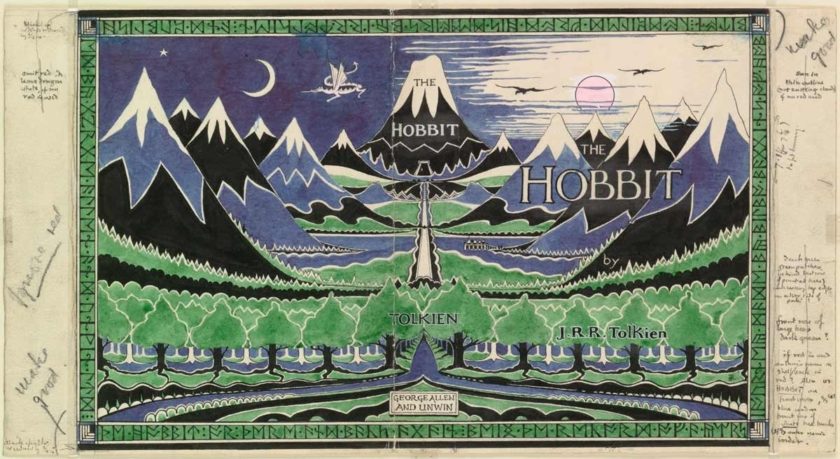
Review: Tolkien Maker of Middle-Earth

Tuesday, March 26th, 2019

[mark safranski / “zen“]

See the source image

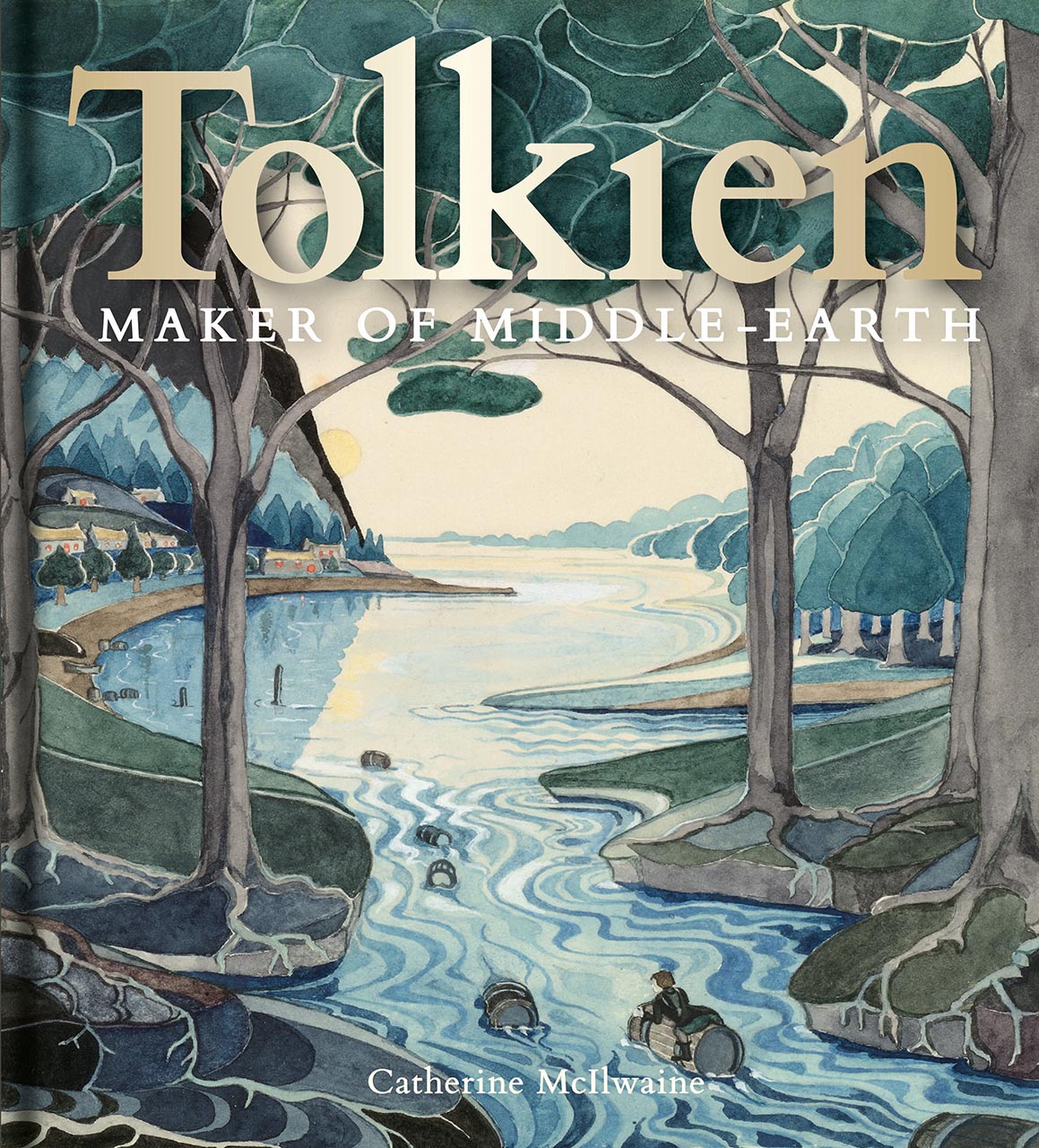
Tolkien: Maker of Middle-Earth by Catherine McIlwaine

I have been a lifelong fan of The Lord of the Rings and of J.R.R. Tolkien generally, Tolkien being one of a small handful of writers who were formative influences in my youth and who remain favorites today. Therefore, I was quite pleased when Scott Shipman alerted me to the publication of Tolkien: Maker of Middle-Earth by Catherine McIlwaine. Other than Christopher Tolkien himself, there could not have be en a better author and editor of a retrospective look at Tolkien’s creation of Middle-Earth than McIlwaine, who is the longstanding Tolkien Archivist of the Bodleian Library at Oxford University.  The book, which includes original essays by Tolkien scholars, including McIlwaine herself, is a companion catalog to the major exhibition of the extensive Tolkien collection held by Bodleian:

The Bodleian Library will publish Tolkien: Maker of Middle-earth as a companion to the forthcoming exhibition of the same name on 1 June 2018.

The “Tolkien: Maker of Middle-earth” exhibition will be held at the Weston Library, part of the Bodleian Libraries at the University of Oxford, from 1 June to 28 October 2018. It will feature an unprecedented array of Tolkien materials – manuscripts, paintings and maps – sourced from the Bodleian’s archive, Marquette University in Milwaukee (Wisconsin) and private collections.
According to The Bookseller, the companion book will be “the largest collection of material by J.R.R. Tolkien in a single volume”. It will also include “new” material, including draft manuscripts of The Hobbit, Middle-earth illustrations and paintings by Tolkien, and letters from admirers such as W.H. Auden, Joni Mitchell and Iris Murdoch.

Tolkien: Maker of Middle-Earth is both a serious addition to any Tolkienphile’s library as well as a 411 page coffee table book full of resplendent pictures of Tolkien’s handmade artwork, annotated maps, marginalia, correspondence with publishers and authors, calligraphic character sketches from the legendarium and photographs from J.R.R. Tolkien’s life, many published for the first time. The essays, by John Garth, Verlyn Flieger, Carl F. Hostetter, Tom Shippey, Wayne G. Hammond and Christina Scull as well as McIlwaine are thoughtful and reflective investigations and commentary on par with what readers would find in Philip and Carol Zaleski’s The Fellowship: The Literary Lives of the Inklings. I particularly liked Shippey’s “Tolkien and that noble Northern spirit” and Garth’s ” Tolkien and the Inklings” but the entire catalog section contains informative and explanatory passages about the immense mythic legendarium that Tolkien created.

Friend of ZP, T. Greer has weighed in at The Scholar’s Stage with a superb post about the importance of J.R.R. Tolkien as a literary figure that is a must read for fans of Middle-Earth:

On The Tolkienic Hero

….Here I’ve sketched out an archetypal template. This is the template upon which the vast majority our era’s hero-tales are crafted. This is the story of Harry Potter, Katniss Everdeen, Luke Skywalker, and Jack Ryan. It is Captain America and Spiderman. It is the central trope of science fiction, fantasy, international thrillers, super hero stories, and their “YA literature” counterparts. It is the myth that drives the imaginations of our times.

For all of this we have John Ronald Reuel Tolkien to thank. I am sympathetic to the argument that Tolkien is the seminal Anglophone author of the 20th century. Perhaps his literary craft is deft enough to deserves that title. Perhaps it is not. Either way I wager that in a few centuries time when our descendants’ literary memory has collapsed our age down to one author (as we have done with the ages of Chaucer, Shakespeare, and Milton), Tolkien will be the man remembered. This is not just because Tolkien’s works have been fantastically popular, even decades after its first publication, and in cultural milieus quite divorced from its creation. Nor it is because in Tolkien we find the genesis of so many of our era’s most popular genres (fantasy, science fiction, role playing games, and so forth). Tolkien’s influence is both subtler and more fundamental than this. Tolkien redefined the way popular literature treats many of its most common themes. This post looks at only one of those themes, but I am comfortable with the contention that Tolkien’s work embodies an entire era’s way of understanding the world. It is hard to say if Tolkien’s Lord of the Rings actually created the central cultural currents of our age or if it is simply their most prominent and enduring incarnation. Either way, Tolkien’s work is here to stay.

Readers familiar with Lord of the Rings will immediately see the connections between my opening sketch and the tale of Tolkien’s ring-bearer. I am not going to devote an entire essay to this topic—a great deal has already been written about Tolkien’s conception of good and evil, power, corruption, innocence, and heroism, and I see no reason to repeat others’ feats here—but I will emphasize two points that deserve strong restatement.

The first point: An aversion to glory is not just the defining character trait of the novel’s central hero. The distinction between greatness and power as goods to be strived for versus greatness and power as burdens to be carried is the distinction that sets apart almost of all of the novel’s protagonists from their foils. It is the defining difference between Frodo and Smeagol, Faramir and Boromir, Aragorn and Denethor, and Gandalf and Saruman. The second trait saves Galadriel in exile; the first corrupts Sauron anew after his master’s defeat. If one is allowed to describe objects as foils, this same distinction sets Sauron’s rings, key to his strategy for corrupting Middle Earth, as a foil to the methods of the ‘wizards’ sent from Western lands to save Middle Earth….

Read the rest here.

Tolkien’s influence will be here to stay for many an age.

Metaphoric matter 14 — and Elijah Cummings, to remind us

Friday, March 1st, 2019

[ by Charles Cameron — I share with Michael Cohen the problem of papers in boxes in storage — &c ]
.

Background text:

Quote:

Dom Donilon: North Korea of course is the combination of a cult and kind of a mob operation ..
Rachel 2/28/2019: Would it be an act of bravery, or an act of high-wire walking, to prosecute Trump?

This post is a catchall for the stray bits of chyron, header, quote, metaphor etc left over from previous, more focused posts.

**

Rachel Maddow:

Header:

Quote:

Rachel: When you are talking about allegations of criminal behavior by a sitting president, allegations are sort of on parallel paths — not exactly parallel, I think they might intersect somewhere down the road ..

**

strong>Headers:

Two Atlantic headers with gambling metaphors for current affairs, North Korea version:

**

And a Vanity Fair Hive header:

As someone whose life library and papers are currently in a couple of hundred boxes in storage, I could hardly fail to offer you this paragraph from Emily Jane Fox‘s reporting on Cohen‘s testimony under the title above:

About nine boxes were there waiting for him. The first contained a bunch of junk. The second did, too. “Oh my god,” he said when he opened the third. He’d hit the mother lode. In the third box were three years of Trump’s financial statements, from 2011 through 2013, which Cohen pointed to on Wednesday as evidence that the president had purposefully inflated and deflated his personal assets when it suited him—to secure bank loans or land a higher spot on the Forbes 400 list, for instance, or to lower his tax liability. There were also countless personal notes from Trump, scrawled across newspaper clippings, printed articles, and torn-out pages from glossy magazines. One note, written in Sharpie across an unflattering article, urged Cohen to call a reporter and threaten him with a lawsuit; another, on a story prominently featuring Cohen, read simply, “Michael, enjoy this while it lasts.”

**

This has been a bit of a rag-tag collection, so let me close with a moment of extraordinary strength: Elijah Cummings’ closing remarks at the conclusion of Michael Cohen’s testimony yesterday:

From the Bunker

Sunday, February 17th, 2019

[Mark Safranski / “zen“]
1

Friend of ZP,  Dr. Robert Bunker had a few new publications lately with other Friend of ZP co-authors and I thought I would begin my return to semi-regular (or at least occasional) blogging by giving them a nod here. The first was run a few weeks ago at Small Wars Journal: 

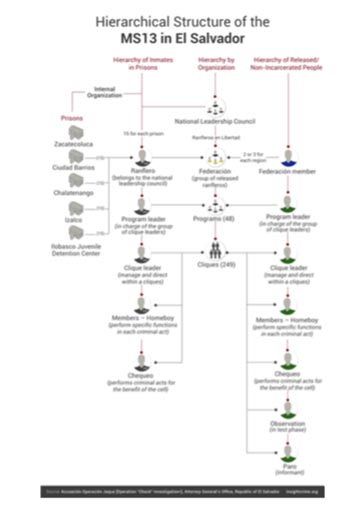
Third Generation Gangs Strategic Note No. 13: Mara Salvatrucha (MS-13) Command and Control (C2) Geographic Variations

by Robert Bunker and John Sullivan

Mara Salvatrucha (MS-13) is a well-known and extremely violent street, and in Central America, prison gang with an estimated transnational membership of 50,000 to 70,000 individuals.[1] Essentially a transnational gang network, MS-13 maintains a relatively robust media presence due to its ongoing criminal activities within the United States, many of which have resulted in homicides and even torture killings, as the gang continues to expand into new communities in Texas and the East Coast of the United States. The gang is organized on a networked, i.e. biological (and/or software program) based model with open architecture ‘plug ins’ that utilize a cellular synapse/and open coding-like strategy that facilitates network linkages and alliances, i.e., interfaces with violent non-state actors (VNSAs). Such network interfaces and organizational schemes go by a number of terms including netwar (John Arquilla and David Ronfeldt) and open-source warfare (John Robb).[2] This note specifically looks at the C2 geographic variations of the Mara Salvatrucha (MS-13) network in the United States, Mexico, and Central America (primarily El Salvador) and MS-13s interface with more powerful violent non-state actors (VNSAs) which result in localized hierarchical organizational expressions.

Read the rest here.

The second is a monograph at The Strategic Studies Institute:

Contemporary Chemical Weapons ... Cover Image

Contemporary Chemical Weapons Use in Syria and Iraq by the Assad Regime and the Islamic State 

This monograph focuses on an understudied, but yet a critically important and timely component of land warfare, related to the battlefield use of chemical weapons by contemporary threat forces. It will do so by focusing on two case studies related to chemical weapons use in Syria and Iraq by the Assad regime and the Islamic State. Initially, the monograph provides an overview of the chemical warfare capabilities of these two entities; discusses selected incidents of chemical weapons use each has perpetrated; provides analysis and lessons learned concerning these chemical weapons incidents, their programs, and the capabilities of the Assad regime and the Islamic State; and then presents U.S. Army policy and planning considerations on this topical areas of focus. Ultimately, such considerations must be considered vis-à-vis U.S. Army support of Joint Force implementation of National Command Authority guidance.

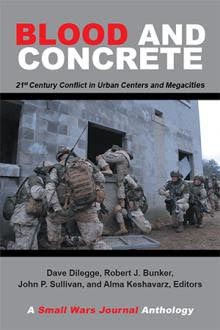
And finally, heading back to SWJ, a book – with Dave Dilegge, John Sullivan and Alma Keshavarz  :

1

Blood and Concrete: 21st Century Conflict in Urban Centers and Megacities

Blood and Concrete: 21st Century Conflict in Urban Centers and Megacities provides a foundation for understanding urban operations and sustaining urban warfare research. This Small Wars Journal (SWJ) Anthology documents over a decade of writings on urban conflict. In addition to essays originally published at SWJ it adds new content including an introduction by the editors, a preface on “Blood and Concrete” by David Kilcullen, a foreword “Urban Warfare Studies” by John Spencer, a postscript “Cities in the Crossfire: The Rise of Urban Violence” by Margarita Konaev, and an afterword “Urban Operations: Meeting Challenges, Seizing Opportunities, Improving the Approach” by Russell W. Glenn. These essays frame the discussion found in the collection’s remaining 49 chapters. Blood and Concrete continues the legacy of Small Was Journal’s coverage of urban operations, conflict and combat.

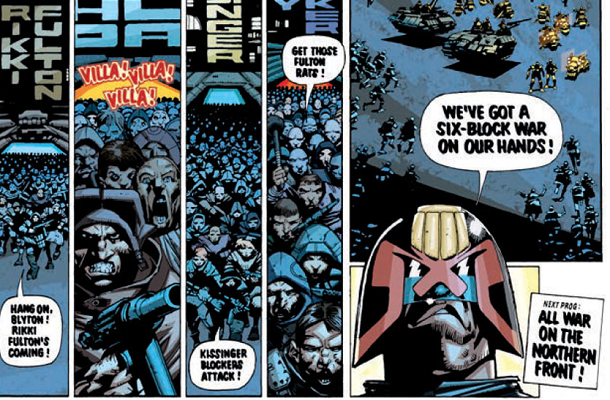
Probably not this kind of megacity…..

See the source image


Jackass and catfish, catfish and gourd

Friday, February 1st, 2019

[ by Charles Cameron — an almost-Darwin-Award-worthy foolishness, coupled with a masterpiece of Zen art — just the sort of post I’d love to post, for my own sake, even if no-one else is listening ]
.

Unbelievable!

That’s a serious journal article about a seriously un-serious drunking game.. And if you can’t read the fine print, not to worry — the two top articles below will brief you nicely..

Readings:

  • Atlantic, This Is What Happens When You Drunkenly Swallow a Live Catfish
  • LiveScience, A Drunk Man Swallowed a Live, Venomous, Spiny Catfish.

  • Acta Oto-Laryngologica Case Reports, A Jackass and a Catfish
  • **

    By way of contrast:

    Here’s what the book’s about:

    Zen art poses a conundrum. On the one hand, Zen Buddhism emphasizes the concept of emptiness, which among other things asserts that form is empty, that all phenomena in the world are illusory. On the other hand, a prodigious amount of artwork has been created in association with Zen thought and practice. A wide range of media, genres, expressive modes, and strategies of representation have been embraced to convey the idea of emptiness. Form has been used to express the essence of formlessness, and in Japan, this gave rise to a remarkable, highly diverse array of artworks and a tradition of self-negating art.

    In this volume, Yukio Lippit explores the painting The Gourd and the Catfish (ca. 1413), widely considered one of the most iconic works of Japanese Zen art today. Its subject matter appears straightforward enough: a man standing on a bank holds a gourd in both hands, attempting to capture or pin down the catfish swimming in the stream below. This is an impossible task, a nonsensical act underscored by the awkwardness with which the figure struggles even to hold his gourd. But this impossibility is precisely the point.

    Read or view:

  • Getty Research, Japanese Zen Buddhism and the Impossible Painting
  • Getty YouTube lecture, Japanese Zen Buddhism and the Impossible Painting
  • **

    On the zen of swallowing, or not:

    In Zen work, an existential contradiction, Mumon’s “red hot coal,” sticks in the student’s throat; the inability “to swallow it or spit it out” precipitates a crisis to be resolved through an insight that is simultaneously an existential gesture. “If I am whole and complete as I am, why do I feel ignorant and incomplete?” might be one formulation of the conundrum, though encoded in a ritual question like “What is the sound of one hand?” The greater the contradiction, the greater the tension — ”doubt mass” — and the greater the breakthrough, according to Zen tradition.

    Source:

  • Tricycle, Fruitful Contradictions: The Zen of mathematics

  • Switch to our mobile site